
Quick Take
- These aren't ordinary pigeons. A specific breed trait explains why their necks inflate to a jaw-dropping size. Learn about Pouter breeds →
- The same feature that makes Pouter pigeons so spectacular to watch is also dangerous to their health. See the hidden health risks →
- Male pigeons do far more than puff up to win a mate. Explore courtship tactics →
- Most people overlook a life-threatening consequence that comes with impressive crops. Discover the breeding consequences →
The extraordinary scene in this Instagram post is not what you’d expect to see in the average pigeon coop. Two males are strutting their stuff, displaying their enlarged throats in an attempt to impress a female. But is this normal behavior for pigeons? Read on to find out.
Pigeon Courtship Displays
“Pigeon” is the collective name for hundreds of breeds of birds in the Columbidae family. These birds were likely first domesticated between 2,000 and 5,000 years ago and there are now many different types.
They can breed at any time of the year. Their breeding cycle comprises courtship and mating, nest-site selection and nest building, incubation, and feeding of the squabs.
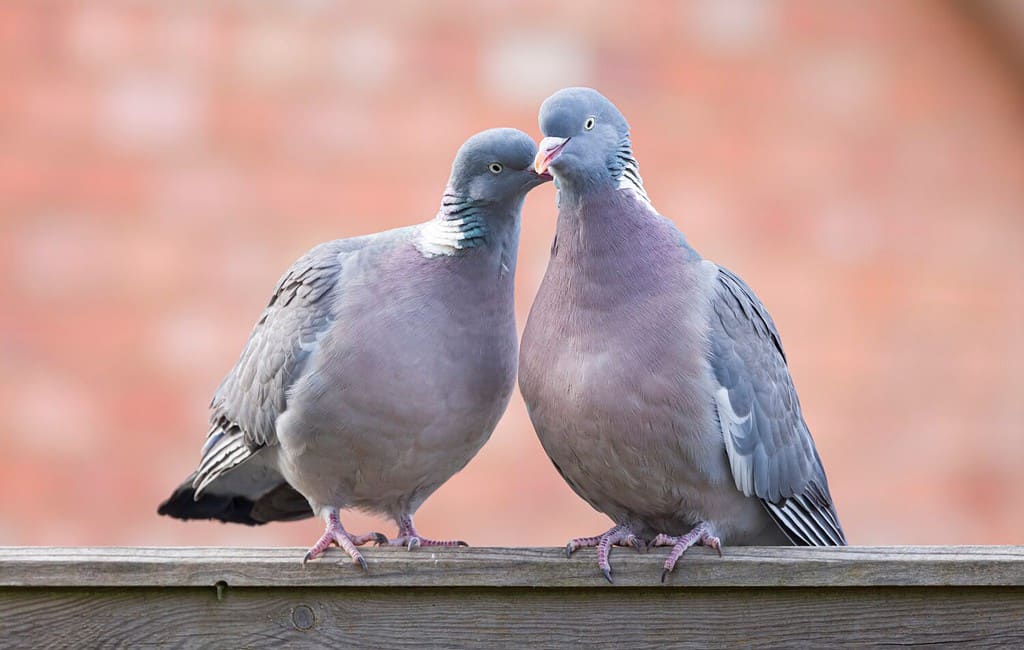
Male pigeons woo the females.
©Paul Maguire/Shutterstock.com
Once paired, these birds stay together for life. To attract a mate, the male struts around a female, displaying his puffed-up neck feathers, fanning his tail, and repeatedly bowing his head while making a special call. These gestures reveal his strength and virility. A potential mate may also drive a female into an open space to get her away from competing males.
Why Do Some Pigeons Have Huge Neck Pouches?
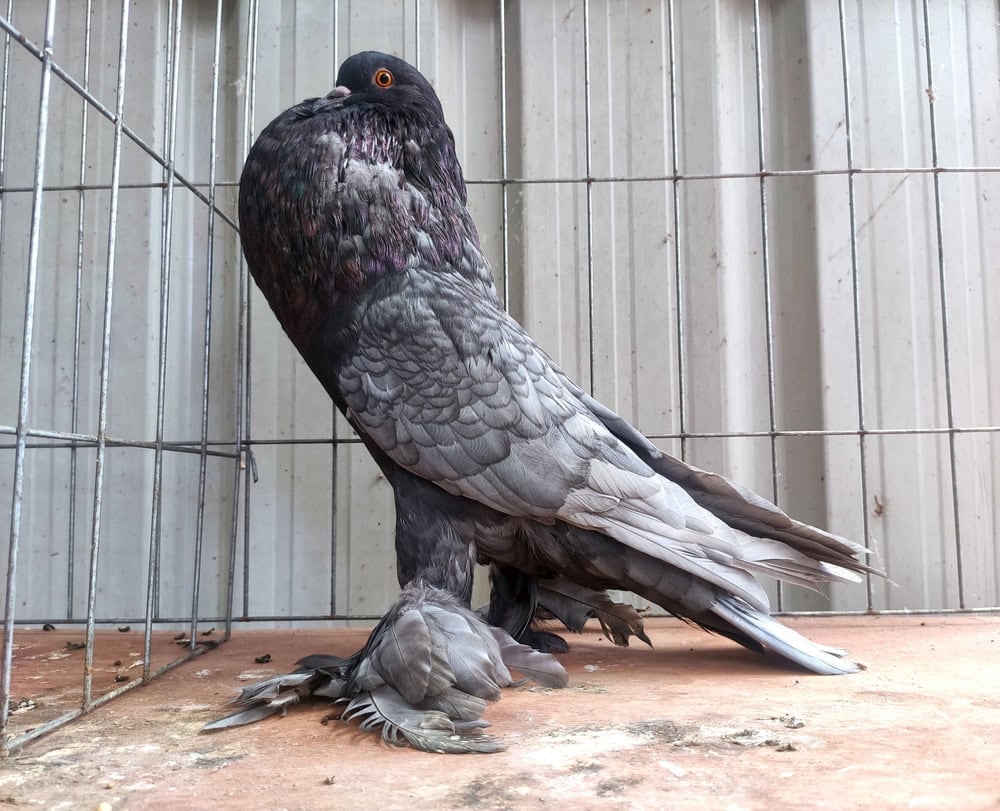
The pigeons in this clip are likely a special type of breed called Pouters or Croppers. These are domesticated varieties of rock dove, known for their very large and inflatable crops (expanded muscular pouches near the gullet or throat). The birds use these compartments to store food before it is digested.
This impressive neck pouch may look spectacular, but there can be associated health problems. Pigeons with very large crops can suffer from a condition called sour crop or crop stasis. This occurs when the food stays in the crop for too long, causing a buildup of bacteria. This condition is also common in hand-fed baby birds. It can be a serious and life-threatening medical issue.
Additionally, pouters are prone to feather loss on their chest. In some birds, this can lead to skin irritation and infections.