
Quick Take
- Crews recently extracted 20,000 goldfish from a single stormwater pond in Canada to prevent total ecosystem collapse.
- Current Aquatic Invasive Species Regulations exclude goldfish from their rules, stalling urgent containment efforts across multiple provinces.
- Feral goldfish in St. Albert successfully survived sub-zero temperatures despite crews completely draining their habitat and hoping they wouldn’t make it.
- Officials mandated an immediate fishing closure at Lost Lake to protect it, as goldfish expansion is a serious concern.
Imagine a wild, feral goldfish surviving in a habitat it was never meant to enter. In Canadian waters, such creatures are not uncommon; apparently, goldfish are now established in multiple provinces, especially in urban and suburban ponds. In these locations, dumped aquarium fish can survive and ultimately build dense populations in ecosystems that can’t necessarily support them.
Provincial agencies in Ontario, Alberta, and British Columbia now describe these feral goldfish as a real ecological problem. Capable of tolerating poor water quality and cold Canadian winters better than many people assumed it could, the average goldfish is taking over local waterways. How are these goldfish surviving, and where in Canada are they spreading like wildfire? Better yet, how did these fish wind up in the wild in the first place, and how are they harming the waters and habitats that they’re introduced to?
Too often released into ponds or connected waterways when owners no longer want them, this is the story behind Canada’s increasing feral goldfish population, and what can be done to stop their exponential growth.
Why Are Feral Goldfish Populations Rising in Canada?
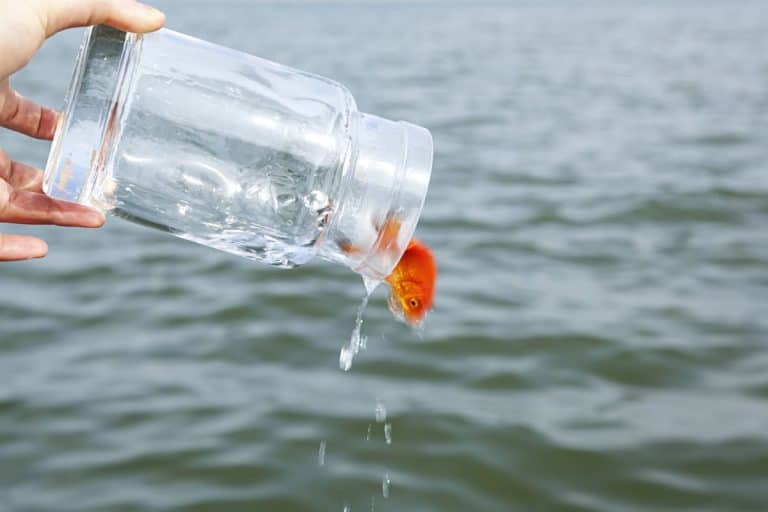
Canadian agencies name human release as the number one reason why wild goldfish numbers are on the rise, with new populations cropping up close to anywhere with human life. The Invasive Species Centre states that goldfish are widespread as companion animals and in aquaculture, but that doesn’t mean they remain in at-home fish tanks for the entirety of their lives.
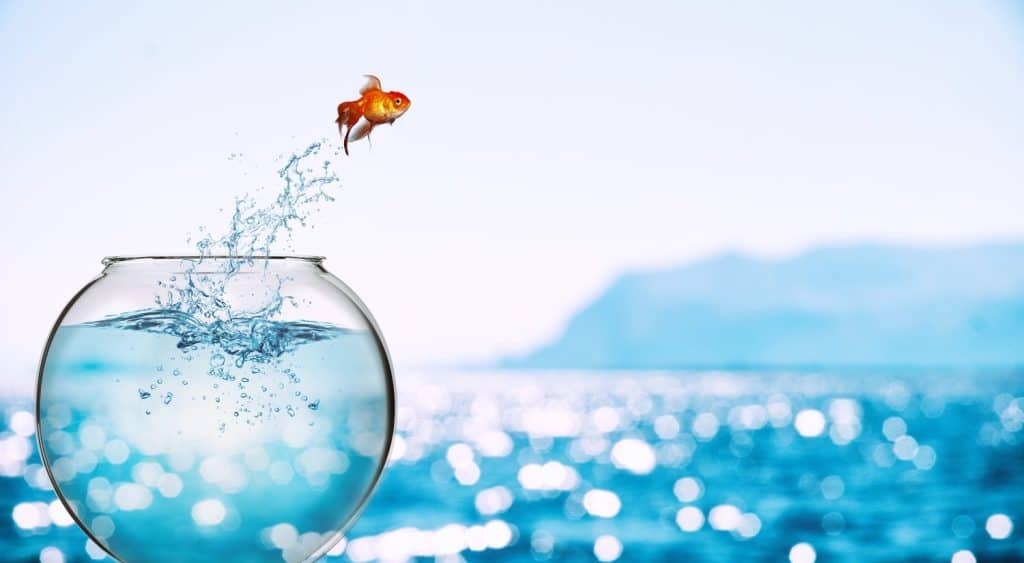
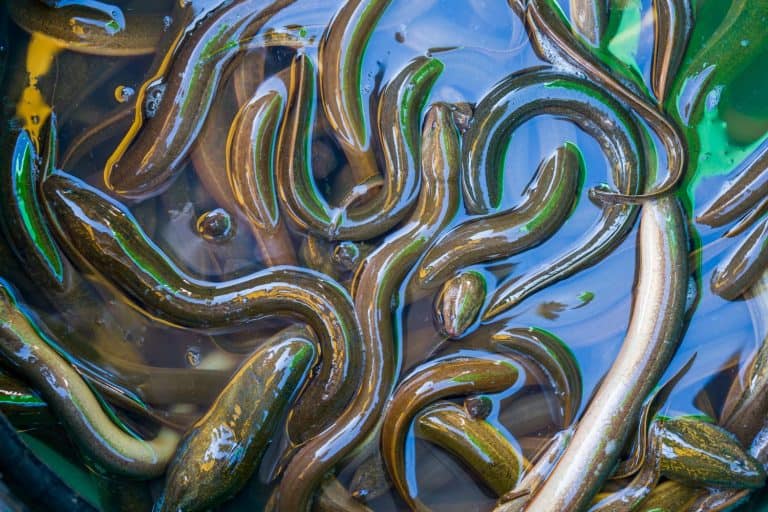
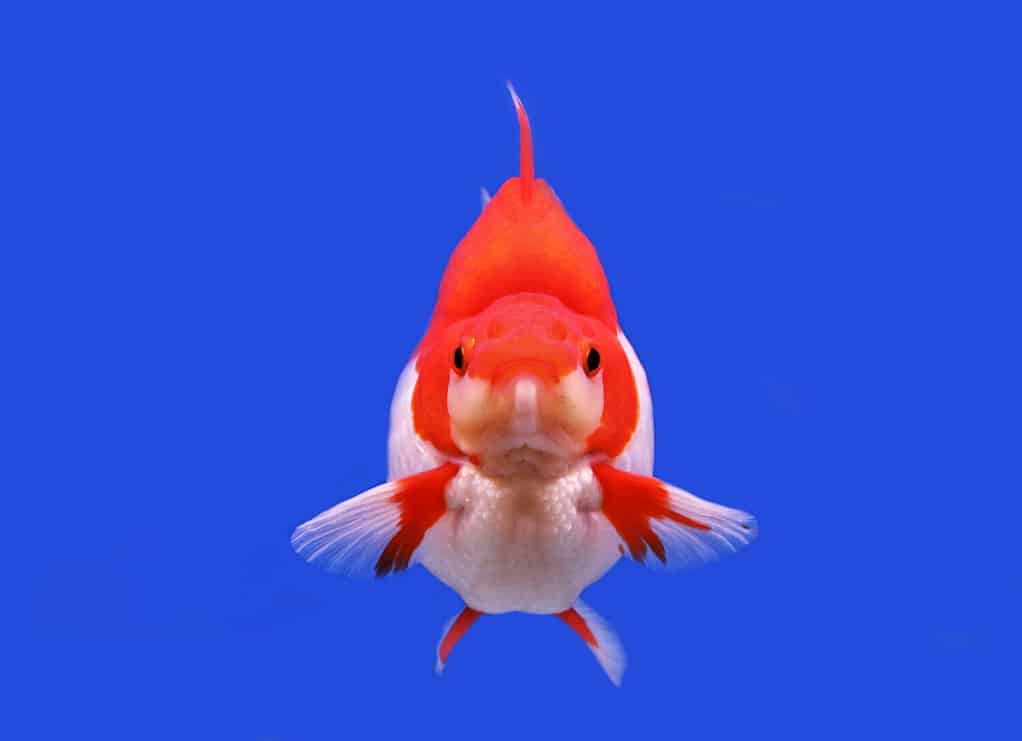
Canada is dealing with a growing feral goldfish population, largely because people keep releasing their pets into connected waterways.
©alphaspirit.it/Shutterstock.com
Jenna White of the very same Invasive Species Centre noted that “people releasing unwanted goldfish is the primary reason” these populations keep appearing, and she has also warned that the effects are “ecological, economic, and social,” and capable of “risking the entire ecosystem” that a feral goldfish finds itself dumped within.
Humans are to blame entirely for these populations. Still, questions remain: where do goldfish appear to thrive, and where specifically in Canada are they taking over?
Types of Water Where Wild Goldfish Thrive
While many may assume goldfish can only survive in a clean, carefully curated tank at home, that’s far from the case. They easily adapt to streams, pools, ditches, and ponds with submerged vegetation, and can also tolerate a wide range of temperatures and oxygen levels. They are extremely hardy fish, depending on the subspecies, which is one reason why urban stormwater ponds have become such reliable places to find these feral populations.
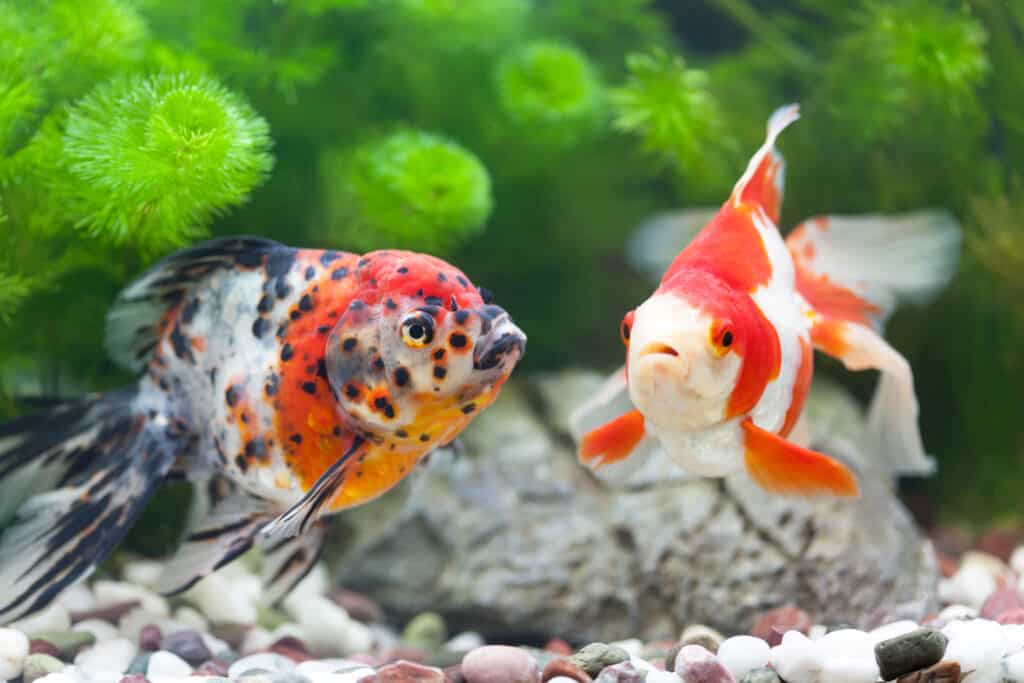
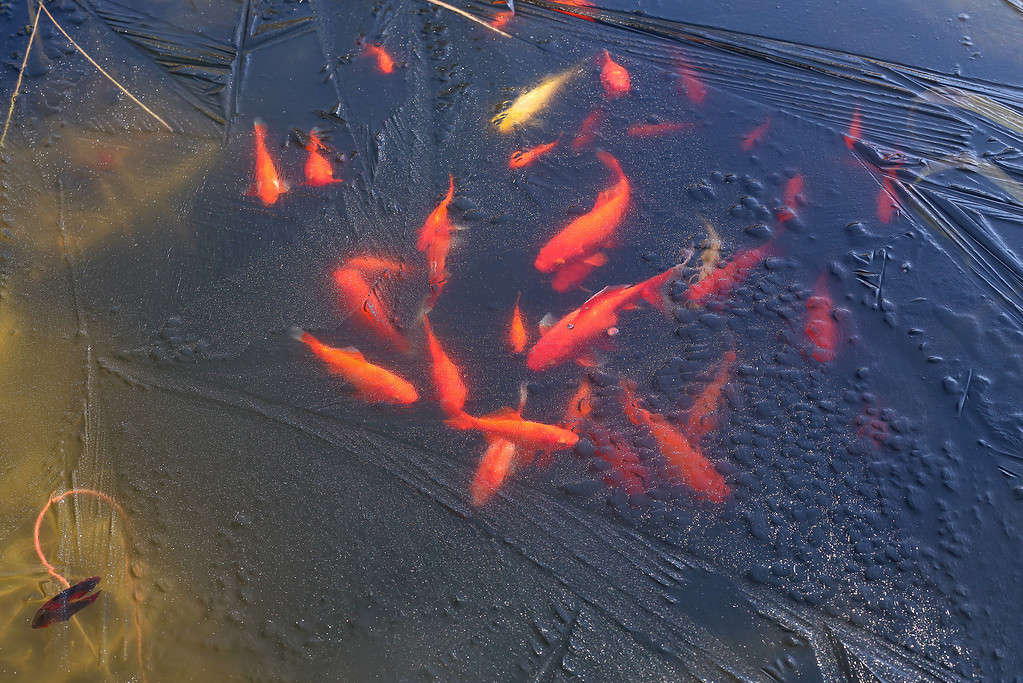
Contrary to popular belief, goldfish can thrive in a number of waterways, and even in freezing temperatures.
©yoshi0511/Shutterstock.com
Stormwater ponds are also typically close to neighborhoods, roads, schools, and commercial areas where dumped pet goldfish are most likely to appear. White reported that her team once found 20,000 goldfish in a single stormwater pond, demonstrating how quickly these sites can become breeding reservoirs, despite their lack of pristine habitat. Goldfish are clearly capable of adapting quickly to any new environment.
Where Feral Goldfish Are Taking Over In Canada
Where are feral goldfish most commonly sighted in Canada? A growing patchwork of freshwater systems seems to be overwhelmed by these pets, with recent reporting from multiple provinces telling a similar story. Here’s a breakdown of various locations dealing with feral goldfish, and why their populations seem to be growing.
Ottawa, Ontario
In reporting on Ottawa’s Celebration Park stormwater pond, about 5,000 goldfish had already been removed earlier in 2025, but there are hundreds to roughly 1,000 more still believed to remain. Councilor Riley Brockington called the scale “mind-blowing”, with a goldfish population large enough to require organized municipal removal as well as euthanasia plans.
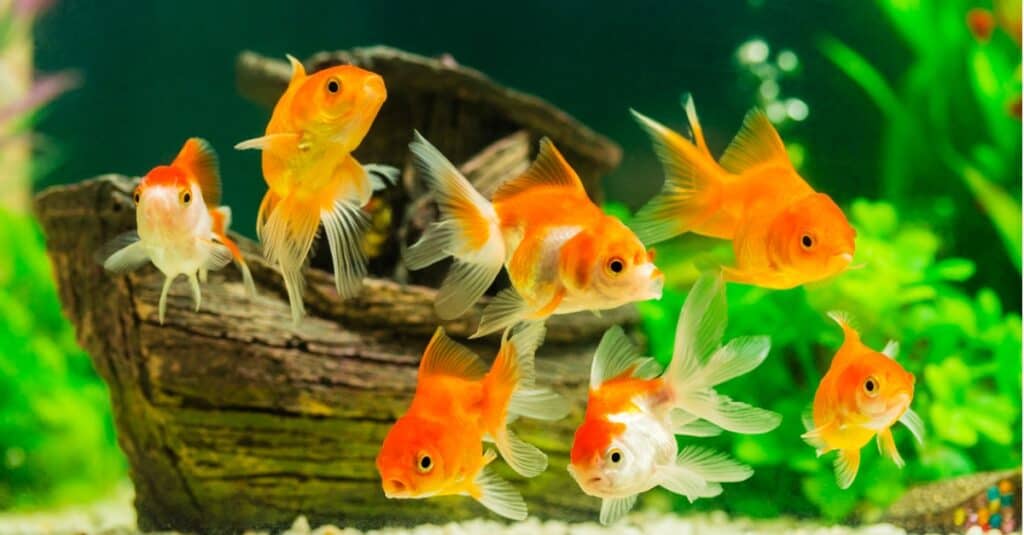
There are likely thousands of feral goldfish in Ontario’s waterways.
©iStock.com/satit_srihin
The same Ottawa news coverage also noted warnings from Carleton biology professor, Steven Cooke: the currently visible adults likely do not represent the full size of the population, since many juveniles may go undetected. There could be many more goldfish present in this region, which is why experts and city officials remain concerned.
St. Albert, Alberta
According to local news stories, city crews in St. Albert attempted to scoop out their feral goldfish and even drained an overrun pond with the hope that winter temperatures would finish the job they started. However, officials said the pond failed to freeze hard enough, and live goldfish were still there afterward, stubbornly prevailing today.
An aquatic invasive species specialist, Kate Wilson warned the city that the fish could potentially wreak havoc in the region, with multiple stormwater systems leading into larger waterways. What begins as a population in a small pond can quickly spiral out of control, as these fish are clearly incredibly difficult to eliminate once they are established.
Regional Municipality of Wood Buffalo, Alberta
Wood Buffalo has goldfish surviving much farther north than many people expected. In Canadian Geographic’s reporting on Alberta’s goldfish problem, officials said roughly 40 goldfish were pulled from a stormwater pond located in this more remote region. It may not sound like very many fish to be concerning, but the number isn’t what’s leaving city leaders and environmentalists concerned.
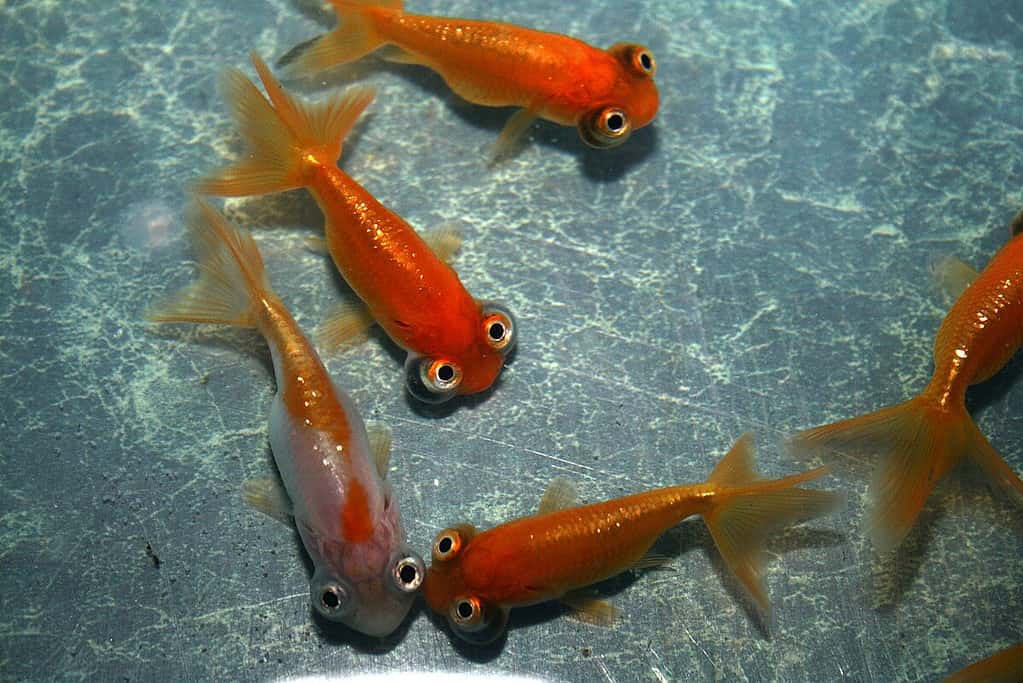
It’s possible for goldfish to survive Canada’s harsh winters, leaving officials stunned.
©Michelle Jo/
Goldfish are obviously breeding and overwintering in northern Alberta, making this issue one that isn’t temporary. These fish are adapting well enough to establish wild populations, even in Canada’s least hospitable environments. And it isn’t only this Alberta location dealing with goldfish, nor is St. Albert the only place having issues. Alberta as a whole is experiencing feral goldfish and has been for years.
In fact, Alberta has more than 100 known wild goldfish locations, mainly in urban stormwater ponds, and new sites continue to be found annually. In the region’s 2017 aquatic invasive species annual report, St. Albert alone removed more than 2,500 pounds of goldfish, which is over 40,000 fish, from two stormwater ponds in just 2017, making them clearly invasive and in need of handling.
Various Locations, British Columbia
A 2019 provincial release on Lost Lake said self-sustaining goldfish populations were already established in the Lower Mainland, identifying this region as having the largest distribution in the entire province. Once these populations are distributed across a heavily populated region full of ideal and connected waterways, control gets much more complicated. Warnings have been issued regarding the release of goldfish in this province, but there are already plenty of established populations to deal with now.
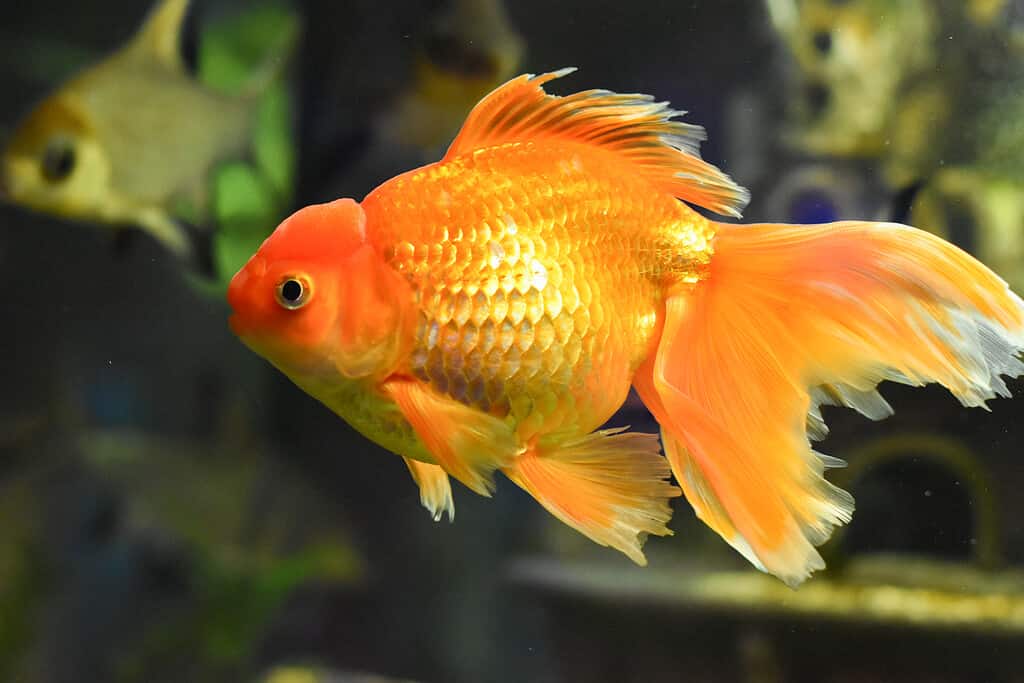
Lakes in Canada have faced closures in order to curb wild goldfish populations.
©Julia Vashurina/Shutterstock.com
There are also thriving feral goldfish populations in the southern Interior and southern Vancouver Island in B.C. Lost Lake near Terrace is another; officials responded with a fishing closure after goldfish were found en masse. In British Columbia’s announcement on the closure, officials said recreational angling at Lost Lake would close to prevent the spread of goldfish, noting that the lake sits close to the Kitsumkalum River and the broader Skeena watershed, locations they do not want these populations entering.
They also said multiple sizes of goldfish were present, suggesting the fish are likely reproducing in the lake, and have been potentially doing so for some time. Once these fish are in a lake with easy watershed connections, wildlife managers have to prevent their spread into a much larger native-fish system, making their threat far greater than a simple pond takeover.
Why Feral Goldfish Are So Concerning
There are many reasons why feral goldfish populations are concerning, with one factor being how easily they multiply. Female goldfish often mature within a year and can spawn up to three times annually. They lay an average of 500 to 1,000 eggs per spawning period, with some specimens producing hundreds of thousands of eggs.
Goldfish also don’t need to be the top predators in a given waterway in order to do real ecological damage. Their feeding behavior increases water turbidity and cuts into food available for native fish, potentially damaging aquatic plants in their feeding processes. Plus, overcrowded populations can alter species composition and add pressure to species that are already at risk, ultimately lowering the biodiversity of an ecosystem.
Goldfish have the potential to kill plant life in a given ecosystem, ultimately removing food for other species.
©Arunee Rodloy/Shutterstock.com
While turbidity may not sound like a huge issue, goldfish root through sediments while feeding, which clouds water and reduces light penetration for all submerged plants, leading to the plants’ potential deaths. Plus, cyanobacteria growth, common in goldfish intestines, may increase algal-bloom risk, potentially altering affected ecosystems beyond repair as these growths spread.
Canada is facing economic repercussions because of these populations as well. For example, recreational fishing contributes about $556 million annually to Canada’s economy, which means any habitat damage and pressures placed on native fish make it all the more difficult to allow anglers to participate in their hobby.
So, what exactly is Canada doing to stop these wild goldfish from taking over, and why are they struggling to keep them in line, besides their obvious abilities to breed faster than the country can keep up with?
Canada’s Efforts to Control Feral Goldfish: Is It Enough?
Part of the problem Canada faces when dealing with wild goldfish is rooted in legalities. Goldfish are not currently listed under the federal Aquatic Invasive Species Regulations and are still not regulated as invasive in many Canadian provinces, even though releasing aquatic species into waters where they are not indigenous is illegal under federal rules. However, it still means that administrations don’t have a uniform, national framework to worth with.
There are also no selective control measures for goldfish once they are established in a given waterway. While netting and angling can help in some waters, they are extremely labor-intensive methods, and pesticide treatment is rarely considered, especially in already struggling ecosystems. Local governments and provincial agencies are often left with few options after the fish have already multiplied and are likely to multiply again before any solutions have been reached.
Prevention and education are Canada’s best bets at stopping their wild goldfish populations now.
©Wirestock/iStock via Getty Images
For now, Canada’s efforts in stopping their feral goldfish populations involve a mix of monitoring, public education, containment, and local removals. Federal authorities continue to monitor any goldfish already found in freshwater systems, and the Invasive Species Centre advocates for pet surrender and rehoming messages instead of releasing fish into the wild.
Educational campaigns and messages are a vital part of the effort, as prevention is key to curbing these growing populations. For example, Alberta launched a “Don’t Let It Loose” campaign in response to the province’s goldfish discoveries. The rest of the country can’t help but chime in: rehome your fish or surrender them, but do not dump them, at all costs.
Invasive Goldfish and Canada’s Future
Goldfish may reside in a gray area of Canadian policy, but their invasiveness is undeniable. They are established in multiple provinces and reproducing fast enough to cause concern, damaging habitats and native fish species. While governments and rules adapt in an attempt to stop these feral fish, there’s only so much time left to stop them from taking over.

Always attempt to rehome your pet goldfish rather than release it into the wild.
©New Africa/Shutterstock.com
The most important thing to understand about these invasive fish is this: never release a pet into a wild ecosystem. The harm it can do may prove unstoppable, even if it’s just a single, innocuous goldfish.