Quick Take
- The otter's most beloved trait nearly drove them to extinction, and it's not the one you'd guess. See the historical threats →
- There are 13 otter species in the world, and one of them hunts prey that would terrify most animals its size. Meet all 13 species →
- A parasite from a common household pet is quietly becoming one of the deadliest threats to a wild otter population. Discover the disease threat →
- Otters tell scientists something critical about a river's health that no water test can capture as clearly. Explore otters as indicators →
World Otter Day is May 25th, and that’s cause to celebrate!
Besides their absolute cuteness, these curious critters are also some of the most entertaining animals you’ll find in the wild. In honor of their special day, let’s get to know these playful creatures, discover the threats they face, and learn why otters are so important to waterway health.
Otter Diversity
Did you know there are 14 different species of otters? They come in all sizes and can be found on every continent except Australia and Antarctica.
North American river otter (Lontra canadensis)
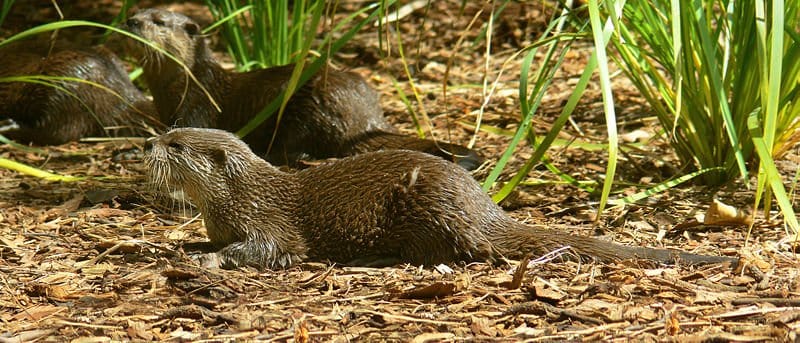
These are the most common otters you’ll see from Alaska to the Gulf Coast of the United States. They live in rivers, lakes, and coastal waterways. These otters are extremely playful and social.
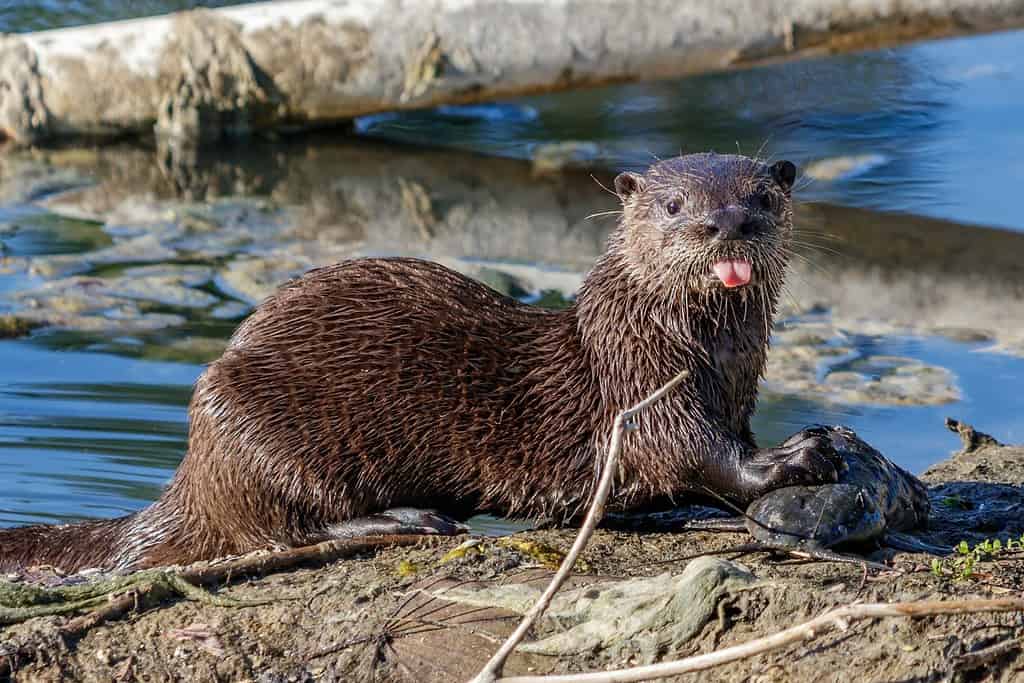
North American river otters are found throughout the United States.
©Microfile.org/Shutterstock.com
Neotropical river otter (Lontra longicaudis)
Found across Mexico and Central America, ranging as far south as Argentina, these medium-sized otters are much like their North American cousins. They also live in most freshwater habitats.
Mesoamerican otter (Lontra annectens)
In 2024, the Mesoamerican otter was classified as a separate species from the neotropical river otter. The new species is found mainly in Central America, with populations extending through Venezuela and Colombia to Ecuador and Peru.
Southern river otter (Lontra provocax)
These otters love the cold rivers of the Andes Mountains and are found exclusively in Chile and Argentina. Sometimes you’ll also see them along each country’s saltwater coastlines.
Marine otter (Lontra felina)
Look along the coastlines of Peru and Chile for these small otters. While they’re part of the same genus as freshwater river otters, this species has adapted to thrive in the saltwater marine habitat.
Eurasian otter (Lutra lutra)
The most widely distributed otter in the world, these freshwater otters are found in rivers, lakes, and along coastlines from Ireland to North Africa. They are shy and prefer to be active at night, making them less observable than some other otter species.
Hairy-nosed otter (Lutra sumatrana)
One of the rarest otters in the world, this species is found only in small areas of Southeast Asia, including southern Thailand, Cambodia, southern Vietnam, Peninsular Malaysia, Sumatra, and Borneo. They are named for the patch of hair on their nose.
Sea otter (Enhydra lutris)
Found in the cold waters of the North Pacific, these otters have the densest fur of any mammal. They often float on their backs with a stone on their chest, which they use to crack open shellfish.
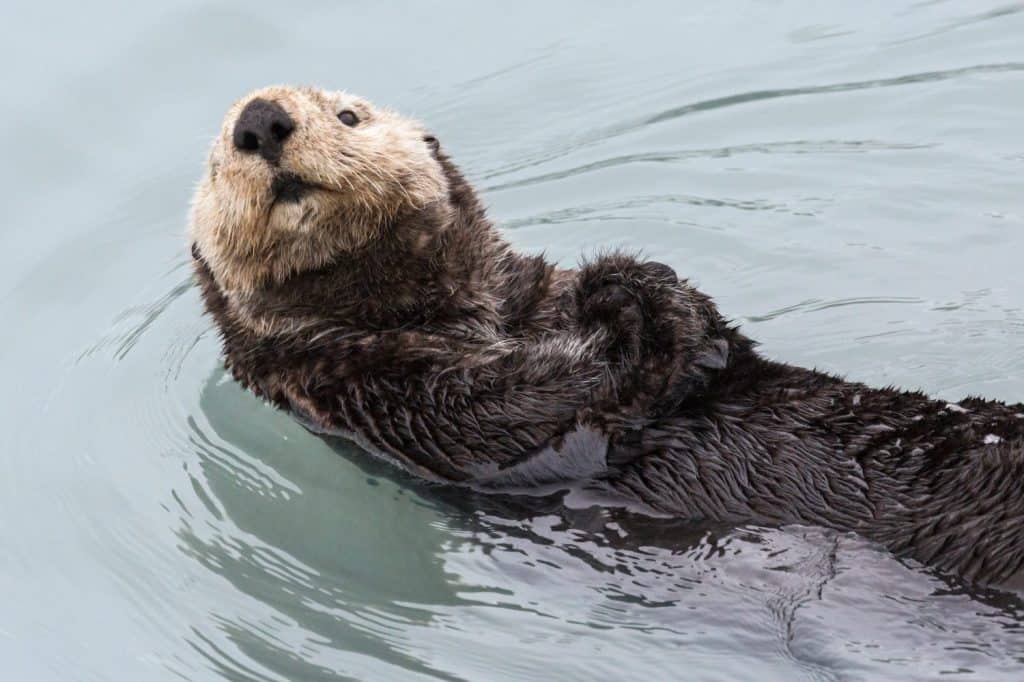
Sea otters love to float on their backs.
©BlueBarronPhoto/Shutterstock.com
Smooth-coated otter (Lutrogale perspicillata)
The largest otter species in Southeast Asia, these otters are often seen in lowland wetlands with other family members. They are among the most social otters.
African clawless otter (Aonyx capensis)
Africa’s largest otter and one of the biggest freshwater otters in the world, it is named for the tiny or sometimes absent claws on its hind feet.
Congo clawless otter (Aonyx congicus)
A close relative of the African clawless otter, this species is found exclusively in the rainforest rivers of the Congo Basin and is smaller than its African counterpart.
Asian small-clawed otter (Aonyx cinereus)
The world’s smallest otter species, found across South and Southeast Asia, inhabits rice paddies, mangroves, and small streams.
Spotted-neck otter (Hydrictis maculicollis)
This species is found throughout much of sub-Saharan Africa, living in large lakes and rivers such as Lake Victoria and Lake Tanganyika. They are fast swimmers and very agile.
Giant otter (Pteronura brasiliensis)
The largest otter in the world, measuring up to six feet from nose to tail, is found in the major waterways of South America. They are apex predators, feeding on fish and small caimans.

Giant otters are apex predators and the largest otter species in the world.
©OSTILL/iStock via Getty Images
A Species Under Threat
Past Threats
The otter’s most defining characteristic, its dense, luxurious, and water-repellent fur, is also its most dangerous trait. Many otter species were hunted to the brink of extinction by trappers who took advantage of fur trades that flourished in each of the otters’ natural habitats.
The sea otter population was nearly decimated by fur trappers in North America during the Pacific Maritime Fur Trade of the 18th and 19th centuries. Between the 1950s and 1970s, trappers nearly wiped out giant otters in South America. North American river otters, Eurasian otters, and spotted-neck otters were also prime targets for trappers.
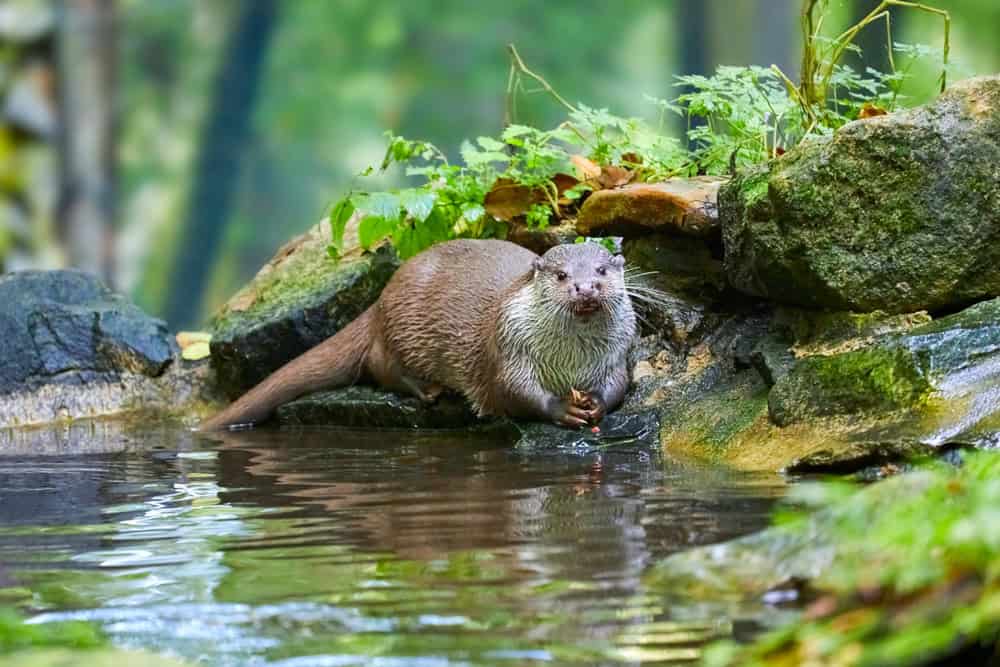
Otters have thick, luxurious fur, making them a prime target for trappers.
©pixel creator/Shutterstock.com
Otters are also considered direct competitors and threats by fishermen and farmers around the world. In the UK, organized otter hunts were a real thing until they were outlawed in 1978. Fishermen around the world regularly killed otters on sight, viewing them as a threat to their fishing catches.
Thankfully, laws and protection agreements were put in place by the late 1970s to protect what remained of dwindling otter populations worldwide. The 1973 CITES agreement was a major factor in helping otter populations recover.
But that doesn’t mean otters no longer face threats.
Current Threats
Habitat loss, pollution, and overfishing all threaten otter populations today. Likewise, growing demand for otters as exotic pets is driving the illegal wildlife trade for Asian small-clawed and smooth-coated otters.
Asian small-clawed otters are a target of the illegal exotic pet trade.
©Benjamint444, CC BY-SA 3.0, via Wikimedia Commons – Original / License
Despite strong protection laws already in place, illegal hunting and poaching continue, especially in places like the Amazon, where fishermen view giant otters as direct competition. In parts of Southeast Asia, otters are prized for their meat and use in traditional medicine.
Otters are also often accidentally caught in the nets and lines of commercial fishing operations. Disease is another threat, especially for sea otters. Toxoplasma gondii, a parasite shed in domestic cat feces, can enter the ocean and is a significant cause of sea otter deaths off the California coast.
Otter Restoration Efforts
With protections in place, otter populations are rebounding. Large populations in one area allow conservation groups to relocate healthy otters to other locations where they once thrived.
One example is Alaska. With its thriving sea otter population, some otters were relocated and reintroduced to British Columbia, Washington, and Oregon—areas where sea otters were once abundant but had disappeared. Sea otter numbers are now increasing in those locations.

Sea otters are one conservation success story.
©Menno Schaefer/Shutterstock.com
North American river otters are another example. Once hunted to extinction in many parts of their natural habitat, more than 4,000 otters were relocated across 21 states between the 1970s and 2000s by conservation groups to reestablish populations that had disappeared. The program was a success, and today healthy otter populations exist in nearly all former habitats.
Why Otters Are Important
Otters are more than just a cute face. They play an important role in keeping aquatic ecosystems healthy. They keep fish and crustacean populations in check, preventing invasive species from overrunning aquatic systems and allowing waterways to maintain the balance needed to sustain other species.
They are also excellent indicators of a water system’s health. Scientists monitor otter populations closely, as the presence or absence of otters signals a robust or failing aquatic environment. When otters are healthy, it’s a sign that the water they live in is in good shape.