
Quick Take
- Angelfish are known for their parental instincts, though what they actually do to their own eggs will surprise you. See the surprising behavior →
- Keeping a single angelfish isn't a compromise. It might actually be the smarter choice for your tank. Discover solo angelfish benefits →
- Before you pick tank mates for your angelfish, there's a hidden risk most beginners don't see coming. Spot the hidden tank mate risk →
- Most aquarists focus on tank length, though angelfish actually demand something different from their habitat entirely. See what angelfish really need →
Native to the slow-moving, heavily vegetated waters of South American river basins, angelfish have thin, leaf-shaped bodies that allow them to navigate tight spaces and avoid predators. Angelfish belong to the cichlid family in the genus Pterophyllum, which includes three recognized wild species: P. scalare, P. altum, and P. leopoldi. However, nearly every angelfish you see in a local pet store is P. scalare, the common angelfish. Angelfish were introduced into the United States as exotic pets in the early 20th century and have become popular additions to commercial and home aquariums. Continue reading to learn how to best care for these graceful freshwater fish.
Freshwater Angelfish Require Space
Angelfish make great first pets for new aquarists. They’re low-maintenance and easy to care for. However, they require a lot of space. The average size of an adult common freshwater angelfish is about 6 inches in length and 8 to 10 inches in height, measured from the tip of the top fin to the tip of the bottom fin.
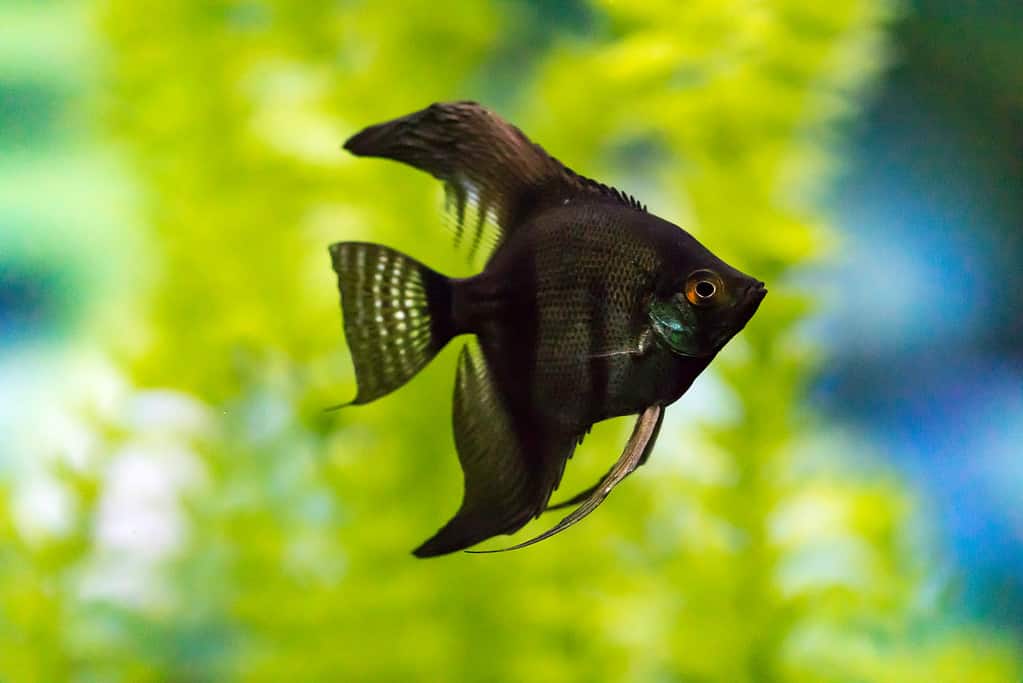
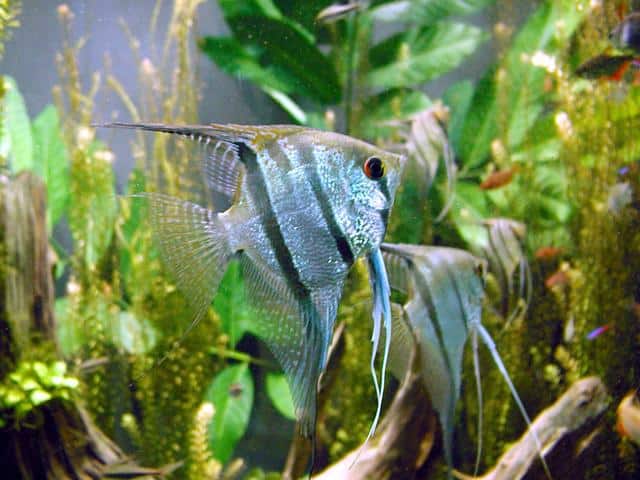
Freshwater angelfish require more vertical space than other aquarium fish.
©Saad315/Shutterstock.com
Freshwater angelfish require a minimum tank size of 30 gallons for a single adult, but a 55-gallon tank or larger is recommended for a pair or small group of angelfish to accommodate their territorial behavior.
Angelfish have tall bodies and long, vertical fins, so they require a tank that is at least 18 to 24 inches tall, rather than one that is long and shallow. Providing an extra-tall aquarium prevents their delicate fins from scraping against the substrate or decorations.
Angelfish Are Opportunistic Feeders
Angelfish will eat anything they can fit inside their mouth. This includes smaller tank mates. They aren’t necessarily aggressive, but they don’t hesitate to eat smaller fish. That’s why aquarists should choose larger community species as tank mates. The best tankmates for angelfish include rainbow fish, medium-sized catfish, rasboras, and larger tetras.
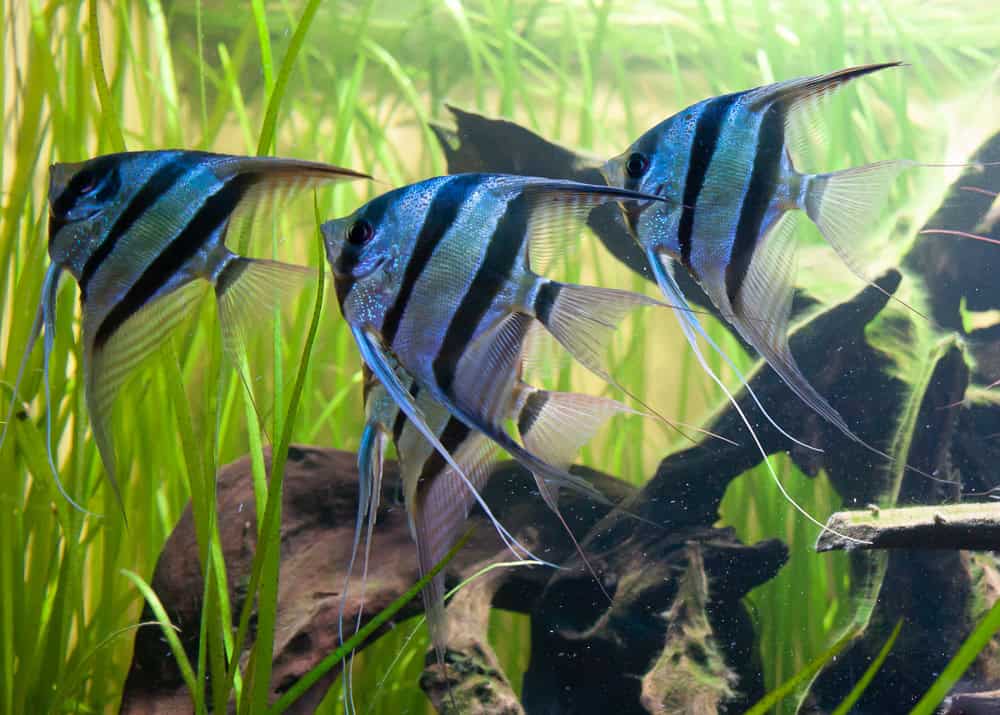
When selecting tank mates for angelfish, bigger is better.
Angelfish are Omnivores
Freshwater angelfish are naturally opportunistic omnivores that thrive on a diverse, high-protein diet. In the wild, their diet consists primarily of small crustaceans, aquatic insects, worms, and small fish, supplemented by occasional grazing on plant matter.
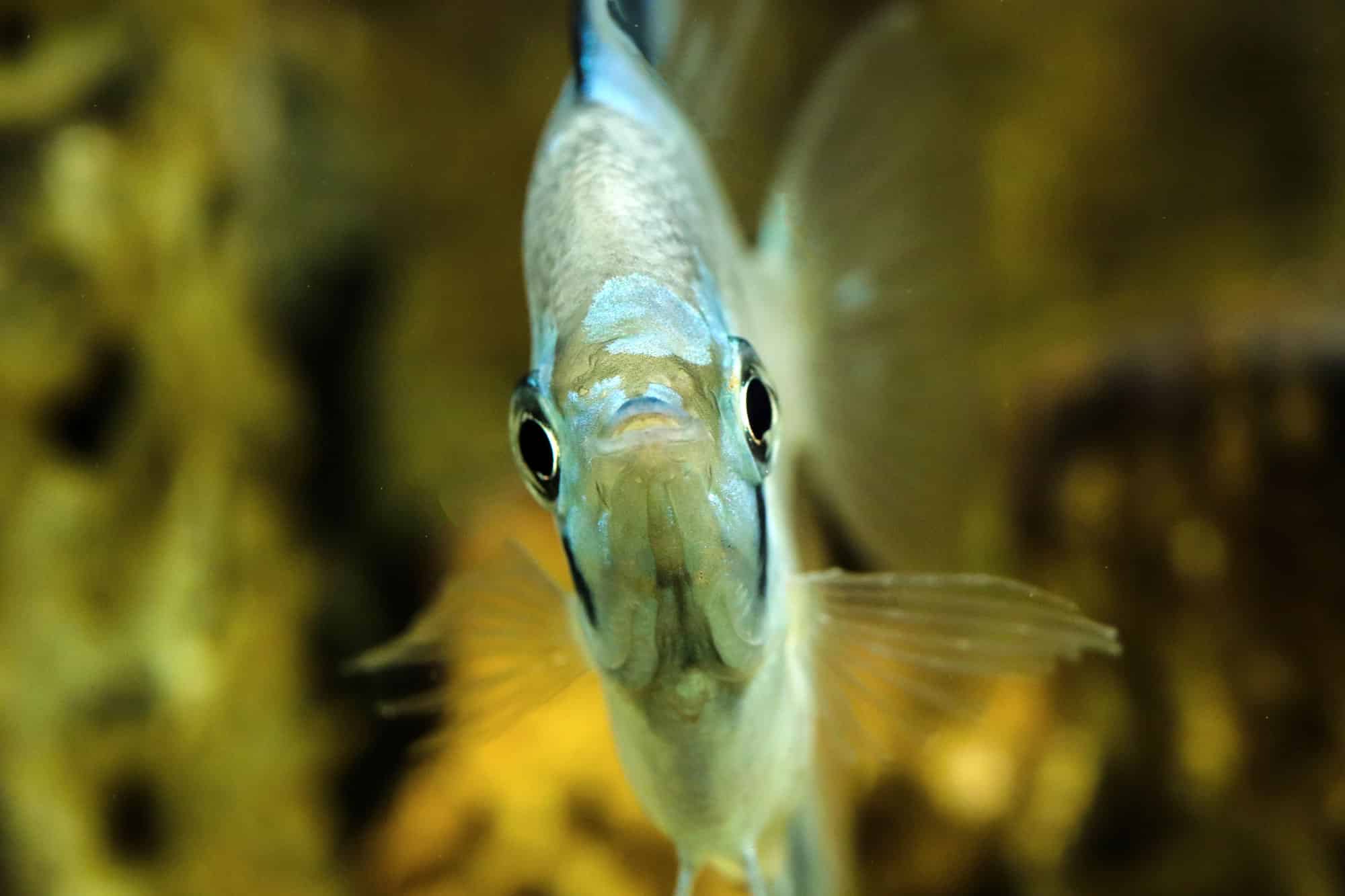
Angelfish are omnivores that eat both animal and plant matter.
©sanches812/ via Getty Images
In a home aquarium, they should be fed a high-quality staple food like protein-rich flake or pellet formulas, which can be supplemented with live, frozen, or freeze-dried treats such as bloodworms or brine shrimp.
Angelfish Parents May Eat Their Own Fry
Freshwater angelfish commonly eat their own eggs and fry. Although cichlids are known for their parental care in the wild, angelfish have lost some of these instincts after generations of commercial breeding. This behavior is especially common among first-time angelfish parents, who often eat their first few clutches of eggs or free-swimming fry.
Breeding Creates Their Unique Color Patterns
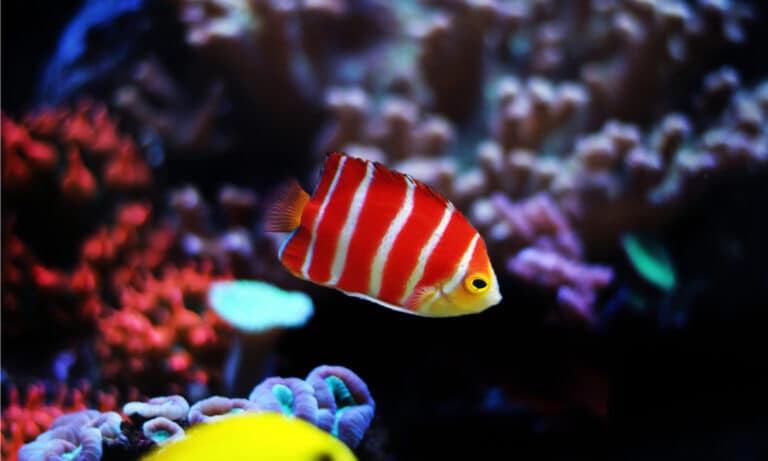
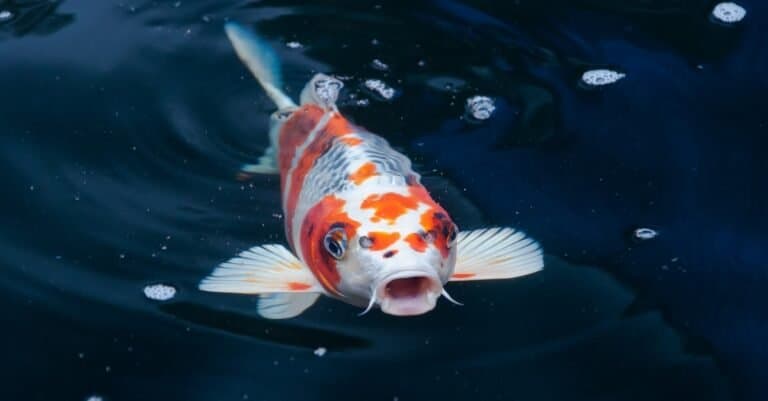
Years of selective breeding have produced many new angelfish colors and patterns. Some of the most popular varieties include koi, marble, peppermint, leopard, albino, zebra, platinum, veil, and silver angelfish.
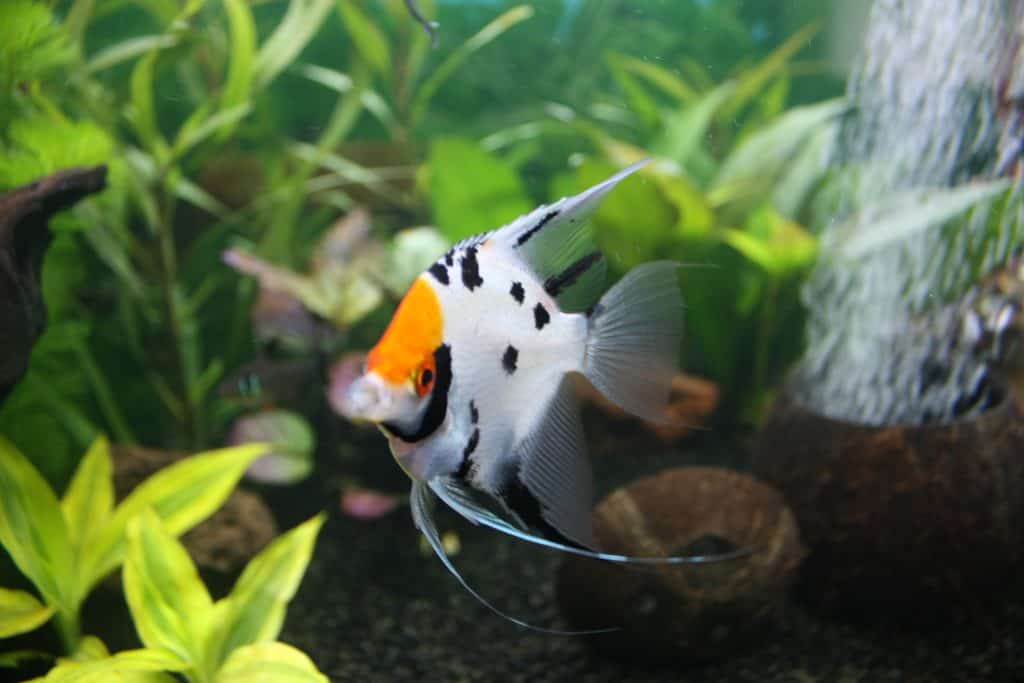
Common freshwater angelfish come in a variety of colors and patterns, such as the koi angelfish in this image.
They Can Live Over a Decade
Angelfish live between 8 and 12 years in the right environment, which includes plenty of room, agreeable tank mates, and routine feeding of quality food.
Angelfish do best with as little stress as possible. One of the best ways to keep things stress-free is by ensuring they have the right water parameters. Angelfish require a specific water temperature (between 78°F and 84°F) and a stable pH between 6.5 and 7.5.
Because angelfish are highly sensitive to waste buildup, it is crucial for their long-term health to keep ammonia and nitrite strictly at 0 ppm and nitrates below 20 ppm through steady filtration and routine partial water changes.
Angelfish Don’t Mind Flying Solo
Angelfish do well alone. While they swim in groups in the wild, they are comfortable living by themselves in an aquarium.
Aquarists can keep a single angelfish as a centerpiece of their tank, and it won’t negatively affect its well-being. A single angelfish is less aggressive because it has no mate to defend and no territory to protect for breeding. When angelfish form pairs, their natural cichlid instincts trigger intense territorial and protective behaviors, which can cause them to chase or attack other fish in the aquarium.
Keeping a single angelfish with a few cory catfish usually works well. Sometimes, you can also keep guppies and bettas with angelfish. However, even a docile angelfish may still try to eat very small fish, such as tiny guppies.