
In 2023, Yosemite was one of the 10 most visited national parks in America. More than 4.2 million visitors travel to California each year to hike, camp, fish, and take in annual events, such as the famed Firefall. With more than 800 miles of trails leading hikers through conifer forests, meadows, and alpine ridges, Yosemite has a little something for everyone. Scenery might be its biggest draw, but the park’s wildlife is a close second.
More than 400 vertebrates call Yosemite home, along with more than 250 species of birds. It’s also home to many amphibian and reptile species, including some that are only native to the park. At least 40 of these species are also protected within Yosemite, giving visitors a rare glimpse into its diverse ecosystem. Whether you’re hiking, camping, or simply visiting Yosemite’s scenic overlooks, here are the animals you might find.
Black Bears
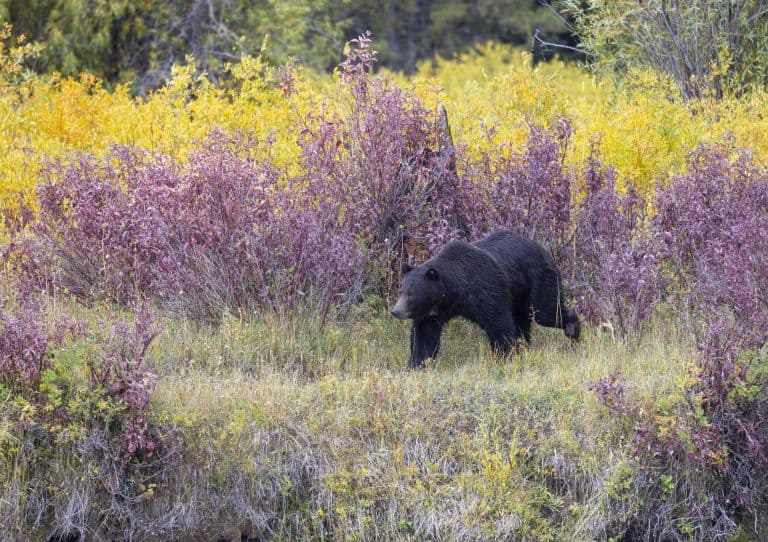
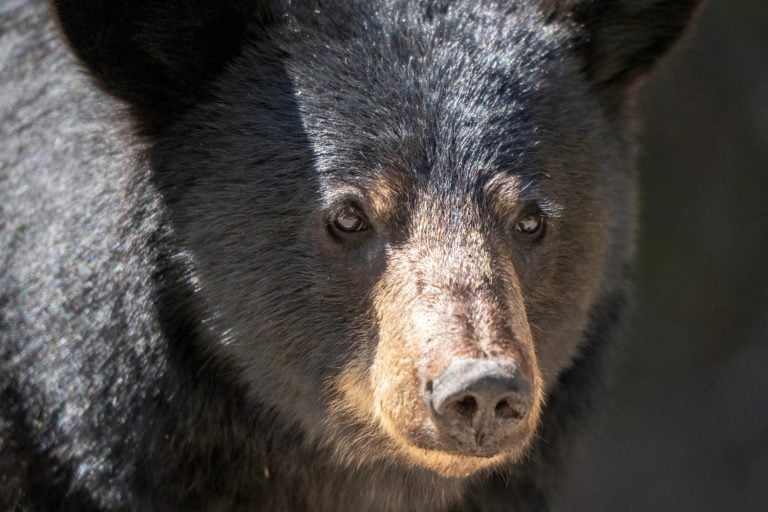
It’s a common misconception that grizzlies still inhabit California. Records show the last one was killed in the 1920s, and they have not relocated. Still, Yosemite remains a home for the American black bear, which thrives among its conifer forests. They’re more adaptable than other bear species and are typically unbothered by humans visiting the park.
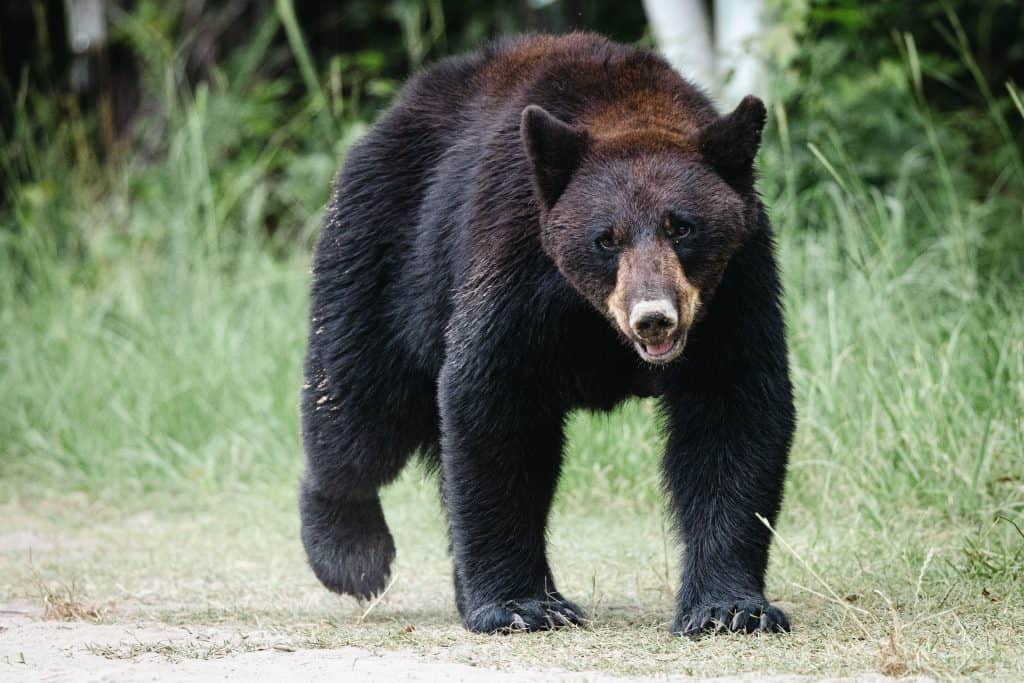
Black bears are often found in Yosemite’s meadows searching for berries.
©Wirestock Creators/Shutterstock.com
Visitors should know that, despite their name, many of Yosemite’s black bears are actually brown. They can weigh more than 600 pounds, which is why some may confuse them with grizzlies. When they’re not in a hibernation state known as torpor, visitors can often find them foraging in Tuolumne Meadows. They also shelter in trees and logs, so Yosemite’s forests are another place hikers might come across a black bear.
Sierra Nevada Bighorn Sheep
Poet John Muir immortalized the legacy of the Sierra Nevada bighorn sheep. He admired them from afar, noting their tremendous ability to weather the harsh conditions of the Sierra Nevada Mountains. Their comeback in Yosemite is a testament to this and is a draw for high-altitude hikers visiting the park.
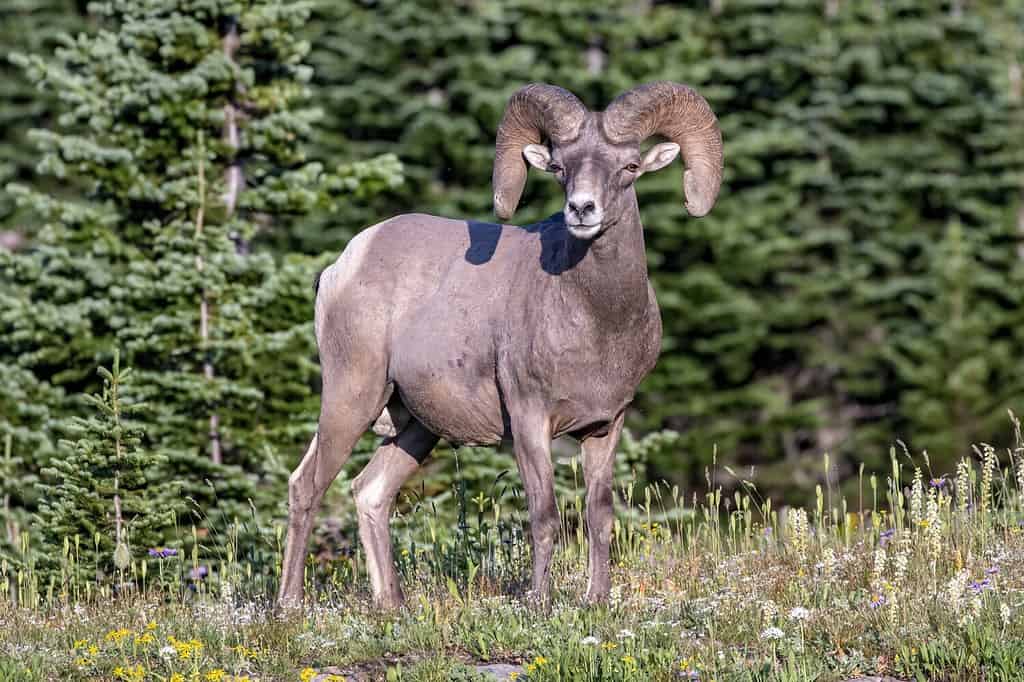
Sierra Nevada bighorn sheep are legendary Yosemite inhabitants.
©Wirestock Creators/Shutterstock.com
During the 19th century, disease from domesticated sheep threatened to wipe out Yosemite’s native bighorn sheep. Conservation efforts by the park relocated 27 sheep, known as the Yosemite Herd. By the 1990s, 125 sheep inhabited the alpine zone. Today, it’s estimated that there are between 380 and 400 throughout the Sierra Nevadas. Experienced hikers who take on Yosemite’s alpine trails can see them jumping between rocky crags. It’s one of the most iconic wildlife sightings to have in the park.
Mule Deer
You might expect to find white-tailed deer in a national park, but Yosemite is also home to another. Mule deer are identified by their fuzzy faces and the black spots on the tips of their tails. These deer are highly adaptable and forage the forest floor for foliage, berries, and bark. While white-tailed deer are relatively docile and skittish, visitors should be cautious around mule deer.

Mule deer can be aggressive during mating season.
©John Boland/Shutterstock.com
According to the National Park Service, more people are injured by deer than by black bears or any other apex predator in the park. At least one death has been attributed to human and deer interactions, and visitors should remember that deer are wild animals.
Mountain Lions
Mountain lions are one of the least-sighted animals in Yosemite. They avoid humans and are elusive, typically active during dawn or dusk. Sightings by hikers are rare, but visitors may see them in rural parts of the park while hunting down prey.
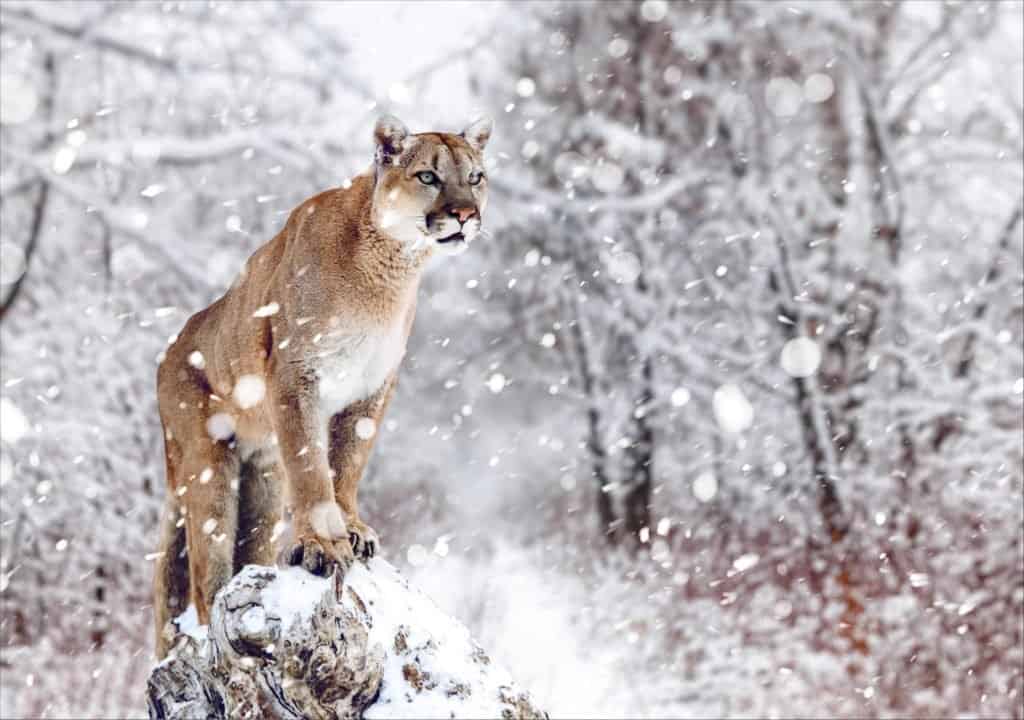
Mountain lions are elusive in Yosemite National Park, but prey on its small mammals.
©Unknown/Shutterstock.com
Mountain lions, also known as cougars or panthers, are the only big cat species inhabiting Yosemite National Park. They’re known to prowl the park’s alpine zones and occasionally forage in large, remote meadows. Campers are more likely to hear or observe a mountain lion because of its nighttime preference for hunting. Thankfully, they’re largely uninterested in humans and will typically continue on their way if left undisturbed. If you do run into a mountain lion, the best practice is to avoid running, make yourself look as big as possible, maintain eye contact, and make loud noises.
Pacific Fisher
The Pacific fisher is a crucial part of Yosemite’s ecosystem. Sadly, their presence in the Sierra Nevadas is one of only two places they still inhabit. They were hunted for pelts during the 19th century, which led to the rapid decline of the species. In the 1940s, forest fires, logging, and deforestation continued to lower the population. The species struggled for some time after, as invasive bark beetles ate away at the trees that Pacific fishers need for shelter.
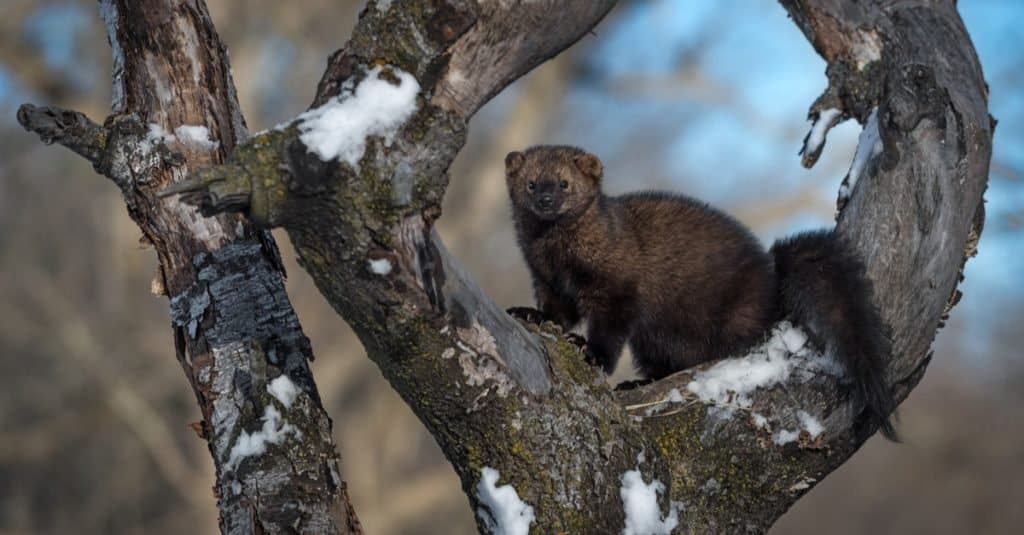
Fisher cats are tree-dwelling carnivores.
©Holly Kuchera/Shutterstock.com
Today, Pacific fishers are found only in the Southern Sierra Nevada, having disappeared from much of their former range in the central and northern Sierra. These harsh conditions have caused the remaining population to evolve, making them a genetically unique species. They are protected within the park, which strives to conserve and help the Pacific fisher flourish. Fishers are tree-dwelling mammals, so sightings are infrequent.
Sierra Nevada Red Fox
The Sierra Nevada red fox is an ancient animal native to the mountains. Its genetics trace back to the Ice Age, which makes it one of Yosemite’s most unique species. It was thought extinct from Yosemite until 2014, when trail cam footage surfaced of the fox traversing the snowy landscape.
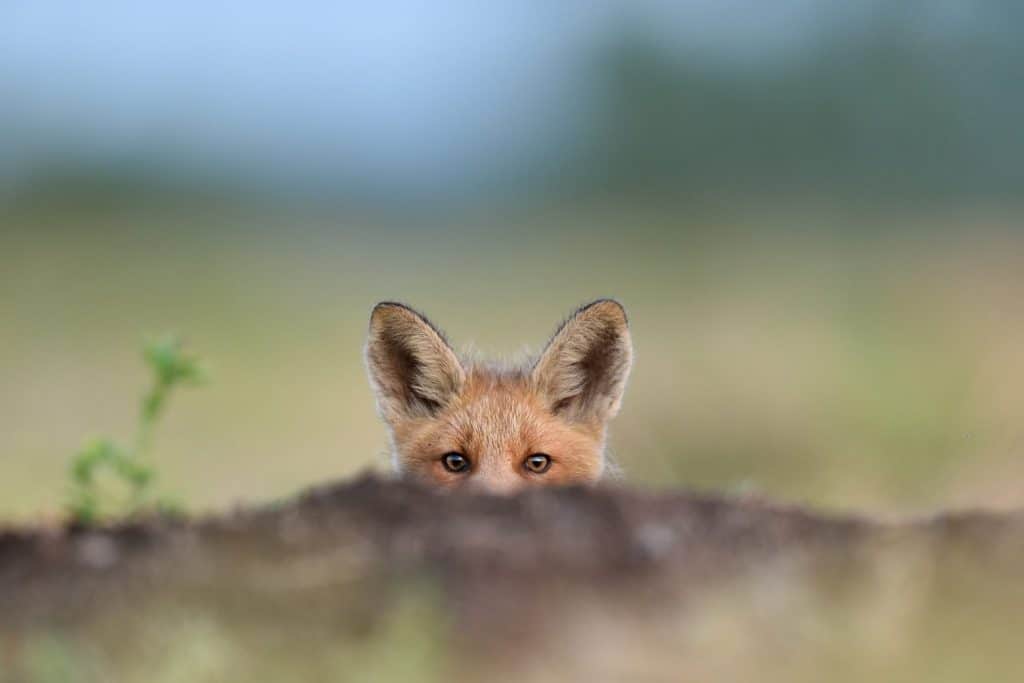
The Sierra Nevada red fox differs slightly from the common red fox.
©Erik Mandre/Shutterstock.com
This legendary fox is highly elusive and rarely seen by visitors. Its thick fur is indicative of the conditions in which it thrives, high above in the alpine wilderness. Research is ongoing to learn more about this Yosemite resident and its history in the Sierra Nevada. Visitors who are lucky enough to see the Sierra Nevada red fox witness a piece of living history.
Bats
Yosemite National Park is a haven for bats, with 17 recognized species that inhabit it. The park’s sequoia groves are to thank for this. They serve as shelter for the bats, who take refuge in their large canopies. The complete list of Yosemite’s bat population includes:
- Little brown bat (Myotis lucifugus)
- Yuma myotis (Myotis yumanensis)
- Long-eared myotis (Myotis evotis)
- Fringed myotis (Myotis thysanodes)
- Long-legged myotis (Myotis volans)
- California myotis (Myotis californicus)
- Small-footed myotis (Myotis ciliolabrum)
- Silver-haired bat (Lasionycteris noctivagans)
- Western pipistrelle (Parastrellus hesperus)
- Big brown bat (Eptesicus fuscus)
- Western red bat (Lasiurus blossevillii)
- Hoary bat (Lasiurus cinereus)
- Spotted bat (Euderma maculatum)
- Townsend’s big-eared bat (Corynorhinus townsendii)
- Pallid bat (Antrozous pallidus)
- Mexican free-tailed bat (Tadarida brasiliensis)
- Western mastiff bat (Eumops perotis)
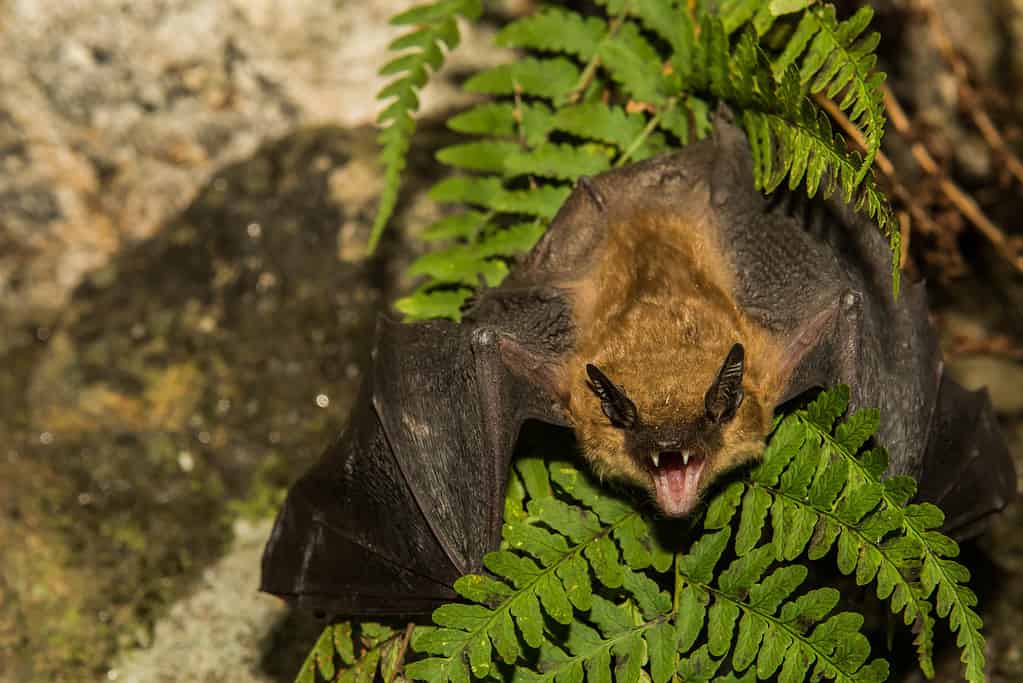
Big brown bats take shelter in the large canopies of Sierra Nevada sequoia trees.
©JasonOndreicka/iStock via Getty Images
Several of these, such as the spotted bat, Western red bat, Townsend’s big-eared bat, pallid bat, and Western mastiff bat, are California Species of Special Concern. Visitors are most likely to see the big brown bat at dawn and dusk.
Rodents
Yosemite National Park is home to a surprising number of rodent species. Visitors will find common rodents, such as the Western gray squirrel, field mice, and chipmunks. However, hikers may also come across gophers (or, sometimes, just their ground holes), as well as several unique species of squirrels.
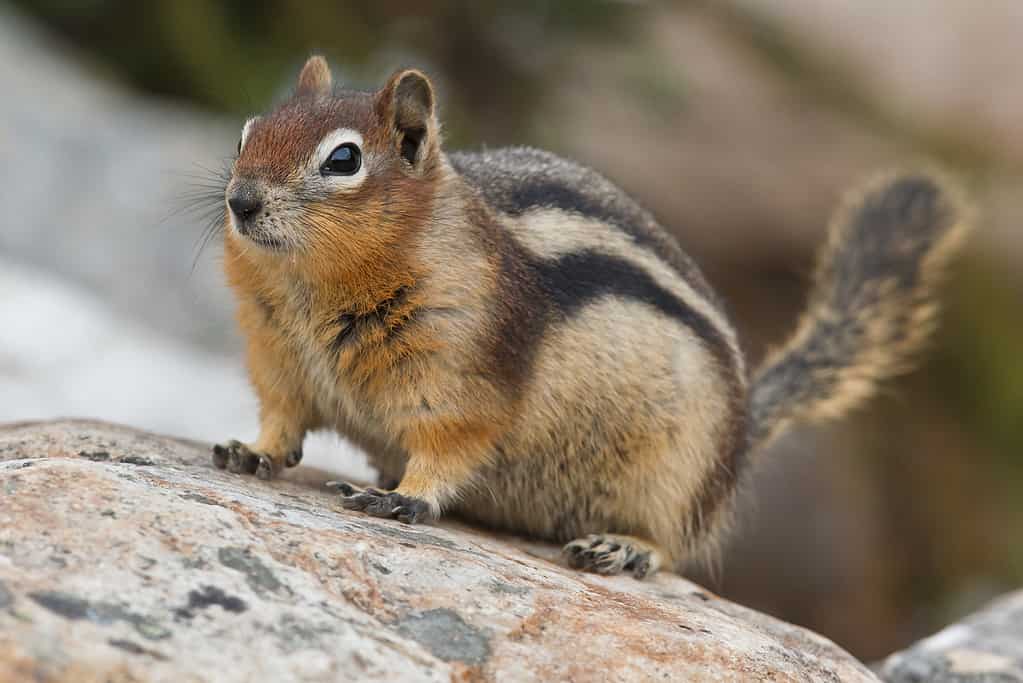
The golden-mantled ground squirrel is often mistaken for a chipmunk.
©Rafa Irusta/Shutterstock.com
The Douglas squirrel, also known as the chickaree, is a frequent visitor to meadows and conifer forests. The golden-mantled squirrel is often mistaken for a chipmunk due to its coloring, and the California ground squirrel is the most commonly sighted. Yellow-bellied marmots are also found in the park’s fields and meadows, and are closely related to woodchucks.
Lizards
Visitors keen on spotting Yosemite’s reptiles will be happy to know there’s a healthy population of lizards to observe. Some are elusive, such as the coast horned lizard, which has only been seen a handful of times by hikers. Others, like the Sierra fence lizard, the San Diego lizard, and the Sierra alligator lizard, are commonly seen.
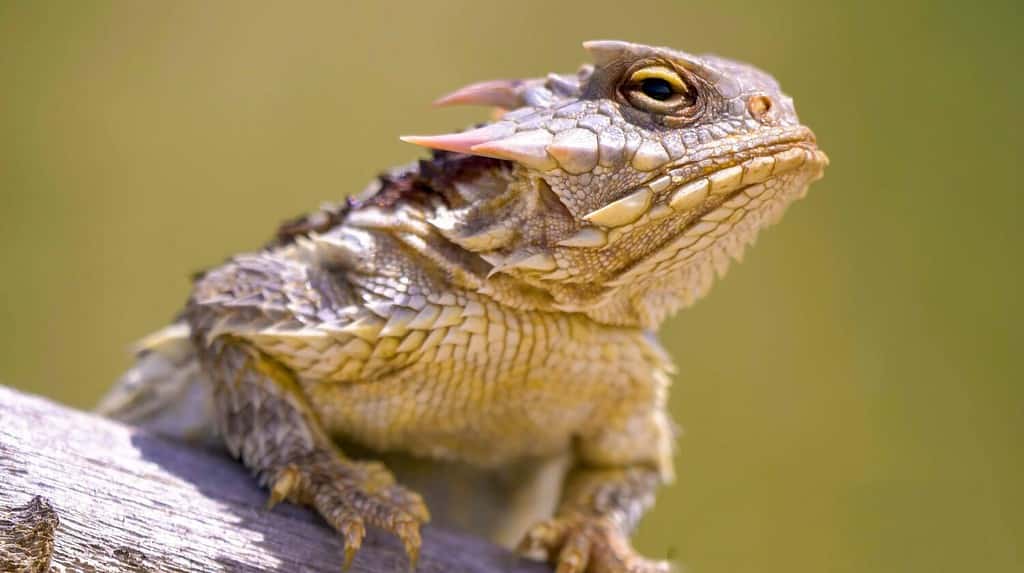
Coast horned lizard sightings are scarce in Yosemite.
©Swaroop Pixs/Shutterstock.com
Hikers typically find these lizards hidden under rocks, sunbathing on granite slabs, or hanging out near waterways. They’re quick and can be skittish, so slow movements and patience are the best practice. Hikers may even hear lizards before seeing them, as they’re known to run through dry underbrush when they feel threatened.
Turtles
Yosemite is one big world for the park’s only turtle species. The Western pond turtle is the only native turtle species found in Yosemite National Park. It inhabits the park’s ponds, lakes, and wetlands. Hikers may occasionally see them in the Tuolumne River, but they live in waterways below the 6,500-foot mark. Currently, the Western pond turtle is listed as a California Species of Special Concern.
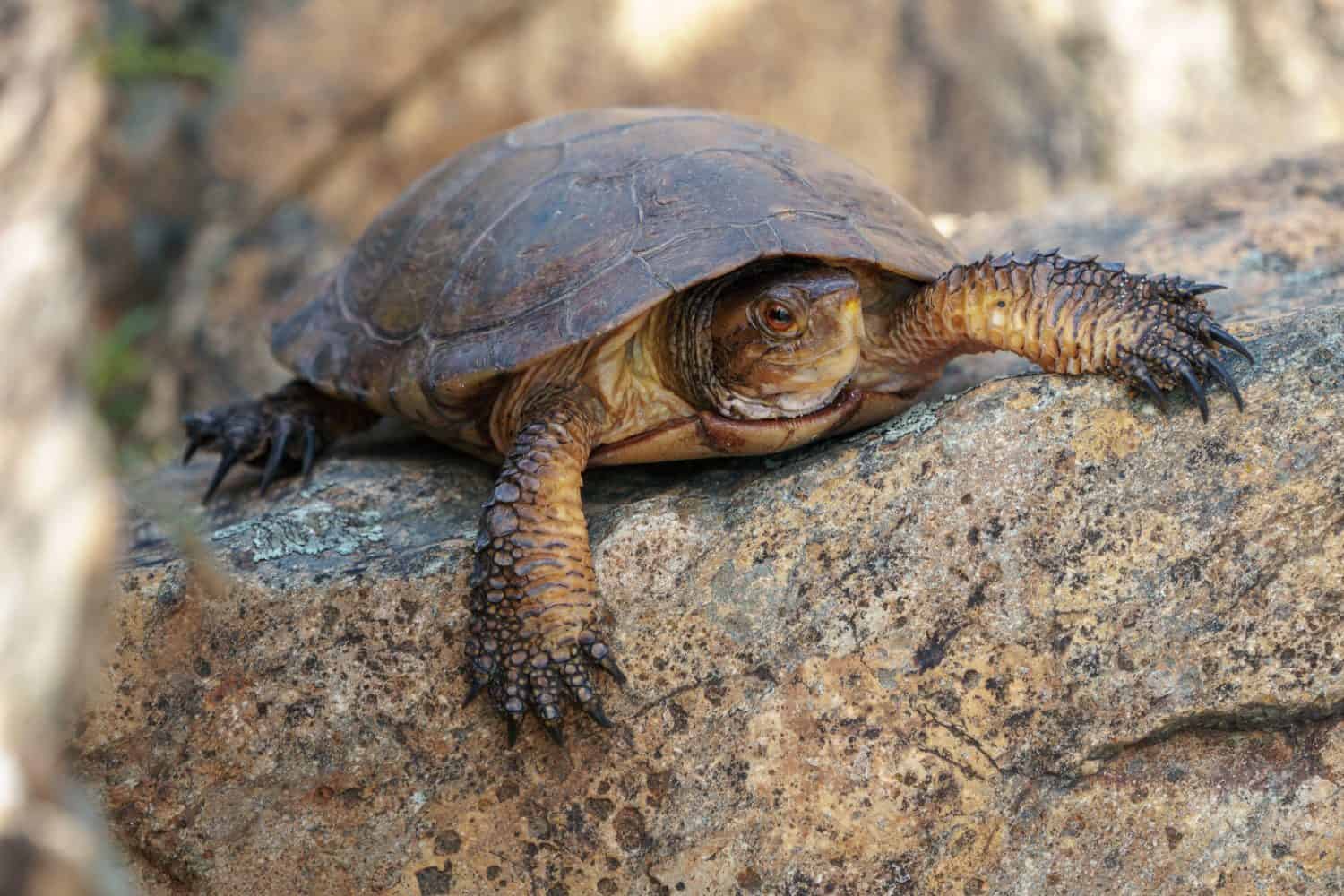
Western pond turtles are protected in Yosemite.
©RelentlessImages/Shutterstock.com
Deforestation and overhunting have threatened the survival of the turtle, which is now protected within Yosemite. Another significant problem facing the species is the presence of invasive bullfrogs in the park. These bullfrogs eat turtle hatchlings and have previously devastated entire generations of Western pond turtles.
Snakes
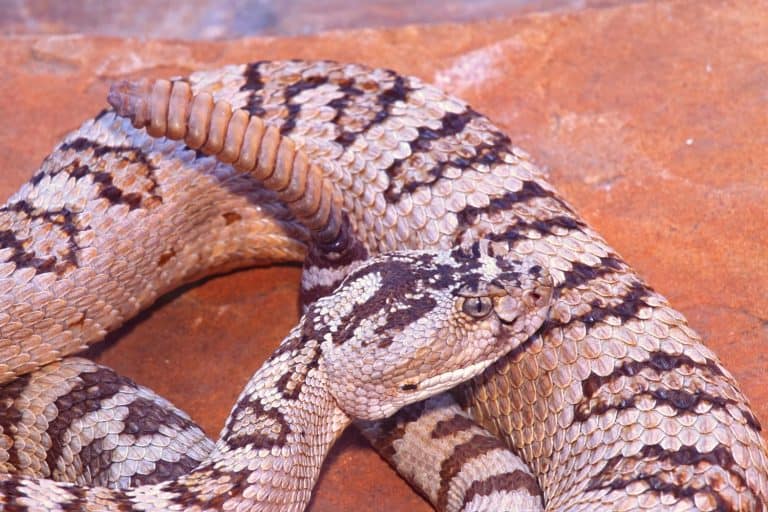
Yosemite National Park is home to 13 species of snakes. The Northern Pacific rattlesnake is the only venomous inhabitant of the park. This snake is preyed upon by the Sierra mountain kingsnake, which is a large, but relatively docile, snake. Both are crucial to the park’s food chain, as one keeps the population of the other in check.
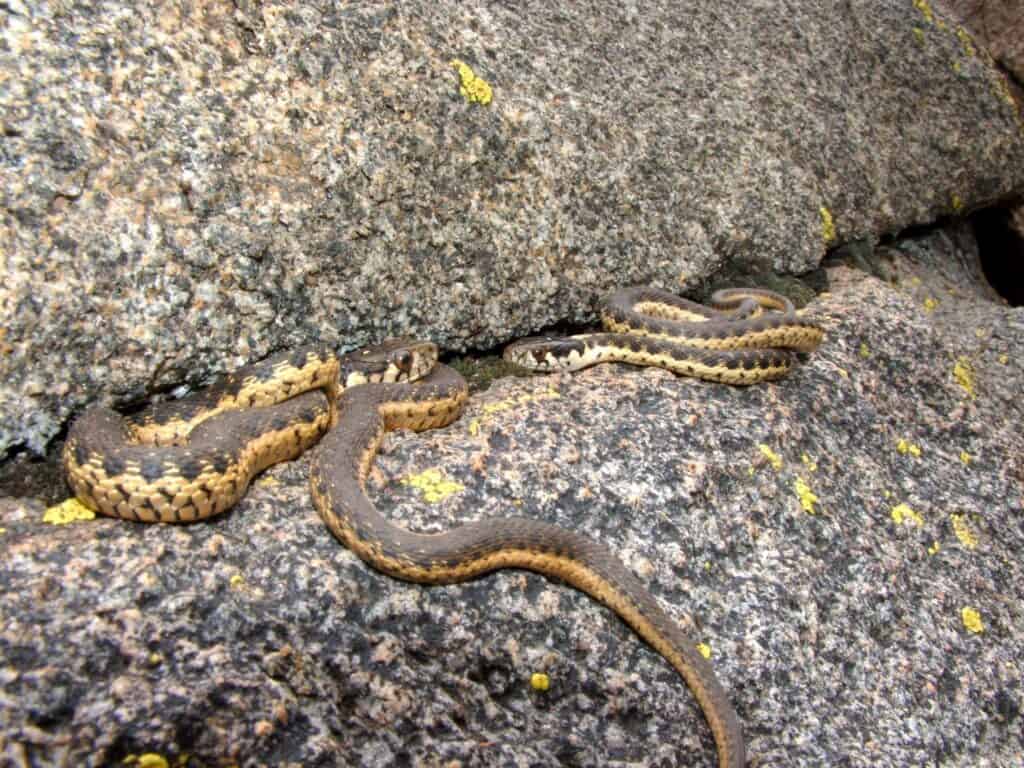
Sierra garter snakes spend much of their lives in water.
©Matt Jeppson/Shutterstock.com
However, garter snakes are the most commonly seen in the park. Yosemite is home to three different types of garter snakes, which are typically found near the park’s waterways. Most snakes in the park feed on small animals such as frogs and fish, so visitors are unlikely to see them outside of hikes that go past ponds and lakes.
Amphibians
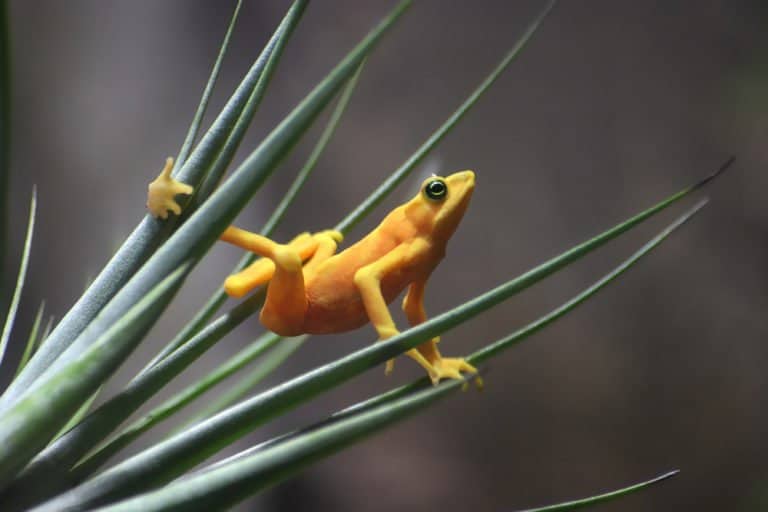
A total of 11 types of amphibians inhabit Yosemite’s lakes and ponds. Few species can survive the harsh winters in the Sierra Nevadas, but these animals have unique adaptations allowing them to do so. The Sierra Nevada yellow-legged frog, Yosemite toad, and Mount Lyell salamander are endemic to Yosemite National Park.
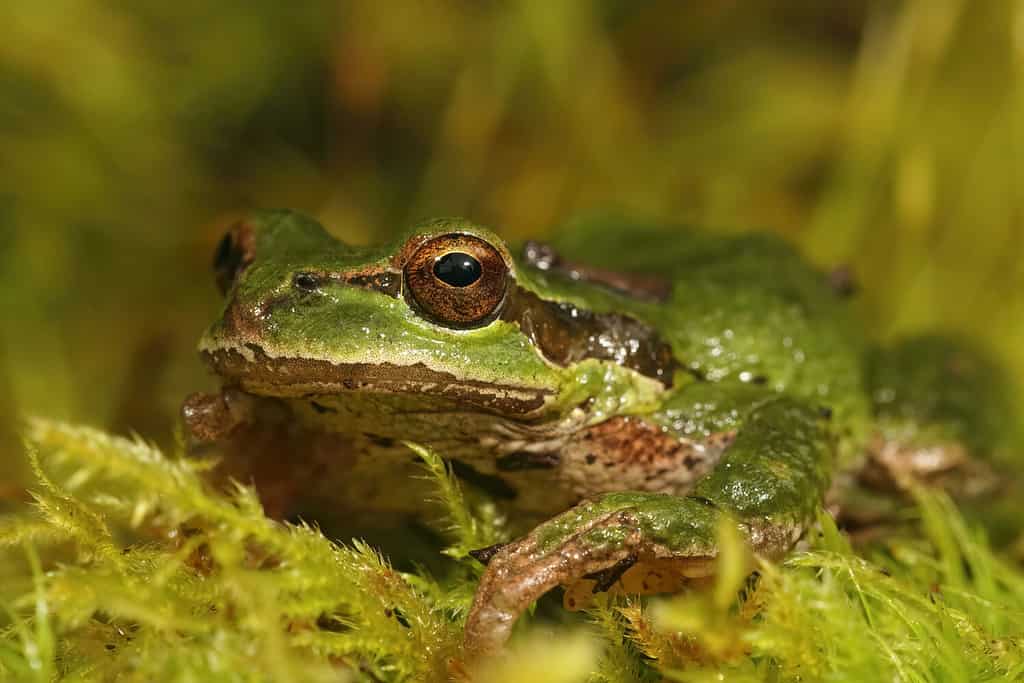
Like most frogs, the Pacific treefrog is quite vocal.
©Oakland Images/Shutterstock.com
Aside from these, visitors can also find the California red-legged frog, the invasive, nonnative bullfrog, and the Pacific treefrog. While these all inhabit the park’s waterways, the Sierra newt is another native Yosemite amphibian, but it is primarily a land-dweller. Hikers sometimes find the Sierra newt crossing trails on its way to ponds or lakes.
Fish
Yosemite National Park’s lowlands are home to a variety of lake fish. The Merced River and El Portal are home to the California roach, rainbow trout, Sacramento pikeminnow, hardhead, and riffle sculpin. These fish are relegated to the lower lakes because waterfalls prevent them from swimming upstream.
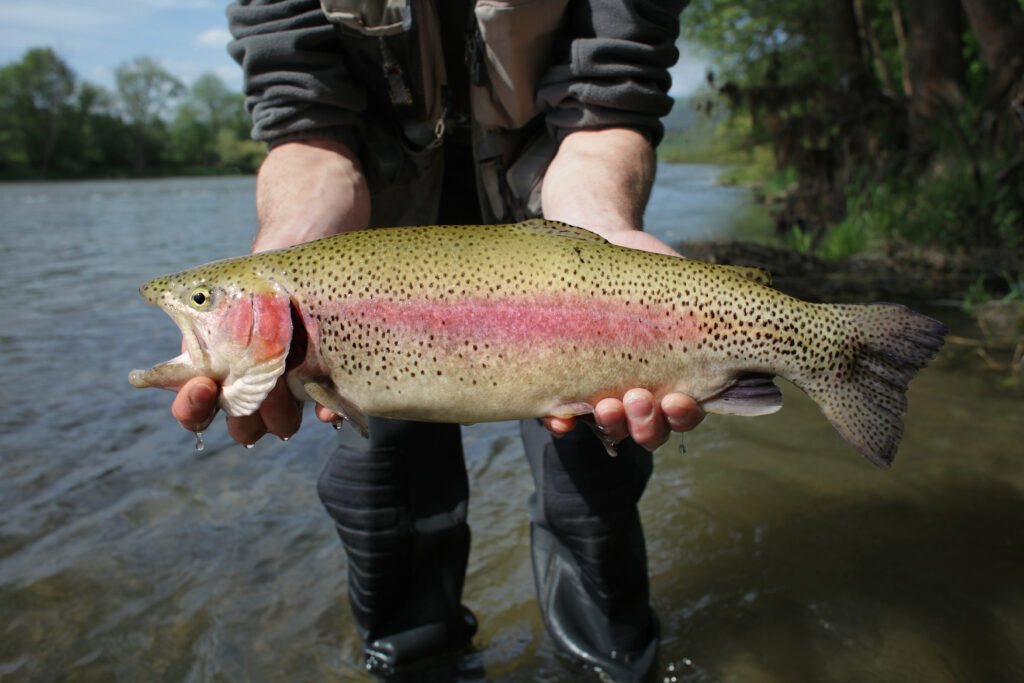
Trout are an invasive species in Yosemite’s lakes.
©pictoplay/Shutterstock.com
Those visiting the park to fish will likely catch trout, which are a nonnative and invasive species. Yosemite National Park is actively removing nonnative trout from about 10% of its lakes as part of an ongoing restoration project. An invasive species like this reduces the food source for native species and poses a threat to smaller fish.
Birds
To date, 262 species of birds have been recorded in Yosemite National Park. This number is staggering, but thrilling for birders looking to observe a variety of native birds. The park is home to unique species such as the American dipper, which dives beneath icy water when hunting prey. The Western tanger is another exciting bird for birders thanks to its vibrant feathers and bold plumage.
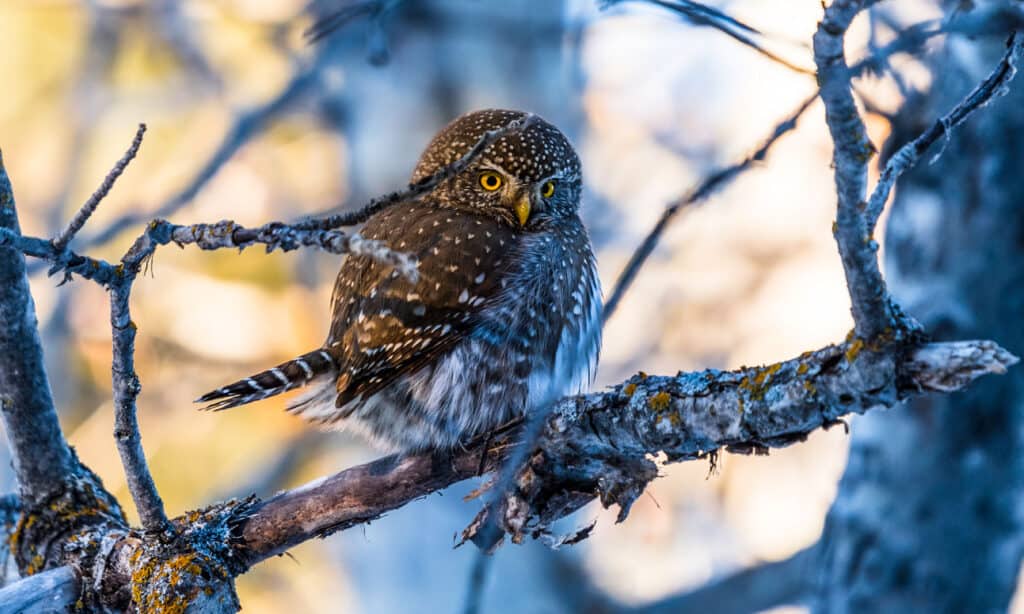
The pygmy owl has plumage that camouflages it against the trees in the Sierras.
©Jordan Feeg/Shutterstock.com
Some predatory birds, such as the pygmy owl, California spotted owl, and peregrine falcon, also inhabit the park. These are typically found at higher elevations and can sometimes be found resting in trees. Yosemite National Park is a hotspot for birders, and the Yosemite Conservancy leads regular bird outings. For solo birders, the National Park Service recommends bringing a pair of binoculars and a guidebook for quick identification.