
Have you herd? Groups of animals often have unique, and sometimes funny, names. You’re probably familiar with the collective nouns for common backyard and barnyard animals, such as flocks of birds and herds of cows. However, there are many more names to discover.
One reason some of the names seem odd today is they originated from medieval European hunting traditions. The 15th-century The Book of Saint Albans, named animal groups. Other names refer to behavioral observations. Check out our alphabetical list of collective nouns to learn where these nouns originated from and how many you know.
Apes: A Shrewdness of Apes
When the name was coined in 1486, “shrewdness” referred to a sense of mischievousness attributed to apes.
Badgers: A Cete of Badgers
The word “cete” may originate from the Latin word “coetus,” meaning assembly.
Bats: A Colony, Cloud, Cauldron, or Camp of Bats
When in flight, a large group of bats does resemble a dark cloud. However, our favorite is “cauldron,” which fits bats’ creepy but cool reputation.
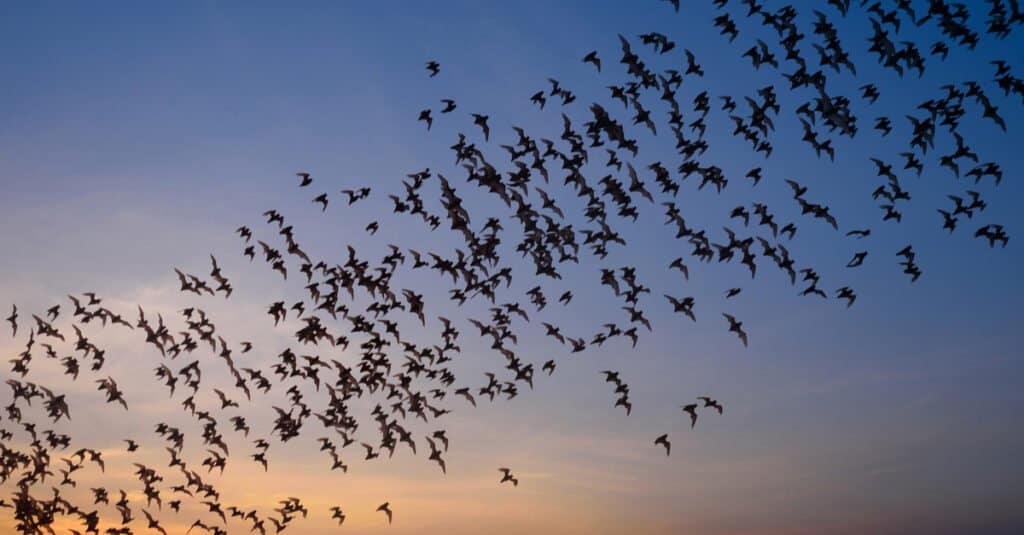
A group of bats goes by many different names, such as colony, cloud, cauldron, or camp.
©Photoongraphy/Shutterstock.com
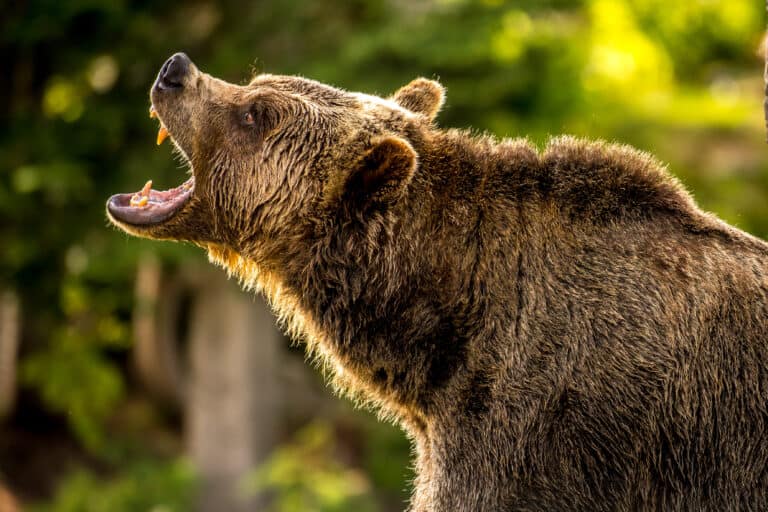
Bears: A Sloth or Sleuth of Bears
“Sloth” means slow in Middle English, which could refer to medieval hunters’ perceptions of bears. The word “sleuth” may be due to the way bears always seem to be investigating something.
Bees: A Swarm of Bees
The word “swarm” comes from the Old English word “swearm,” which refers to a mass of bees moving together.
Bittern: A Sedge of Bitterns
A bittern is a small bird in the heron family, and sedges are the marsh grasses in which it hunts.
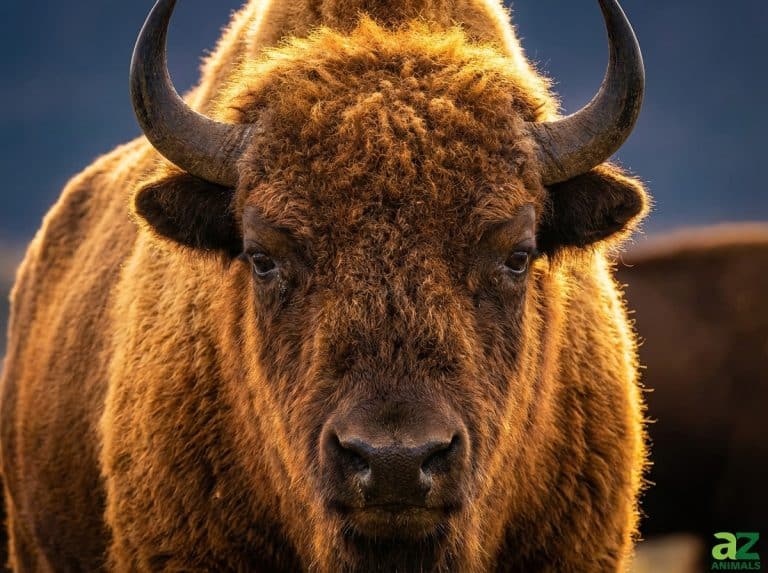
Buffalo: A Gang or Obstinacy of Buffalo
When a herd of buffalo crosses the road in one of North America’s national parks, they take their time, undeterred by cars with honking horns. This makes “obstinacy,” meaning stubbornness, a fitting term.
Buzzard: A Wake of Buzzards
A ‘wake’ is a funeral tradition involving a gathering of friends and family members of the deceased, typically held before the funeral. Vultures are scavengers, well-known for their attraction to corpses.
Bobolink: A Chain of Bobolinks
The bobolink is a small North American songbird. Its name is an onomatopoeia of its call, and its collective noun is likely a play on the “link” in its name.
Camels: A Caravan of Camels
These sturdy mammals have often served as pack animals in desert caravans.
Cats: A Clowder, Pounce, or Glaring of Cats
“Clowder” may originate from the Middle English word “clotter,” meaning to huddle together. The words “pounce” and “glaring” are likely derived from observations of cats’ behavior.
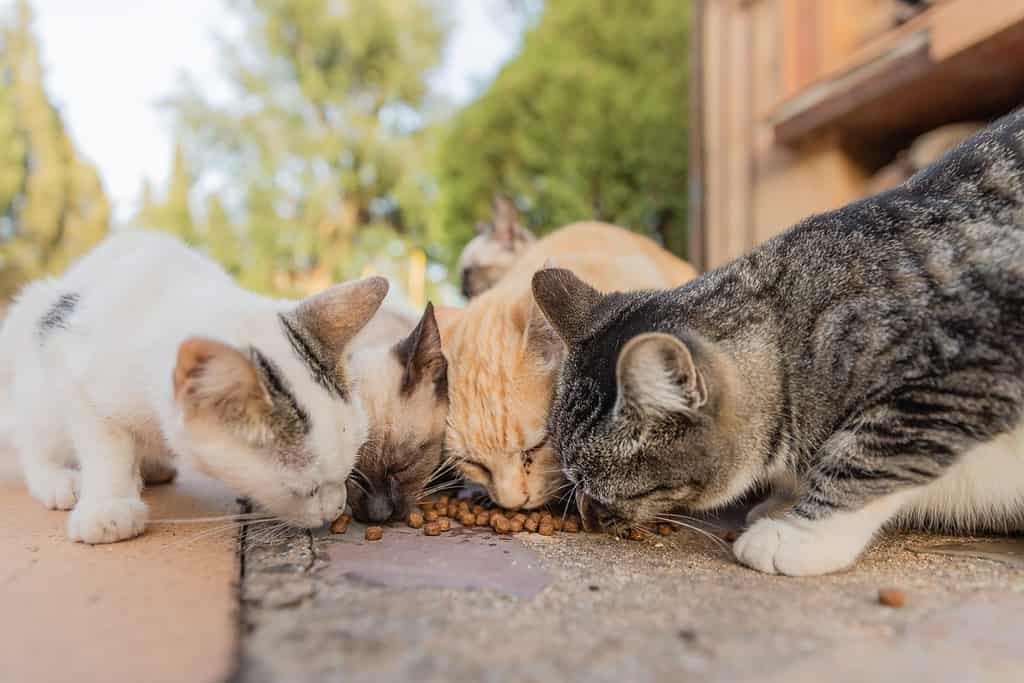
A group of cats is called a clowder.
©Natalia de la Rubia/Shutterstock.com
Cobras: A Quiver of Cobras
The origin of “quiver” refers to a pouch used to carry arrows for hunting or warfare.
Crocodiles: A Bask of Crocodiles
“Bask” likely refers to the crocodile’s habit of basking in the sun on riverbanks.
Crows: A Murder or Horde of Crows
The term “murder” has its origins in superstitions and folklore. Some superstitions held that crows were bad omens. Crows are also scavengers, so they are often associated with death.
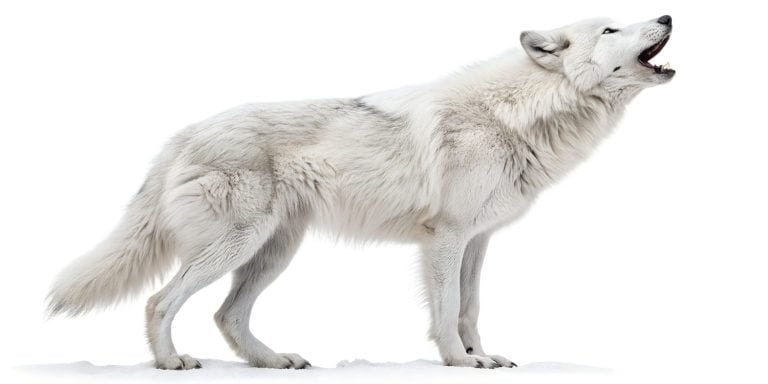
Dogs: A Pack of Dogs
The origin of “pack” is likely from an early Germanic word “pak” or Middle Dutch “pac,” both of which essentially means a bundle.
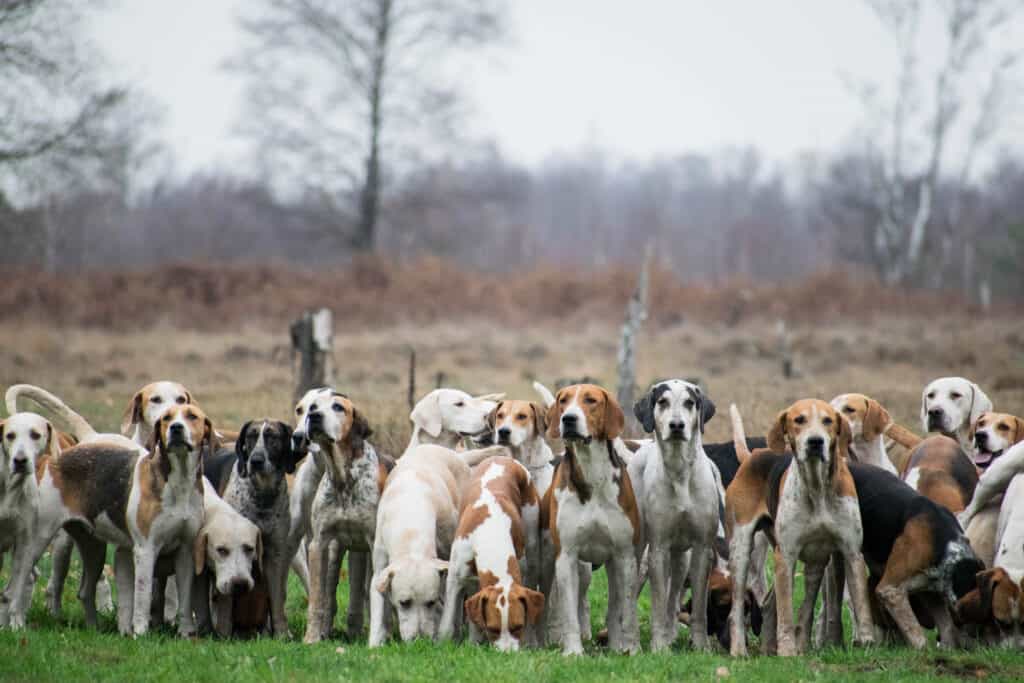
Whether you’re referring to wolves or your domesticated pups at home, a group of dogs is called a pack.
©Marjolein Hameleers/Shutterstock.com
Donkeys: A Drove or Pace of Donkeys
These terms are possibly related to “driving” the animals for farm work and the slow, steady pace they keep.
Eagles: A Convocation of Eagles
The word “convocation” refers to a large, formal gathering for a specific purpose.
Elephants: A Herd, Memory, or Parade of Elephants
A “parade” may refer to the way elephants walk in a line, while “memory” no doubt stems from the notion that “elephants never forget.”
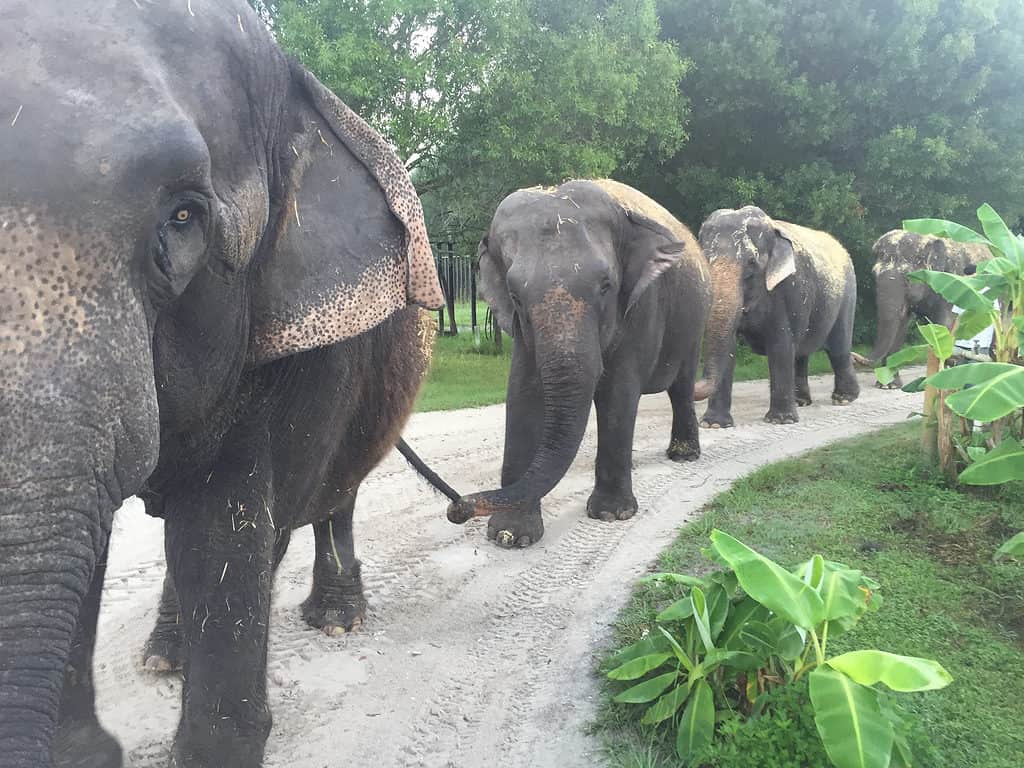
A group of elephants is sometimes referred to as a parade.
©ElephantErik/Shutterstock.com
Ferrets: A Business of Ferrets
A group of ferrets is called a business, likely derived from “busyness,” which describes ferrets’ active temperaments.
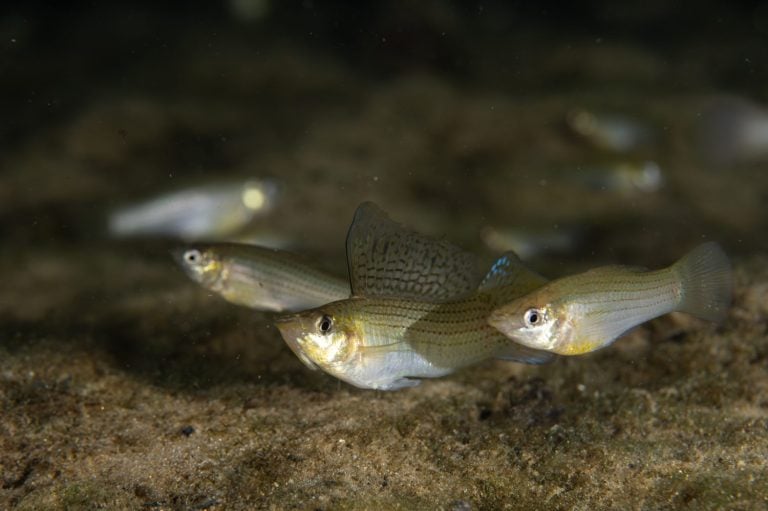
Fish: A School of Fish
This term was derived from the Middle Dutch term “scolu,” which means “multitude.”
Flamingos: A Stand or Flamboyance of Flamingos
Both of these names likely refer to the behavior of these brightly-hued birds.
Foxes: A Skulk of Foxes
To “skulk” means to sneak around, which is something foxes are known for.
Frogs: An Army of Frogs
Frogs are called an “army,” possibly due to the fact that these social creatures live together in large numbers.
Geese: A Gaggle or Skein of Geese
A group of geese is called a “gaggle” when they are on the ground and a “skein” when in flight.
Giraffes: A Tower or Journey of Giraffes
Giraffes are called a “tower” when they are standing still and a “journey” when in motion. These nouns most likely refer to their appearance and behavior.
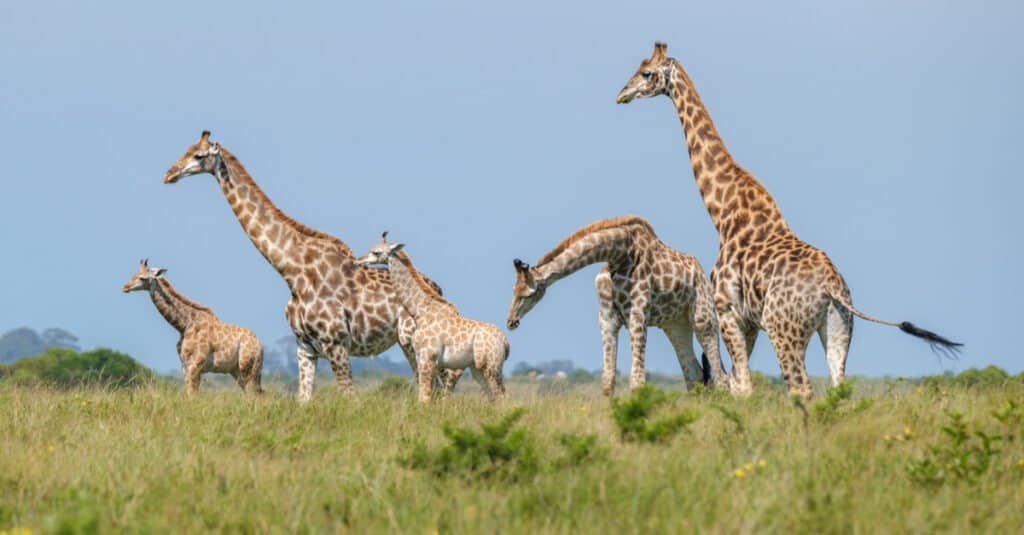
A tower of grazing giraffes can eat hundreds of pounds of leaves per week.
©rudiPro/Shutterstock.com
Hippopotamus: A Bloat or Thunder of Hippopotami
Both terms refer to the hippopotamus’ large size.
Hyenas: A Cackle of Hyenas
“Cackle” no doubt originated with this animal’s famous laugh-like vocalization.
Jaguars: A Shadow of Jaguars
“Shadow” is probably derived from the animal’s unique ability to camouflage itself in the jungle.
Jellyfish: A Smack of Jellyfish
A “smack” refers to the way a group of jellyfish “smack” victims with their sting.
Kangaroos: A Troop or Mob of Kangaroos
We likely refer to kangaroos as “troops” or “mobs” because they are very social and live in groups of 10-50 animals.
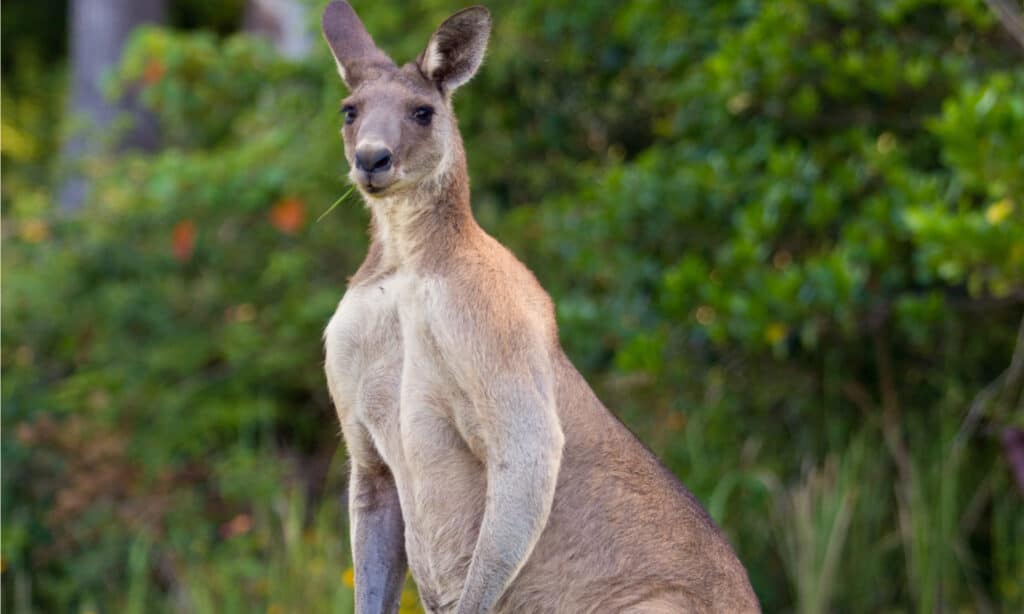
Kangaroos are social animals and live in groups.
©kimonofish/Shutterstock.com
Lemurs: A Conspiracy of Lemurs
This term means “to plot or plan in secret” in other contexts. It likely refers to the way lemurs work together to avoid predators.
Leopards: A Leap of Leopards
The name is probably derived from the way leopards hunt by leaping from trees to catch prey.
Lions: A Pride of Lions
Some believe this term originates from lions’ affinity with royalty or their place at the top of the food chain.
Mice: A Mischief of Mice
Mice no doubt earned this name due to their troublesome behavior.
Moles: A Labor of Moles
A group of moles is a “labor” because of the work it takes to dig their underground tunnels.
Monkeys: A Troop of Monkeys
A group of monkeys is called a “troop” because monkeys are social and live in families or larger groups of multiple families.
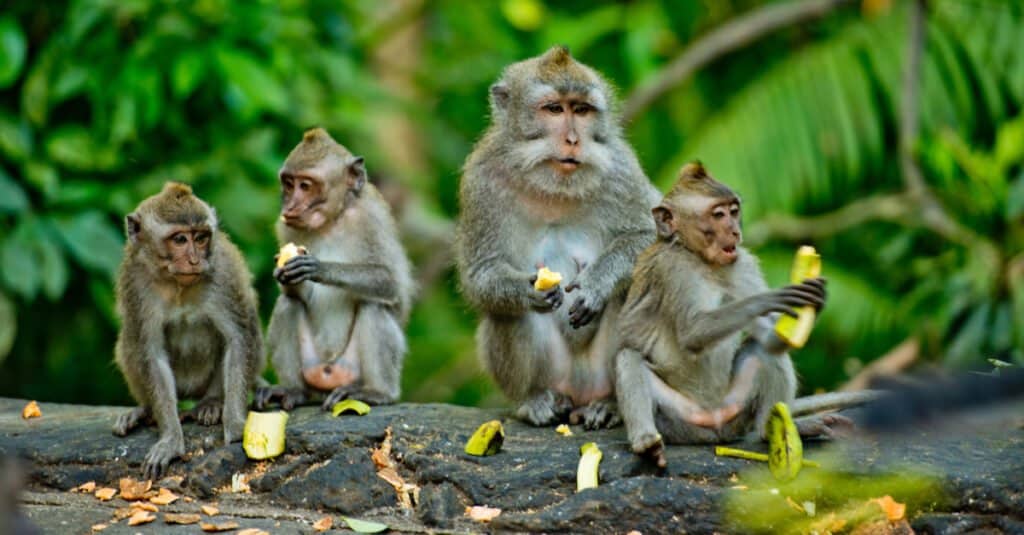
A troop works together to take care of the group’s young monkeys.
©Leo_nik/Shutterstock.com
Mules: A Pack or Span of Mules
A “span” is typically two mules used to pull a wagon or plow. Mules are also “pack” animals, which means they can carry heavy loads.
Otters: A Romp of Otters
To “romp” means to frolic, which describes otters‘ energetic behavior.
Oxen: A Yoke of Oxen
The yoke is a wooden bar that links two animals together to pull a wagon or a plow.
Owls: A Parliament of Owls
The term ‘parliament’ refers to a legislative body or assembly that discusses and makes laws. It likely refers to the longstanding stereotype of owls being wise.
Parrots: A Pandemonium of Parrots
“Pandemonium” is likely a description of the chaotic squawking of a large group of these birds.
Porcupines: A Prickle of Porcupines
This noun is probably a cute reference to the animals’ quills.
Ravens: An Unkindness of Ravens
May refer to ravens’ mythical reputation as tricksters. It may also be due to the belief that they are cruel to force their young from the nest before they can live on their own.
Rhinoceros: A Crash of Rhinoceroses
“Crash” refers to a group of running rhinos, possibly because they run at top speed, regardless of their poor eyesight.
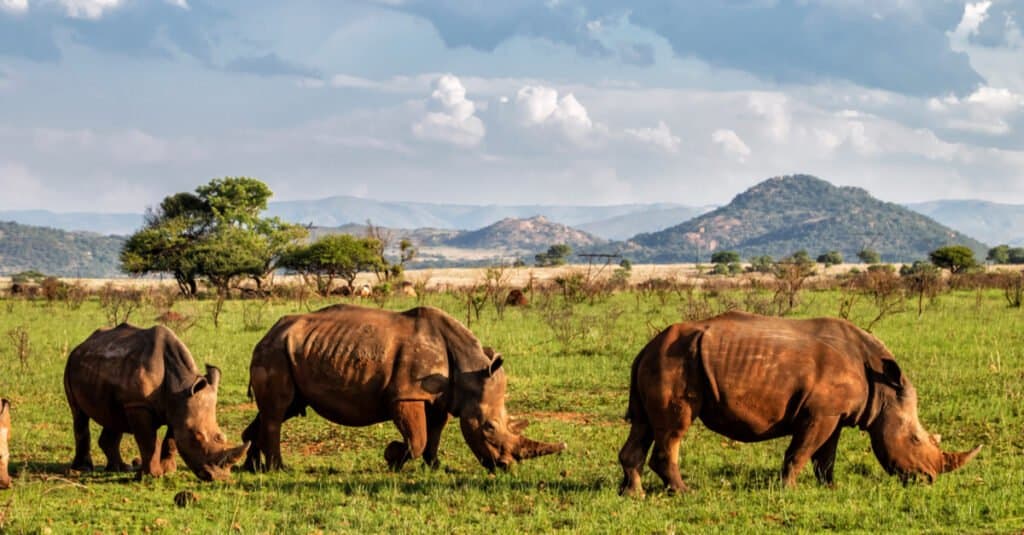
Rhinos gather on the plains in groups called a “crash.”
©Henk Bogaard/Shutterstock.com
Shark: A Shiver of Sharks
“Shiver” could refer to the fear sharks cause or the fact that they are cold-blooded.
Skunk: A Stench of Skunks
The term “stench” is due to this mammal’s ability to spray odorous liquid in self-defense.
Snakes: A Nest of Snakes
Not only do snakes hatch from a nest, but some species gather by the hundreds to overwinter in large nests found in burrows.
Squirrels: A Dray or Scurry of Squirrels
The word “dray” refers to the nests of leaves and branches they build high up in the trees. “Scurry” describes the way they move.
Tigers: An Ambush or Streak of Tigers
An “ambush” describes the tiger’s hunting style, while a “streak” describes their speed and agility.
Whales: A Pod of Whales
This term is believed to have originated in the 1800s, likely referring to the way whales swimming in formation looked like seeds in the pod of a plant.
Zebras: A Zeal or Dazzle of Zebras
The word “zeal” means enthusiasm in pursuit of an objective, which may refer to zebras’ spirited personalities. The term “dazzle” likely stems from zebras’ ability to camouflage themselves in large groups.