
Quick Take
- Reaching only 0.5 inches, these pollinators are crucial for maintaining Australian biodiversity.
- The Amegilla cingulata faces survival risks unless it identifies specific soft soil for nesting.
- Their striking sapphire appearance is counterintuitively created without any actual blue pigment.
- Executing buzz pollination is mandatory for these bees to access pollen trapped in specific flowers.
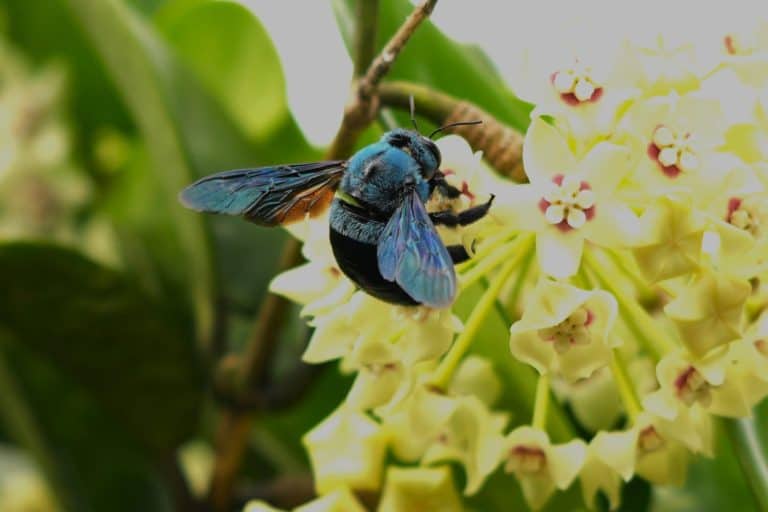
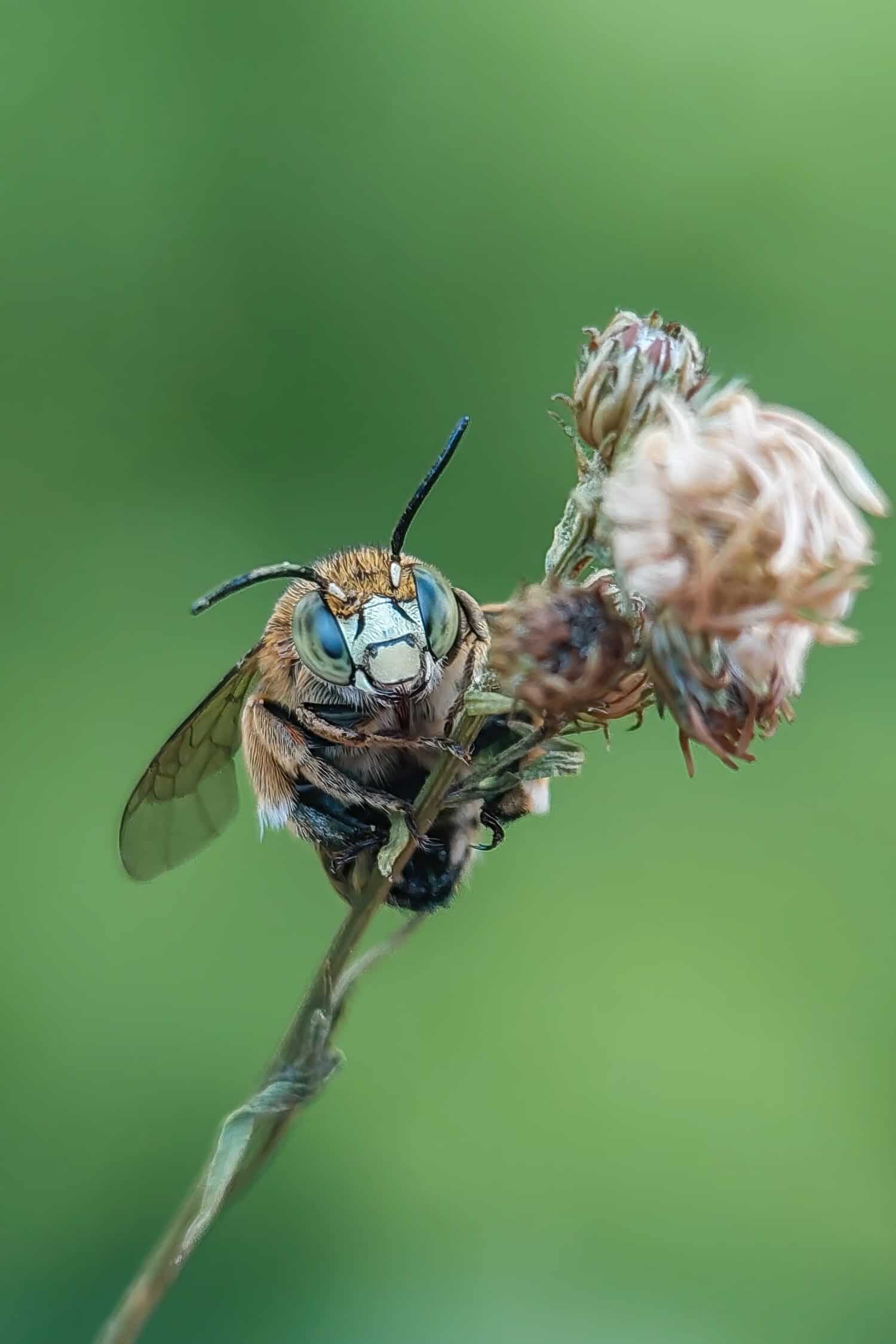
Bees are distinctive for their black and yellow coloring, but did you know some species are blue? The blue-banded bee is a species native to Australia and looks extremely different from what you typically see in North America. These bees play a crucial role in maintaining Australia’s biodiversity as key pollinators. This Instagram post by @ocean.destinations shows a picture of a blue-banded bee with metallic blue stripes. Read here to learn more about these uniquely colored bees.
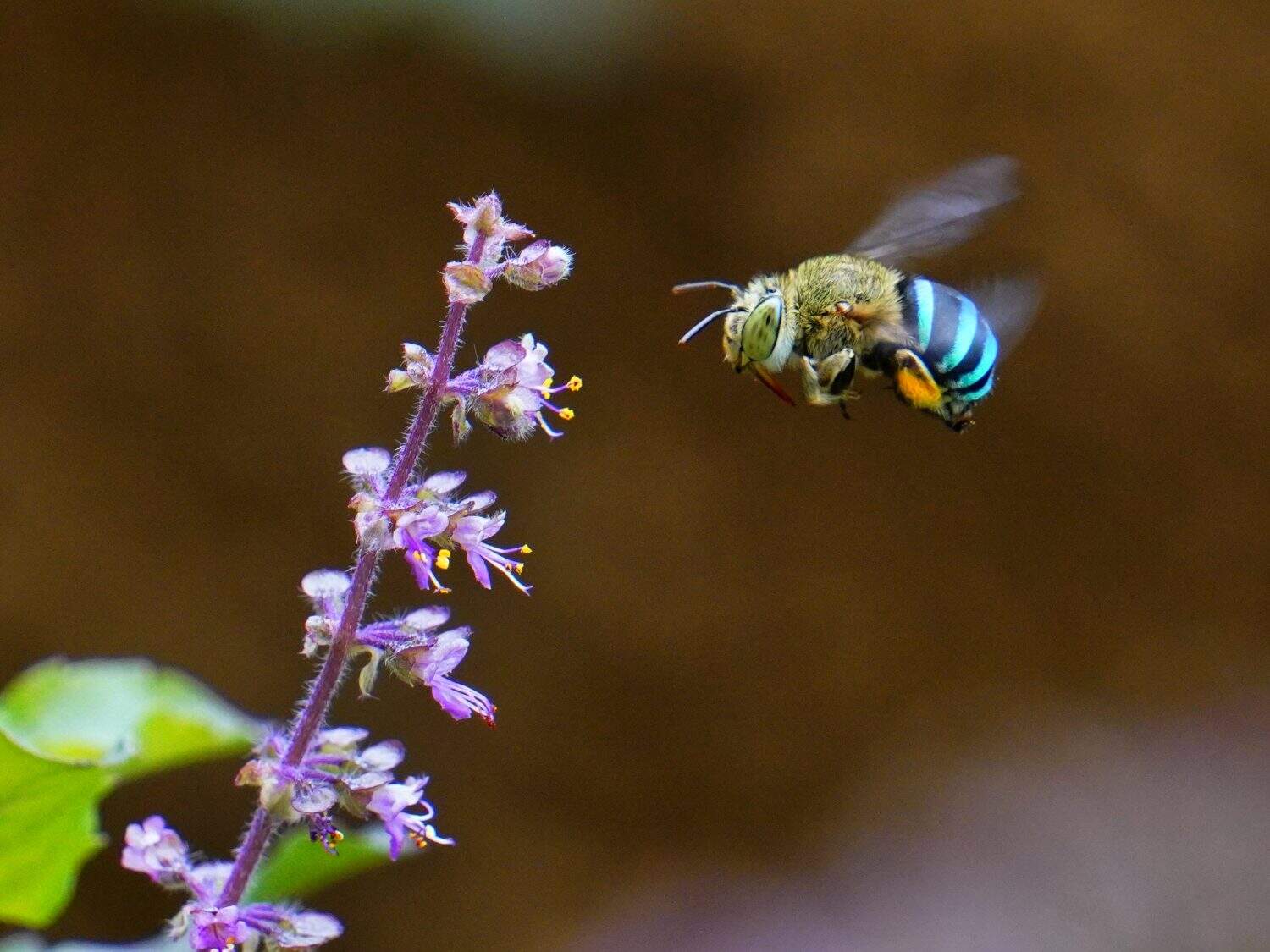
A blue-banded bee is flying to pollinate a flower.
©AjayTvm/Shutterstock.com
About the Blue-Banded Bee
The blue-banded bee may seem like a unique species, but there are multiple species within the genus Amegilla. The most widespread species is Amegilla cingulata, which is especially prevalent in Australia. These bees are famous for their bright, metallic blue stripes on their abdomens. They are on the smaller side, normally measuring a little under half an inch long. This means they are only slightly larger than a single grain of rice.
Native to Australia, they can be found in gardens, forests, and woodlands, where they nest in burrows dug into soft soil. Why blue-banded bees evolved to be blue is unknown; however, their bright coloring comes from their iridescent hairs. Rather than being pigmented blue, their hairs reflect sunlight in a blue-green wavelength. This is similar to how beetles shimmer or how soap bubbles display various colors.
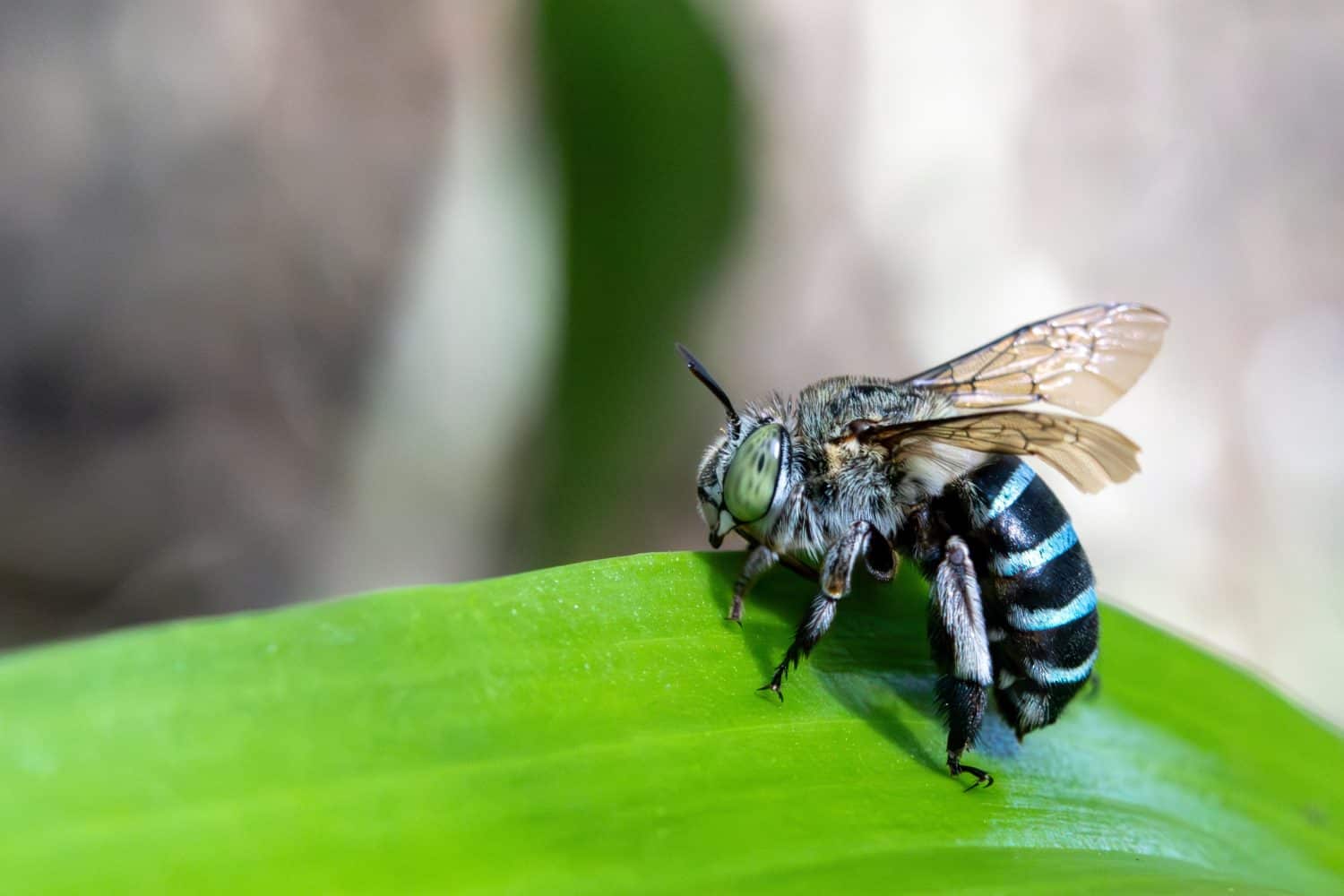
Blue-banded bees have iridescent hairs that look blue under sunlight.
©CoreRock/Shutterstock.com
Do They Pollinate?
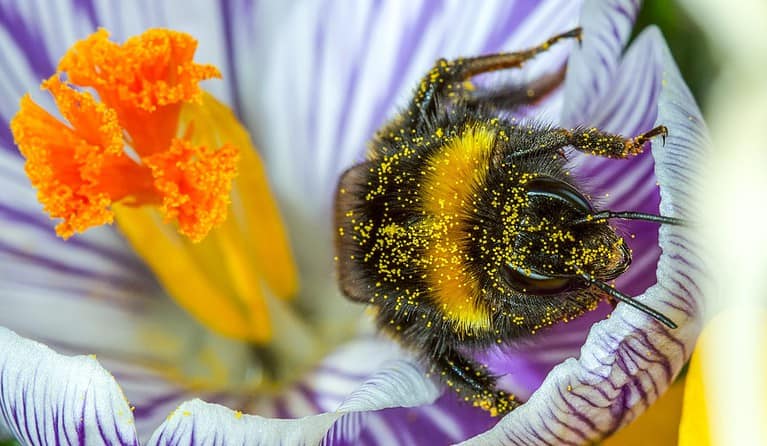
Blue-banded bees are unconventional pollinators famous for buzz pollination. While most pollinating bees passively collect and deposit pollen between flowers by simply landing on them, blue-banded bees are more purposeful. When they land on flowers, they vibrate their flight muscles rapidly, shaking pollen loose from the flowers. This unique pollination method is especially effective for fertilizing flowers whose pollen is deep inside their anthers, such as those of tomato, eggplant, and chili plants. Buzz pollination, as performed by blue-banded bees, is much more efficient than the pollination methods used by honey bees and greatly supports plant reproduction.
Another trait that distinguishes them from honey bees is their asocial living. Blue-banded bees are solitary insects. Females build their own nests in burrows, which contain about two to thirteen cells. This means that each bee manages its own nest. While they do not form large colonies, it is not uncommon for them to nest in close proximity to one another. Because they do not form colonies, there is no honey production. Honey bees produce honey as a long-term food source, but blue-banded bees feed directly on nectar from the flowers they pollinate and do not need to store honey. This adaptation supports their solitary lifestyle.