Quick Take
- Flying snakes are native to South and Southeast Asia and glide through the sky to maneuver through dense foliage.
- By wiggling in the air and flattening their bodies, flying snakes can somewhat control the direction of their glide.
- Flying snakes can glide horizontally for distances of up to about 330 feet at a time, allowing them to navigate between trees with remarkable agility
Flying snakes are easily one of the scariest-sounding animals out there. Snakes are already frightening with their slithery bodies and venomous bites, but flying snakes take it a step further by parachuting between trees to move around. This YouTube video by National Geographic shows these snakes flying through the air, and it’s an incredible sight. Read here to learn more about how snakes fly.
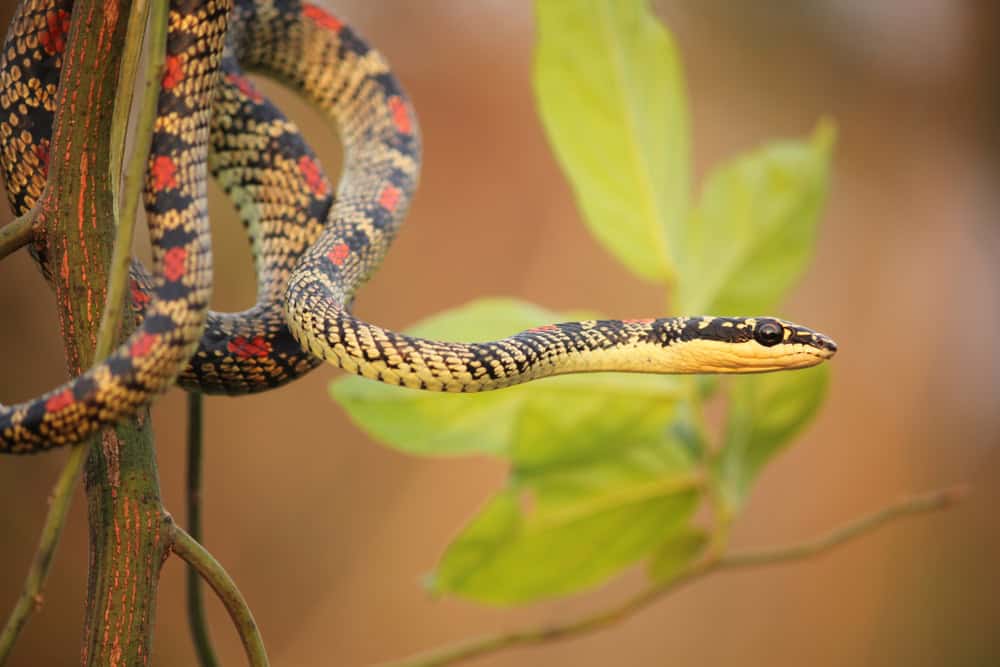
Flying snakes hold onto a branch with a “J” shape before launching themselves off.
©Nikhil patil 0321/Shutterstock.com
About Flying Snakes
Flying snakes refer to the group of tree snakes in the genus Chrysopelea. This group lives in South and Southeast Asia in countries like India, Sri Lanka, Thailand, Malaysia, and, as in the video, Indonesia. The common trait between them is their arboreal lifestyle. This simply means that they spend the majority of their time living in trees and rarely descend to the ground. Trees are a perfect home for these snakes. Most flying snakes eat animals such as lizards, frogs, birds, and rodents—all of which also live in trees. Given the density of trees in Indonesia’s jungles, staying above ground offers more benefits than remaining on the ground. This is also why flying snakes have adapted to glide between trees to move more quickly.
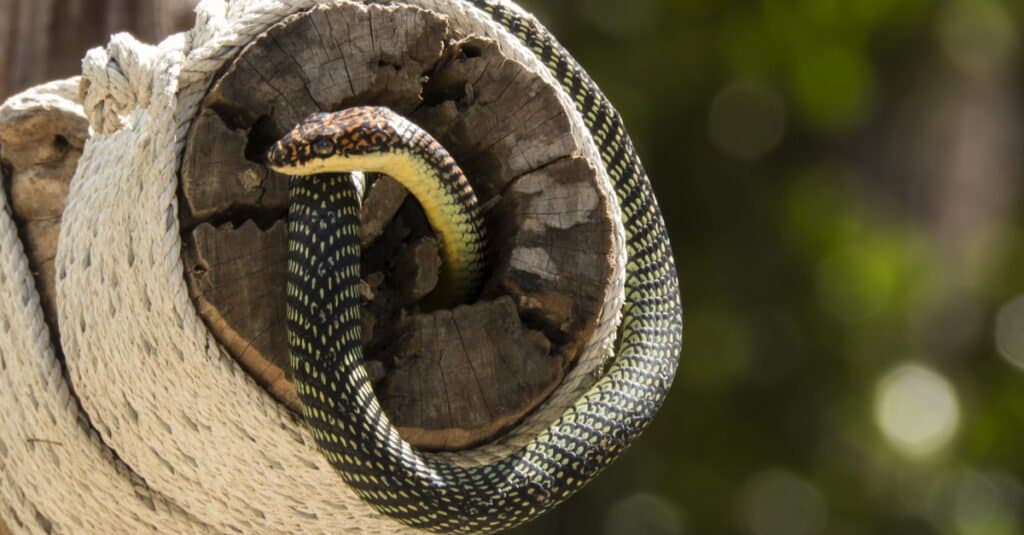
To glide better, flying snakes can flatten their ribs to give them more surface area.
©PACO COMO/Shutterstock.com
How Do Flying Snakes “Fly?”
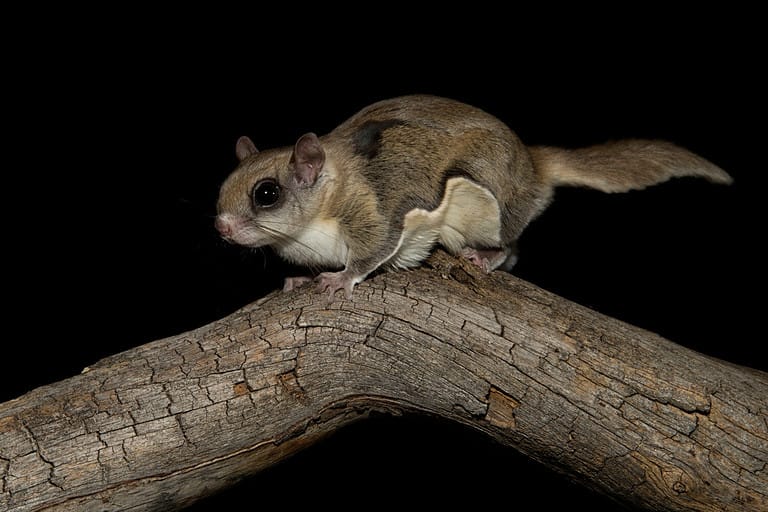
This group of snakes is unique because they are able to “fly.” However, their movement is more akin to parachuting or gliding. Since these snakes do not have any special anatomy that allows them to gain altitude, such as wings or flaps, they are more similar to other gliding animals like flying squirrels. These snakes fly for a few reasons. The most apparent is the speed at which they can move between trees. In a matter of seconds, they can drastically change their altitude, helping them to avoid predators or to ambush prey. It also helps them to avoid the forest floor, a spot where they are more vulnerable. They still move around trees by slithering between branches; however, their short flights serve as shortcuts.
To begin the glide down, the snakes hang off a branch in a “J” shape, like in the video. Then, they launch themselves out, flattening their bodies as much as they can, and wiggle side to side in the air. By adjusting their body angle and flatness in mid-air, they can slightly steer themselves in the direction they want to go. This means that they can aim themselves at specific trees—a scary thought. Flying snakes have been recorded gliding horizontally for distances of up to about 330 feet in a single go! They can drop between drastically different altitudes in a matter of seconds, which is a big help in avoiding danger. These snakes are simply amazing and are the only known limbless vertebrates that can glide!