
Quick Take
- Red kites are resident bird species in some parts of the UK.
- They scavenge and hunt live prey such as rabbits.
- Red kites can reach an altitude of a mile but glide lower when foraging.
- Their flight feathers are crucial for them to find food.
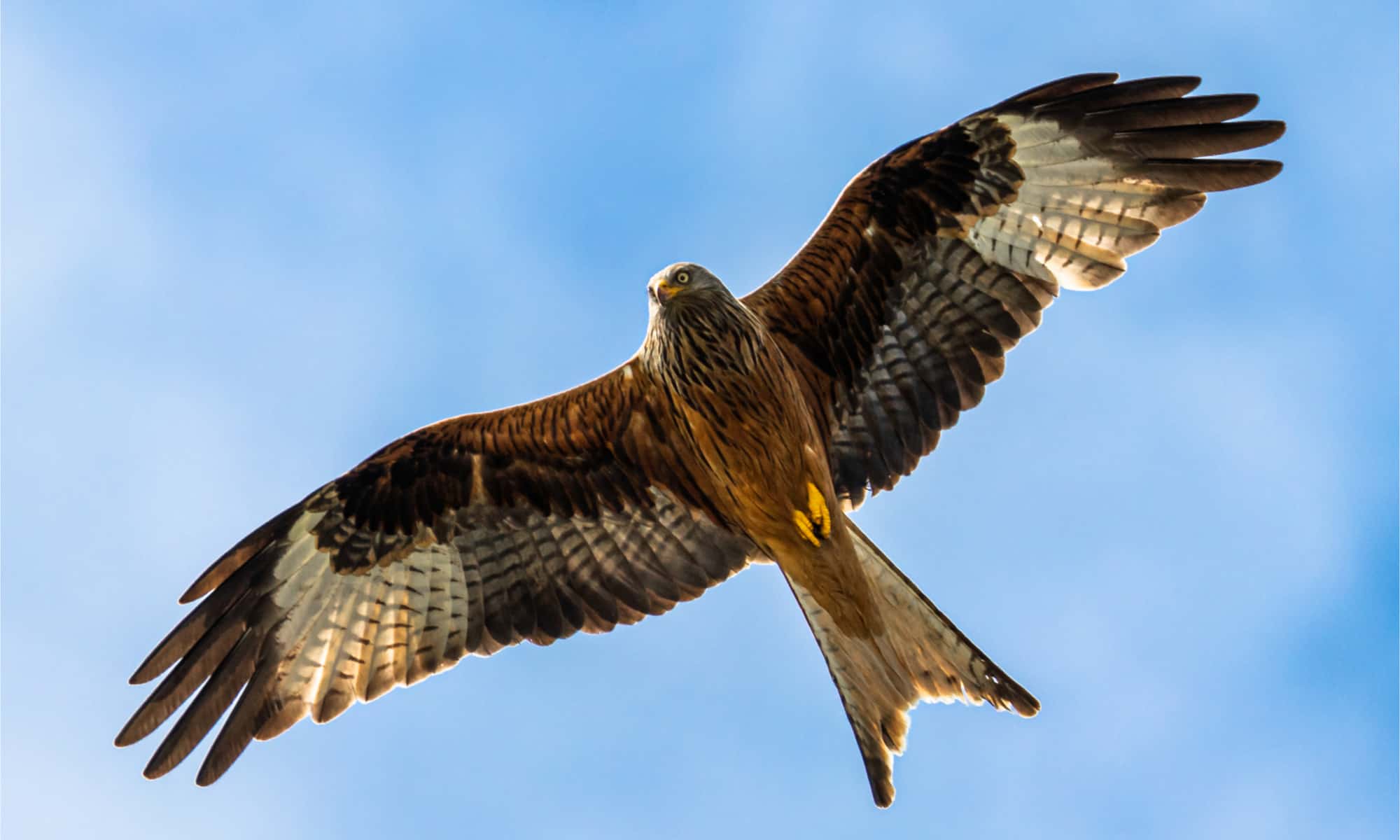
The striking gold/red plumage and characteristic forked tail of the red kite have always been a joy to behold from the ground. Now, thanks to drone technology, you can experience what it would be like to fly next to one. This remarkable video footage was captured in Norfolk UK. The close-up view offers a remarkable perspective of this magnificent bird in flight, with its flight feathers spread wide and its sharp eyes searching for prey. Take a look for yourself, then read on to learn about red kite flight.
Red Kites in the UK
Red kites (Milvus milvus) are a resident bird species in some parts of the UK. They are also found in some other parts of Europe and northwest Africa. Their home ranges include both hunting and nesting areas. These birds can hunt at distances ranging from 1 to 15 miles from their nest. When they are not flying, they roost in trees, and in the winter, they roost together. Roosting sites may include individual trees, groups of trees, or forest edges.
Hunting From the Sky
In the video clip, you can see the bird keeping a lookout for food. Red kites hunt during the day and are primarily scavengers. However, they also hunt a range of live prey, including rabbits, voles, and field mice. They also supplement their diet with worms and invertebrates.
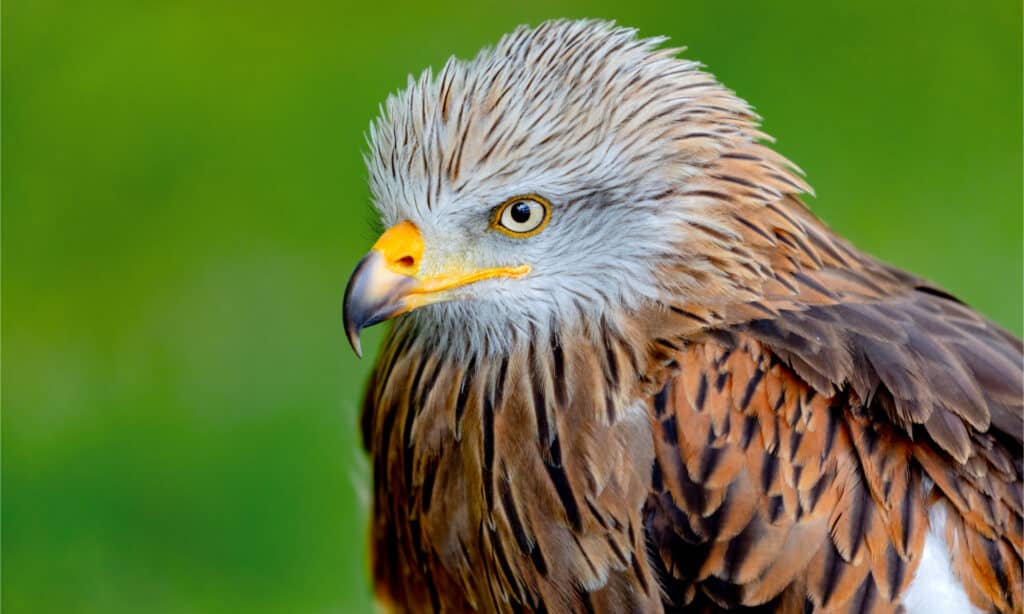
Red kites roost in trees, sometimes in groups.
©Gelpi/Shutterstock.com
When hunting, they glide at soaring heights, scanning the ground for prey. When they spot potential prey, they dive swiftly and seize it with their talons.
These birds can reach altitudes of almost a mile above the ground, but it is more common for them to soar at between 16 feet and 200 feet when they are foraging for food. They typically use higher altitudes to cover longer distances.
Flight Feathers Are Vital
Flight feathers are vital for this type of foraging. These are the long, stiff, and asymmetrically shaped feathers that you can clearly see on the bird’s wings in this clip. The primary feathers, which are the main source of thrust, are located at the end of the wing, while the secondary feathers, which provide lift, are closer to the body.
Sadly, when red kites swoop down to eat roadkill, they can get hit by vehicles. They are also at risk of colliding with power lines and barbed wire fences. Missing, broken, or bent feathers seriously affect the birds’ hunting capability until they grow back!