
Quick Take
- This bird can watch for predators with its eyes closed, and the anatomy behind it is stranger than you'd expect. See the eye anatomy →
- Its cry is so unsettling that folklore gave it a haunting human explanation. Hear about the haunting cry →
- Its camouflage is so effective it skips something every nesting bird considers essential. Discover the no-nest strategy →
- Baby potoos don't look like birds at all. They disguise as something far weirder. See how chicks disguise themselves →
The bird in this Instagram clip is one of the most extraordinary avians on the planet. It is a potoo, also known as the ghost bird. It’s not just its appearance that’s so unnerving; it also behaves bizarrely! Let us explain more.
Meet the Ghost Bird
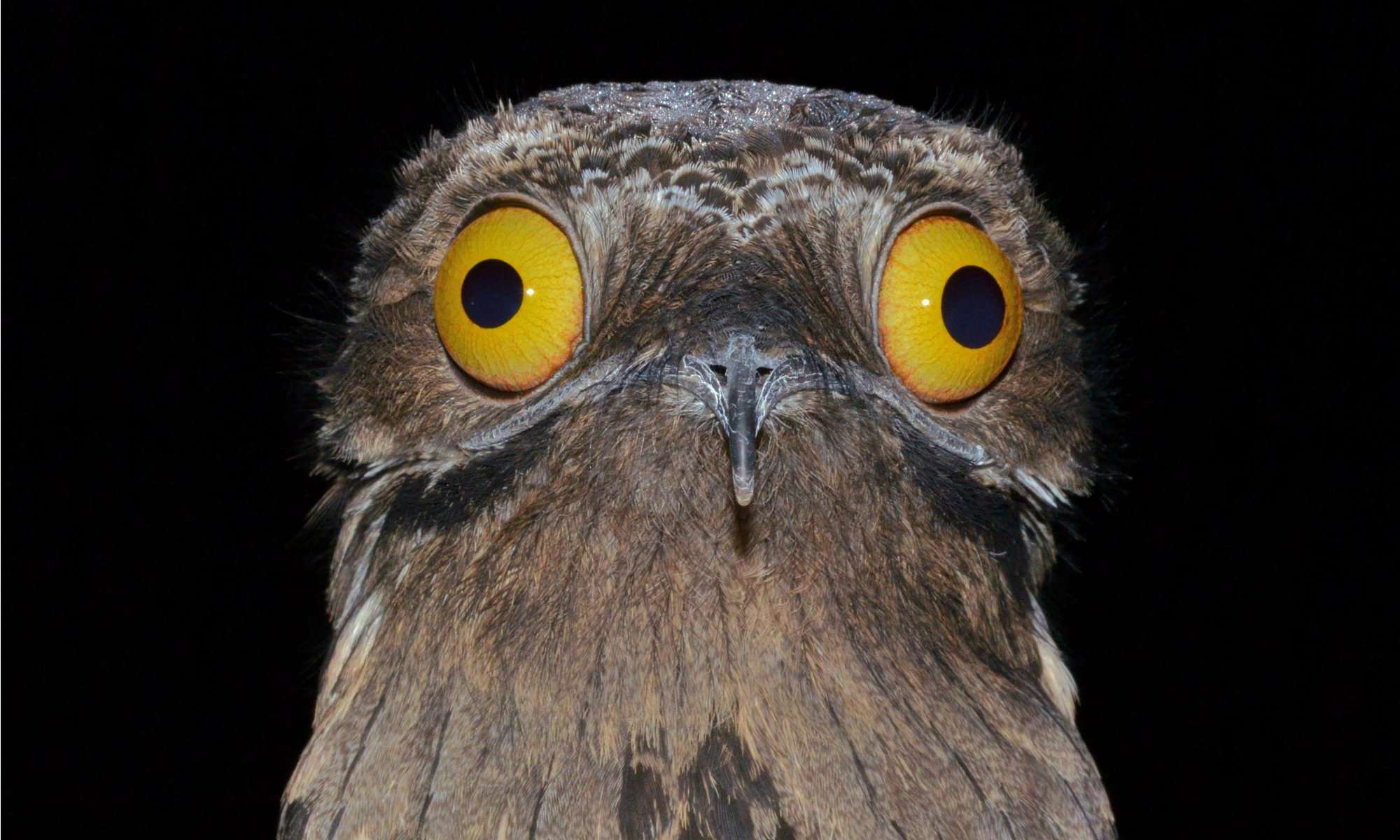
Potoos are a group of seven species of birds within the genus Nyctibius, including the common potoo (Nyctibius griseus). They look like a combination of an owl and a nightjar. These birds have a large head with huge yellow eyes. Thanks to some notches in their eyelids, they can still watch for predators even when their eyes are almost closed. Once their eyes are open, they are large and bright yellow, often with asymmetrically dilated pupils.
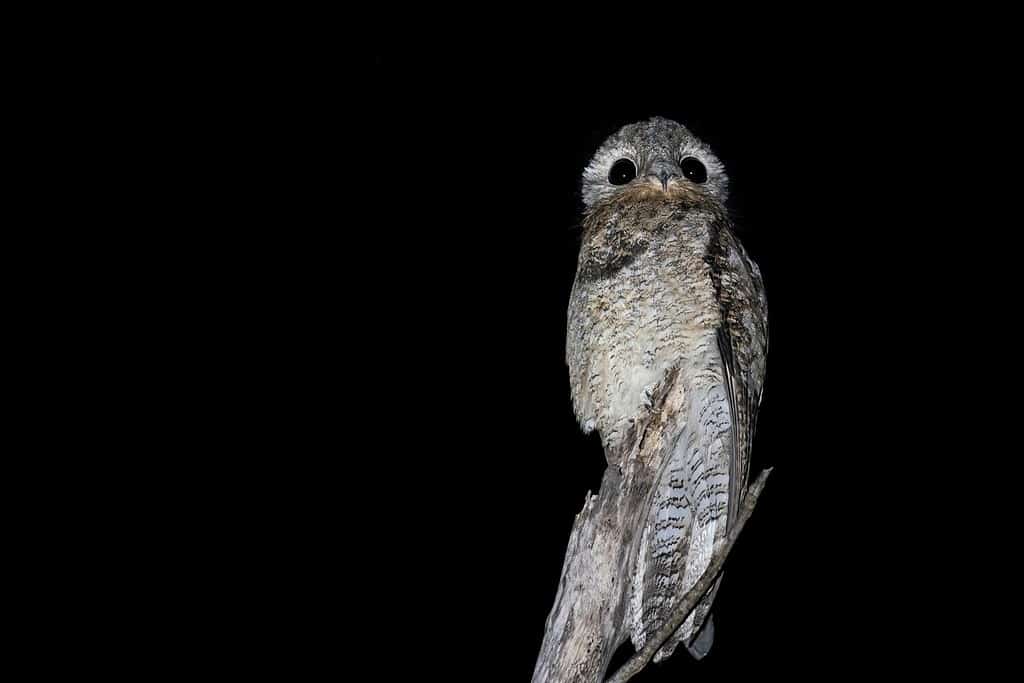
Potoos mimic tree stumps and branches.
©Rob Jansen/Shutterstock.com
Overall, their bodies are grayish with splotches, giving them a ghostly appearance. They prefer open forested habitats with scattered trees, such as forest edges, but can also be found along rivers or even roadsides.
These birds are native to Central and South America. However, there are fossil records of them in western Europe, dating back to the Eocene era (56 to 33.9 million years ago).
Their call is distinctive and mournful, and in folklore, it has been compared to the cry of a lost loved one, a child calling for their mother, or a wife mourning her husband.
Why Do Ghost Birds Strike a Pose?
Another reason for the name ‘ghost bird’ is their habit of remaining absolutely still on a branch or tree stump. They adopt a posture that makes them look just like a broken branch. As shown in the Instagram post, they also adopt this pose on manmade structures such as fence posts. Some have been seen using wires, traffic poles, and even plastic bottles. This method is so effective that they don’t even build nests to raise their young. Camouflage is enough.
When they freeze, they tilt their heads straight up and close their eyes. Baby potoos learn how to do this at a young age. Because young potoos still have fuzzy white feathers, they resemble a clump of tree fungus more than a branch!