
Quick Take
- Inspector Clouseau sports a vivid pink belly, and researchers have a surprising explanation for why that's not caused by what you'd first suspect. The erythrism explanation →
- Most manta rays wear black and white for a clever reason, so what does going pink actually cost Inspector Clouseau in the wild? What pink costs in the wild →
- A genetic mutation behind Inspector Clouseau's color has shown up elsewhere in the animal kingdom, appearing in places you'd never expect a manta ray to have company. The mutation behind the color →
Manta rays are some of the coolest sea creatures. They belong to a group that includes over 600 species of rays — such as stingrays and sawfish — and are considered the largest fish in the sea. They have flat bodies and large pectoral fins. Giant manta rays (Mobula birostris) can have a wingspan (or disc width) of up to 30 feet and typically weigh around 3,600 pounds! The reef manta ray (Mobula alfredi) is smaller, with a disc width of 9.8 to 11.5 feet and a typical weight of 1,540 pounds. While manta rays are beautiful no matter their size, one manta ray in particular looks like something out of the “Barbie” movie rather than real life — Inspector Clouseau, a pink manta ray!
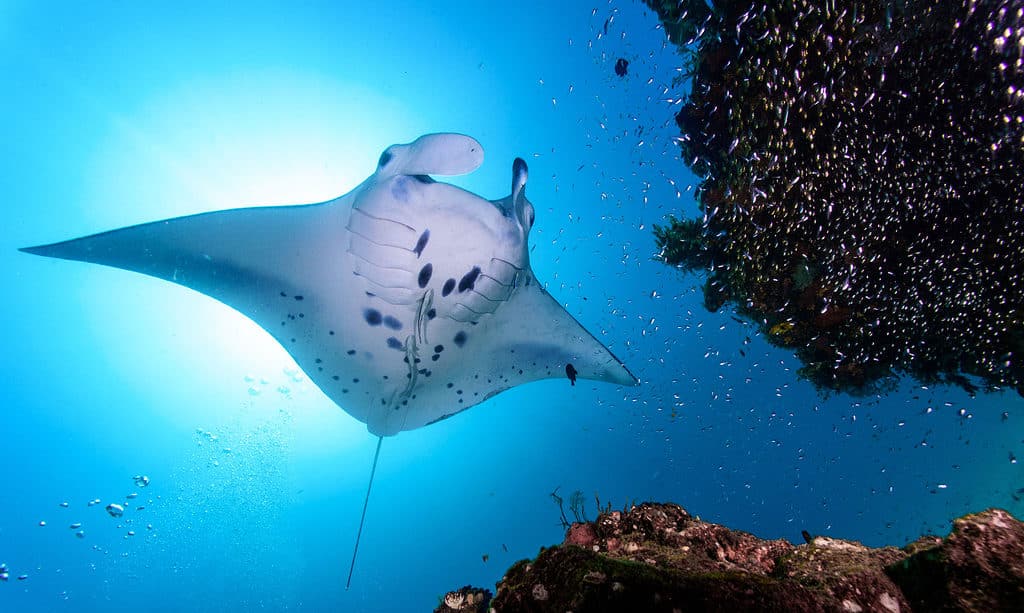
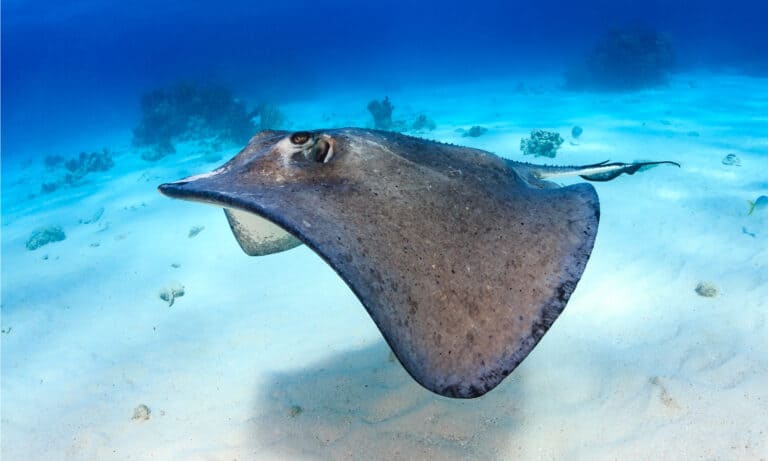
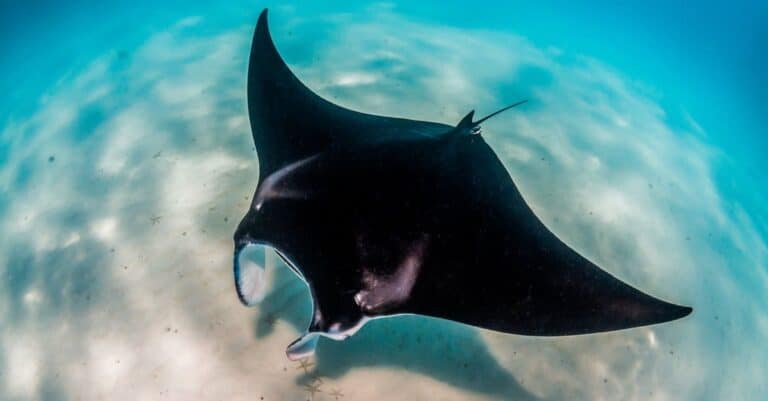
Manta rays are typically black and white.
©Hoiseung Jung/Shutterstock.com
Instagram account Pubity shared pictures of this fascinating manta ray, taken by user @kristianlainephotography. The pink manta has a vibrant pink hue on its underside and a more typical black back. According to the caption, it’s the only known pink manta ray in the world and was discovered near Lady Elliot Island in Australia’s Great Barrier Reef. Inspector Clouseau (named after the “Pink Panther”) has a wingspan of 3.3 meters (10.8 feet).
Why Is This Manta Ray Pink?
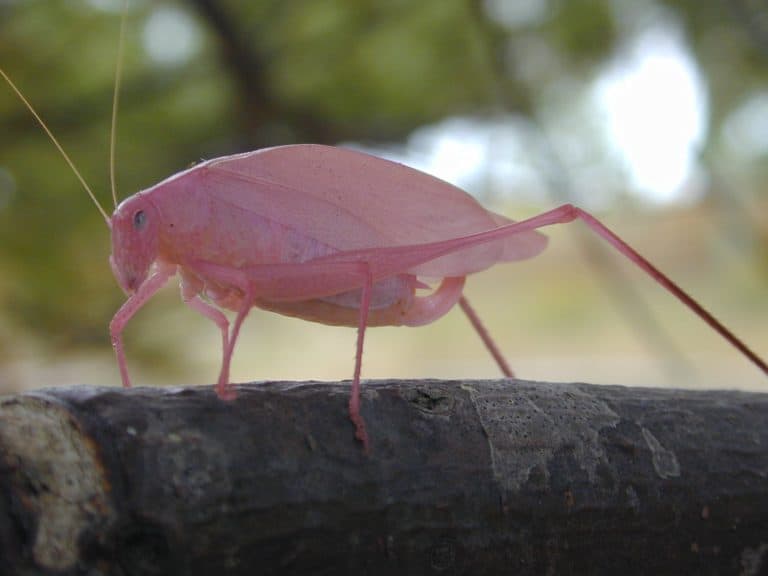
According to National Geographic, Inspector Clouseau was first spotted in 2015. In 2016, Amelia Armstrong, a researcher from the Australian research group Project Manta, took a sample from the pink manta ray and determined that its pink hue was not caused by diet or infection. Instead, Project Manta believes its color comes from a genetic condition called erythrism, which causes animals to have a reddish or pinkish hue. There have been many examples of this throughout nature, including pink grasshoppers!
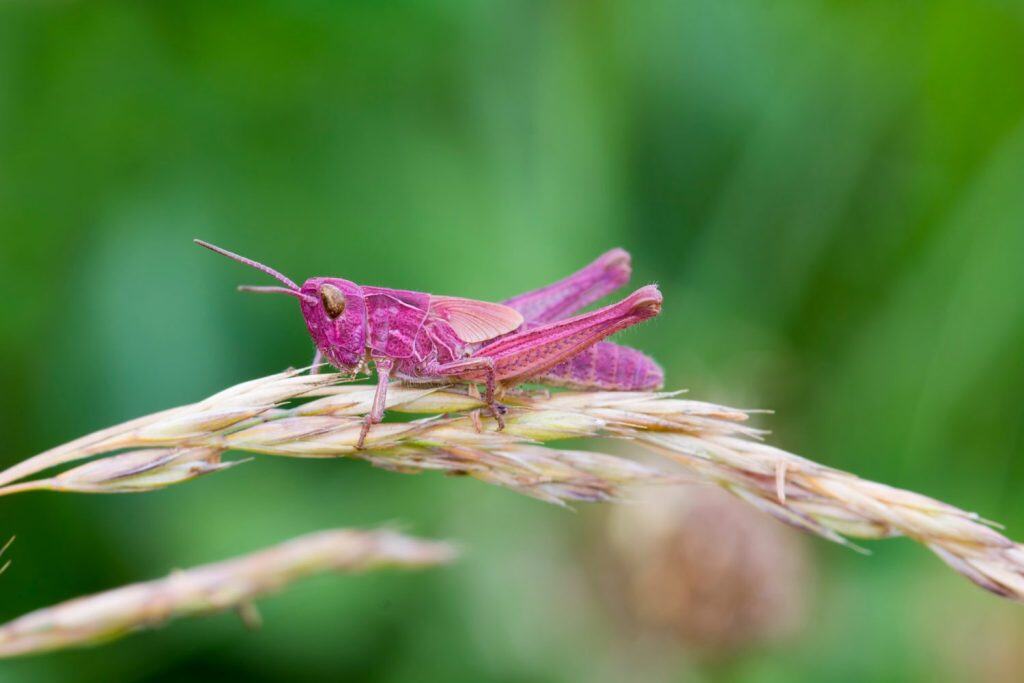
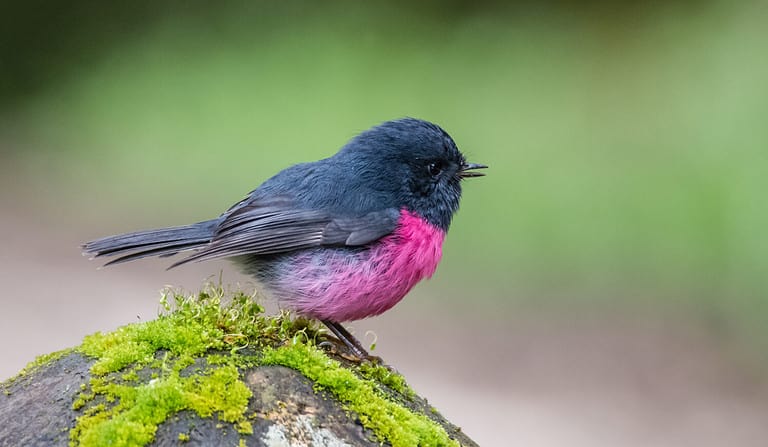
Erythrism is a genetic mutation that gives animals a reddish-pink hue.
©chris276644/Shutterstock.com
Aquatic ecologist Solomon David told the outlet in February 2020, “Having seen other pigmentation-related mutations in fishes, it’s not completely unexpected that this exists, but it’s really cool to see regardless.”
Most reef mantas are either black, white, or a combination of the two, typically with a black back and a white belly. This coloration serves as camouflage: from above, the manta ray blends in with the dark water, while from below, it matches the bright light of the surface. Researchers are unsure what advantages, if any, the pink coloration provides Inspector Clouseau in the wild. (But it is really pretty to look at!)