
Quick Take
- A University of Iowa experiment gave pigeons a simple task with an obvious shortcut, which they deliberately ignored. See the Iowa study →
- Researchers expected pigeons to follow a predictable behavioral law, but the birds broke it entirely. See the broken law →
- Living 'at the edge of chaos' sounds like a liability, but for pigeons it turns out to be their greatest survival weapon. Explore the survival advantage →
- Pigeon cognitive abilities quietly outperform those of animals widely considered smarter, and the list of what they can do turns out to be longer than you would expect. Discover pigeon cognition →
Pigeons are social and curious creatures. Despite this, they tend to return to known locations that provide food and shelter and live in flocks for safety. These characteristics make pigeons seem like creatures of habit, but in reality, they avoid routine.
Why Pigeons Tend to Keep Their Options Open
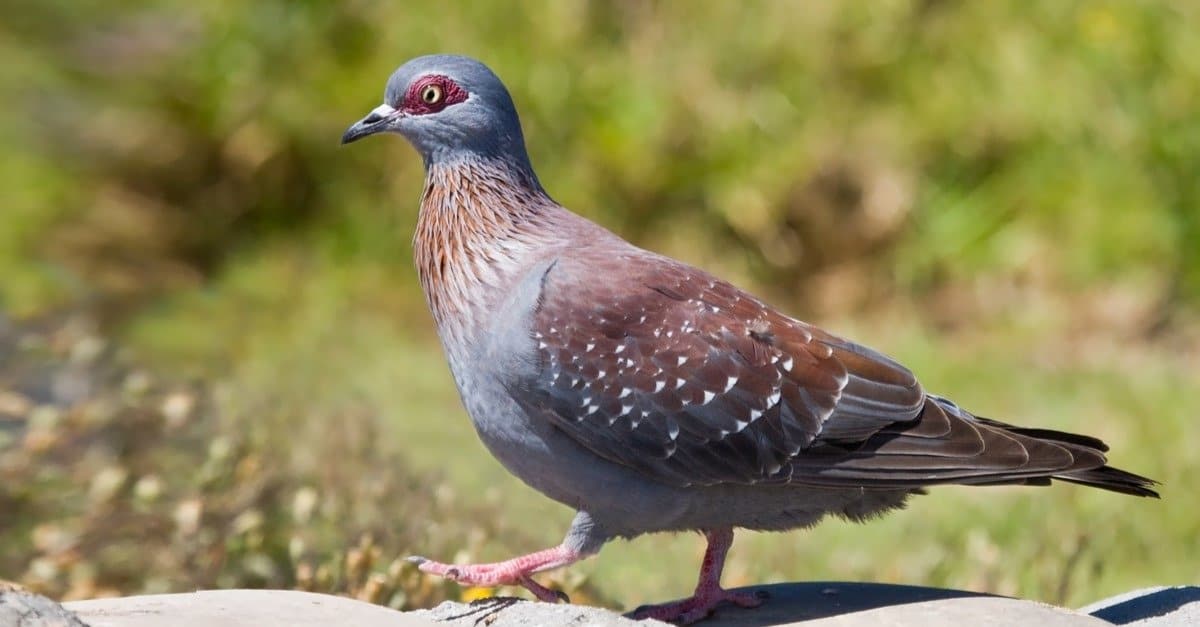
Pigeons receive a bad rap for being “flying rats” and for spreading disease. In reality, pigeons are neither. Instead, pigeons are effective at navigating new environments and making choices based on information learned and remembered.
According to a new study published in the Journal of Experimental Psychology: Animal Learning and Cognition, pigeons are animals that keep their options open. They do not become complacent in their environment. This skill set is why pigeons have lived for centuries and continue to thrive in almost any habitat.
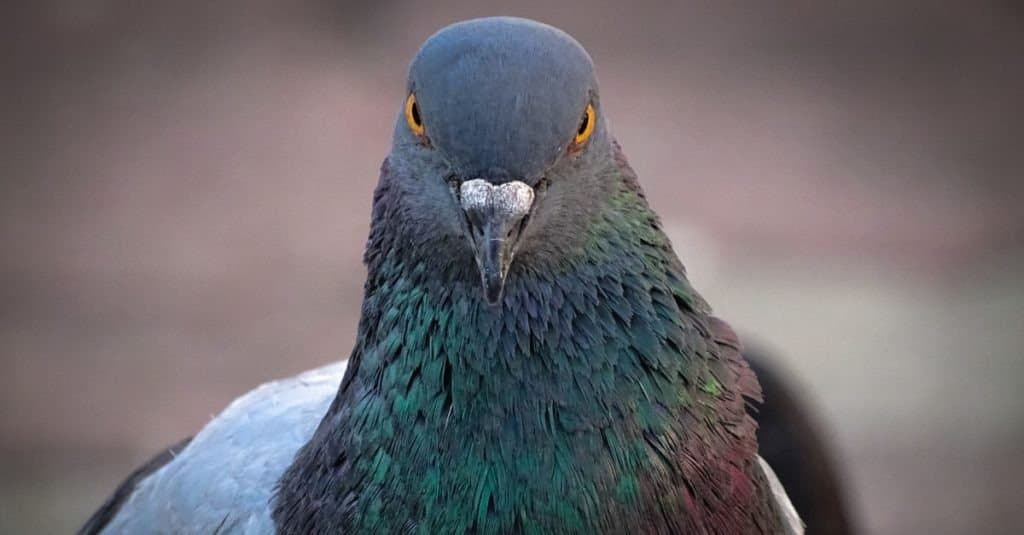
Pigeons are not content with routine; instead, they prefer to learn about and adapt to their environment.
©hkhtt hj/Shutterstock.com
To reach this conclusion, researchers at the University of Iowa conducted an experiment in which pigeons were the test subjects. Six pigeons were placed in separate rooms in which there was a computer screen with buttons lit up. There were 120 buttons in total. The pigeons simply had to peck five of the buttons to receive a reward.
Pigeons quickly learned that pecking any five buttons would earn them a treat. Interestingly, pigeons did not rely on the same five buttons each time to receive their reward. The pigeons tried different combinations of buttons. This demonstrated to researchers that pigeons—and other animals—are not always driven solely by reward-seeking behaviors. Instead, they have a desire to learn and grow. Animals with the capability to explore are highly adaptable to their surroundings and are more likely to survive change than those who do not.
What Does It Mean to Be Living “At the Edge of Chaos”?
Pigeons in the study were said to be living “at the edge of chaos.” Living in this way is not as chaotic as it sounds; rather, it is key to surviving in a constantly changing world.
Before beginning the study, researchers believed that pigeons would follow the Law of Effect. Simply stated, when pigeons learned what combination of pressing buttons would give them a reward, they would continue to follow that pattern to receive their treat.
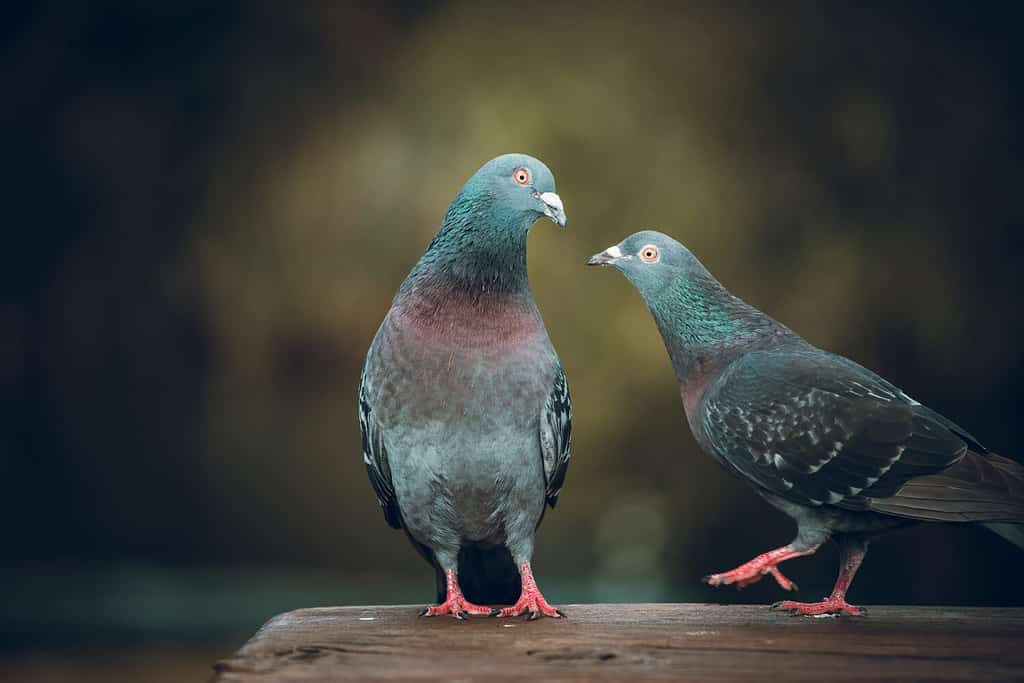
Pigeons in the study deviated from the Law of Effect, experimenting with what rewarded them.
©YIUCHEUNG/Shutterstock.com
What researchers did not expect was that pigeons would deviate from the Law of Effect. The birds would try other combinations of buttons to see if a reward was produced. They consistently learned information about their controlled environment.
Researchers noted that pigeons would return to combinations known to provide treats. By venturing out to experiment with new combinations, pigeons created multiple positive outcomes for themselves. This gave them variety and control over their environment, which is necessary in the ever-changing world pigeons inhabit.
How Intelligent Are Pigeons?
Pigeons have been labeled as having a “bird brain” for decades. This likely stems from observing pigeons blatantly scavenge for food, with little fear of humans. However, it’s important to remember that today’s pigeons are descendants of rock pigeons and have lived alongside humans for centuries. It is not a lack of intelligence that makes them unafraid. Domestication, producing offspring that are instinctively tamer, positive interactions with people, and living closely with humans have ingrained in pigeons the idea that people are not a threat.
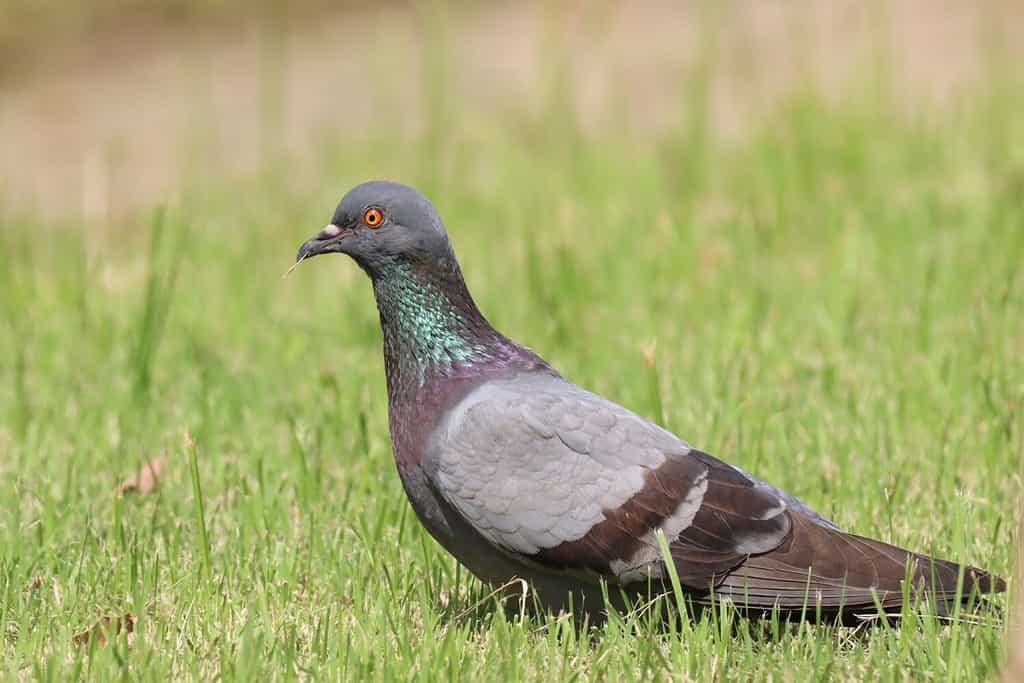
Pigeons are intelligent birds, possessing greater cognitive abilities than many other animals.
©Opasbbb/Shutterstock.com
Pigeons are intelligent animals. While their intelligence cannot be compared to that of humans, their cognitive abilities are on par with those of primates on specific tasks and surpass those of many animals considered to be smarter. Some of the cognitive ability strengths pigeons possess include:
- Problem solving
- Abstract thought
- Self-recognition
- Long-term memory
- Ability to distinguish between images
- Navigation
- Spatial reasoning
Pigeons continuously gather information from their environment and learn from it. By recognizing patterns and adapting when those patterns change, pigeons demonstrate remarkable intelligence. Consequently, the intellect pigeons possess surpasses that of most birds, making the “bird brain” comment not only incorrect but also unfair to pigeons.
Not Being Robotic Is Key to the Survival of Pigeons
The study noted that pigeons were not creatures who follow the rule, “If it ain’t broke, don’t fix it.” Instead, pigeons attempted a series of different combinations of pressing buttons over thousands of trials. Each time they did this, pigeons learned more about the buttons they pecked and the reward process that followed.

Pigeons are capable of living in any number of habitats due to their unique ability to adapt.
©Jossfoto/Shutterstock.com
“What we learned is there’s something that keeps the birds from becoming fully machinelike in their responses,” Ed Wasserman, the study’s author and professor in the Department of Psychological and Brain Sciences, explained in a news release. “Maybe it’s in their best interest to keep some variability in their behavior. You don’t want to be too locked in, because things happen, and the world could change.”
As Wasserman points out, pigeons appear to understand why it is important not to lock into one sequence and outcome. By not becoming “machinelike,” pigeons are better at adapting to changes in their environment. This can mean anything from finding new food sources to finding new places to live. Pigeons do not panic when change is afoot because they are constantly gathering information. By being attuned to the variability in their habitats and not averse to making adjustments, pigeons have an incredible chance of survival as the world around them changes. The same cannot be said for some animals considered to have higher intelligence, highlighting just how advanced pigeons truly are.