
Quick Take
- There are three types of squirrels: tree squirrels, flying squirrels, and ground squirrels.
- Tree squirrels sleep in dreys.
- Flying squirrels are cavity nesters that favor the hollows of trees.
- Ground squirrels are true hibernators that sleep in burrows.
The Sciuridae family contains over 280 species of squirrels, including tree squirrels, ground squirrels, and flying squirrels. Squirrels, rodents recognized by their bushy tails, are found everywhere except in Australia and Antarctica. Most tree and ground squirrels are diurnal and active between dawn and dusk, while flying squirrels are nocturnal and active at night. Heavy sleepers, mature squirrels sleep 14 to 15 hours per day, while baby squirrels (kits) can sleep up to 22 hours per day. Like all animals, squirrels require a safe place for refuge, sleeping, and raising their young. Continue reading to discover everything you need to know about how and where squirrels sleep.
Where do Squirrels Sleep?
Tree Squirrels
Tree squirrels sleep in dreys. These nests are made of small twigs, grass, leaves, and moss. Dreys are typically constructed in the forks of branches or the hollows of mature trees, although squirrels sometimes build their dreys under eaves or in unfinished attics.
A drey is a spherical, basketball-sized nest that is often mistaken for a bundle of leaves high in a tree. Constructed with a twig frame, it is lined inside with soft materials like moss, leaves, shredded bark, or fur for warmth and insulation.
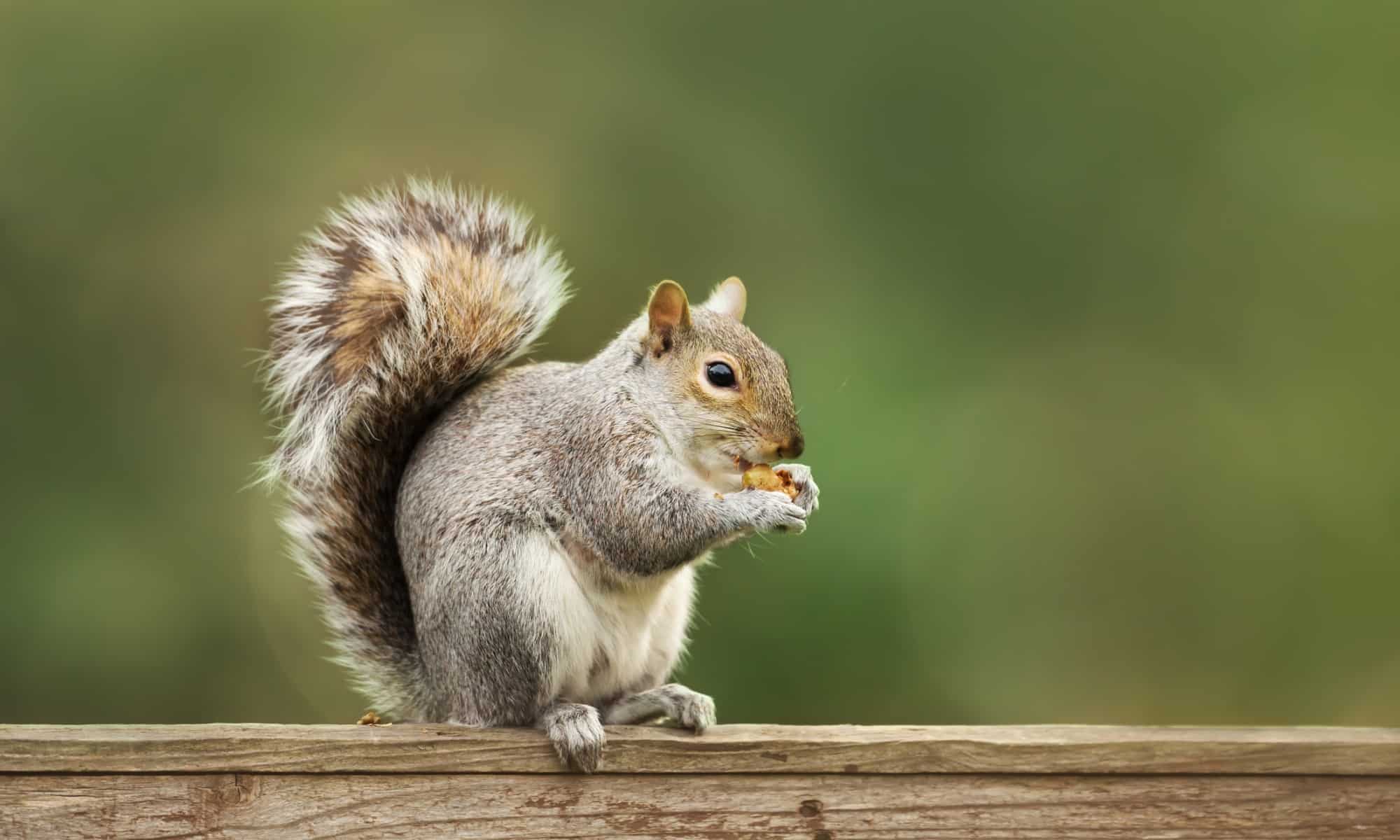
Tree squirrels (Sciurus) are solitary creatures that live and forage alone, except when mating or caring for young. While they often forage in the same area, they are typically territorial. However, they may share a drey to conserve warmth during extreme cold, forming a temporary group called a scurry, composed of between two and nine squirrels.
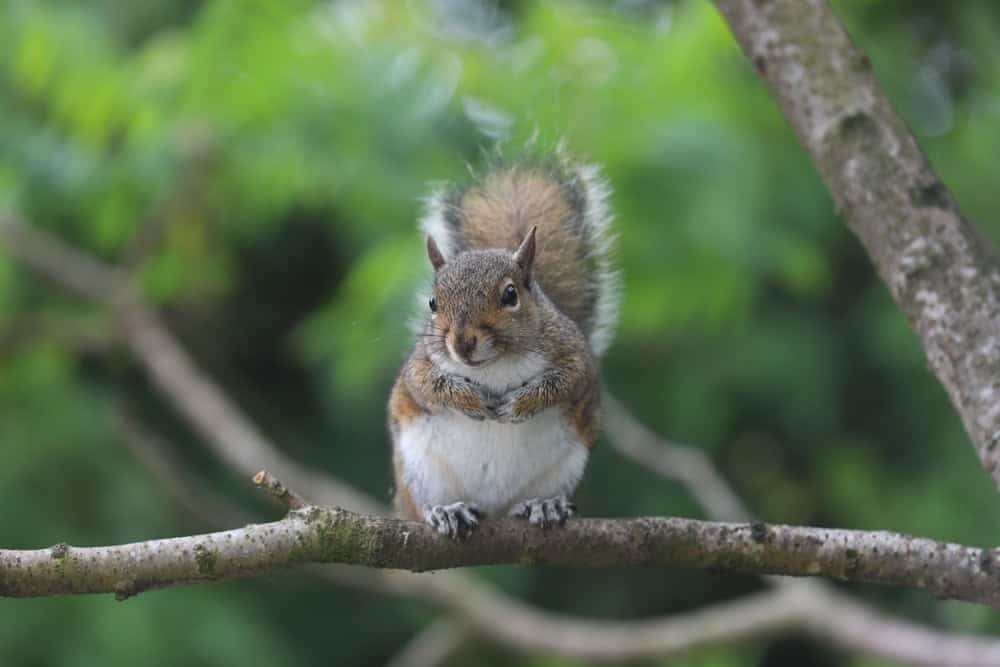
Of the over 65 species of squirrels found in North America, the Eastern gray squirrel is the most abundant.
©Wirestock Creators/Shutterstock.com
Tree squirrels sleep significantly more during cold weather, often staying in their dreys for days at a time when the temperature drops below 50°F. They do not truly hibernate but enter a state of deep, flexible sleep called torpor, emerging only to forage on warmer days.
Flying Squirrels
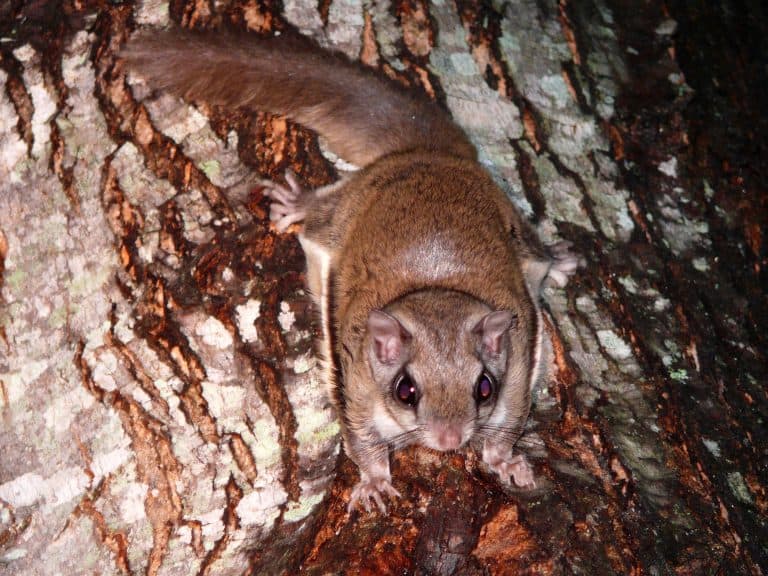
Flying squirrels (Pteromyini) are cavity nesters that generally build their nests in the hollows of mature trees. They line the cavity with soft materials like shredded bark, moss, lichen, leaves, feathers, and fur. However, when such places are scarce, they may build dreys in the forks of sturdy branches, similar to tree squirrels.
Flying squirrels are social animals that live in colonies or family groups. They often share dreys in tree cavities with up to 15–20 other squirrels during winter, nesting together for warmth.
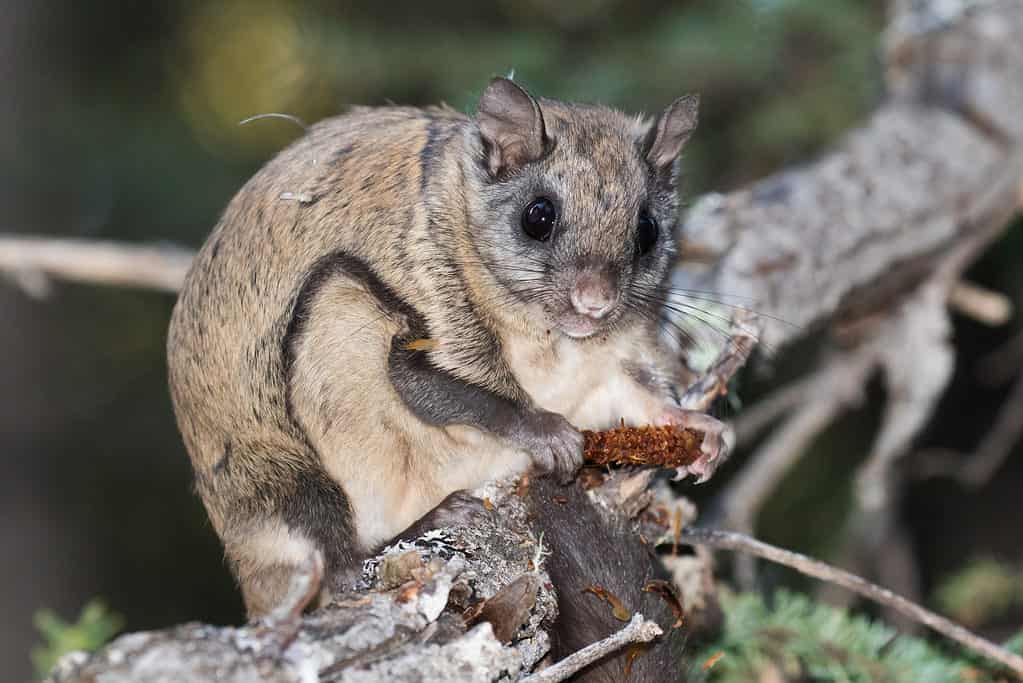
Flying squirrels do not actually fly; they use a patagium, a thin, elastic membrane of skin stretched between their limbs that enables them to glide up to 150 feet.
©Jukka Jantunen/Shutterstock.com
Flying squirrels, like tree squirrels, conserve energy during extreme cold or food scarcity by reducing their body temperature, heart rate, and metabolism. This state of torpor allows them to survive harsh winter nights, huddled together in communal groups. Like tree squirrels, flying squirrels will leave their dreys to forage on mild winter days.
Ground Squirrels
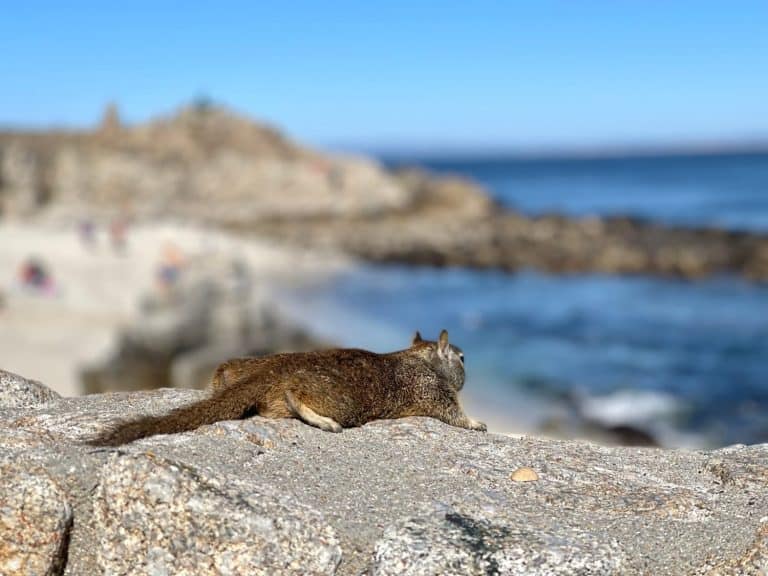
Ground squirrels (Marmotini) sleep and raise their young in complex, underground burrow systems. These burrows are usually 2.5 to 4 feet below the surface. These tunnels, which may be in fields, along fencerows, or under rocks, provide protection from predators and harsh weather.

Ground squirrels spend most of their lives in underground burrows.
©slowmotiongli/Shutterstock.com
Ground squirrels are true hibernators that use deep torpor to survive winter. During this period, ground squirrels go into their burrows to sleep. Their body temperature drops, and their metabolism slows down. This period can last from five to eight months, depending on the environment.
Most ground squirrels do not leave their burrows in the winter, only emerging in early spring, when the temperature has risen sufficiently.
Where Do Squirrels Sleep When It Rains?
Squirrels protect themselves from getting wet by staying in their dreys when it rains. Because they are small animals, it is difficult for them to control their body temperature when they are wet.
If they get caught in the rain, squirrels protect themselves by using their tails as makeshift umbrellas. Even though their tails might get soaked, the rest of their body stays relatively dry.