
Quick Take
- Male cuttlefish have a deceptive trick for outmaneuvering rivals that has nothing to do with size or strength. See the deceptive rival trick →
- Their color-shifting isn't just for show. It plays a dual role that rivals never see coming. Explore the dual-role camouflage →
- These normally solitary creatures transform their behavior so dramatically during mating season, it's hard to believe they're the same animal. Discover the seasonal behavior shift →
- Most male competition ends without a single bite, though a specific trigger exists that pushes it past the point of no return. Find the fighting trigger →
Every species of animal in the world has a unique mating ritual. These courtship displays highlight each species’ unique traits and behaviors, offering valuable insights into their lives. One example is the cuttlefish, whose underwater dance of sorts is fascinating to watch. A YouTube video by Earth Touch captures this ritual. Read here to learn more about the cuttlefish’s courtship display.
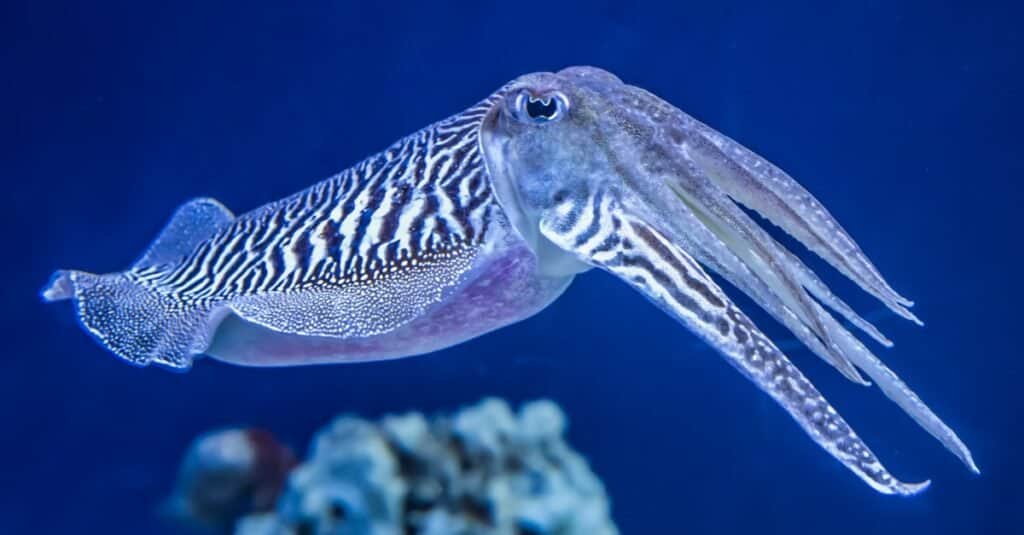
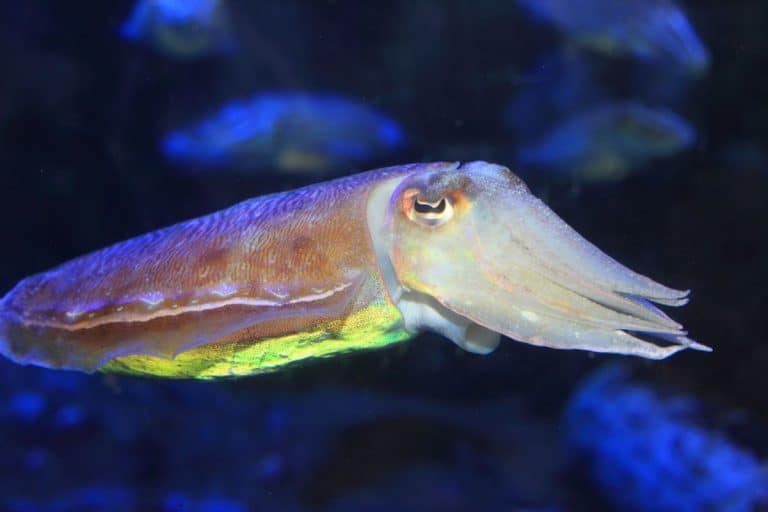
Cuttlefish can shift their appearance from dark brown to zebra-like stripes, a trait they use to impress females during mating season.
©David A Litman/Shutterstock.com
The Cuttlefish Courtship Display
When you think of courtship displays, it’s normal to think of animals like birds first. However, marine animals like cuttlefish also have their own fascinating courtship displays. To successfully find a mate, cuttlefish go through intense rituals in which males compete with each other. While these competitions are mostly displays, they can sometimes become aggressive. These displays consist of several main behaviors.
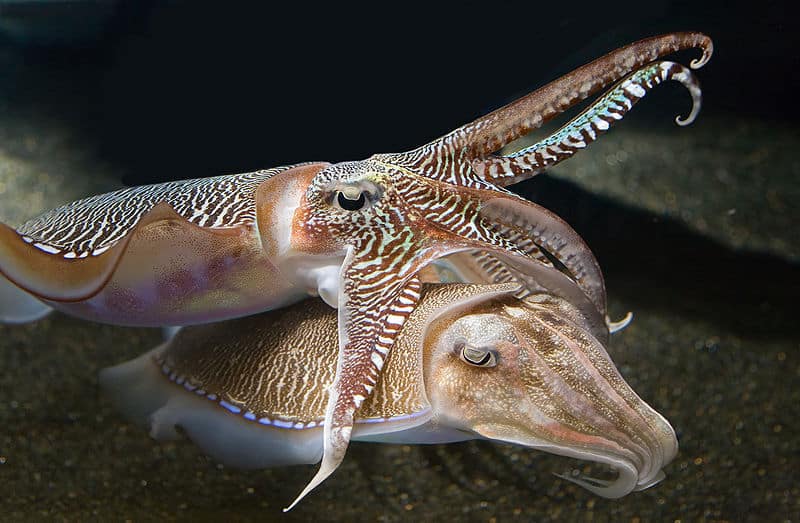
First, males rapidly change their colors and patterns, shifting between zebra-like stripes and bright flashes of color. This signals dominance, as seen in the video when they shift from dark brown to black-and-white patterns. They also use their pattern shifting to confuse other males. If another male is present, a male may mimic a female’s appearance to distract the rival and gain access to the actual female. When successful, the male stays close to the female, guarding her from other males. The male then uses a specialized arm to transfer sperm to the female, completing the courtship ritual.
When males compete with each other for a mate, these encounters can sometimes become physical. Most of the time, color and pattern signaling are sufficient. However, if a competing male does not back down, the males may bite or grapple. Mating season varies by species, but the famous giant Australian cuttlefish mates between May and August. Cuttlefish are usually solitary, but during mating season, they gather in large groups that can number in the thousands. The remarkable mix of colors, patterns, and behaviors highlights how cuttlefish mating rituals are distinct from those of other animals.