
Quick Take
- A juvenile eagle too weak to win a direct fight still walked away with the prize, and researchers actually have a name for the strategy it used. See the named strategy →
- Benjamin Franklin once accused bald eagles of having bad moral character, and scientists say he wasn't entirely wrong.
- Adult bald eagles dominate through size and aggression, but there's a specific window of distraction that flips the entire power structure. Explore the dominance hierarchy →
- Young eagles are significantly worse at one critical survival skill, and stealing isn't just bad behavior. It's how they stay alive long enough to get better. See how stealing aids survival →
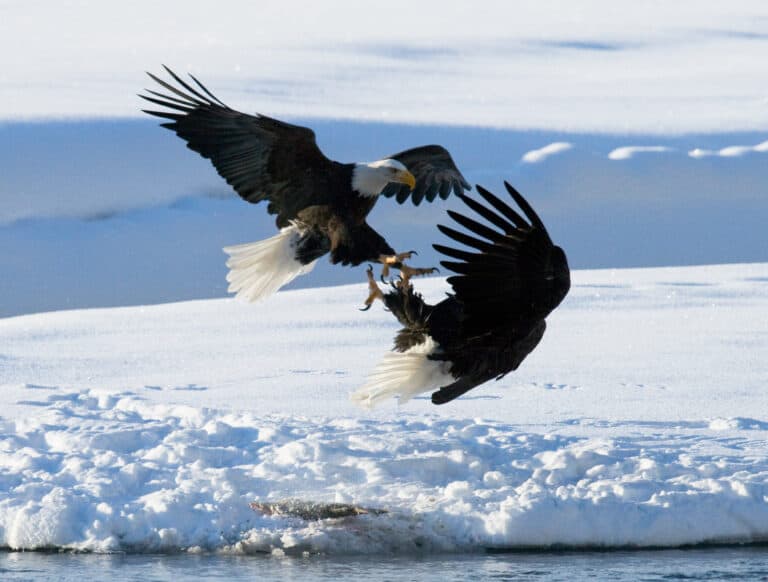
In the slow-motion video above, which was captured by wildlife photographer Mark Smith, you can see several bald eagles crowd around a single fish stuck on wet rocks. Adult eagles face off with their wings spread wide and claws raised, a younger bird swoops in from above to challenge them, and a juvenile eagle that was watching from the side eventually grabs the prize and flies off with it. The short clip shows a behavior that scientists know very well: bald eagles love to steal food, and fights over meals are a normal part of their daily lives.
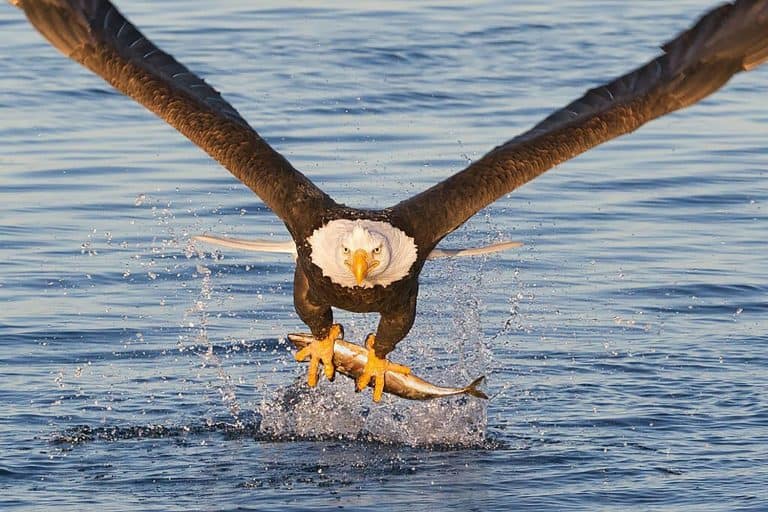
Stealing food from other animals — or from each other — is a common practice, and bald eagles are among the most studied food thieves in the animal kingdom. Research by expert Mark Stalmaster and others showed that when eagles gather where salmon swim or water birds nest, they spend a huge chunk of their hunting time trying to swipe fish from their neighbors instead of catching their own. Doing this saves energy. Snatching a fish that is already on land takes much less effort than catching a fresh one out of the water, especially in the winter when food is hard to find.
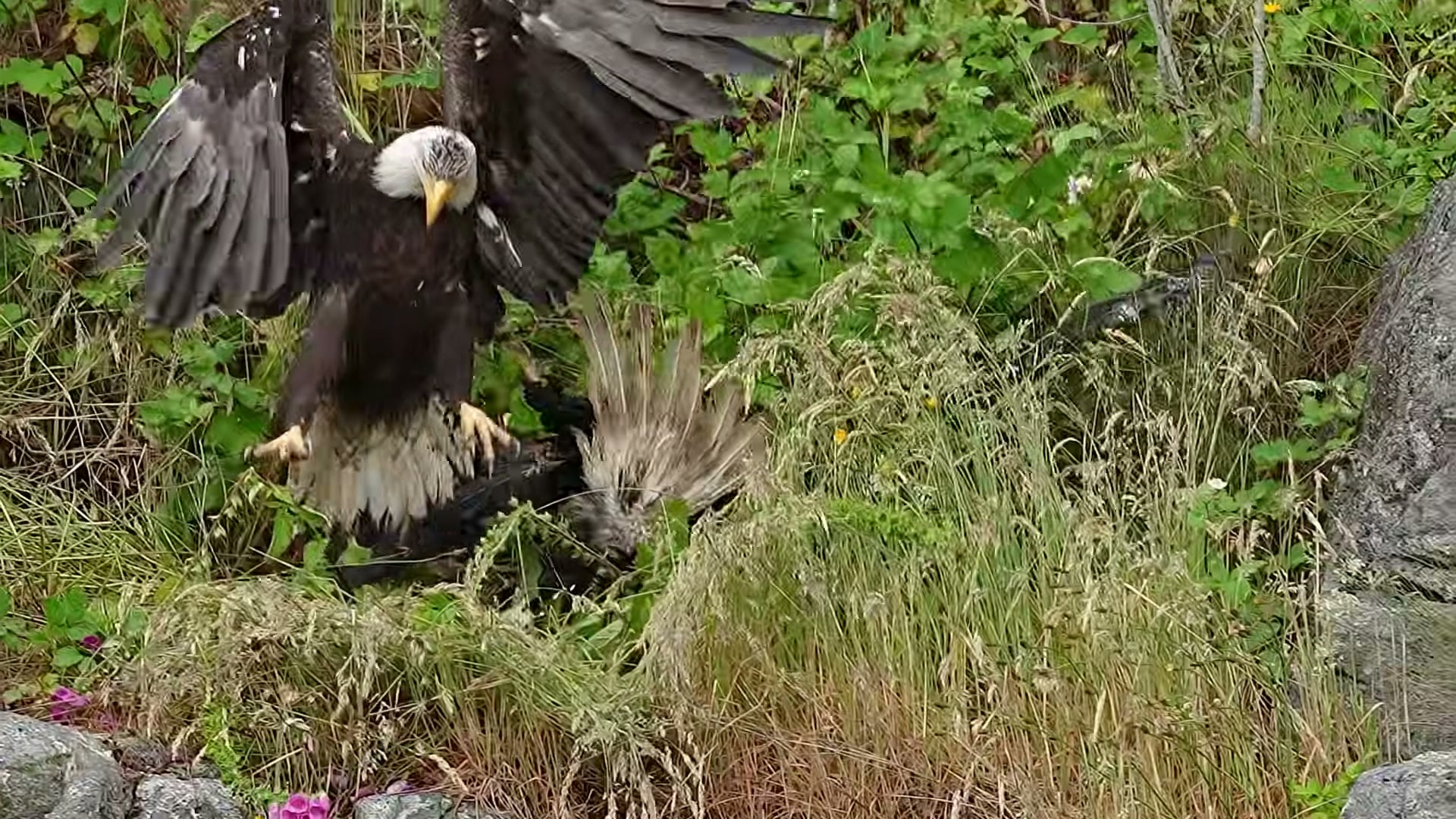
The wings and talons are evidence of just how aggressive these birds can be.
©Mark Smith Photography via YouTube — used under fair use – Original / License
Size, Age, and the Chain of Command
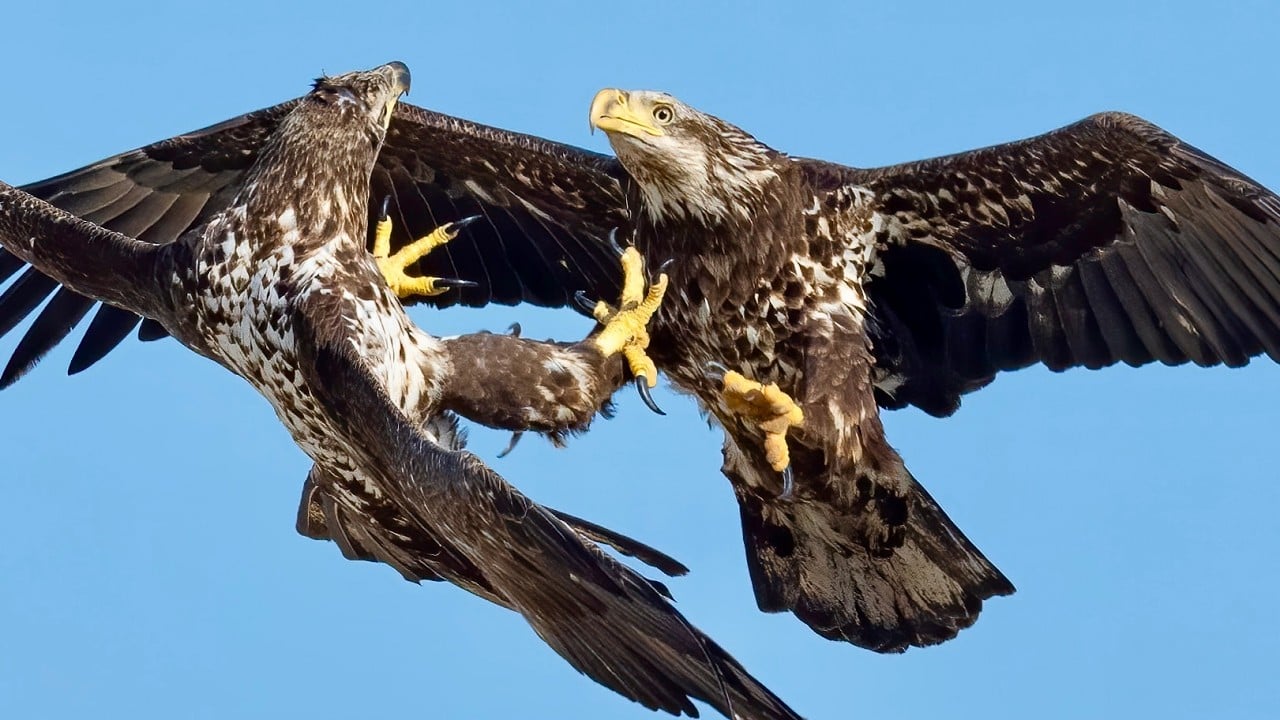
The body language shown in the video follows a well-known order of power and authority. Spreading their wings, opening their beaks, and raising their neck feathers makes the birds look bigger and shows they are ready to fight. Locking claws in mid-air and tumbling together is the most extreme type of fight. Eagles usually do this to defend their territory or during mating displays rather than over food, though it can happen at a meal if neither bird gives up. The Cornell Lab of Ornithology notes that most fights are settled through these visual warnings alone. Actual physical contact is kept short because getting hit by those sharp claws can cause serious injuries to both birds.
Size and age play a big role in these fights. Adult bald eagles, which are easy to spot by their white heads and tails, are almost always in charge over younger birds. These younger eagles keep their patchy brown feathers until they are about five years old. Female eagles are also about 25 percent larger than males, a size difference that is common in birds of prey where the females are the bigger sex. In a crowded feeding spot, the biggest bird usually wins a direct fight. That is why the adult in the video takes charge at first when it lands with its claws out, and why a rival that drops on top of it quickly backs away once it realizes who it is picking a fight with.
Work Smarter, Not Harder: Young Eagles at Work
The young eagle’s strategy is the most interesting part. Instead of jumping into the middle of the fight, the young bird waits close by, keeps its eyes on the fish, and moves in the second the adults get distracted. This matches what researchers call opportunistic stealing. It is a trick that lower-ranking animals in many group-feeding species use to get around the normal chain of command. Studies on birds of prey and birds in the crow family show that lower-ranking birds often get food through good timing rather than strength, taking advantage of quick moments when the dominant birds are busy fighting each other (Bildstein, Raptors: The Curious Nature of Diurnal Birds of Prey, 2017).
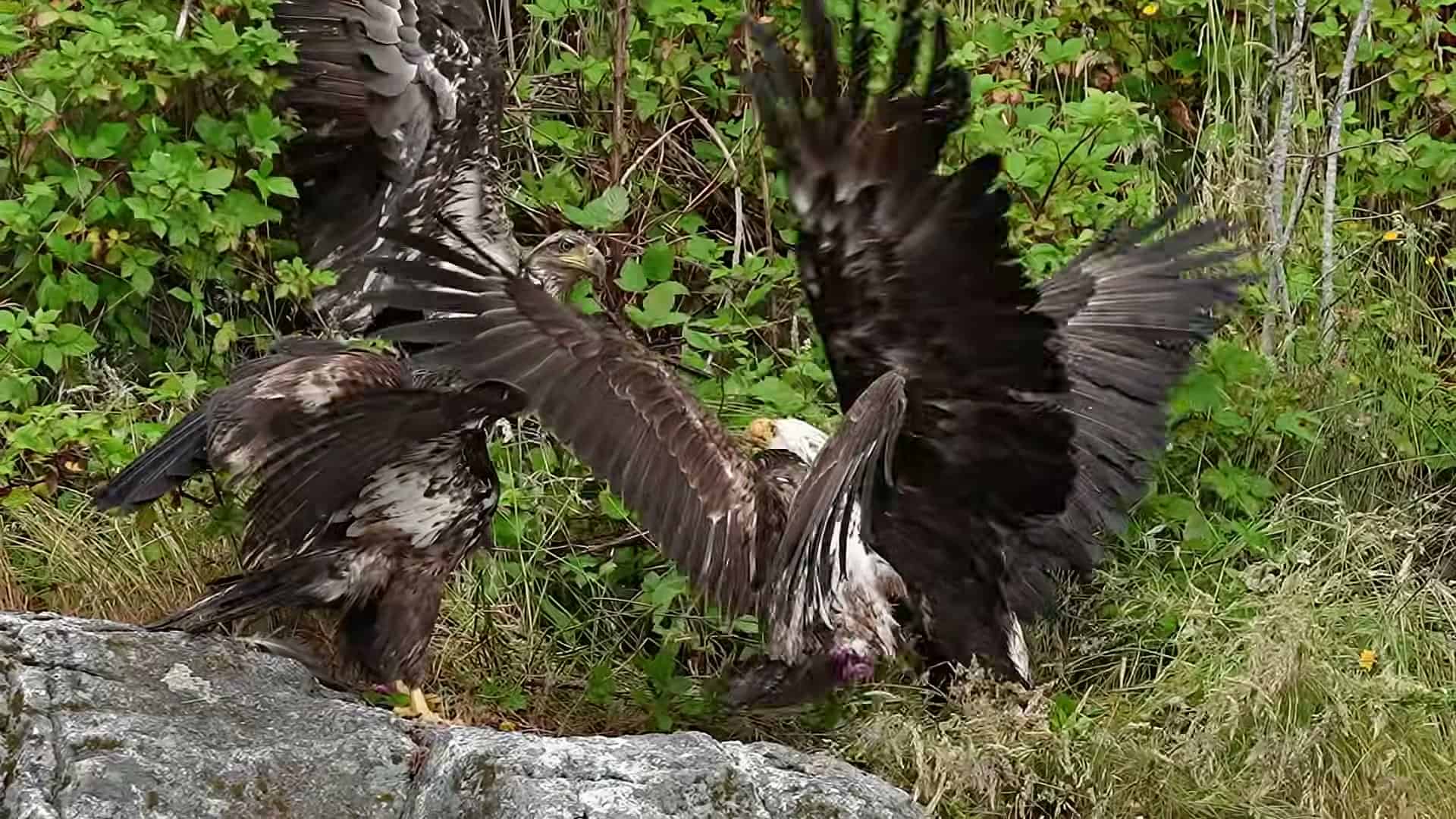
In a crowded feeding spot, the biggest bird usually wins a direct fight.
©Mark Smith Photography via YouTube — used under fair use – Original / License
Young bald eagles have a lot to learn, and watching others seems to be a big part of how they pick up new skills. Young eagles are known to follow adults around feeding areas, and their hunting success gets much better as they get older. A 1994 study in the Journal of Raptor Research found that first-year eagles were far worse at catching fish than adults. That is one big reason why so many young eagles rely on eating leftover food and stealing during their early years. The young bird in the video is a great example of this pattern. It cannot win a fight using pure strength against the adults, so it uses patience and good positioning instead.
A common mistake people make about bald eagles is thinking they spend all their time actively hunting. Benjamin Franklin famously complained that the bald eagle had “bad moral character” because it stole fish from ospreys. While judging a bird’s morals isn’t scientific, his observation of their behavior was spot-on. Bald eagles happily eat dead animals, steal fish from ospreys and gulls, and fight each other over large piles of food. Active hunting is only one piece of how they find meals.
What the video captures illustrates a natural set of behaviors, including showing off who is boss, stealing food from their own kind, and a young bird using observation and smart timing to grab a meal it could never win in a direct fight.