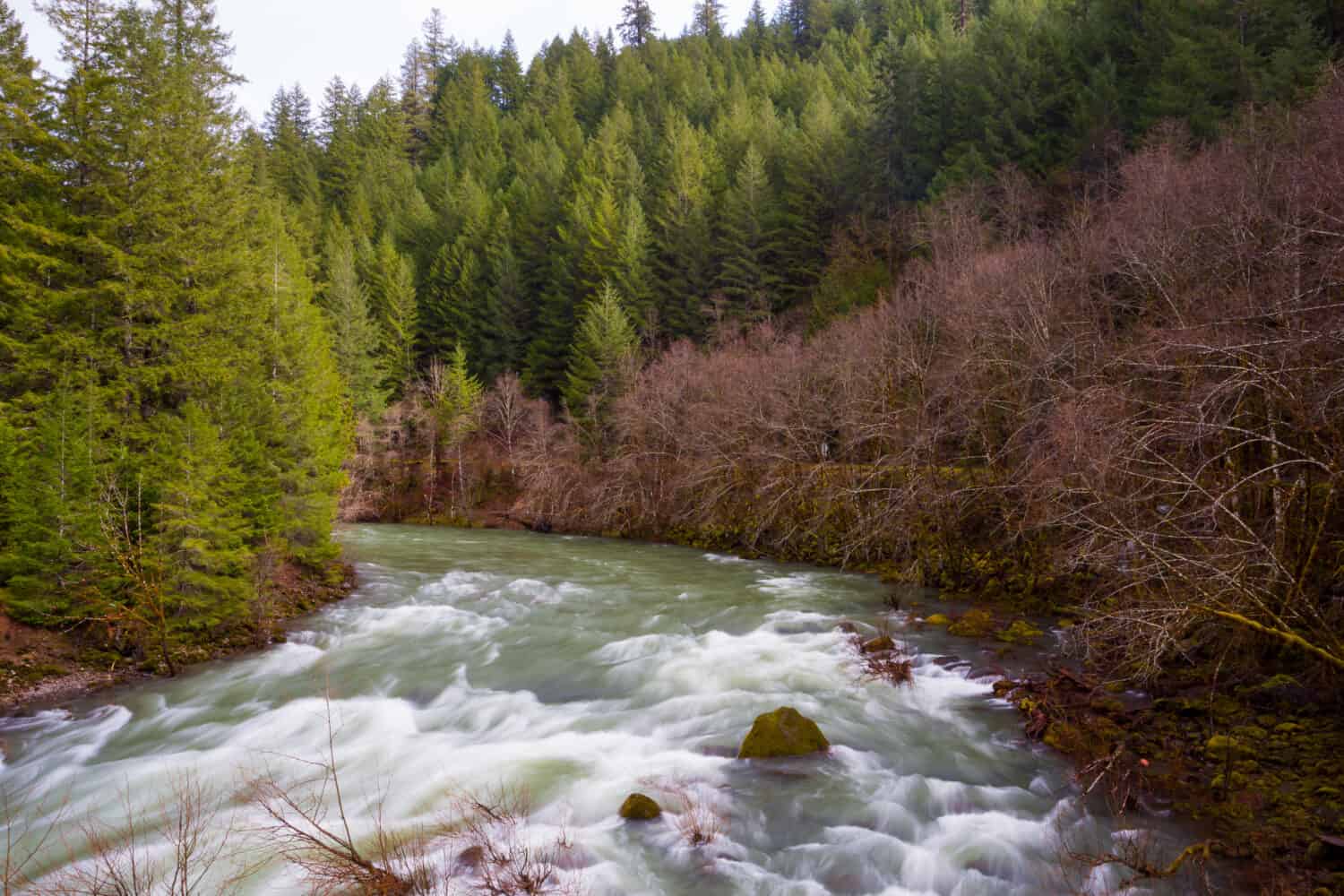

The mainstem Willamette River starts at the confluence of the Middle and Coast Forks that originate in the mountains south and southeast of Eugene. It runs for 187 miles north and ends when it joins the Columbia River. Its route through Oregon is bordered by the Cascade Mountain Range to the east and the Coast Range to the west. It also passes through the cities of Eugene, Salem, and Portland. This mighty river has the largest watershed in the whole of the state, covering 11,487 square miles. It is also the 13th largest river by volume in the contiguous United States and features the second largest waterfall by volume in the country—Willamette Falls in Oregon City, which is second only to Niagara Falls. Around 70 percent of Oregon’s population lives within a 20-minute drive of the river. In addition to its importance for people, the river is also home to a wide range of freshwater animal species. Let’s explore some of them.
Sturgeon
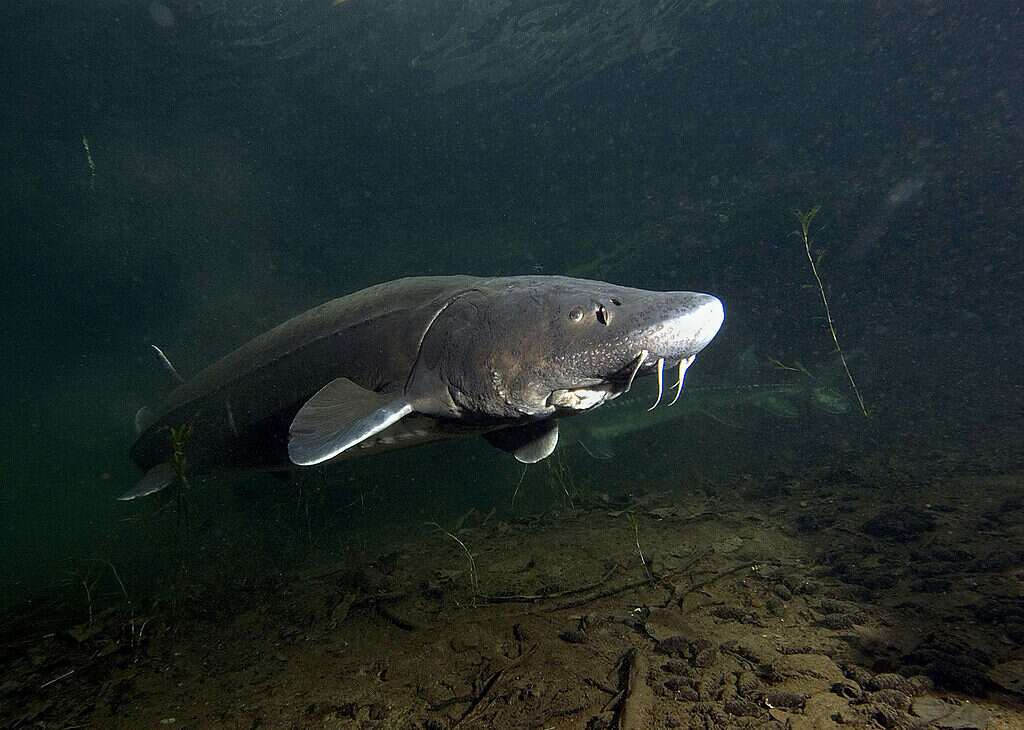
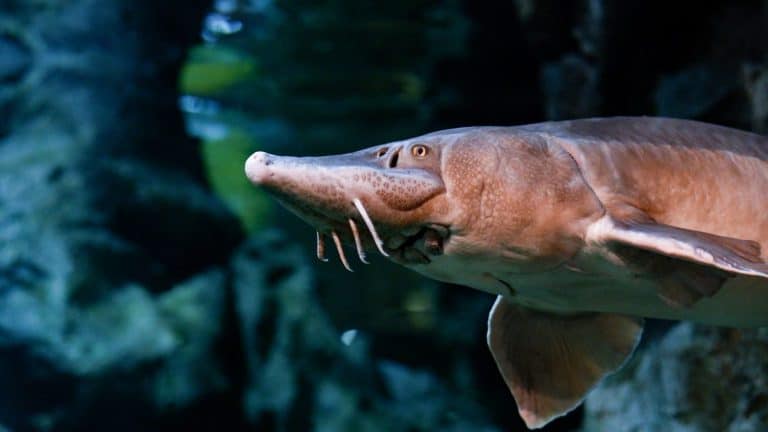
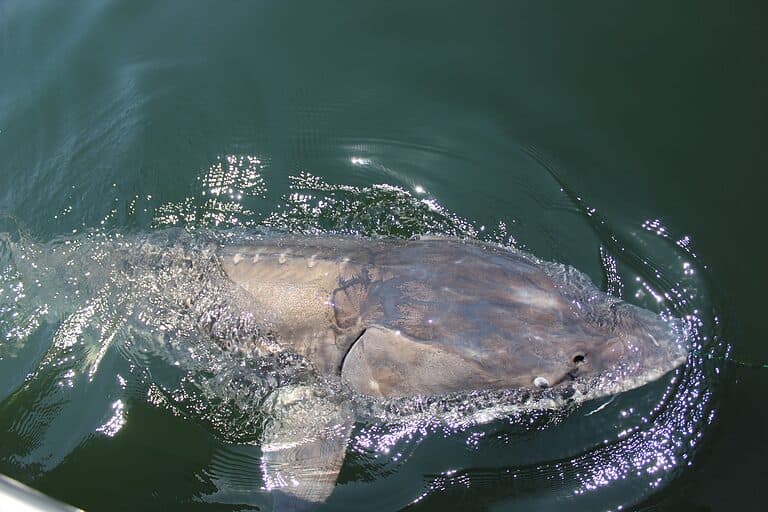
White sturgeon look like prehistoric creatures.
©Oregon Department of Fish & Wildlife / CC BY-SA 2.0 – Original / License
Both green and white sturgeon populations are found in the river. Green sturgeon have olive to dark green backs. Their stomachs are yellow or green-white with a green stripe down the middle and grow to around 7 feet. White sturgeon can reach 20 feet, but are more generally around 10 feet long. Sturgeons can live for over 100 years and do not mature until they are 25 years old. White sturgeon can be caught using stinky bait, as they use their barbels to smell and feel food. Putting the bait on the bottom is the most effective option. According to the Oregon Department of Fish and Wildlife, however, Green Sturgeon may not be targeted for retention or catch-and-release angling. If you accidentally catch one, they must be released immediately unharmed.
Chinook Salmon
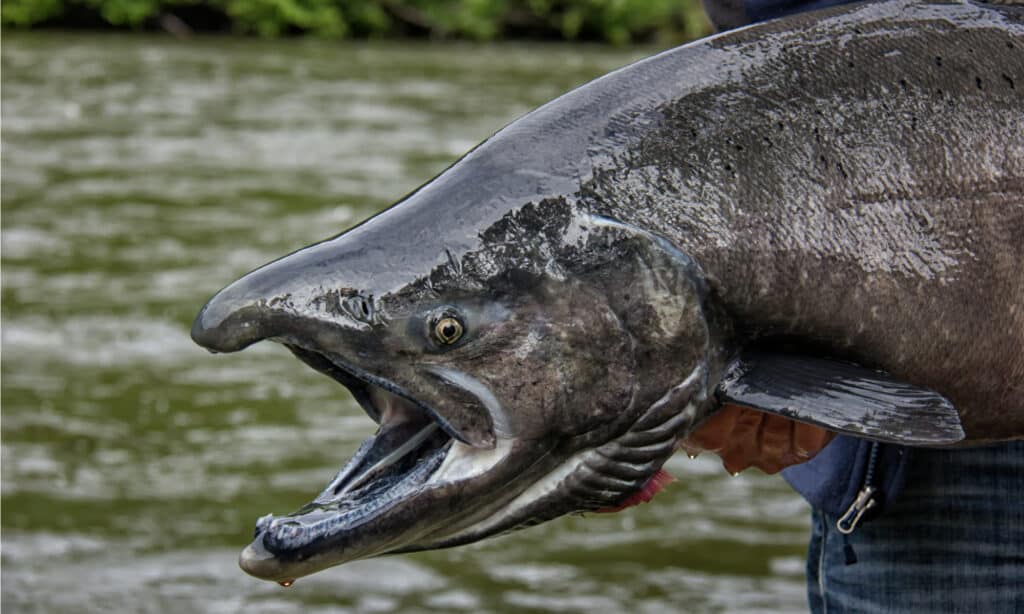
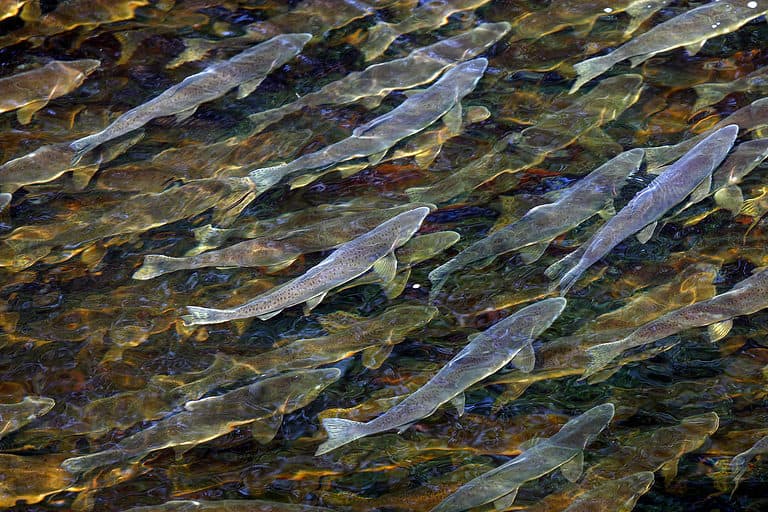
A black streak along the gum line of the Chinook Salmon gives them the alternate name of blackmouth.
©Martin Rudlof Photography/Shutterstock.com
The chinook salmon (Oncorhynchus tshawytscha) is the largest of all the Pacific salmon species. They can frequently reach lengths of 5 feet or more and weigh up to 100 pounds. You can recognize them by their deep blue-green back and silvery sides. In freshwater, they darken in color and develop red on their bellies and fins. Males have a hooked nose and a ridged back. Adults return to the freshwater rivers and streams where they hatched to spawn and die shortly after. In freshwater, the fry and smolts feed on plankton, then on terrestrial and aquatic insects, amphipods, and crustaceans. Adult fish returning to the river do not feed. Seasons and bag limits for salmon can vary from year to year, so in-season updates need to be checked. The Upper Willamette River Chinook salmon is a threatened species.
Coho Salmon
©United States Fish and Wildlife Services / Wikimedia Commons
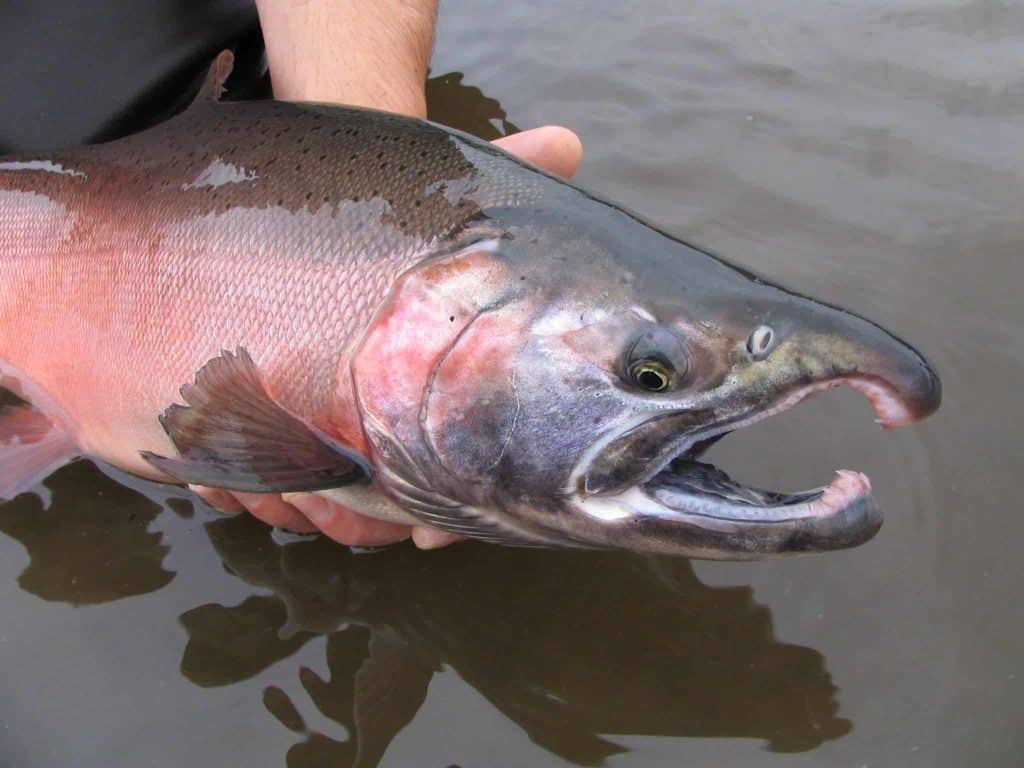
Beginning in September, coho salmon are found in numbers in the Willamette River. Seasons and bag limits can vary from year to year and need to be checked. Adult coho salmon usually weigh 8 to 12 pounds and are 24 to 30 inches long. They spend almost half of their lifecycle in freshwater before migrating to the ocean. The young feed on plankton, crustaceans, and insects. In the ocean, they eat squid and small fish. These fish are commonly called the ‘silver salmon’. When they return to freshwater to spawn, they become red on their sides and dark greenish on their backs, heads, and fins. Adults usually weigh around 15 pounds but can reach 25 pounds.
Trout
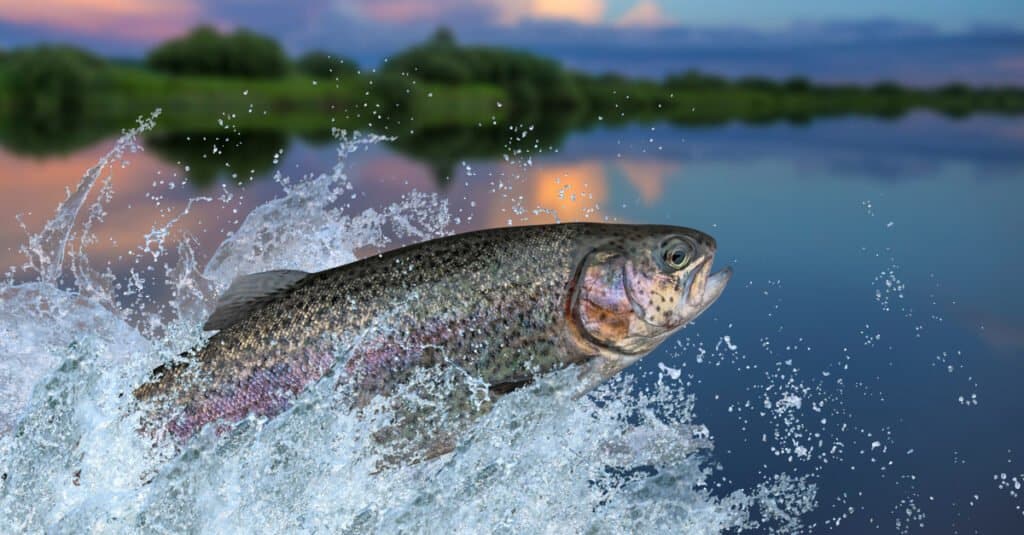
Rainbow trout are commonly found in the Willamette River.
©FedBul/Shutterstock.com
Trout species in the Willamette River include steelhead, rainbow, and cutthroat. Steelhead trout are migratory rainbow trout. They are born in freshwater, migrate to the ocean for their adult lives, and then return to freshwater to reproduce. Adult freshwater stream rainbow trout average between 1 and 5 pounds. Adults generally have a blue-green or olive green coloring with heavy black spotting over the length of the body. However, color varies between regions. Rainbow trout are predatory fish that will eat just about anything they can get hold of. This includes all life stages of aquatic insects, fish eggs, and terrestrial insects that have fallen into the water. Seasonal regulations apply to trout fishing in this river so read them carefully. The best areas for trout fishing include the upper Willamette River mainstem and the area above Albany.
Western Pearl Shell Mussels
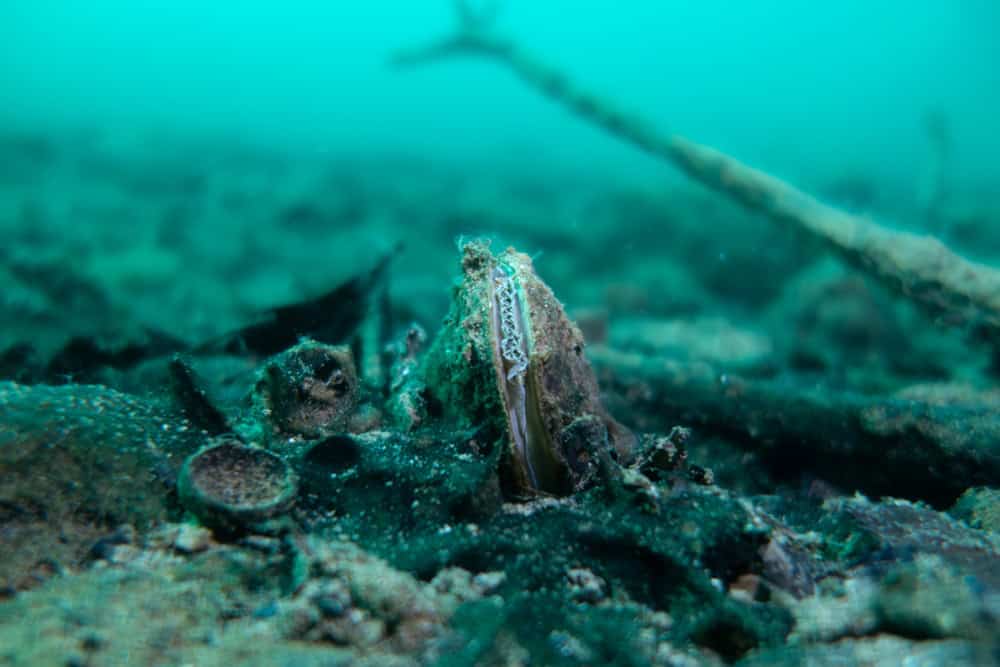
©P. Fromentin/Shutterstock.com
Western pearl shell mussels are about the size of a small fist and reside at the bottom of the Willamette River. They get their name from the iridescent lining of their shells. These incredible creatures can live to over 100 years old in the right habitat. River otters and sturgeon feed on them, but their numbers are in decline. The section of the river known as Norwood Island contains the largest population of mussels in the Willamette River. They rely on healthy stocks of fish for their reproductive cycle. This means that any challenges faced by the fish species will also affect the health of mussel populations.