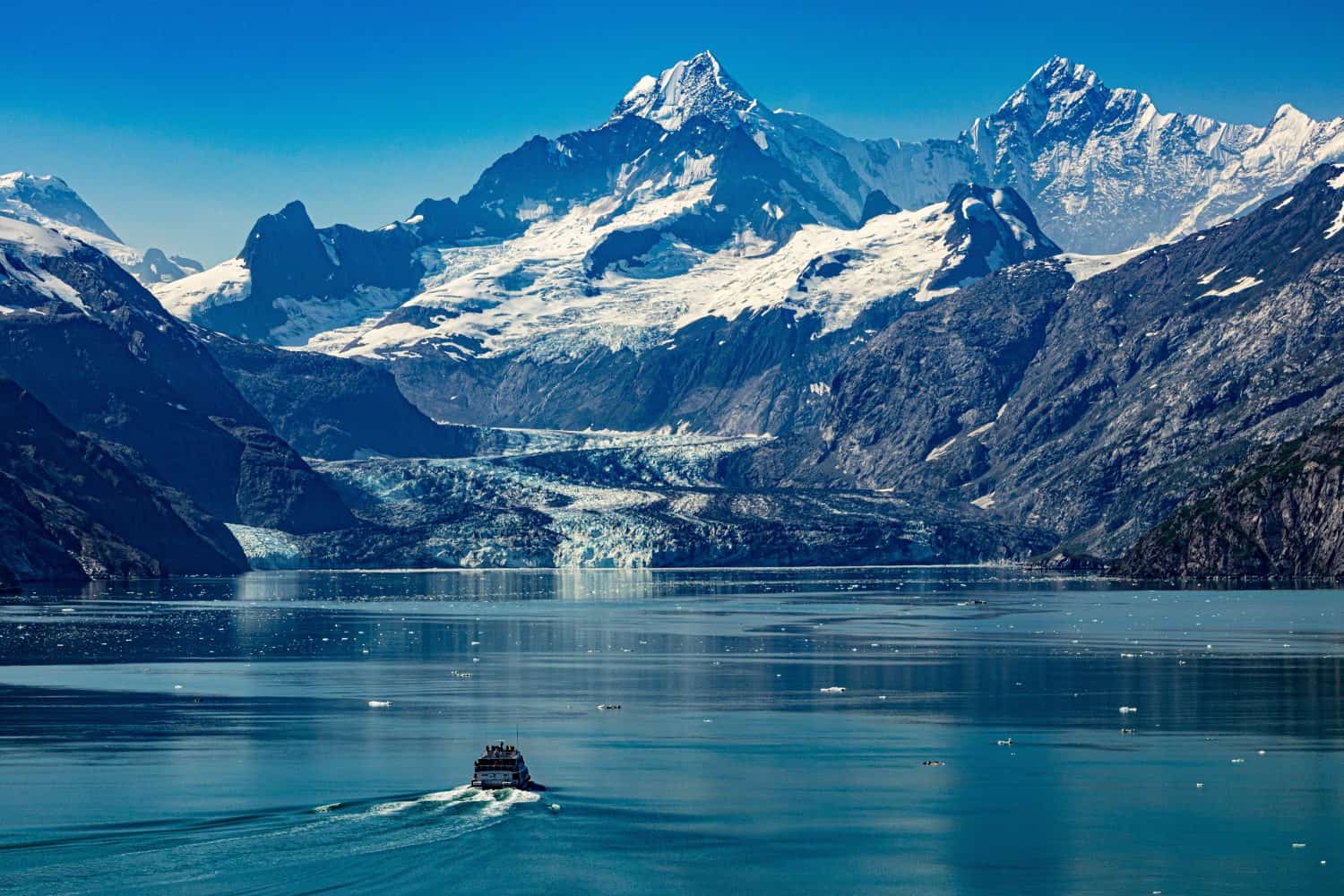

Glacier Bay National Park and Preserve is a gorgeous park located in the Southeast area of Alaska near Juneau. A visit to this park will put you right in the middle of amazing winter landscapes that come complete with impressive tidewater glaciers and a variety of fascinating animals.
Your visit will also provide the chance to look up in wonderment at towering mountains that escalate nearly three vertical miles. This is also a popular destination for glacier enthusiasts, boasting over 50 named glaciers. Try to see them all. One of them, the Margerie Glacier, frequently calves, and you can see huge chunks fall off into the ocean. It’s quite a sight to see.
Most people get to Glacier Bay National Park by boat, but you can also explore much of the park on foot. The park gets nearly 400,000 visitors per year. While there, they can explore, take day cruises, enjoy private kayak tours, hike the trails, and more. Of course, many visitors also flock to the park to see the majestic animals, of which there are many. You’ll find creatures exploring the forests, the icy waters, or journeying across the skies. Below is a list of every species you’ll see during your adventure.
Black Bears
Black bears are among the many amazing animals you’ll see at Glacier Bay National Park. There’s a good chance you’ll visit one of these majestic creatures if you’re hiking through the many meadows and beaches of the park, because that’s typically where they’re looking for food.
More specifically, you have a good chance of finding them around the Gustavus Forelands and near Bartlett Cove. It’s unknown just how many black bears are wandering around the area, but there have been reports that at least 50-60 black bears live in the Gustavus Forelands on their own. You’ll further increase your chances by visiting the park during the late spring and fall seasons. If you see one, keep your distance for your safety.
Bald Eagle
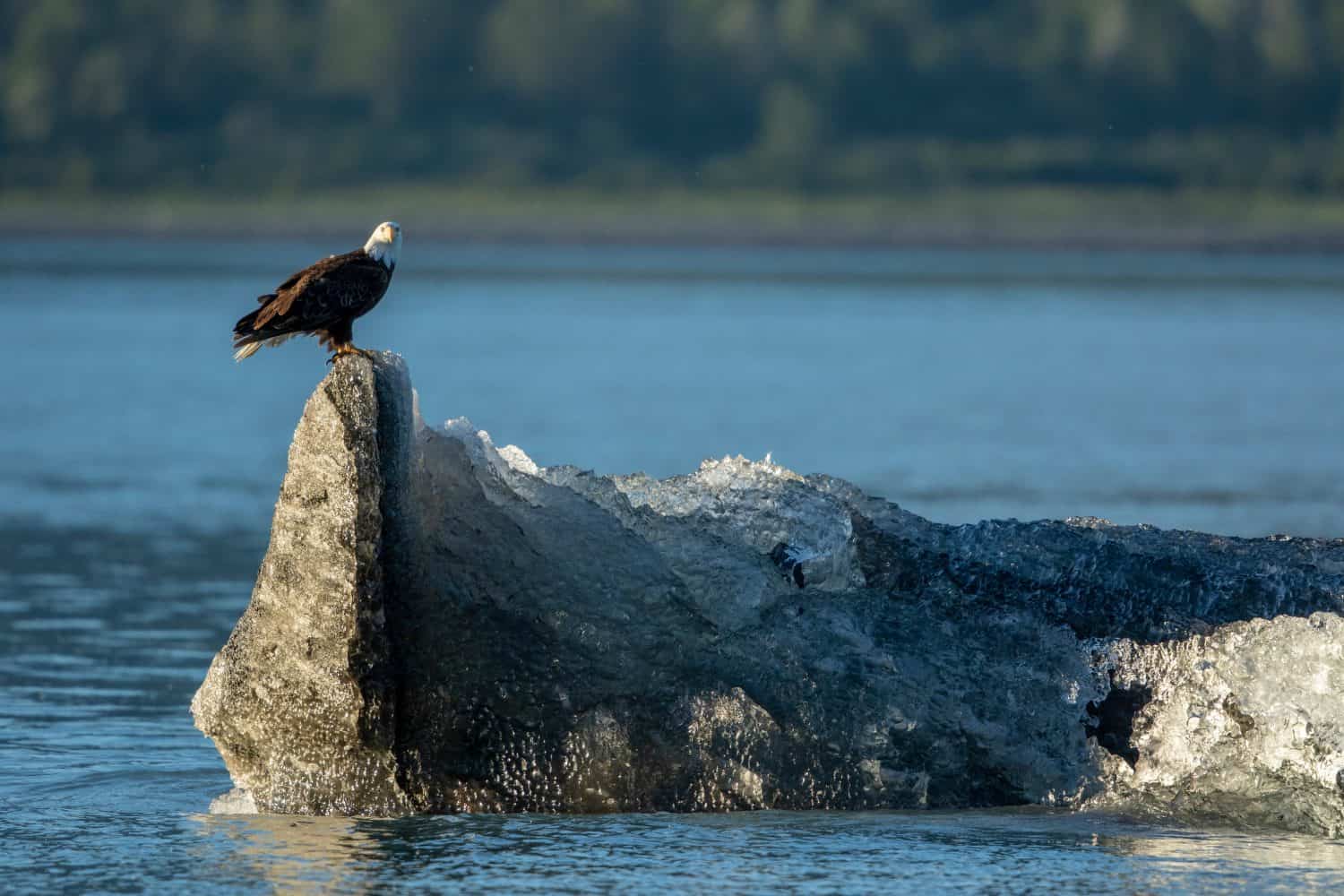
Alaska is a great place to visit if you want to see a bald eagle, and they’re at the park all year long.
©Danita Delimont/Shutterstock.com
It’s always an incredible sight to glimpse a bald eagle nesting in a tree or flying majestically through the air, and you’ve got a great opportunity to see one at Glacier Bay National Park. Since they’re often in flight and can be hard to track, it’s unknown how many bald eagles are living in and near the property. However, you can often see them along the many shorelines throughout the park. The eagles don’t migrate, so you can see them all year long, but you’ll increase your chances by visiting during the summer when the weather is warmer and the eagles are nesting.
Porcupine
Porcupines are among the more common animals that you’ll see scurrying along the ground during your hikes and excursions. It’s almost impossible to determine an exact number of porcupines that live in the area, but look hard enough and you’re likely to find one. They like to make homes in the forested areas of the park, especially near alder, spruce, hemlock, and cottonwood trees. You can see them all year long, but if you’re a true fan of the species, visit the park between spring and fall and during the low-light and evening hours. Keep your eyes open when traveling through areas with dense foliage.
Moose
No trip to Glacier Bay National Park would be complete without finding at least one moose. The first of the moose population was spotted in the 1960s, and they have established a home in the park ever since. Moose are quite adept at evading attention, so staying focused is key if you hope to spot one. For best results, travel through the forested coastal and wetland areas, especially near the Gustavus Forelands and other low-elevation terrain. Moose are out and about all year long, but your best chances of seeing one are during spring and fall, when there is less snow and fewer places to hide.
Wolves
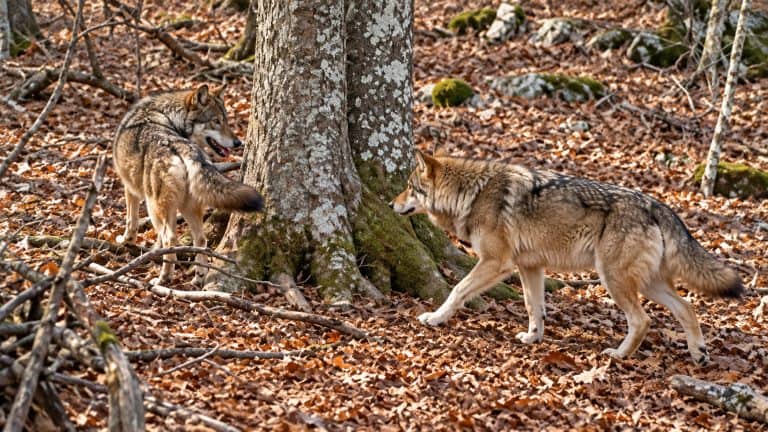
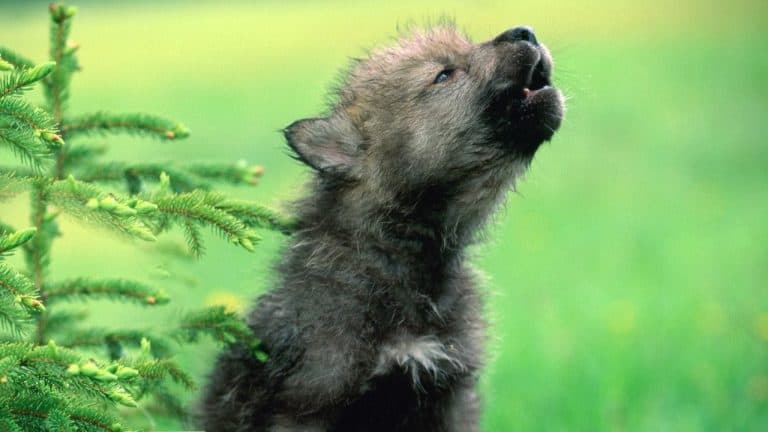
Though you should be cautious about approaching them, there is a good chance that you will spot at least one wolf walking around the park. It’s common knowledge that there are several packs established in the area. They’re quite secretive, so you may not spot them easily. However, if you’re actively looking for them, you can spot them anywhere from mountainous terrain to coastal shorelines and river valleys. More than anything, you’re likely to see their tracks during spring and summer.
Brown Bears
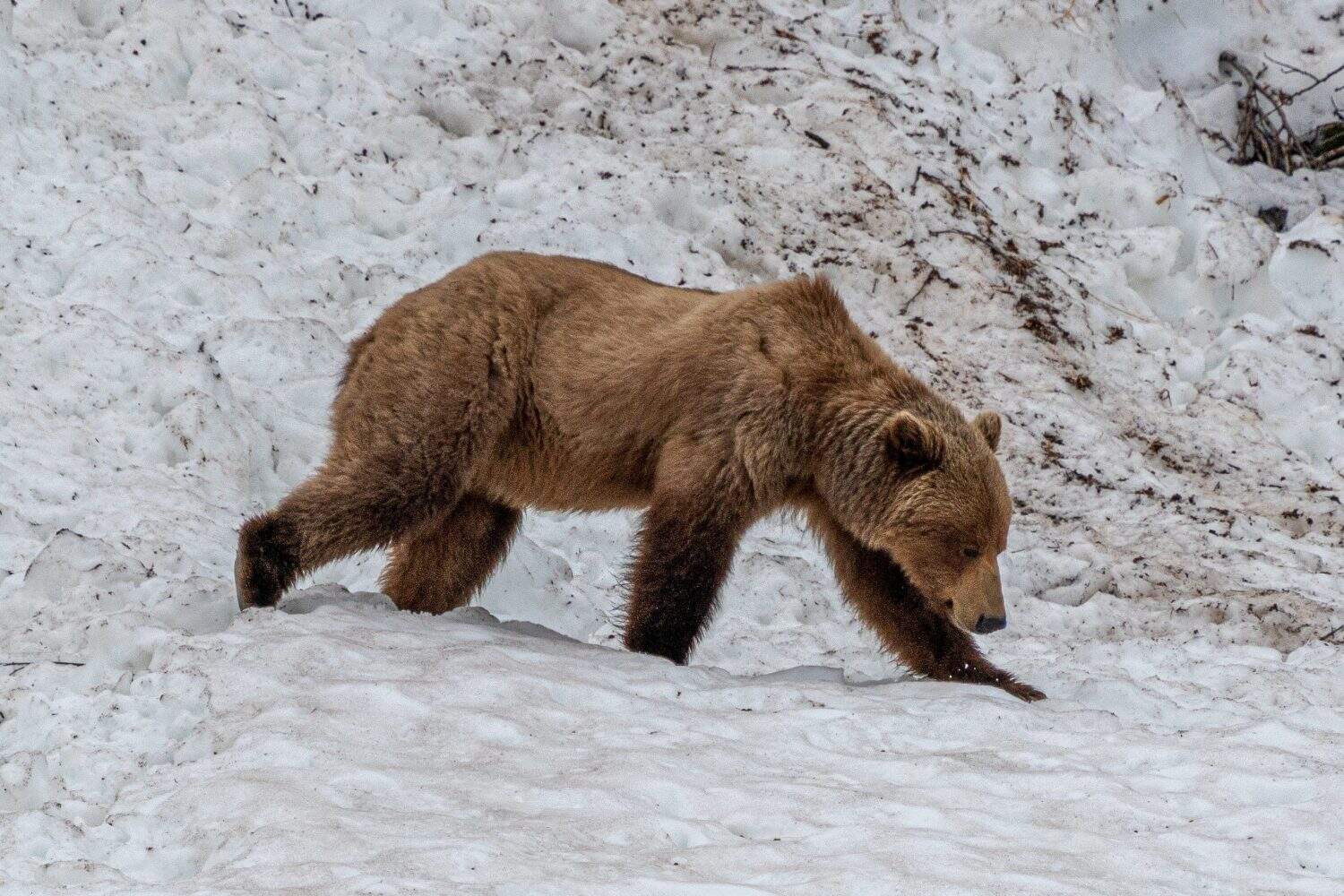
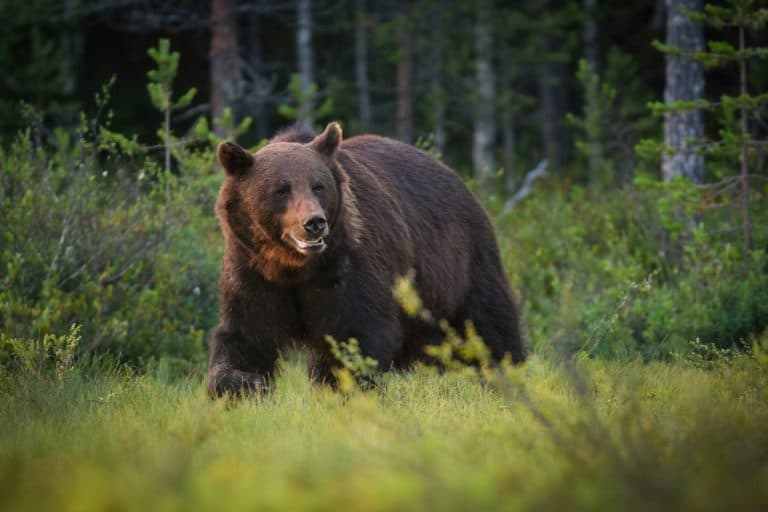
There are hundreds of brown bears exploring the park. Enjoy them from a distance.
©Alice121/Shutterstock.com
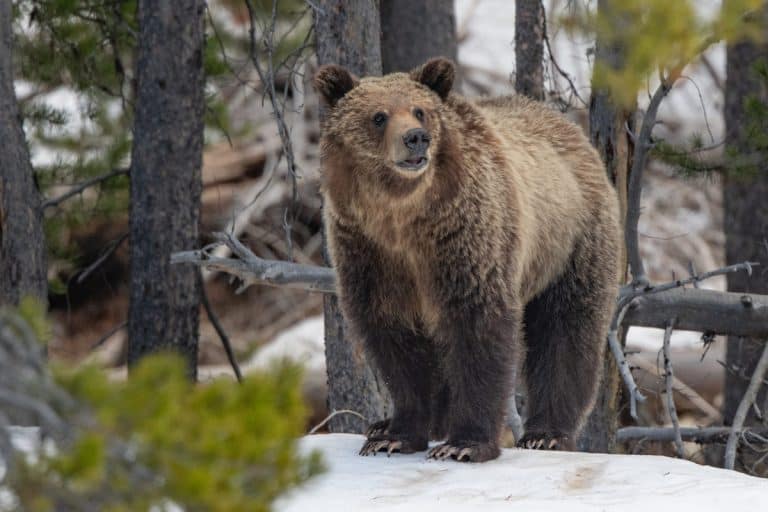
You may see the aforementioned black bears, or you may instead spot a brown bear during your visit to the park. Though an exact number is uncertain, it’s estimated that there are over 300 coastal brown bears in the area. You’ve got a chance of seeing any one of that group pretty much anywhere across Glacier Bay National Park. For the best chance, stick to the shoreline and along the edge of the forests. They’re most visible from summer to early fall when they’re foraging for food before they rest during winter hibernation.
Black-Legged Kittiwake
One of the most majestic bird species you’ll see flying over Glacier Bay National Park is the black-legged kittiwake. For those unfamiliar, kittiwake birds are coastal breeding birds that are often confused with seagulls. Kittiwake birds are a type of gull that is smaller in stature, but they nest by the thousands. Some notable nesting sites can be found along the cliffs near the Margerie Glacier. However, simply looking up at the sky can often be all you need to do to spot one in action. They typically breed between late spring and summer, so plan your visit then if you don’t want to miss them.
Ravens
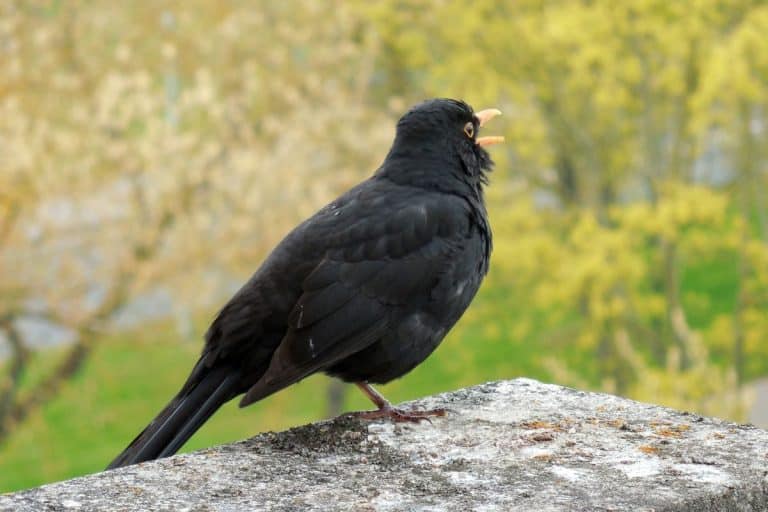
Another bird that calls the park home is the common raven. The park is also home to jays and crows, but ravens are relatively easy to spot. If you don’t see them, you’ll likely hear them because the creatures are famous for making hundreds of varied vocalizations. You’ll find them along the shorelines, cliffs, and forest edges. Ravens can be seen all year long, but you may spot them during the spring and summer months when they’re nesting.
Mountain Goats
A mountain goat sighting can bring your trip to Glacier Bay National Park to the next level, as they are quite a sight! Mountain goats are famous for their size and striking appearance, so bring your camera on your hike. During a survey conducted in 2012, experts counted over 800 mountain goats living in an area along the coast near Adams Inlet, so that may be a good place to start your search.
You may need to look up along the steep cliffs of the upper Glacier Bay region, since, as their name suggests, they love exploring mountains. You’re most likely to see a mountain goat during the summer months. That’s when their food supply is more abundant, so they’ll be out eating. During the winter, they often retreat to higher elevations where the snow is less deep and less dangerous.
Humpback Whale
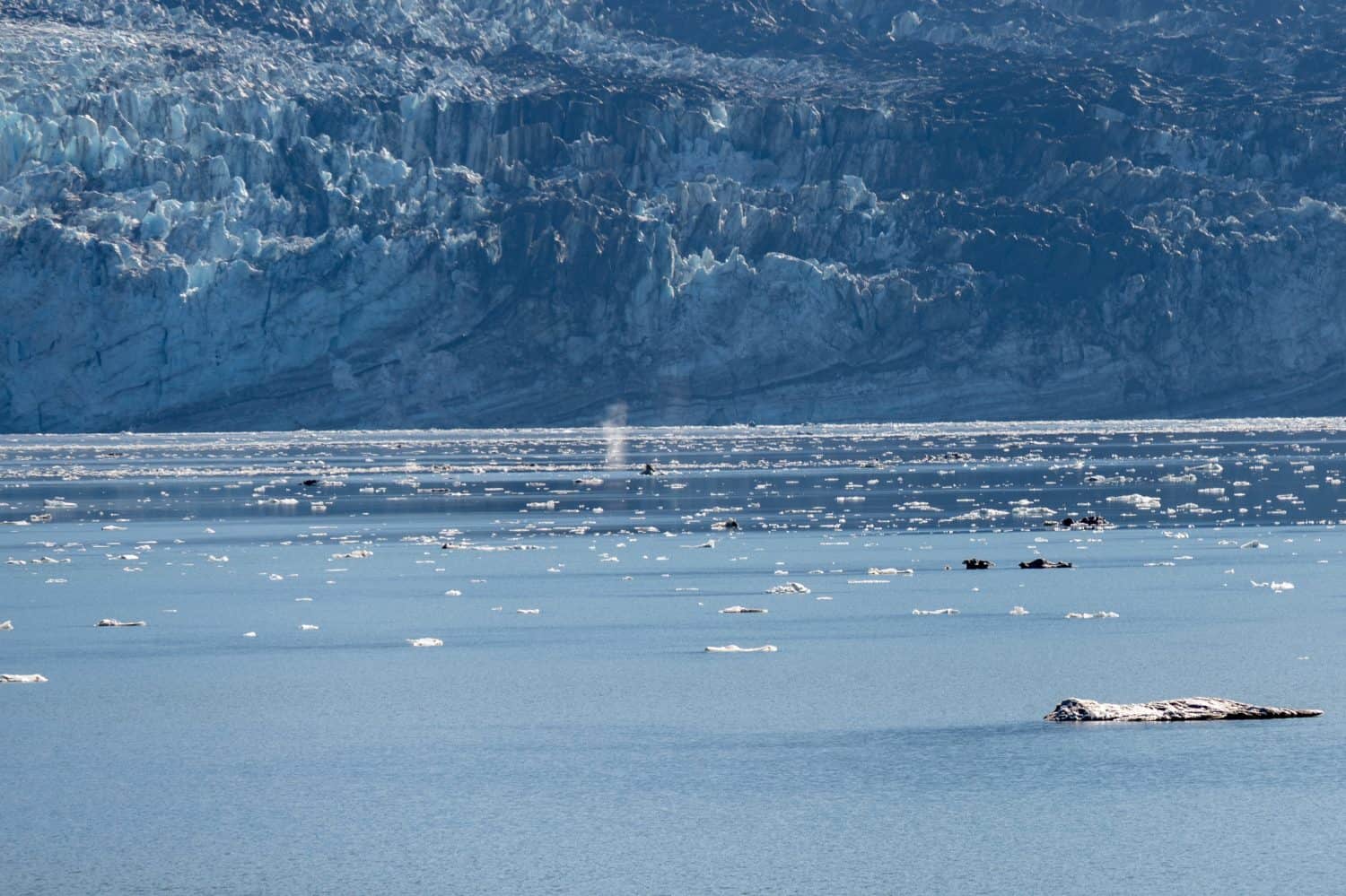
You’ve got a great chance of at least seeing the spout of a humpback whale by watching the water from land or taking a guided tour.
©Beth Fitzpatrick/Shutterstock.com
There’s also an abundance of awe-inspiring marine life found at Glacier Bay National Park, including massive humpback whales. Visit during the summer months and you’re likely to see them along the coast. In 2013, researchers spotted over 200 individual whales feeding and swimming in the waters of the Icy Strait and in Glacier Bay. You can spot them from the mainland or take a boat tour and get up close and personal.
Harbor Porpoise
The harbor porpoise is one of the more common aquatic creatures you’ll see at the park. They’re often seen in the water, swimming in groups of between 2 and 10 at a time. If you’re looking out at the water and you see their distinctive triangular dorsal fin coming out of the water, get your camera ready. Recent surveys suggest there are close to 1,000 harbor purposes in the area. The best chances of seeing one are during the months of May through September, when there’s less ice in the water.
Marbled Murrelet
As one of the more common sea birds in the area, your chances of catching sight of a Marbled Murrelet in the water are pretty good. Surveys conducted in 2016 suggest that there are more than 60,000 of this species in the area. You’ll typically catch them in the lower and mid-bay waters near the coastal forest edges, where they’re often seen nesting during the month of July. You’ll often see them diving into the water looking for fish to eat.
Tufted Puffin
Tufted puffins are fairly common at the park. Though exact numbers fluctuate with time, many tourist groups often catch hundreds of them at a time. Their breeding season runs from spring to late summer, making it a great time to try to spot them. You may catch them on land, specifically on the beaches of the park, or out in the ocean waters. You can see them near the “Gloomy Knob” region of the park.
Stellar Sea Lion
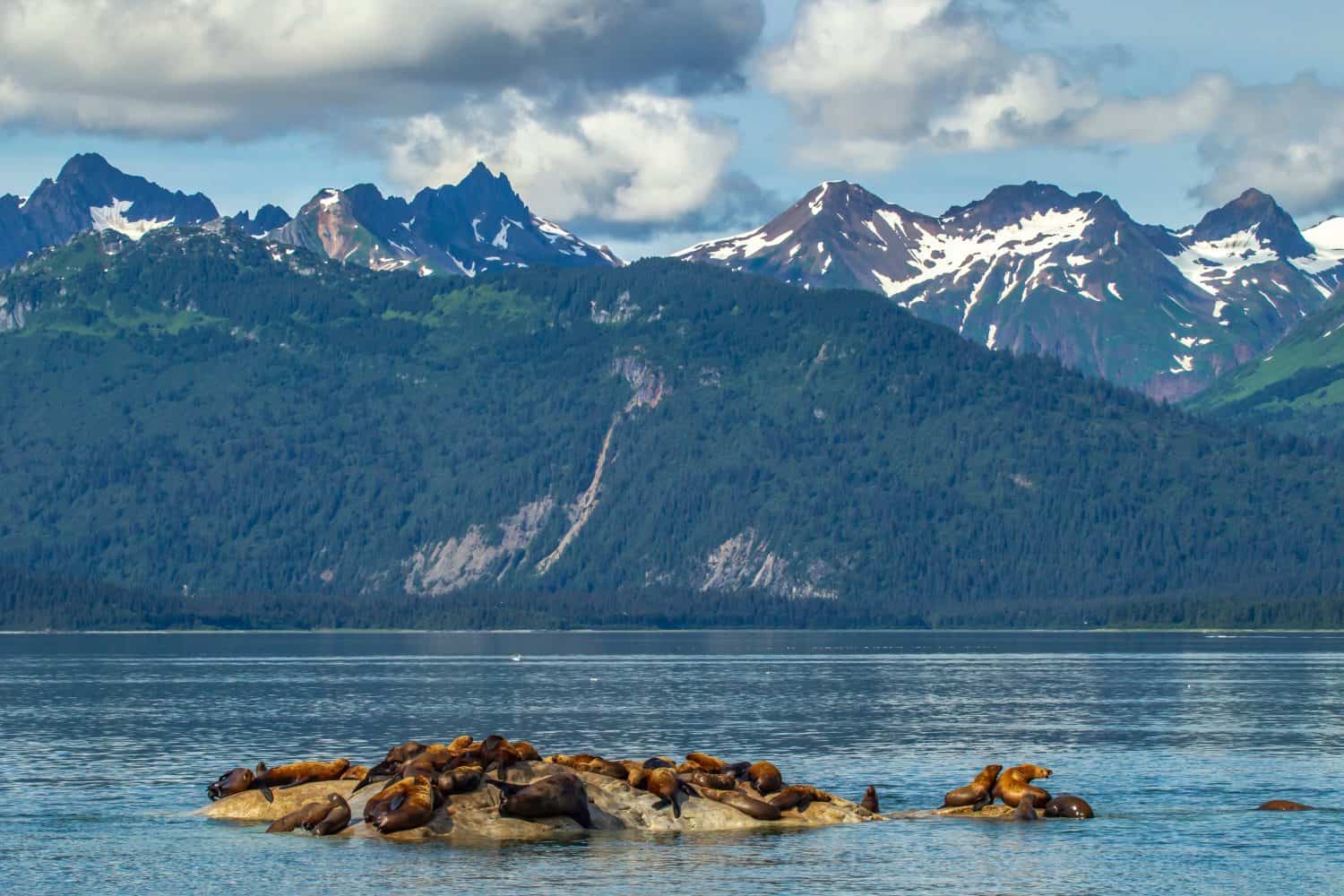
Visit the park during the spring and summer months, and you can see sea lions during breeding season.
©Danita Delimont/Shutterstock.com
Sea lions are one of the stars of your visit to Glacier Bay National Park. You’ll typically see them in the coastal areas of the park and in the nearby coastal waters. Take your trip to the park between late spring and summer when the breeding season is at its peak. You may also see them during the early fall when they come out in big numbers to hunt for salmon. It’s estimated that there are over 1,000 sea lions in the area during the breeding season, so your chances of seeing one are high.
Orca
If you ever get a chance to see a killer whale in the wild, take it. You’ll spot orcas in the marine waters near the larger sounds and outer coastal approaches of the park. Take your trip during the summer months. You’ll be more likely to see them during times when sea lions, seals, and other prey are active. It’s not a guarantee that you’ll see one during your trip, as they can be elusive, but keep your eye on the water, and there’s always a chance. Take a guided tour to increase your chances.
Sea Otter
Sea Otters are amongst the most common creatures you’ll find at the park. Since 1995, when sea otters began making their return to the park, the population has exploded to over 8,000, so your chances of catching one in action are great. Your best chances of seeing them are by traveling along the shallow coastal waters of the lower bay, where they’ll often lie amongst the rocky shores and reefs. While you can see otters all year round, your chances increase during the summer months when the weather is warmer and the water is clearer.
Giant Pacific Octopus
Though the giant Pacific octopus does make its home around the park, you’ll need to put in some work to see it. Going under the surface of the water will be necessary as the octopus often finds a home inside crevices and dens within moderate-depth waters. The Pacific octopus lives in the area year-round. There’s no exact number of how many are in the area, but they’re a sight to see when you find one.
Harbor Seals
Finally, if you love harbor seals, then this Glacier Bay National Park is one of the best places to visit. Every year, approximately 2,000 harbor seals come to this area as they stop for molting, resting, and pupping. When you visit, make your way to Johns Hopkins Inlet, which is where most of them take their breaks. As for the best time to see them, many tourists come between May and August, which is during the breeding season. You can also see them during their non-breeding season, which lasts from September to April. These are amongst the most adorable animals you’ll ever see, so make a point to come out to see them.