
Quick Take
- Sharks do have an extraordinary sense of smell, though the "mile away" claim gets one critical detail embarrassingly wrong. Check the actual distance →
- A drop of blood won't trigger what Hollywood promises, and the real reason why says a lot about how sharks actually think. Discover the real behavior →
- Given a choice between you and another animal, a shark's preference reveals exactly how little humans factor into their diet. See what sharks prefer →
Many of our most popular myths are rooted in fact. “Blood in the water” is a popular phrase used to imply weakness or a mistake. While the phrase alludes to sharks and their incredible sense of smell, it is only partially accurate.
If you’re bleeding about a mile away from a shark, there’s good and bad news: The bad news is that you’re bleeding. The good news is that sharks aren’t likely to come straight for you. Despite its origins, this saying only incites fear of an already misunderstood apex predator.
So, How Strong Is a Shark’s Sense of Smell?
A shark’s sense of smell works when scent molecules reach the inside of its nose. On land, this works thanks to the wet lining inside the noses of most mammals. In the water, fish and other marine species often have better scent glands because their nasal cavities are already underwater. Therefore, scent molecules enter freely and, sometimes, from a great distance.
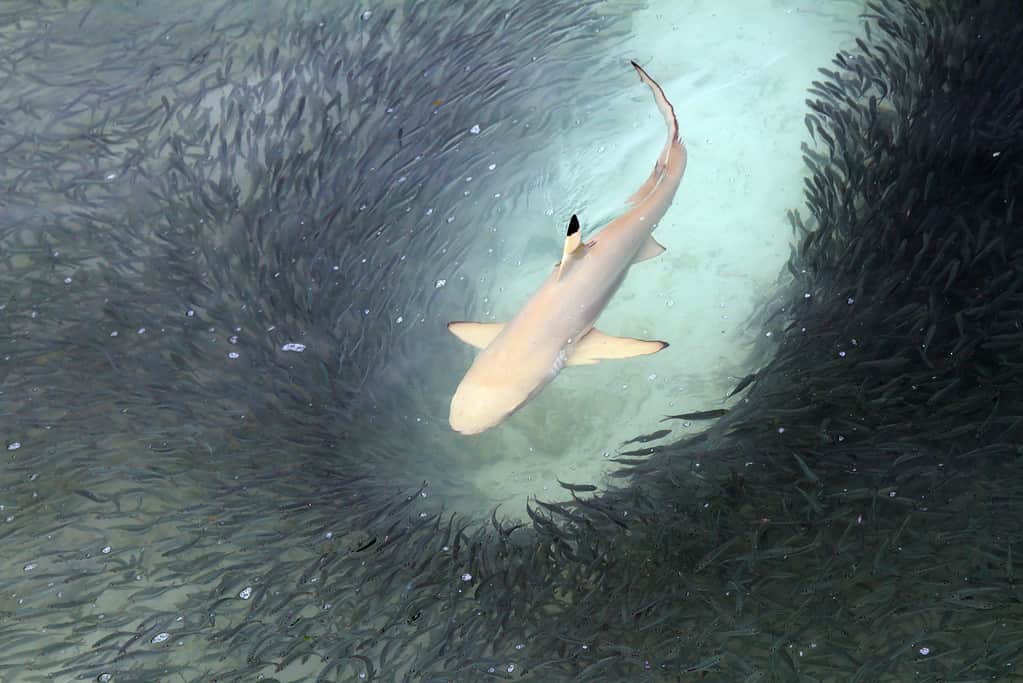
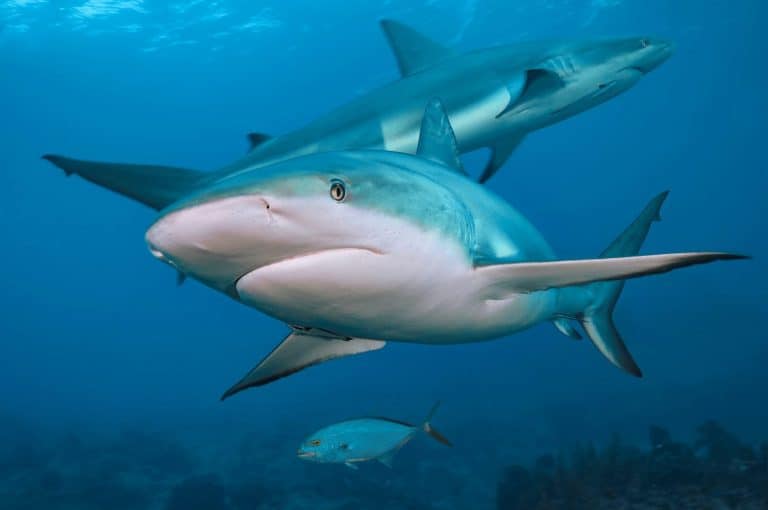
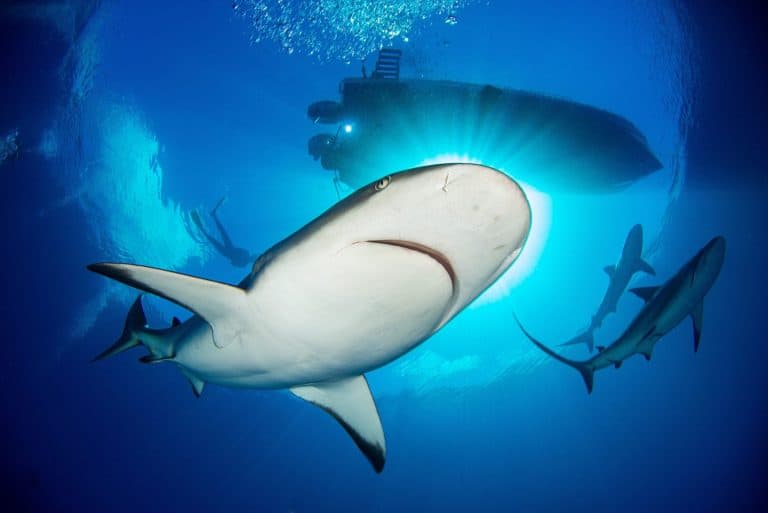
Sharks are smart hunters and aren’t swayed easily by a single drop of blood.
©iStock.com/RuthBlack
And “great” doesn’t mean sharks can smell a single drop of blood from a mile away. The most they can scent blood is up to a quarter of a mile. Even that depends on water conditions, including depth and temperature. At best, a shark can detect blood at concentrations as low as one part per 10 billion, but this only happens under ideal conditions, with no dilution before the blood reaches the shark’s scent glands.
Can One Drop of Blood Lure a Shark?
Another common misconception is that one drop of blood is enough to trigger a shark’s bloodlust. Despite what Hollywood depicts, sharks are not that desperate for a meal. They’re intelligent and patient hunters that live up to their reputation as apex predators. A single drop of blood isn’t enough to draw a shark in from such a distance or trigger a feeding response. It’s also not enough to make them use the energy it would take to find the source.
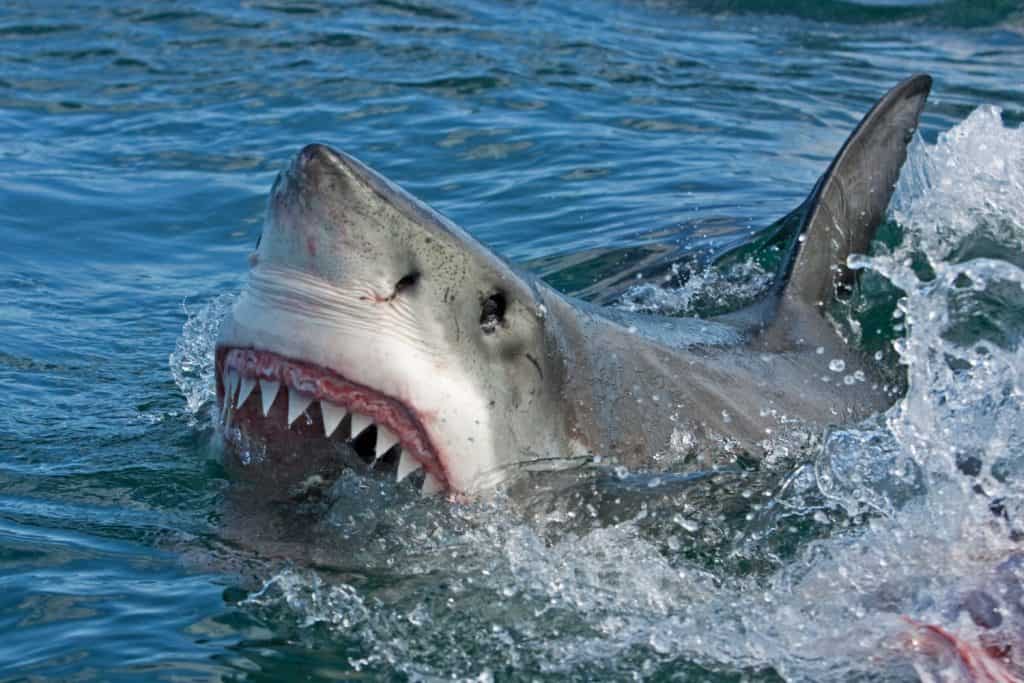
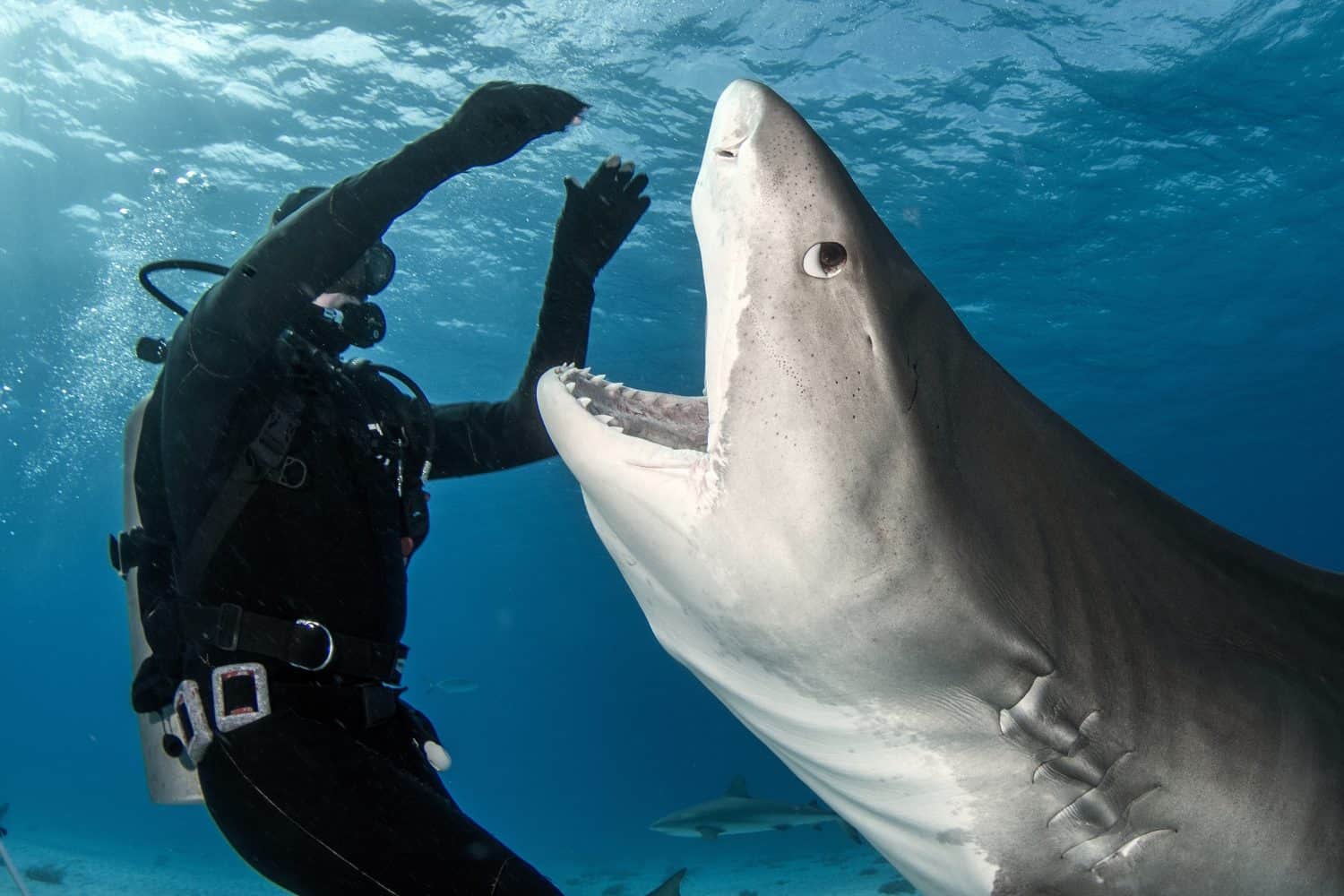
Even top predators have food preferences, and for sharks, humans are at the low end of the food chain.
©Martin Prochazkacz/Shutterstock.com
Another consideration is that sharks do not typically favor humans over other animals. When presented with a choice, sharks are more likely to be attracted to a bleeding seal than a human, as seals are a natural prey with higher fat content. They do not have a taste for humans or human blood. Most shark bites occur out of curiosity or confusion rather than an intentional attack. So, while a paper cut in shark territory might spark fear, it’s not a reason to panic.