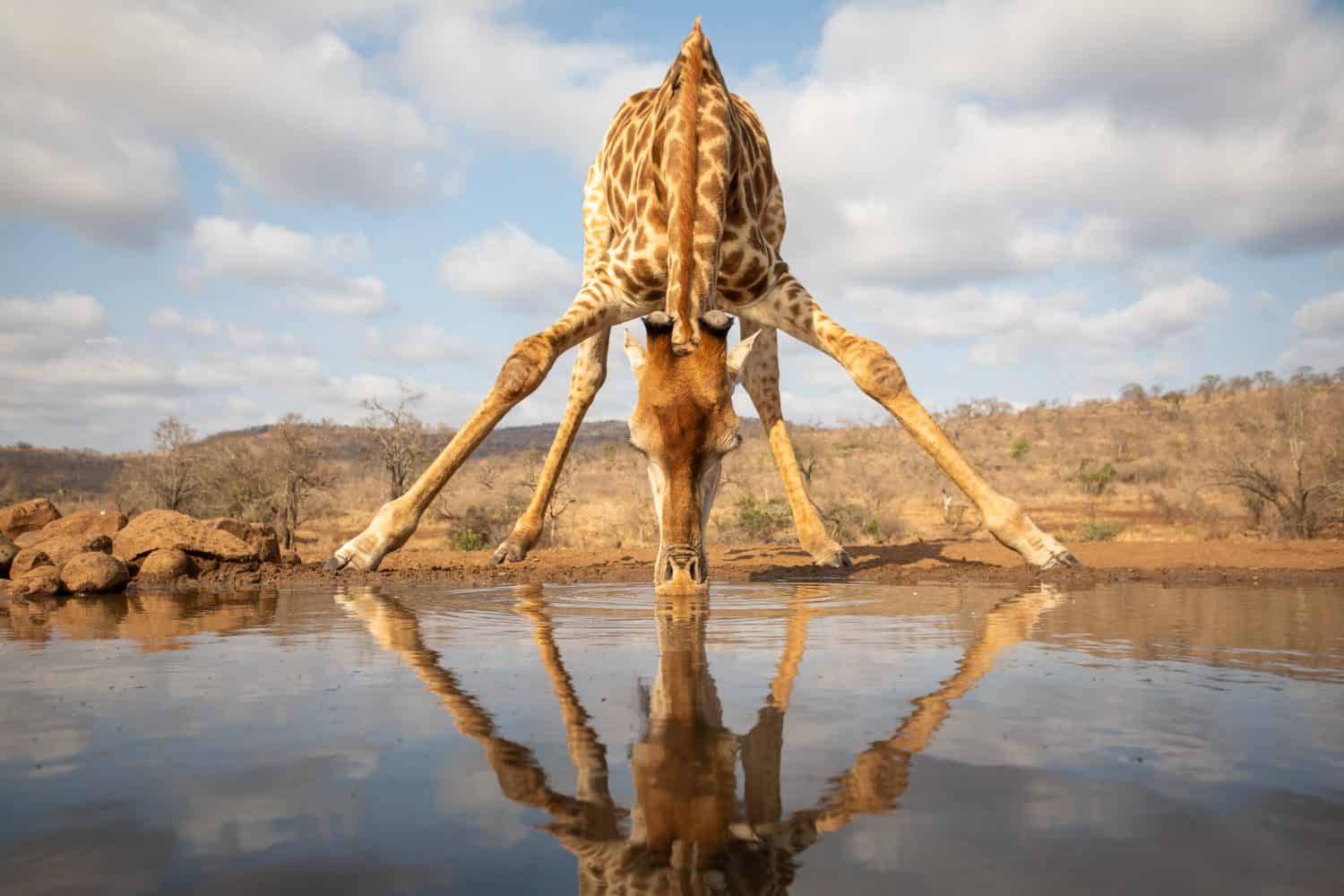

The African continent contains a plethora of creatures great and small, but none stick out quite like giraffes. They tower above the competition. They also look practically alien compared to the more compact, conventionally built mammals that dot the continent’s great savannas and forests. However, those long legs and even longer necks are the result of a long evolutionary journey, shaped by millions of years of adaptation, climate changes, and competition for food. That slow, steady evolutionary path helps explain the utterly distinct form of the modern giraffe. It also illustrates how environmental pressures and patterns can fashion such fascinating features.
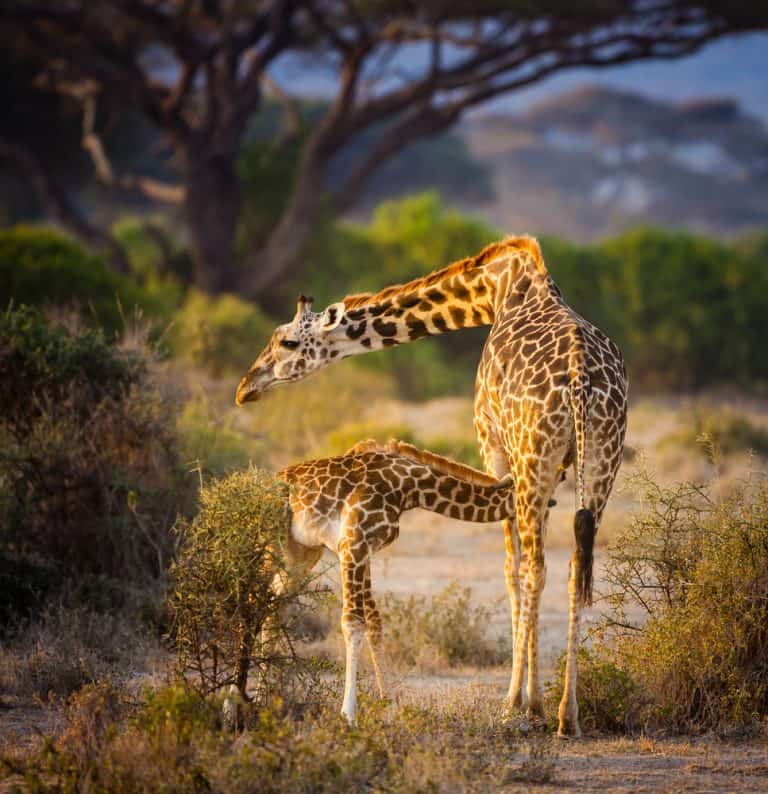
The giraffe (Giraffa camelopardalis) is the tallest living terrestrial and largest ruminant on planet Earth. Traditionally, researchers considered giraffes to be one species with nine subspecies. However, recent findings suggest that giraffes comprise four extant species with seven subspecies distinguished by different fur coat patterns. While there aren’t many animals like giraffes, their closest living relatives are okapis, which somewhat resemble zebra-giraffe hybrids. The giraffe’s physical features have made them famous worldwide. They are characterized by spotted fur coats, incredibly long necks and legs, and strange, horn-like bone structures on their heads called ossicones. They live in a range extending longitudinally from Chad to Southern Africa, and latitudinally from Niger to Somalia.
For millennia, giraffes have fascinated people because of their utterly unique appearance. Despite their many depictions in the media, however, these creatures have been extirpated from many sections of their original range. As of 2025, an estimated 117,000 to 140,000 giraffes remain in the wild. This has led giraffes to be classified as vulnerable to extinction by the International Union for Conservation of Nature (IUCN). Let’s learn more about these fascinating creatures and how evolution gave them their unmistakable appearance.
What Is the Origin Story of Giraffes?
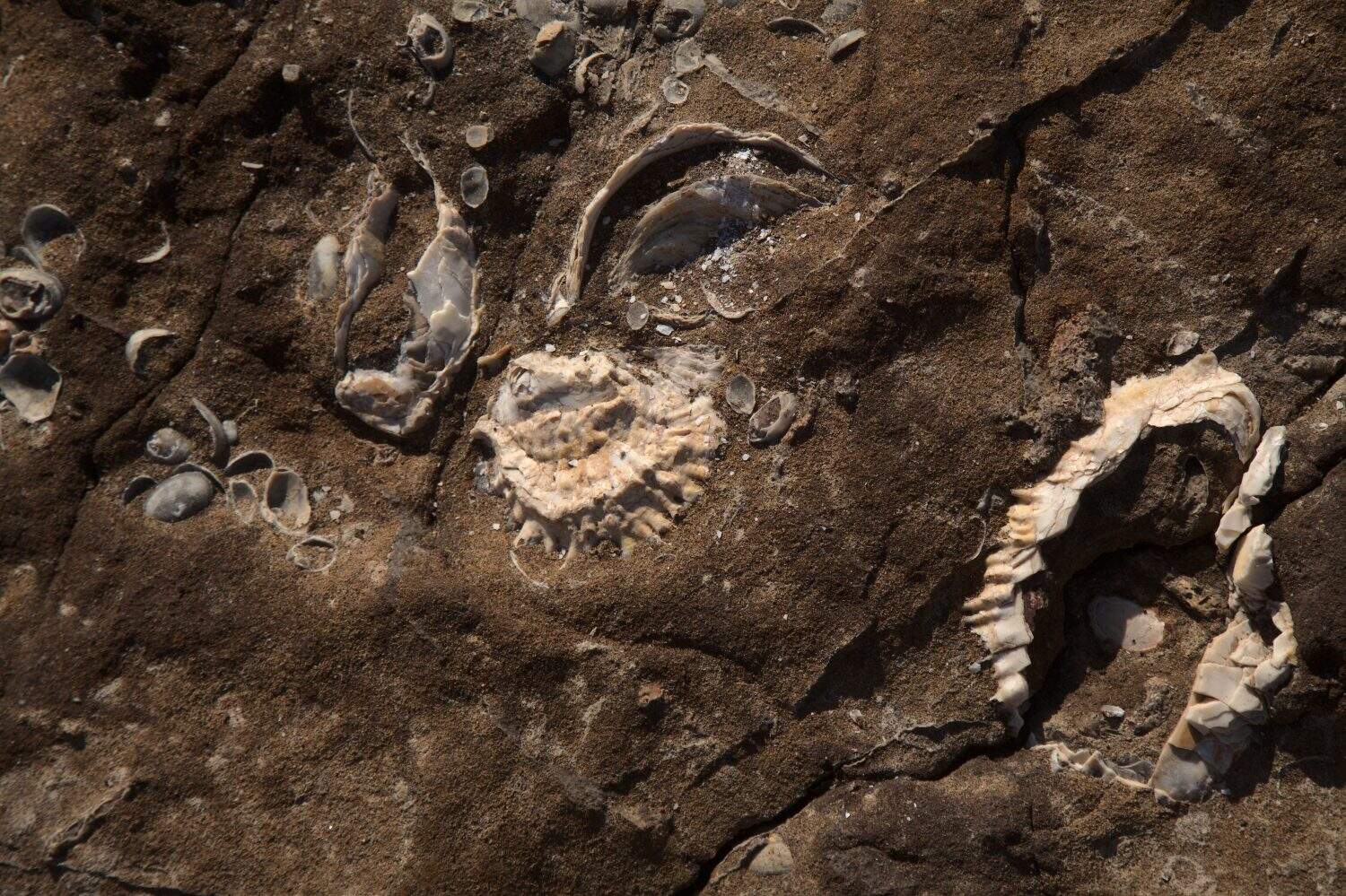
The earliest recorded giraffids lived around 17 million years ago in what is now Kenya.
©Tamara Kulikova/Shutterstock.com
The story of the modern giraffe begins between 20-25 million years ago in Africa and Eurasia. Back then, they existed in a decidedly more short-necked, deer-like form. They were also just one member of a much larger Giraffidae family, which included vaguely antelope-like creatures such as the diminutive Canthumeryx and the sizable Sivatherium. The larger, latter creature featured short, bifurcated horns.
One of the earliest recorded giraffids lived around 17 million years ago in Kenya. Called Canthumeryx sirtensis, this giraffe ancestor featured a longer-than-usual neck, but nothing compared to a modern giraffe. Researchers link it with the longnecks because it featured distinct tooth enamel patterns and limb bones that are related to those found in modern giraffes. This makes Canthumeryx sirtensis a transitional species. It fills the missing link between ancient and modern ruminants in the Giraffidae family.
As the Miocene Epoch progressed, environmental pressures in Africa increased. The continent’s climate shifted from dense forest areas to more open woodlands and savannahs. Animals could no longer remain in one place and expect to survive. These changes rewarded creatures that could browse higher in the dwindling trees and travel farther for more dispersed food sources. During this era, giraffids with longer necks began to emerge in response to the changing African grassland ecosystem, foreshadowing the modern giraffe. It was also at this point (around 11-12 million years ago) that the modern giraffe’s lineage diverged from that of the okapi, the giraffe’s closest living relative.
Giraffid Becomes Giraffa
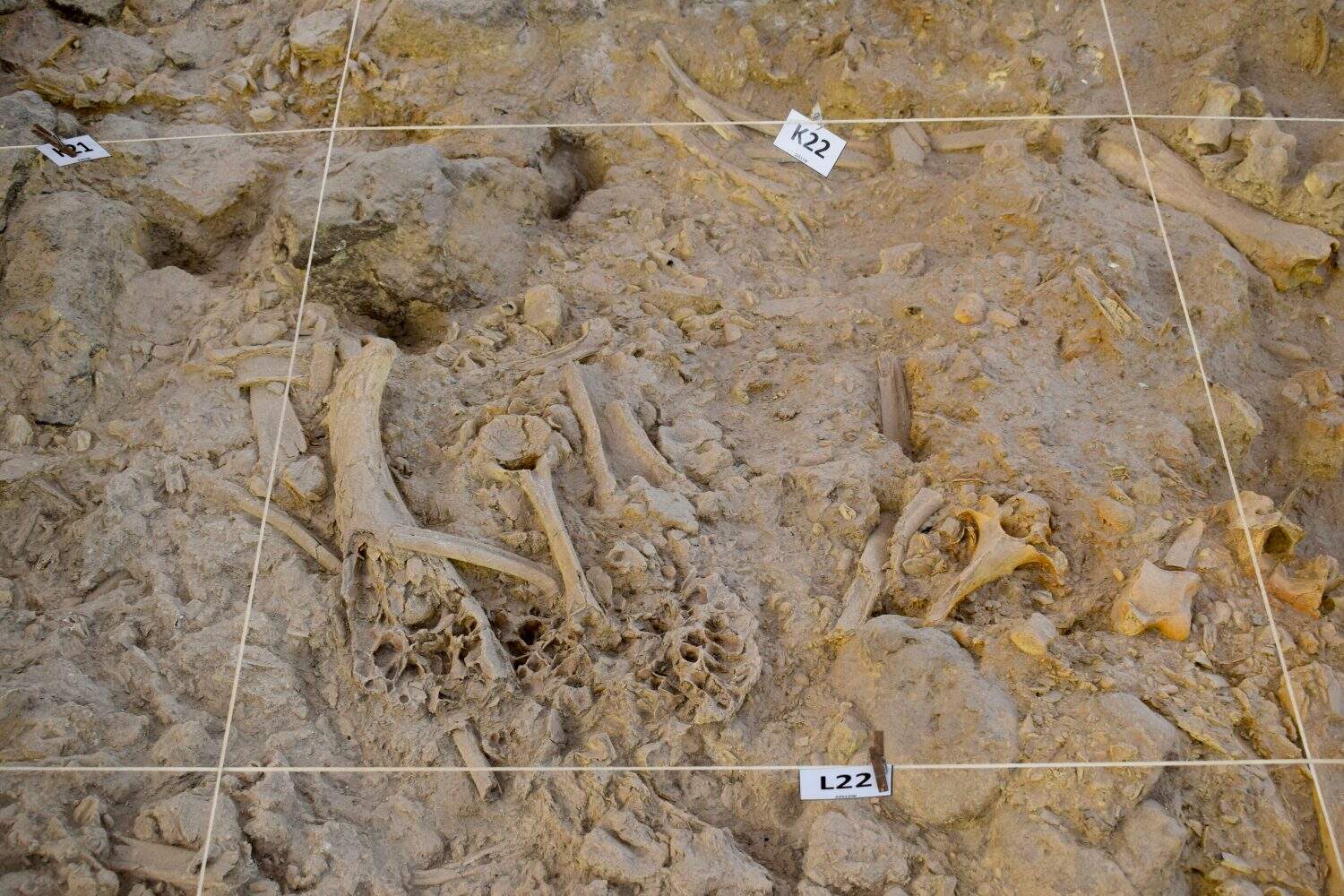
Giraffes slowly evolved from transitional species like Giraffa jumae.
©Janettavr/Shutterstock.com
Around seven or eight million years ago, the late Miocene Epoch introduced the genus Giraffa. Fossils of these creatures illustrate the steady evolutionary transition from deer-like antelopes to the modern giraffe. Take the Giraffa jumae, a transitional species discovered in East Africa. Due to its relatively long neck, scientists consider it the first direct ancestor of giraffes. The evidence of neck-lengthening is obvious. The reasons behind that lengthening, however, are not.
Giraffe Physics
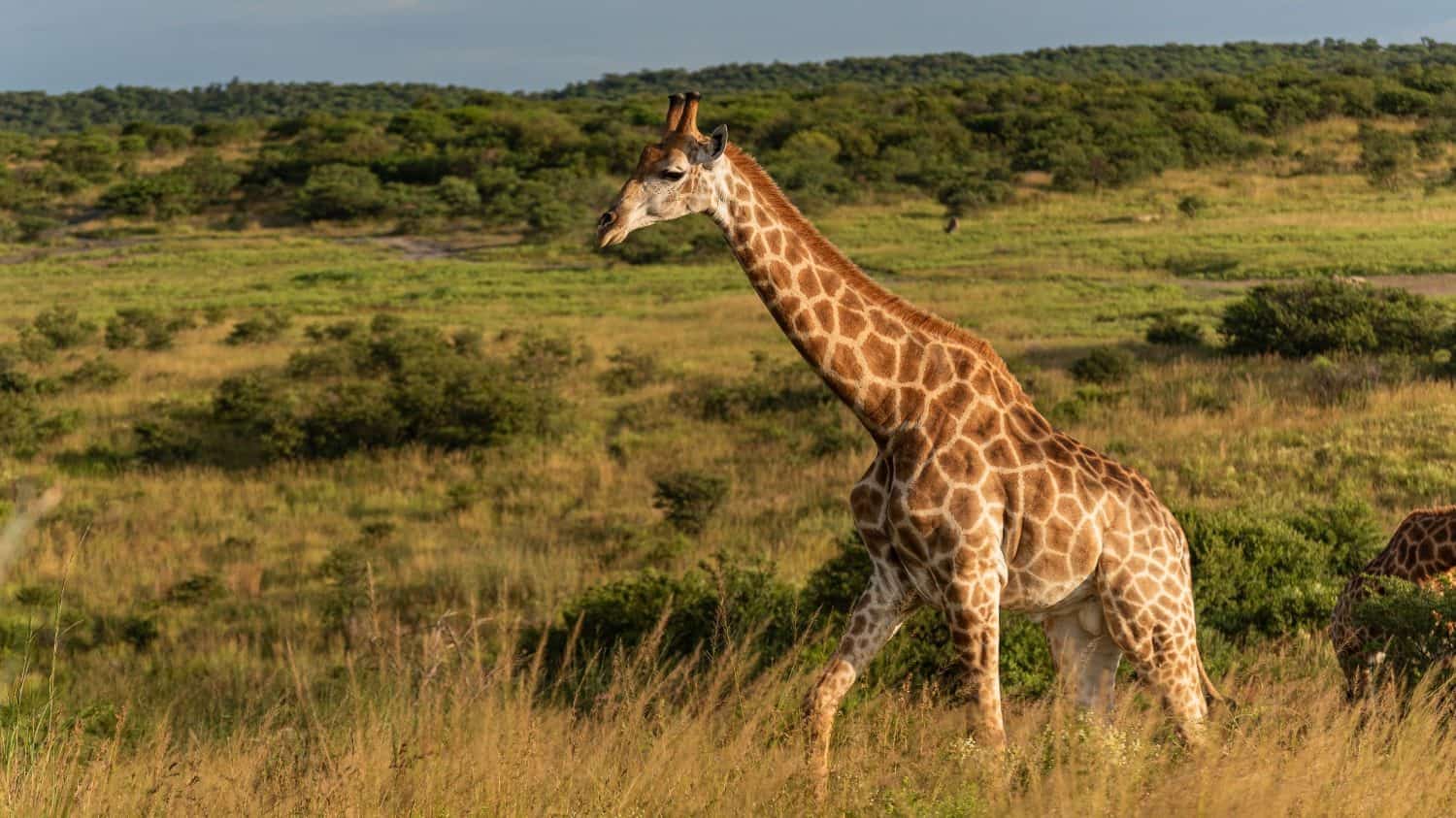
Giraffes have special valves in their hearts that prevent blood from rushing to their heads when they bend down.
©Wirestock Creators/Shutterstock.com
To grow a neck that long to begin with requires some serious feats of organic engineering. Giraffes have seven cervical vertebrae in their necks, which is the same amount found in most mammals, including humans. The only difference between our cervical bones and those of giraffes is their size. Indeed, each of a giraffe’s seven cervical vertebrae can be up to 40 centimeters long. This size, plus reinforcement from ball-and-socket joints, allows giraffes to bend their long necks considerably without breaking them.
Bone size is one thing, but the energy requirements for such a configuration are immense. To support that neck, a giraffe’s heart is nearly 25 pounds. Its heart also features specific valves and arterial walls, which keep blood from rushing to its head when it lowers its neck to the ground. As for giraffe legs, they seem to have evolved in parallel with the necks. The front legs are slightly longer than the hind legs. This gives giraffes’ bodies a slope, but also helps them conserve energy when traveling long distances.
Giraffes may have incredibly long necks and legs, but scientists still aren’t quite sure just what caused such extended adaptations.
Competing Causes

Giraffes may use their long necks to forage higher up in tree canopies than other animals, but they also use them to fight.
©Vincent_Nguyen/Shutterstock.com
The versatility of giraffe necks has confounded scientists as to their exact evolutionary purpose. As such, they have offered several explanations for such length. The most obvious theory is that of feeding; they were evolutionary rewarded for having longer necks because it allowed them to forage for food higher up in tree canopies than other herbivores. Charles Darwin and other scientists in the 19th century supported this theory, as it seemed evident from giraffe behavior. Even now, observation of them in their natural habitat shows giraffes eating parts of acacia trees that no other animal can reach. More contemporary research, however, suggests that giraffes will feed at lower heights when food is abundant. This implies that the long necks have other benefits.
Enter the sexual selection hypothesis. This theory suggests that the necks may be helpful for feeding, but are really there for combat and courtship. Males compete by swinging their necks at each other, as well as striking each other with the horn-like structures on the tops of their heads. As with many animals, the males with the strongest necks and the most battle victories get the best access to potential mates. It makes sense then that male giraffes usually have longer and more muscular necks than females. As with many things in nature, however, answers don’t come from binary black-and-whites. Instead, all these benefits of a long neck likely evolved in tandem to make giraffes what they are today.
Modern Perspectives
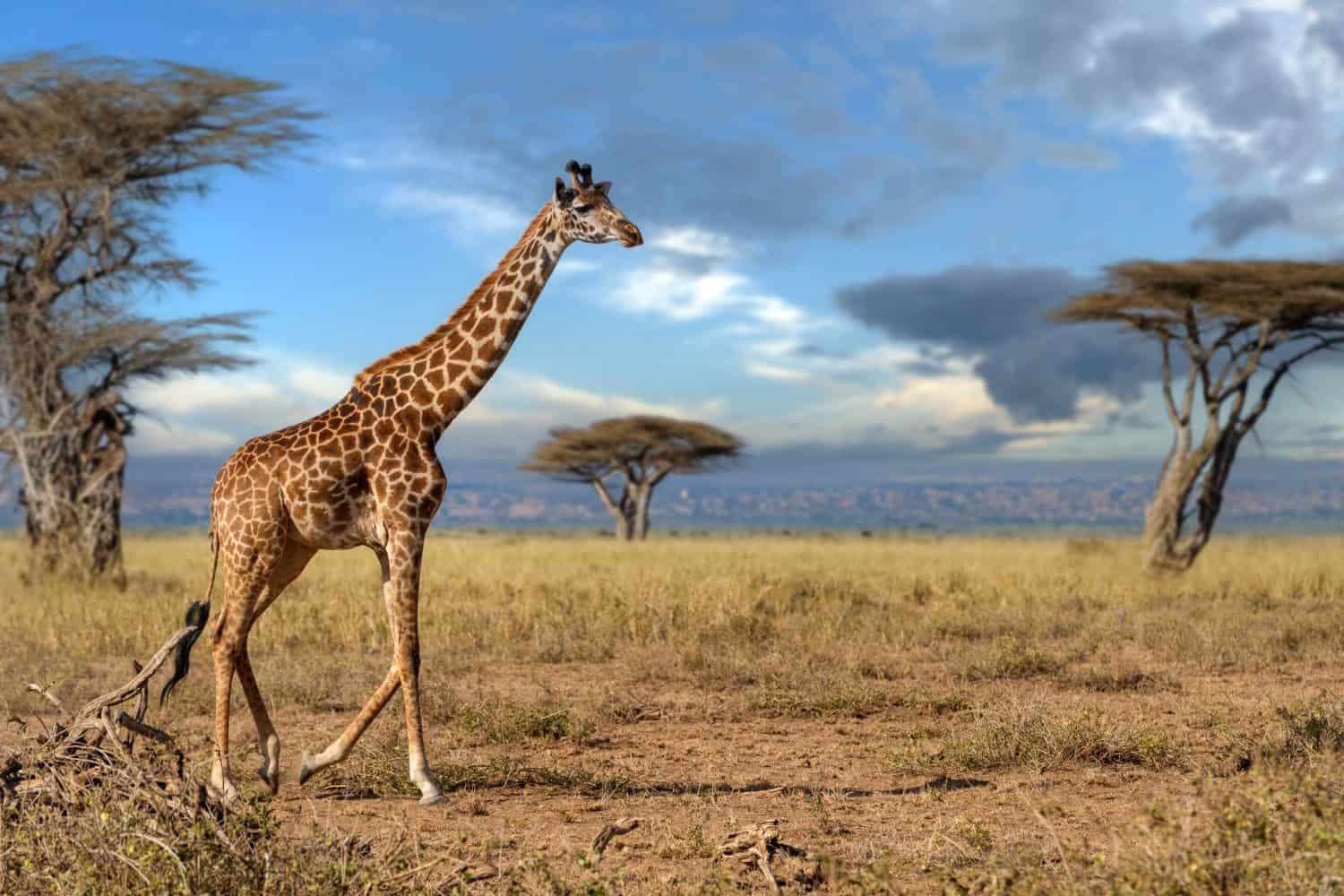
Giraffes in different parts of Africa have different patterns on their fur coats.
©Volodymyr Burdiak/Shutterstock.com
People think of modern giraffes as a single, uniform species. However, recent research has updated the scientific perspective on species and genetic diversity. Indeed, there are now what are considered four distinct species of giraffe in Africa. These are the northern, southern, reticulated, and Masai giraffes. Each of them has a unique coat pattern and slight regional adaptations. Reticulated giraffes found in northern Kenya and Ethiopia, for example, have a polygonal coat patterns which help them blend in better in open terrain.
Unchecked human development has forced these creatures to adapt even further or risk extinction. Whether due to climate change or habitat loss, altering vegetation and its patterns, giraffes have been forced to adapt many aspects of their lives. These include migration routes, reproductive cycles, and even behaviors. Like other animals at the mercy of human civilization, giraffes will continue to evolve in an attempt to outpace both environmental shifts and their threatened species status. Only time will tell what they will look like or how long their necks will be in ten, a hundred, or even a thousand years.