
It can be tempting to trust viral home improvement videos, especially when they claim to make our lives easier. Recently, many videos have surfaced showing an easy way to address a common homeowner problem: Wasps. In videos such as this one by @bitofact, the method seems straightforward. A large tub, some gasoline, and boom, your wasp problem is solved. What you don’t see, however, are all the things that could go wrong with a DIY wasp nest removal like this.
To find out once and for all if gasoline is a reliable method for removing a wasp nest, we consulted the experts. What they had to say was not only sobering, but could actually save your life.
“The best option for removing a wasp nest is still calling for a professional pest control service. They have the tools and knowledge to remove them safely and effectively.”
Jeff Schumacher, owner of All-Safe Pest & Termite
The Rise of Gasoline Treatment for Wasps
Many potent chemicals are used for pest removal, but gasoline isn’t typically one of them. In their lifetime, most homeowners will have at least one wasp nest on their property at some point. With so many viral videos like the one above, we reached out to experts to learn more. David Price, an Associate Certified Entomologist and Vice President of Strategic Growth at Mosquito Joe, a Neighborly company, explains why he believes this method has become so popular.
“It could be misinformation, and seeing videos trending online with this method,” Price says. “It also dates back to an old ‘quick fix’ method that goes back decades before the impact on the environment was better understood.”
Gasoline is made up of more than 500 chemical compounds, none of which are safe for use outside of mechanics. Even a simple spill can be devastating for the environment, and as these chemicals soak into the ground, they cause more damage than many realize.
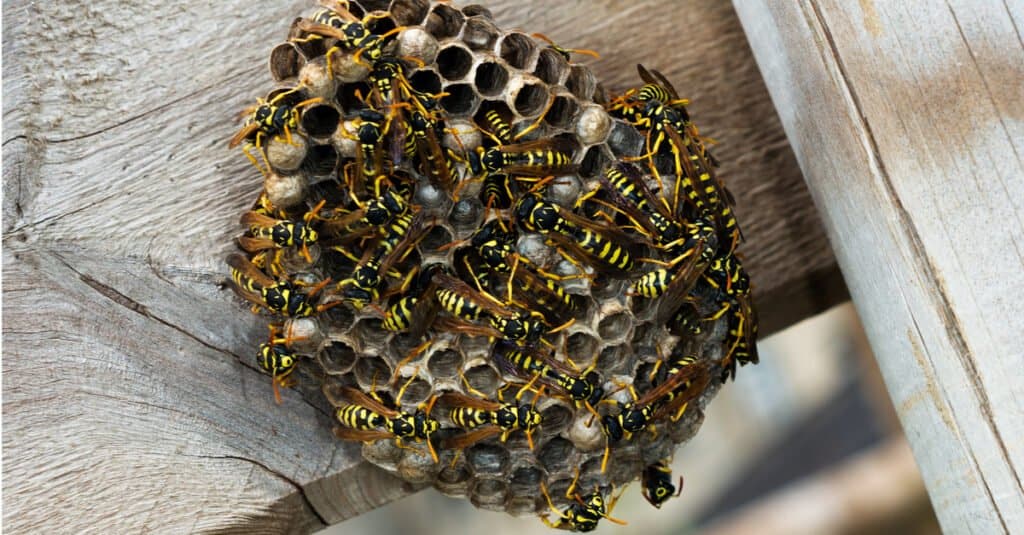
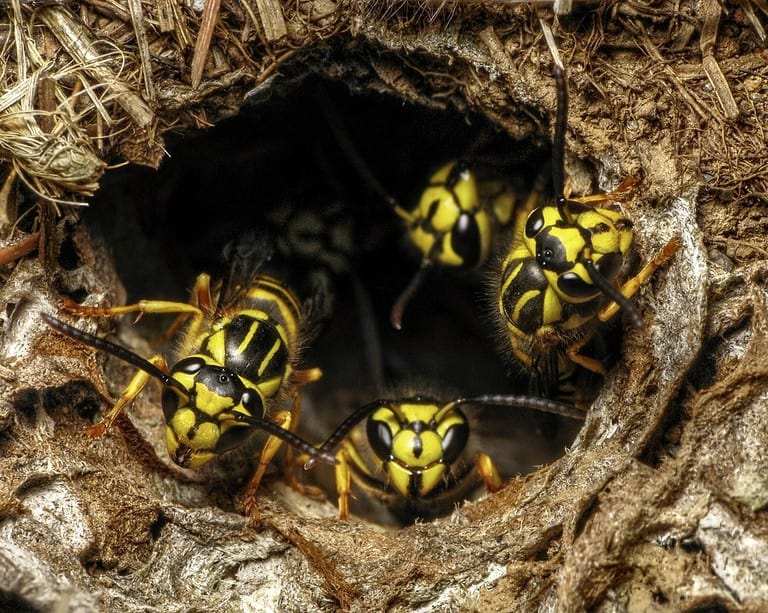
A single nest can hold hundreds to thousands of wasps, and you won’t know until they’re agitated and fleeing the colony.
©Sarah2/Shutterstock.com
“For one, gasoline is extremely flammable. It can easily ignite, given the right circumstances, and cause extensive damage and even death. Gasoline also releases toxic fumes that are harmful to people, pets, and the environment,” Price explains. “When poured onto the ground or soil, it can contaminate the area, kill plants, and beneficial insects. Using gasoline creates more problems than it solves when trying to use it to remove wasps.”
Unintentional Ground and Air Pollution
Science has already confirmed what many have long suspected about greenhouse gas emissions. When gasoline seeps into the ground, it triggers a domino effect that ripples across the local ecosystem. The ground becomes polluted, killing any exposed plant life almost immediately. This has negative consequences for insects that rely on plants, such as pollinators, which are now also exposed to toxic chemicals. Benzene, toluene, and hexane are only a few of the substances that can cause groundwater pollution, which may also be an unintentional consequence of using gasoline to remove a wasp nest.
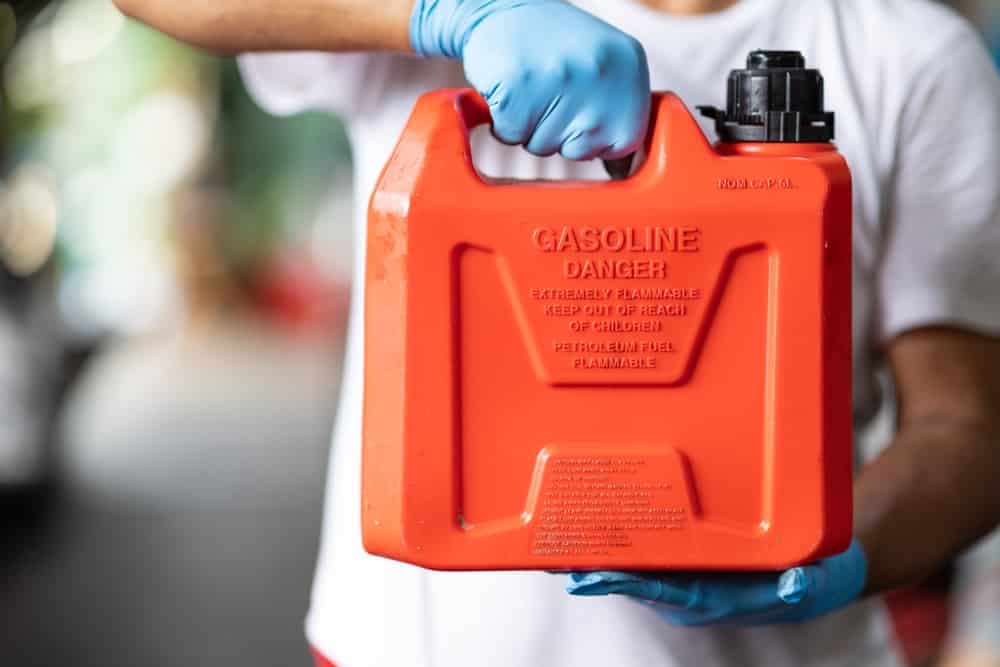
Gasoline is highly toxic to the environment and should not be used in any natural area, including around your home.
©Quality Stock Arts/Shutterstock.com
Even small amounts of gasoline can release greenhouse gases. This includes carbon dioxide, which pollutes the surrounding air. These fumes are also highly toxic to humans and animals in the vicinity and can cause significant health issues. Jeff Schumacher, owner of All-Safe Pest & Termite, explains how serious these issues can be for both insects and homeowners.
“First of all, the toxic fumes alone could kill the wasps, but the wasps aren’t the only ones inhaling those fumes,” Schumacher says. “Family and pets could also inhale them, which could lead to health issues such as dizziness, nausea, and some other long-term illnesses, like damage to the nervous system and increased risks of certain cancers.”
Gasoline For Wasp Nests: Effective or Reckless?
Schumacher has seen viral videos of wasp nest removal time and time again. Experts consistently warn that using gasoline for wasp nest removal is extremely hazardous and not recommended, as numerous things can go wrong for the average homeowner.
“There have been numerous videos showing people using gasoline to remove wasp nests,” Schumacher says. “It is usually placed inside a container, which is then used to cover the entire wasp nest. From there, we can see that the wasps started to fall one by one into the gasoline itself. It works, but is it worth the risks?”
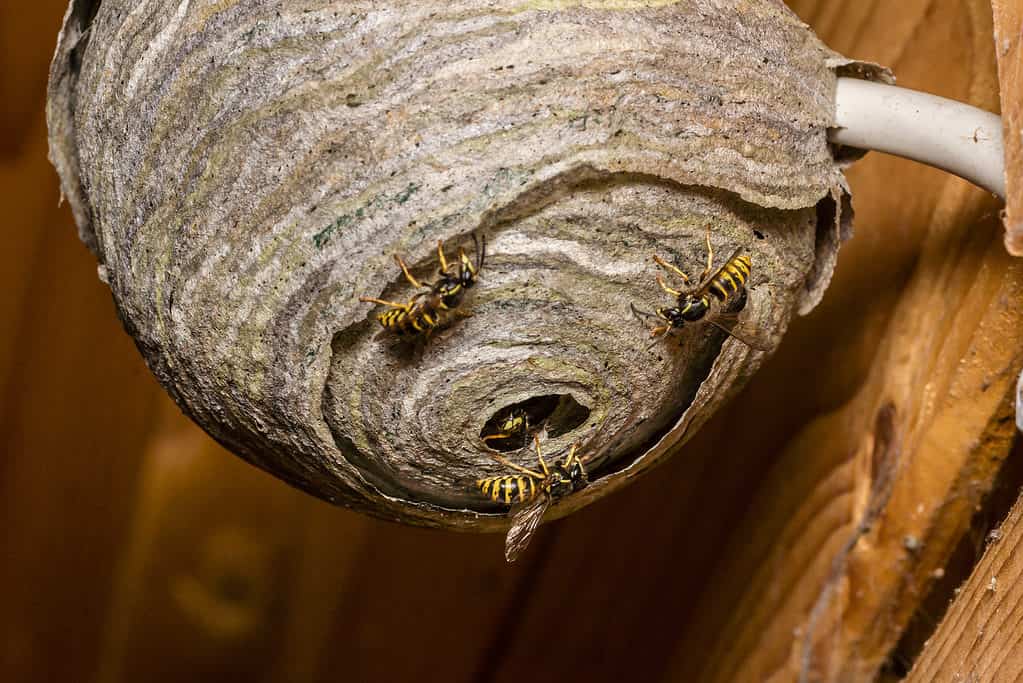
Gasoline isn’t effective on all nests, and the viral method won’t work on large infestations or dome-shaped nests like this one.
©iStock.com/SKatzenberger
“Wasp nests are paper-like, and gasoline is highly flammable, so they pose a fire hazard. One wrong move and everything would turn into flames, including the house where the nest is currently located,” Schumacher warns. “Another thing to consider is how the gasoline is being applied. If it’s placed on a rag and then dabbed into the nest itself, it is definitely far safer compared to holding a tub of gasoline,” he says.
A rag can only cover so much, and it might not kill every wasp, so there’s still a risk of being stung, he adds.
The Best Way to Remove a Wasp Nest, According to Experts
One of the best ways to remove a wasp nest is to avoid having one in the first place. According to Schumacher, prevention is one of the best steps homeowners can take to avoid being in this situation. He recommends:
- Removing standing water, as wasps need water for survival and construction
- Sealing entry points to prevent them from building wasps indoors
- Eliminating yard debris, as it could provide ground nest locations, and can even be used as materials for building their nests
Price offers similar advice and explained what to do if homeowners already have a wasp nest. “Identify the wasp as some are more aggressive than others, and they build different types of nests,” he suggests. “Wait until evening when they are less active and less likely to attack. Use a wasp-specific spray labeled for outdoor use. Ensure you stand 10 to 15 feet away and always follow the manufacturer’s recommendations. Wait at least 24 hours before knocking the nest down. Use gloves and long sleeves when removing the nest. When in doubt, call a professional pest control expert.”
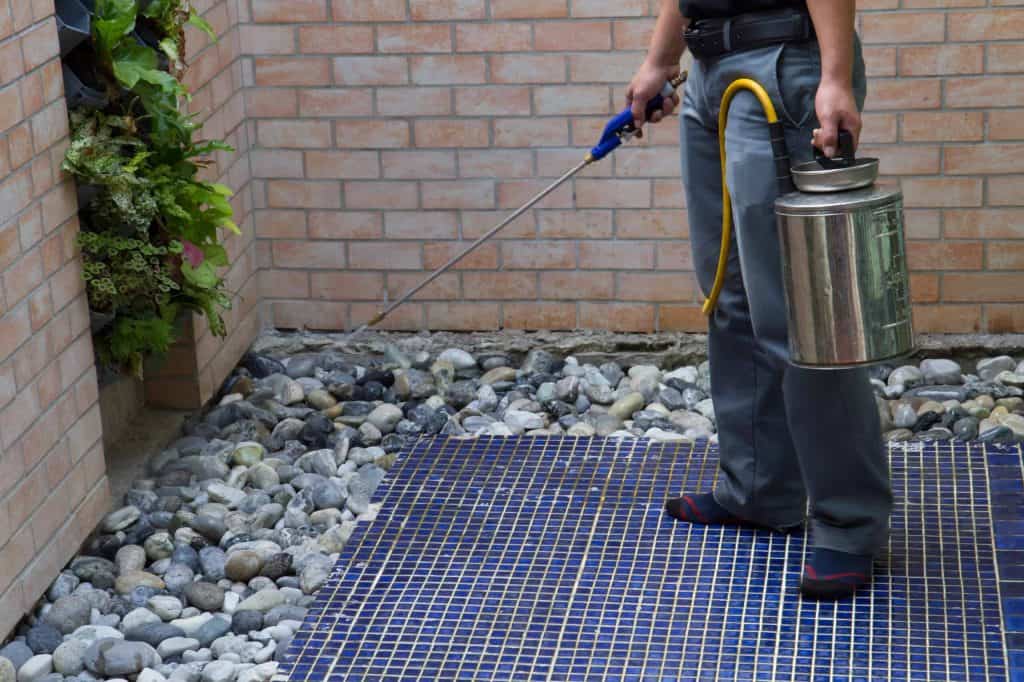
When it comes to pest removal, experts agree it’s best to hire a professional before tackling it yourself.
©Janon Stock/Shutterstock.com
While gasoline might be highly effective in killing wasps, it’s not worth the risks. One factor homeowners often overlook is the unpredictable nature of wasps. They can sting multiple times, and swarms quickly become agitated when their nests are disturbed. One wrong move or hesitation in exposing the wasps to gasoline can result in severe injury to a homeowner. Environmental contamination, air pollution, and potential health issues are also not worth saving a few bucks. As tempting as it might be, if we’ve learned anything, it’s to leave the pest removal to the experts.