
Quick Take
- The method scientists used to track these whales across a whole ocean required no satellite tags and no research vessels. See how they were tracked →
- These whales are hardwired traditionalists, so their decision to cross 9,000 miles to a completely foreign ocean is even harder to explain. Explore the crossing hypothesis →
- A single "wrong turn" by one whale can reshape the genetics, culture, and survival odds of an entire ocean population, and climate change may be making it happen more often. See the ripple effects →
- One of these whales was first photographed over two decades ago, and what researchers discovered when they finally matched the images will rewrite what's possible for any marine animal. Meet the record-breaking whale →
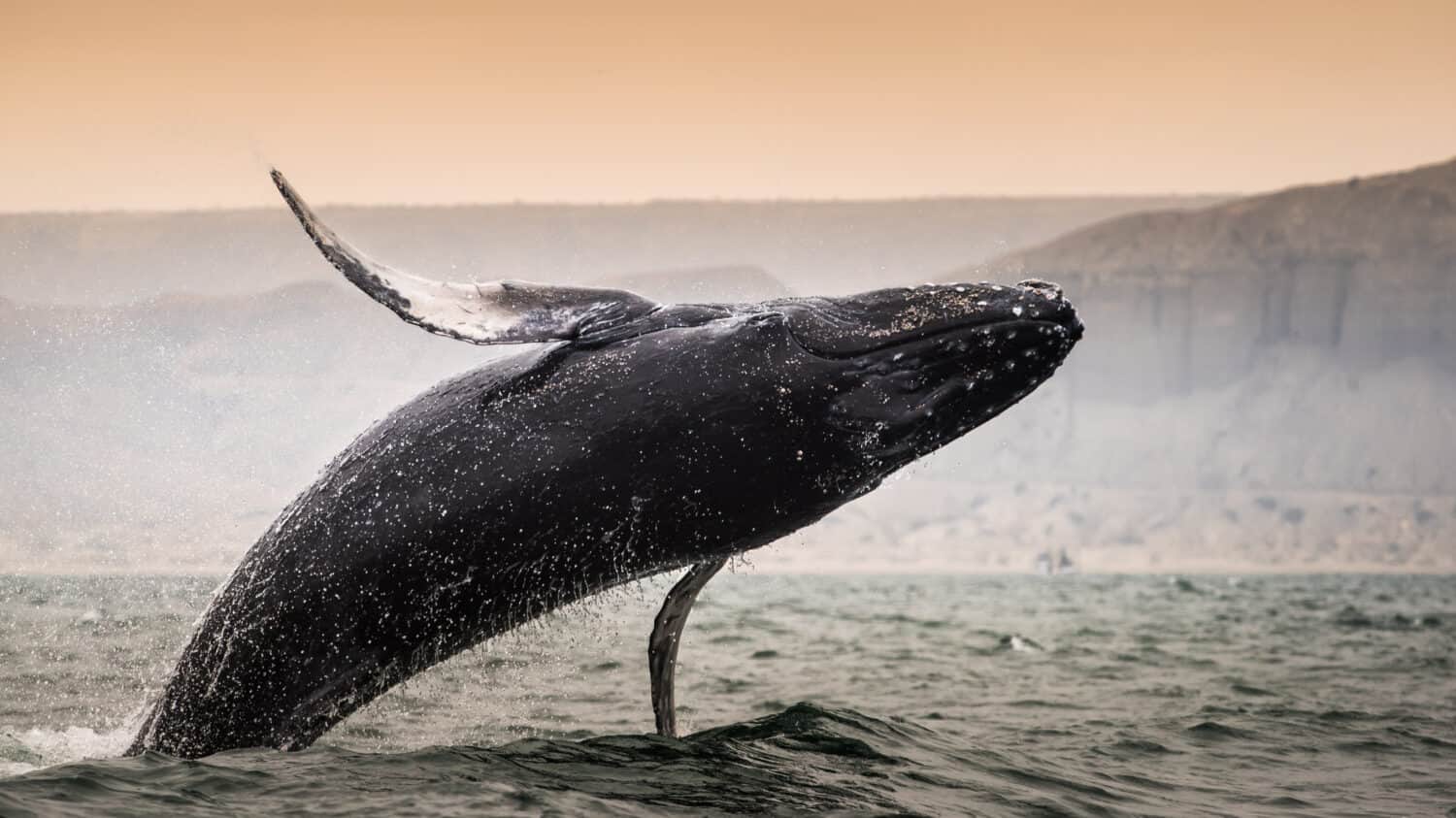
If you’ve ever stood on a coastline or the deck of a boat during migration season, watching a 40-ton humpback whale hoist its massive body out of the water, you know the feeling of pure awe it inspires. For decades, marine biologists have shared that same wonder, tracking these gentle giants across the globe. We thought we had them mostly figured out. We knew they were loyal creatures of habit, sticking closely to their specific ancestral highway systems between cold feeding waters and warm tropical nurseries.
But nature loves to shatter our neat little categories.
A groundbreaking international study published in Royal Society Open Science has completely disrupted our understanding of whale geography. Researchers have confirmed that two individual humpback whales made mind-boggling journeys between the breeding grounds of eastern Australia and Brazil, crossing more than 14,000 kilometers (nearly 9,000 miles) of open ocean.
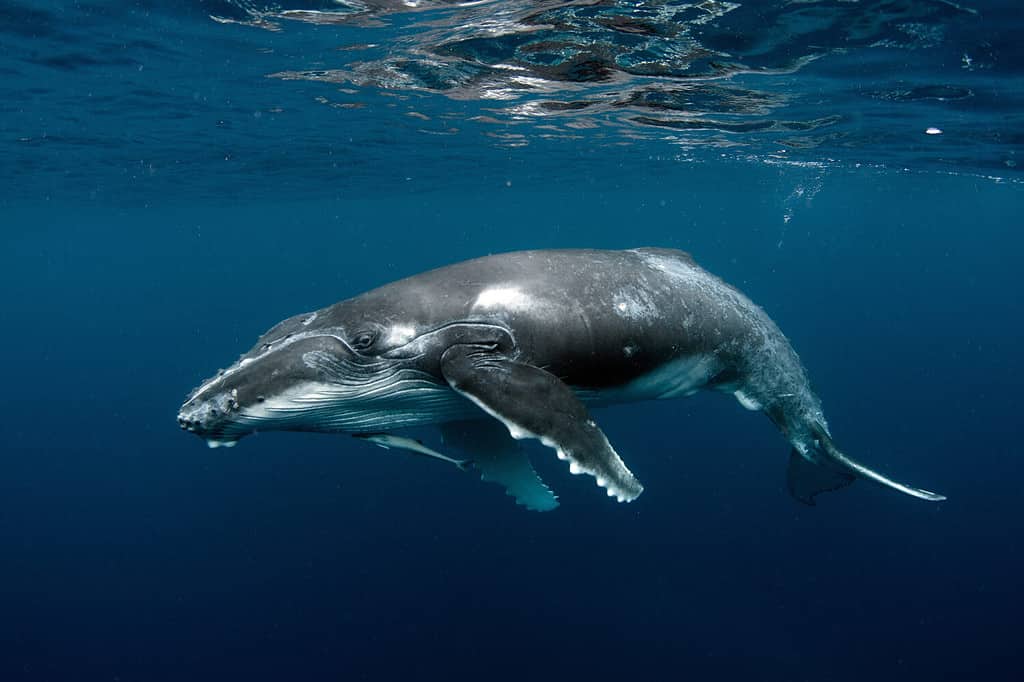
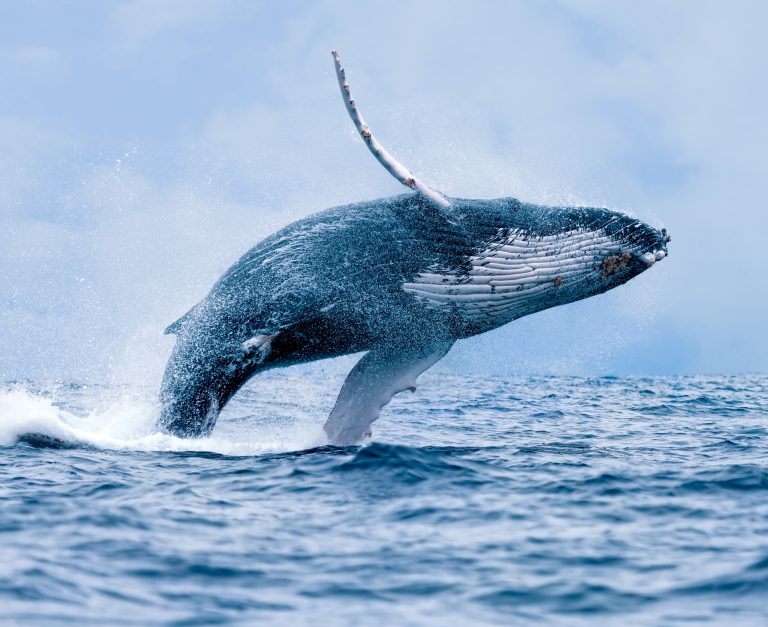
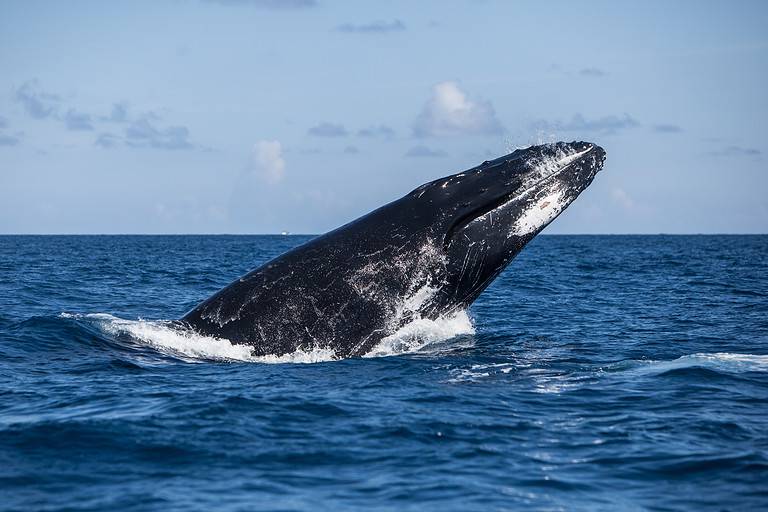
Whale calves are usually about 13 to 16 feet long at birth after an approximately 11-month gestation.
©Tomas Kotouc/Shutterstock.com
One of these whales smashed the absolute world record for the longest individual humpback journey ever documented, clocking a staggering 15,100 kilometers (roughly 9,383 miles) between sightings. To put that in perspective, that’s farther than a straight-line flight from Sydney to London.
As someone who deeply respects the painstaking, decades-long work of marine conservation, I find this discovery thrilling not just because of the raw numbers, but because of how we found out, and what it means for the future of the oceans.
The Anatomy of a Cosmic Coincidence: How the Whales Were Found
Imagine trying to find a specific human being based solely on a passport photo taken 20 years ago, except the person is moving through a pitch-black, borderless liquid world that covers 70% of the planet.
That’s essentially what a team led by researchers from institutions like Griffith University and the Pacific Whale Foundation pulled off. And they didn’t do it with expensive, high-tech satellite tags (which usually fall off after a few months anyway). They did it with citizen science and photography.
Every humpback whale carries a unique “fingerprint” on the underside of its tail, known as a fluke. The trailing edge notches, the scars from encounters with orcas or fishing gear, and the distinct black-and-white pigmentation patterns form a visual ID that remains largely unchanged throughout their lifetime.
The team analyzed a large dataset of 19,283 high-quality fluke photographs collected between 1984 and 2025 across eastern Australia and Latin America. By running these photos through an advanced automated image-recognition algorithm via the global platform Happywhale, and painstakingly verifying every potential match by hand, they found two needles in a planetary haystack.
Maverick Whale #1: The Australian Tourist
First photographed in the pristine waters of Hervey Bay, Queensland, in 2007, this whale was spotted again in the same area in 2013. But in 2019, it was spotted off the coast of São Paulo, Brazil. That’s a minimum straight-line distance of 14,200 kilometers (approximately 8,823 miles).
Maverick Whale #2: The Record-Breaker
This whale was first first cataloged in September 2003 at Abrolhos Bank, Brazil’s premier humpback nursery off the coast of Bahia, where it was part of a boisterous, competitive group of nine adults. Twenty-two years and one month later in September 2025, a citizen scientist photographed that exact same whale spotted alone in Hervey Bay, Australia. Distance: 15,100 kilometers (approximately 9,383 miles). Because we only have the starting and ending photos, the actual distance these whales swam is undoubtedly thousands of kilometers longer. They didn’t swim in a straight line through continents; they navigated the treacherous currents of the Southern Hemisphere.
The “Southern Ocean Exchange”: Why Did They Cross Over?
Humpback whales are notorious traditionalists. They display extreme “site fidelity,” meaning an Australian humpback almost always goes back to Australia to breed, and a Brazilian humpback returns to Brazil. So, what drove these two to switch sides?
The discovery provides heavyweight evidence for a concept scientists call the Southern Ocean Exchange hypothesis.
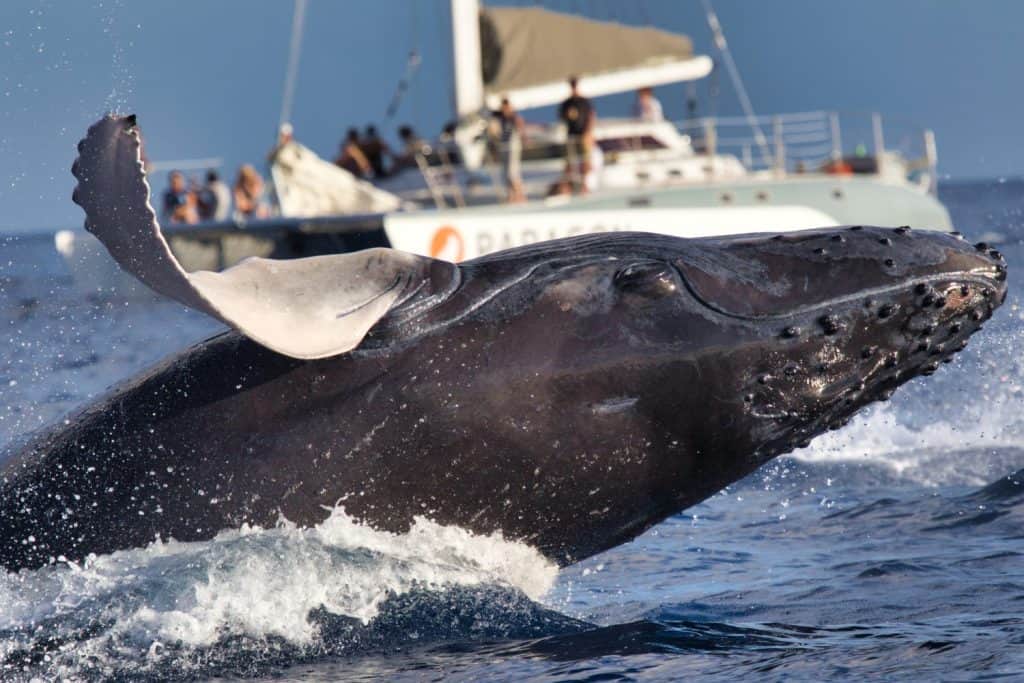
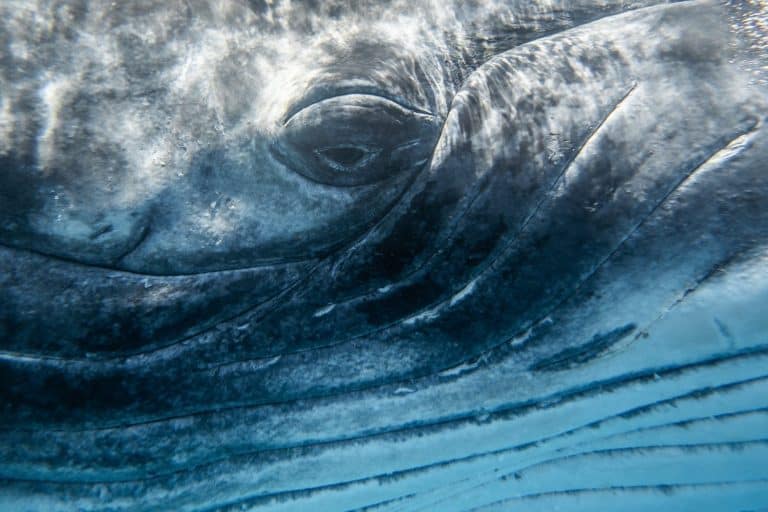
Adult humpbacks are enormous, reaching about 60 feet long and weighing up to roughly 40 tons.
©Manuel Balesteri/Shutterstock.com
During the polar summer, different populations of humpbacks from all over the Southern Hemisphere converge on the icy waters of Antarctica to gorge themselves on millions of tiny krill. Think of Antarctica as a massive, international airport terminal.
Normally, when the season ends, everyone boards their usual flight home. But the hypothesis suggests that every once in a while, a couple of whales accidentally walk to the wrong gate. They likely fell in with a different social group, started swimming, and followed their new companions all the way back to an entirely different continent.
Culture, Genetics, and Climate Change
While these two wanderers represent just 0.01% of the database, proving that ocean-hopping is an incredibly rare anomaly, their journeys are more profound than that.
- Genetic Lifelines: When populations are entirely isolated, their gene pools can stagnate. Even if “exchange” events only happen once in a generation, a single maverick whale reproducing in a new population injects fresh genetic diversity, building evolutionary resilience across the entire species.
- Cultural Remixing: Humpback whales are famous for their complex, eerie songs. We already know that whale songs spread culturally across ocean basins. For example, a new melody originating in Western Australia can ripple all the way to the South Pacific over a few seasons. These long-distance travelers act as literal cultural ambassadors, carrying entirely new musical styles across oceanic borders.
- The Climate Wildcard: The research team, however, highlighted a more sobering fact: The Southern Ocean is changing rapidly. Climate-driven shifts in sea ice and the erratic distribution of Antarctic krill are forcing whales to travel further, stay longer, or alter their foraging behavior to survive. As traditional feeding boundaries blur, these cross-ocean exchanges might not just be accidental anomalies anymore, they might become survival strategies.
What This Tells Us About Our Limits
The ultimate takeaway from this record-shattering discovery is a humbling lesson in scientific humility. It reminds us that our maps, boundaries, and population models are human constructs layered over a natural world indifferent to our spreadsheets and categorizations.
It also underscores the immense, irreplaceable value of long-term scientific monitoring and citizen science. Without that tourist or researcher snapping a photo of a whale tail in Hervey Bay or Bahia, this mind-blowing chapter of natural history would have gone entirely unrecorded.
The next time you look out at the ocean, remember that somewhere out there, beneath the rolling waves, a whale might be navigating an epic, lonely, 15,000-kilometer journey, redrawing the maps of what we thought was possible.