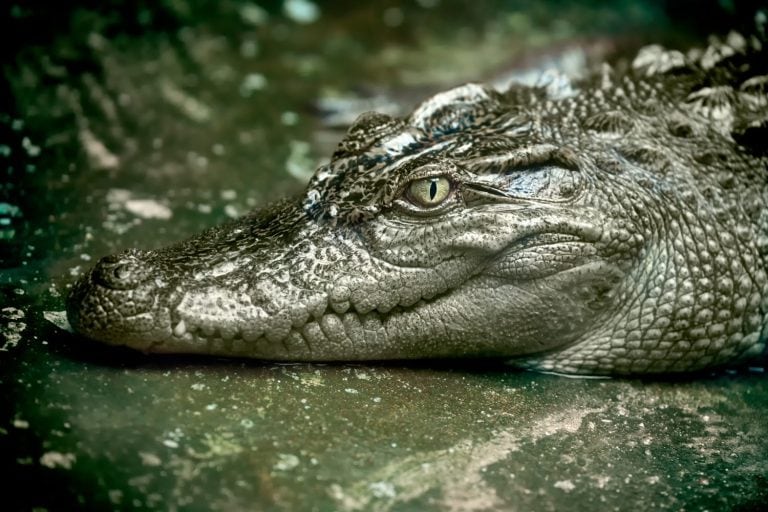
For the third year in a row, the Fort Worth Zoo has achieved the remarkable: growing the population of critically endangered gharial crocodiles! The Fort Worth Zoo has hatched these crocodiles for three consecutive years, marking the first time this conservation feat has been accomplished in North America. And they look so darn cute!
What Are Gharial Crocodiles?
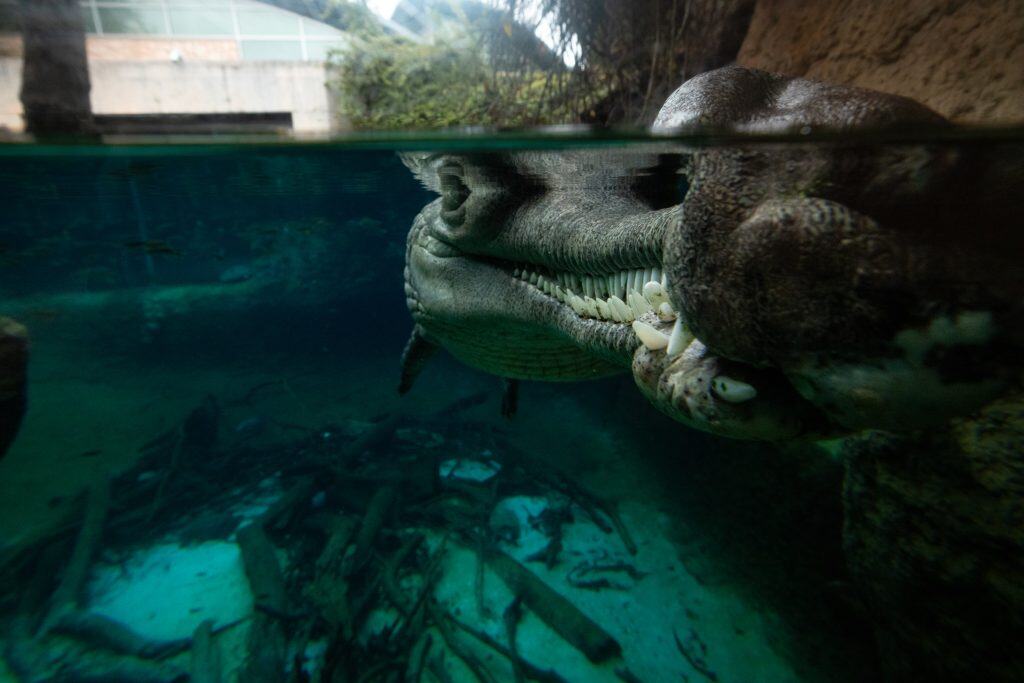
Gharial crocodiles can grow up to 16 feet long.
©Fort Worth Zoo
Gharial crocodiles (Gavialis gangeticus) are reptiles native to Northern India and Nepal. They live in calm, slow-moving rivers and hunt fish, crustaceans, waterfowl, and frogs. These crocodiles are one of the largest crocodilian species, with adult males growing up to 16 feet and weighing nearly 1,500 pounds, while female gharials are slightly smaller.
These crocodiles love to swim and will spend most of their lives underwater.
According to the International Union for the Conservation of Nature (IUCN), gharials are critically endangered, making the arrival of new hatchlings especially significant. The reptile faces decline due to habitat destruction, pollution, and river fragmentation.
New Gharial Offspring
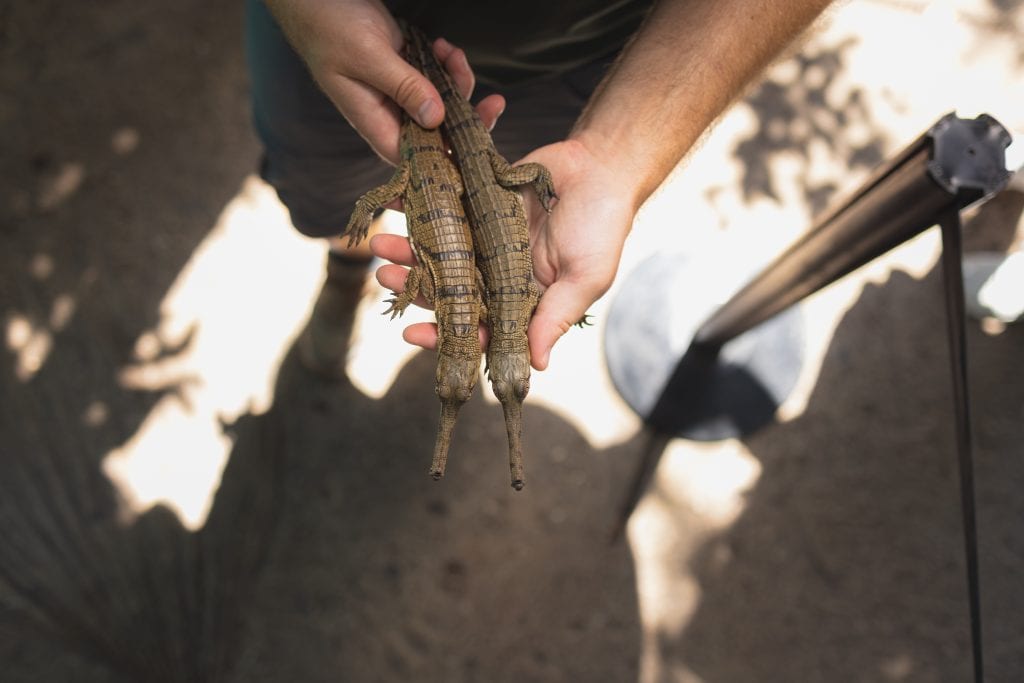
Two new hatchlings from eggs laid by different female gharials recently hatched at Fort Worth Zoo.
©Fort Worth Zoo
Two new gharial hatchlings hatched at the Zoo in June, making the Fort Worth Zoo the only institution in North America to have produced multiple offspring of this species, and the only North American institution to have repeated this process for multiple consecutive years, according to a press release.
“Each year of successful gharial offspring expands not only our husbandry knowledge for breeding and rearing this rare species, but we are also able to share our successes and failures with other zoos currently attempting a similar feat,” says Vicky Poole, associate curator of ectotherms at Fort Worth Zoo. “Broadly, gharial breeding output would need to be increased and reliable to consider repatriation programs to the wild from zoos.”
Tiny Hatchlings
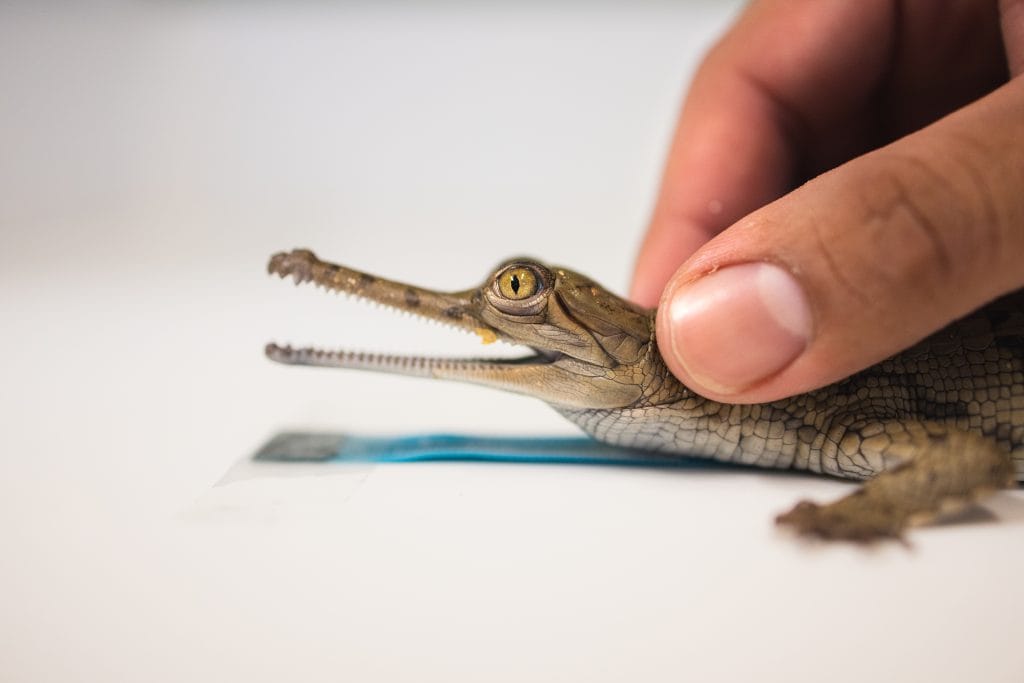
Tiny hatchlings are kept away from public viewing for safety.
©Fort Worth Zoo
The new hatchlings, which are just about 12 inches long, hatched on June 5 and June 11. They hatched from eggs laid by two different females of the zoo’s gharial group, which will help diversify the gene pool of the species.
“We forgot how small new hatchlings start out compared to our one- and two-year-old hatchlings!” Poole says. “None of our hatchlings have names at this point — we identify them by their unique patterns, which they will have throughout their lives.”
Right now, the hatchlings are kept away from public viewing for safety, along with the hatchlings from 2023 and 2024.
“Staff need to closely monitor them when they are young to make sure they are feeding well and growing properly,” Poole explains. It makes sense — all baby animals are precious, but those helping to bring a species back from near extinction just by existing are especially precious! There are plans to create a safe gharial hatching habitat so that guests can eventually observe the tiny crocs.
This success is the product of over 15 years of dedicated conservation work for this rare species.
Vicky Poole, associate curator of ectotherms at Fort Worth Zoo
Visit the Adult Harem of Gharials

Watch a harem of adult gharial crocodiles swim at Fort Worth Zoo.
©Fort Worth Zoo
While you can’t see the baby gharials yet (other than in pictures), you can see the adult gharial crocodiles, called a harem. At Fort Worth Zoo, the harem of gharials is comprised of one male and three females in their mid-40s, and is located in the Museum of Living Art. This area of the zoo has a regulated water temperature, gently sloped waterfront, and heat coils in the sand, all designed for optimal breeding success.
“The females can be quite sassy after they lay their eggs, exhibiting a natural nest-guarding behavior,” Poole says. “They are all trained to go to a dedicated spot for feeding, making it safer for the keepers to work around the large crocodilian species.”
They use cameras to monitor for egg laying on their nesting beach, to make it easier to gather the eggs for controlled incubation. From there, the Gharial Team will check each egg for signs of fertility and development. “This is so we can implement and incrementally test improvements to the husbandry and/or habitat to address potential challenges,” Poole says.
Decades of Scientific Work
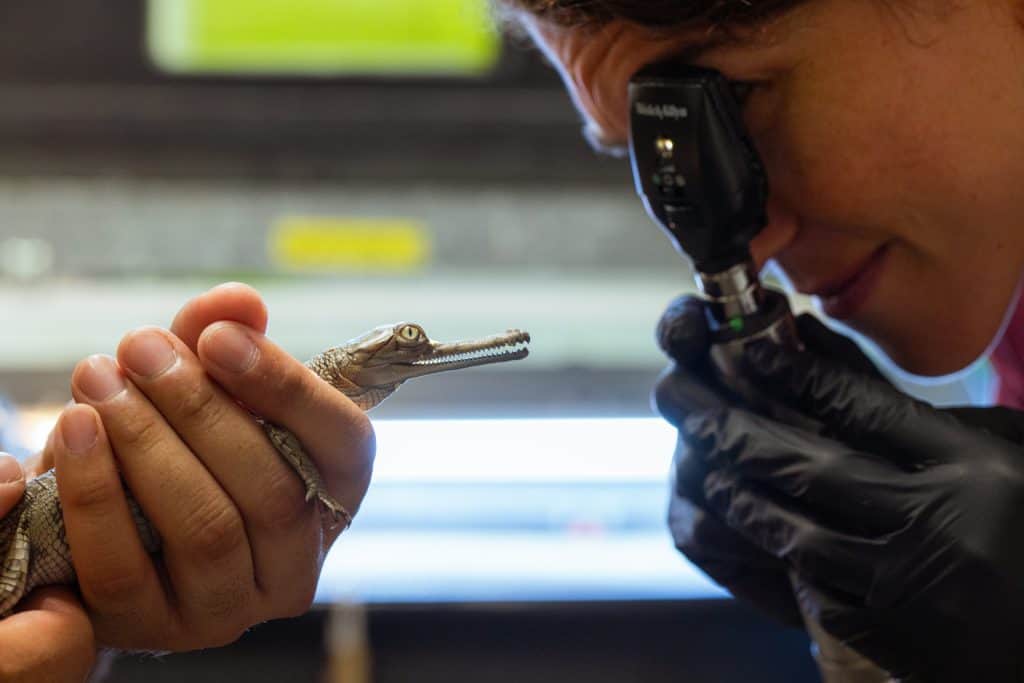
Years of work have gone into breeding gharial crocodiles at Fort Worth Zoo.
©Fort Worth Zoo
The Fort Worth Zoo is nationally acclaimed and one of the top zoos in North America by USA Today. Nearly 7,000 animals call the Fort Worth Zoo home, and the institution is dedicated to education and conservation, enhancing the lives of more than 1 million visitors a year, as well as the animals who live there.
It has taken the Fort Worth Zoo years to be able to breed gharial crocodiles and help their conservation efforts. “This success is the product of over 15 years of dedicated conservation work for this rare species,” Poole says.
“It’s more than a personal passion project,” Poole says. “The Fort Worth Zoo committed to this large species when animals were brought into the Zoo’s collection, and it has taken decades for the incremental accomplishments we have had thus far.”
In the future, the zoo’s goal is to inspire other facilities to continue the conservation work for these crocodiles. “We hope that our successes and support impact gharials at other facilities and ultimately, the wild,” she says.