You likely know seagulls as the obnoxious birds that shamelessly steal your lunch at the beach. However, the manner in which they eat their food is complex. A viral YouTube video shocked viewers when it showed a seagull gulping down an entire fish. As you can see in the video, the seagull swallows the fish whole. It doesn’t even look as if the fish made it to the bird’s stomach before the end of the video. In fact, the seagull’s neck appears much larger after eating, suggesting the fish is still lodged in its throat or crop. That begs the question: if they’re consuming their prey in one piece like this, how do seagulls digest their food? Let’s get into it.
What Do Seagulls Eat?

Seagulls often engage in surface feeding in the ocean.
©theresacaporuscio/Shutterstock.com
If you’ve witnessed a seagull in action, you’ve likely noticed that seagulls will seemingly eat whatever they can steal from beach-goers. This might include chips, sandwiches, bread, and even garbage. These opportunistic omnivores are highly adaptable in their eating habits. However, their diet mostly consists of fish, insects, and shellfish. They sometimes even feast on small animals like rodents, carrion (dead animals), eggs, and plants. According to the nonprofit organization Save Coastal Wildlife, an adult seagull typically eats around 20% of its body weight per day. This usually works out to be around five to 10 oz of food daily. That being said, that one fish in the above video will likely only last the seagull for a few hours. Of course, it depends on its exact size in comparison to the gull itself.
How Do Seagulls Swallow Fish Whole?
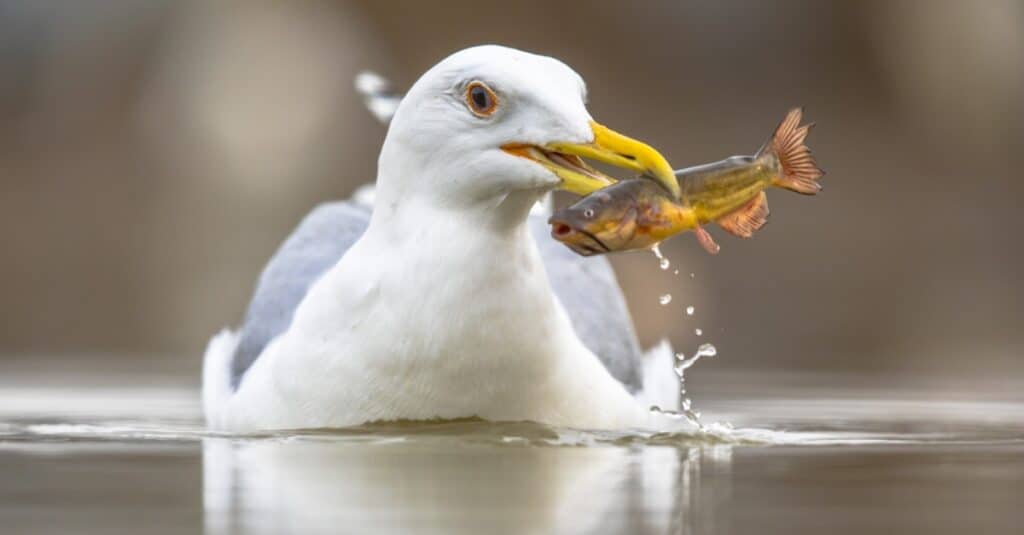
Seagulls (and birds in general) have unique digestive systems.
©iStock.com/CreativeNature_nl
You might wonder how the seagull in the video managed to swallow the fish whole. Remarkably, it gulped down the entire fish without any visible struggle or gag reflex. This is because birds don’t have teeth, and seagulls are no exception. In other words, they can’t rip apart or chew their prey before swallowing it.
Like most birds, seagulls also have what’s called a crop, or a small pouch in the base of the esophagus where undigested food goes for temporary storage. This is the beginning of the digestion process, as the food begins to soften in the crop. From there, the food moves down to the proventriculus (glandular stomach) and eventually the gizzard (muscular stomach).
Yes, you read that right: the bird has two stomachs, each serving its own function. The proventriculus secretes digestive enzymes that help break down the food, while the gizzard further grinds the food using ingested grit. The gizzard also helps the bird filter out certain undesirable parts of their prey. Their digestive system is remarkably efficient and well-adapted to their diet.