
Quick Take
- Armadillos are literally denser than water, which raises the question of how one can cross a 140-yard river without drowning. See how they cross →
- Their shell makes floating nearly impossible, yet armadillos have two completely different water-crossing strategies depending on what they're up against. Discover both strategies →
- The mechanism armadillos use to inflate themselves is voluntary, deliberate, and still not fully understood by scientists. Explore the inflation process →
- Crossing the water is only half the story. What happens to an armadillo's body afterward is just as strange. See what happens after →
The nine-banded armadillo does not appear to be built for water, and science supports this. Its specific gravity is approximately 1.06, which essentially means it is denser than water and sinks with little effort. Plus, its bony shell is heavy enough that staying afloat requires active work, more than this creature can likely put forth.
However, armadillos cross rivers regularly and have been documented swimming distances of 140 yards. How do armadillos manage to swim, and what specific mechanisms ensure their survival, especially when crossing large bodies of water?
Most people don’t realize that armadillos float by inflating from the inside.
The Armadillo Way of Swimming
It’s important to note that this animal doesn’t always inflate whenever it sees a body of water. When a nine-banded armadillo encounters a shallower area of water, it avoids the water entirely.
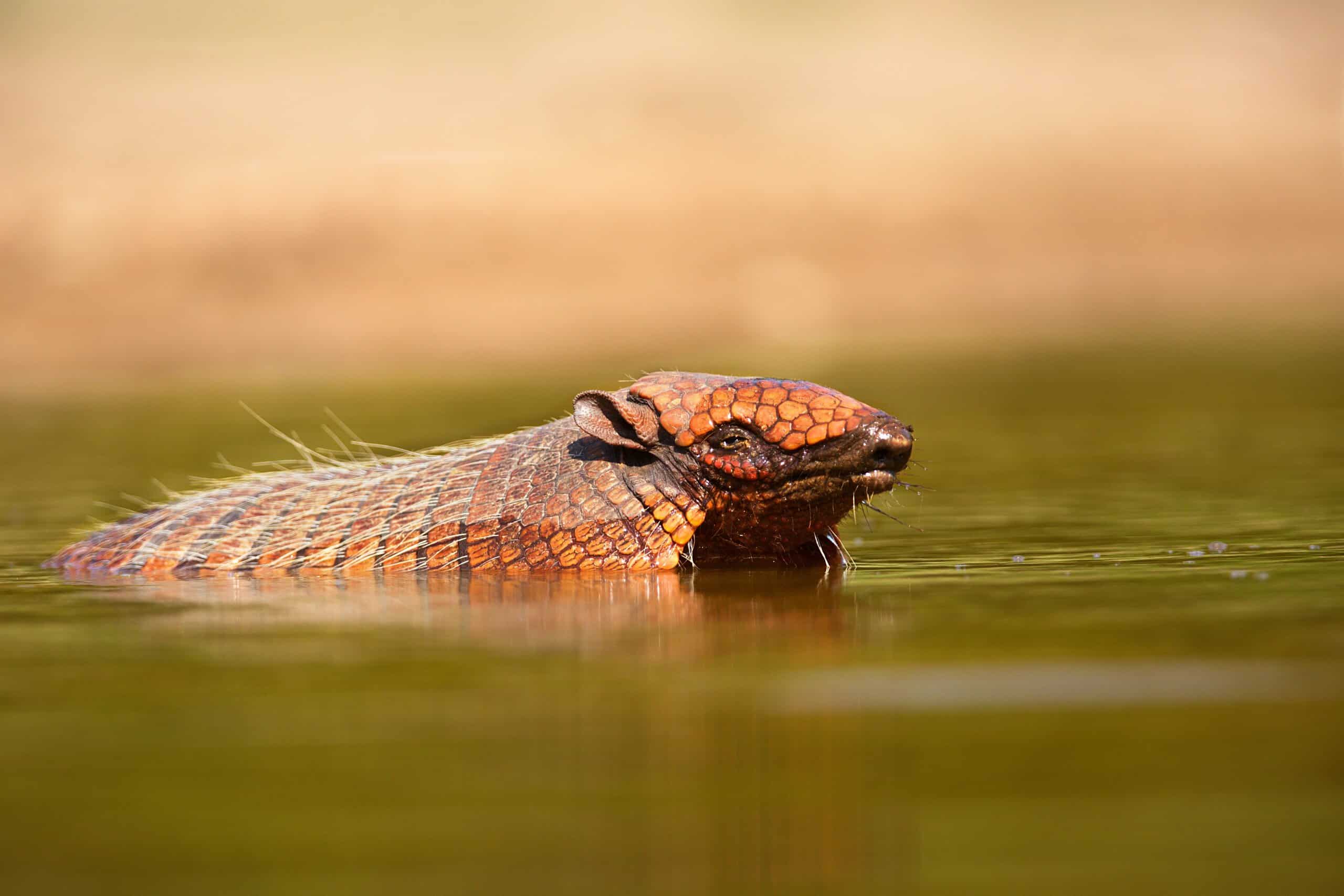
Armadillo shells are too heavy to float, but it has evolved to combat this feature.
©mariamalaya/Shutterstock.com
According to the Florida Fish and Wildlife Conservation Commission, armadillos can hold their breath for four to six minutes, and they use that time to simply walk across the bottom of whatever body of water they choose to cross, emerging without ever having to swim at all. Their density works in their favor here; they use little to no effort to walk underwater.
However, for a wide or extremely deep river, walking isn’t a viable option. The crossing takes too long, and the depth is too great, which is why armadillos have one more strategy.
How Do Armadillos Inflate?
Before entering larger bodies of water, armadillos swallow enough air to inflate their stomachs to approximately twice their normal size. Air also fills portions of the intestines, ensuring a buoyant baseline. Together, these organs add enough internal volume to counteract the shell’s weight.
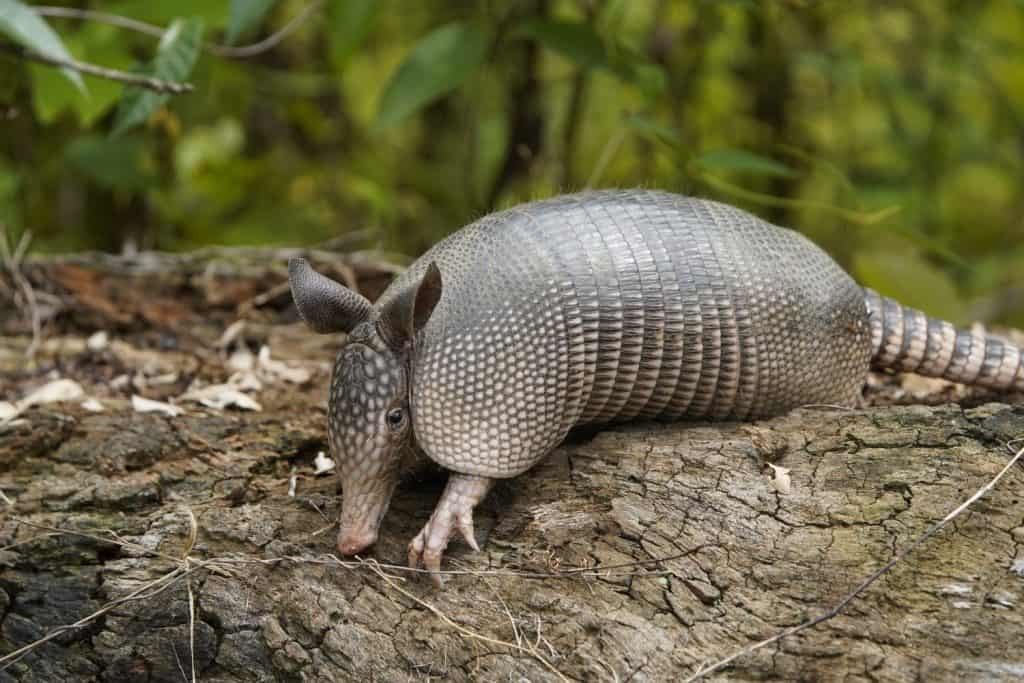
Armadillos inflate from within, allowing them to float across the surface of large bodies of water.
©guentermanaus/Shutterstock.com
A stomach inflated to twice its size pushes against more surrounding water, generating enough upward force to keep a dense and armored body at the surface.
But what is the exact mechanism at work within an armadillo that allows this to happen, especially at their whim? As Texas Tech University’s Mammals of Texas species account notes, the physiological process by which the armadillo ingests and retains air in its digestive tract is not fully known, but it appears to be under its control. The animal chooses to do this, preparing itself before ever entering the water. It is unclear how they figure out whether sinking or floating is the right call, but they seem to manage.
Once inflated, the armadillo dog-paddles in the water. Its shell, which cannot be compressed, holds its shape around the expanded digestive organs.
How Armadillos Deflate and Swim So Effectively
After completing its journey, it takes an armadillo several hours to release all of the excess air from its digestive system. The gas is released gradually, and through normal digestive processes like passing gas. Plainly speaking, the animals will spend a decent amount of time belching and farting as the stomach and intestines return to their resting size.
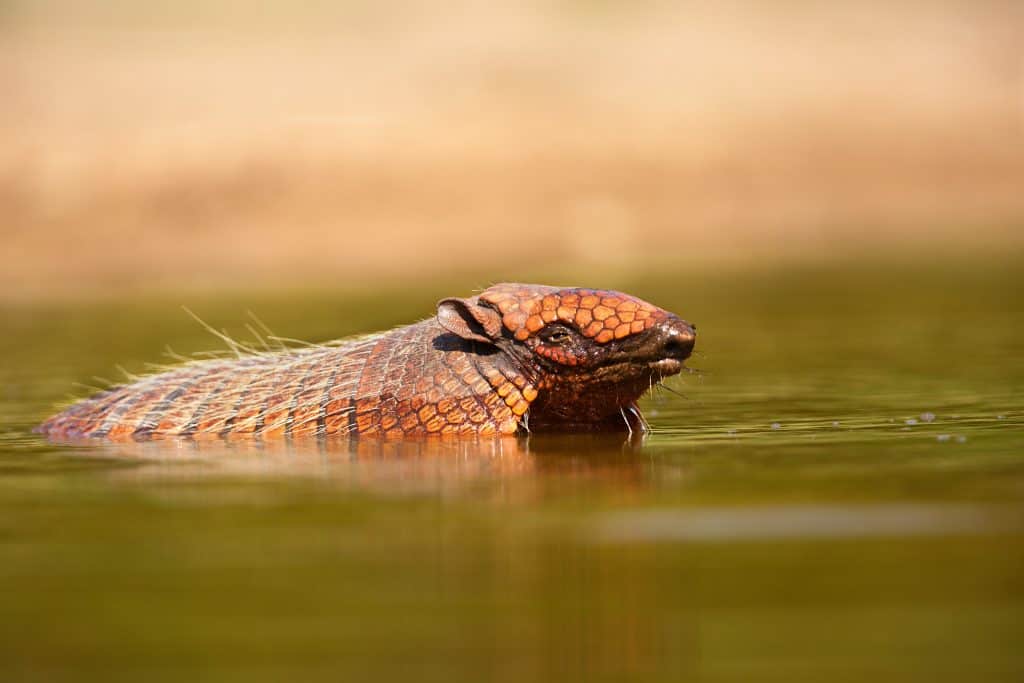
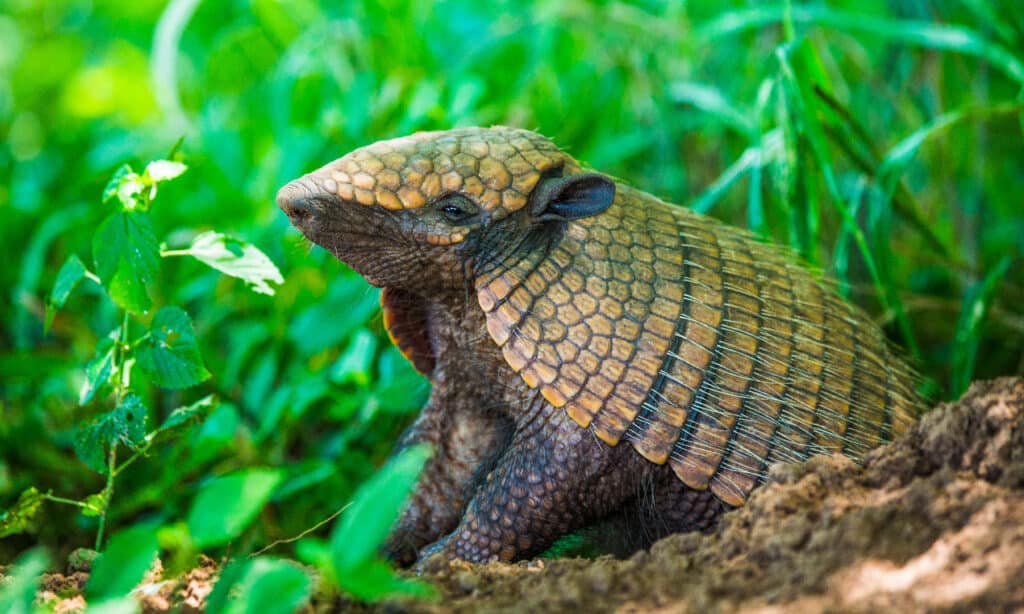
While sinking can be an effective strategy, armadillos can also float across water.
©Dagmara Ksandrova/Shutterstock.com
Through underwater walking and voluntary inflation, armadillos are far more capable in water than their build suggests. Wildlife sources have documented an armadillo swimming 140 yards across open water, and this fact helps explain the armadillo’s increased range expansion over the past century.
While the protective shell of an armadillo makes buoyancy difficult, it is a necessary component of this unique animal. So, this creature adapted a way of inflating itself. It works well, even though it means a bit of extra hot air is involved.