
Overexploitation is a major factor in the decline of many species. Humans exploit at least a third of vertebrate animals to provide food, products, or medicines. A scaly mammal called the pangolin is a typical victim of this exploitation. The pangolin’s scales are trafficked for medicine, and their bodies are used for meat. Eight pangolin species currently recognized by the International Union for Conservation of Nature (IUCN) are in trouble, ranging from vulnerable to critically endangered. They are now protected under international laws. However, to protect them effectively, we need to understand exactly why they are being targeted by local stakeholders and what they are being used for. This will enable effective controls to be matched to local motivations. A recent study carried out by researchers from the University of Cambridge in the UK has set out to pinpoint whether it is a demand for their meat or for their scales that is driving their exploitation.
About Pangolins
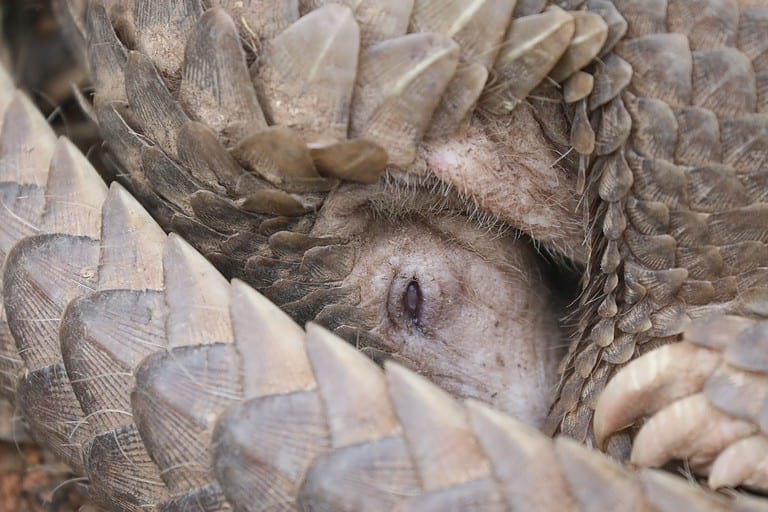
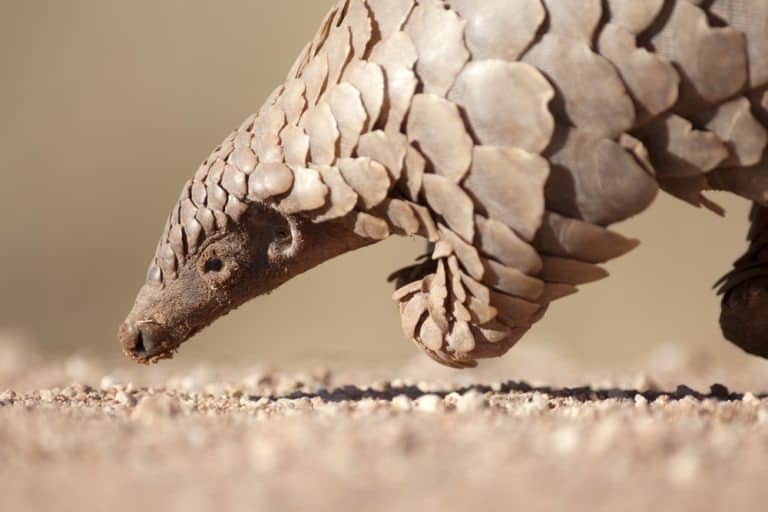
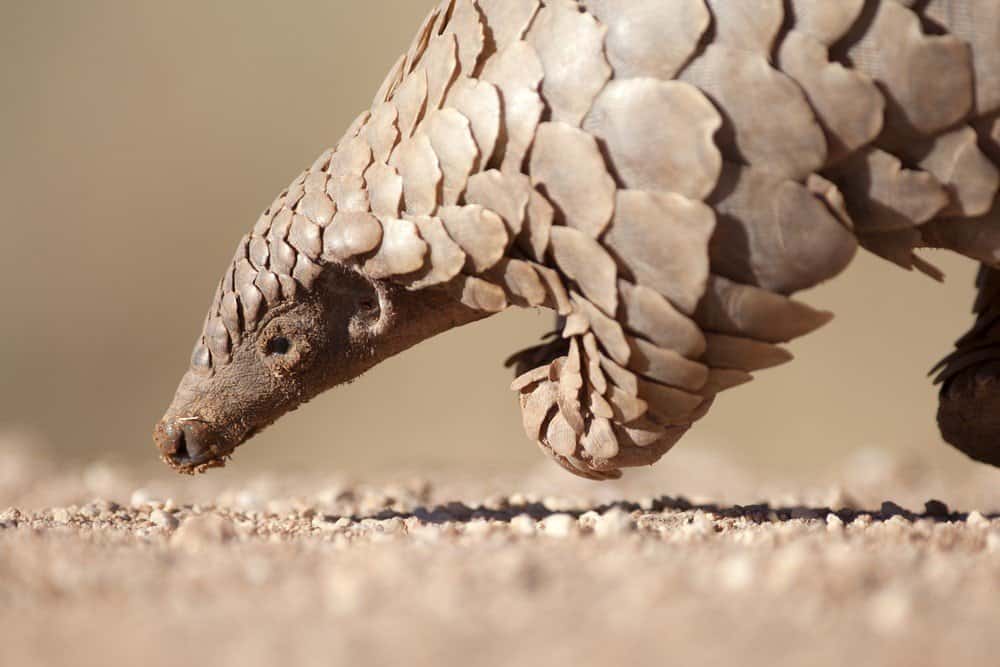
Pangolins are unusual mammals because instead of fur, they have scales. They lead a solitary, nocturnal life, and if you startle them, they will cover their heads with their front legs and expose their scales in an attempt to deter their attacker. Four currently recognized species of pangolin live in Africa: black-bellied pangolin (Phataginus tetradactyla), white-bellied pangolin (Phataginus tricuspis), giant ground pangolin (Smutsia gigantea), and Temminck’s ground pangolin (Smutsia temminckii). A further four live in Asia: Indian pangolin (Manis crassicaudata), Philippine pangolin (Manis culionensis), Sunda pangolin (Manis javanica), and Chinese pangolin (Manis pentadactyla). This research was carried out in Nigeria, Africa.
Exploitation of Pangolins
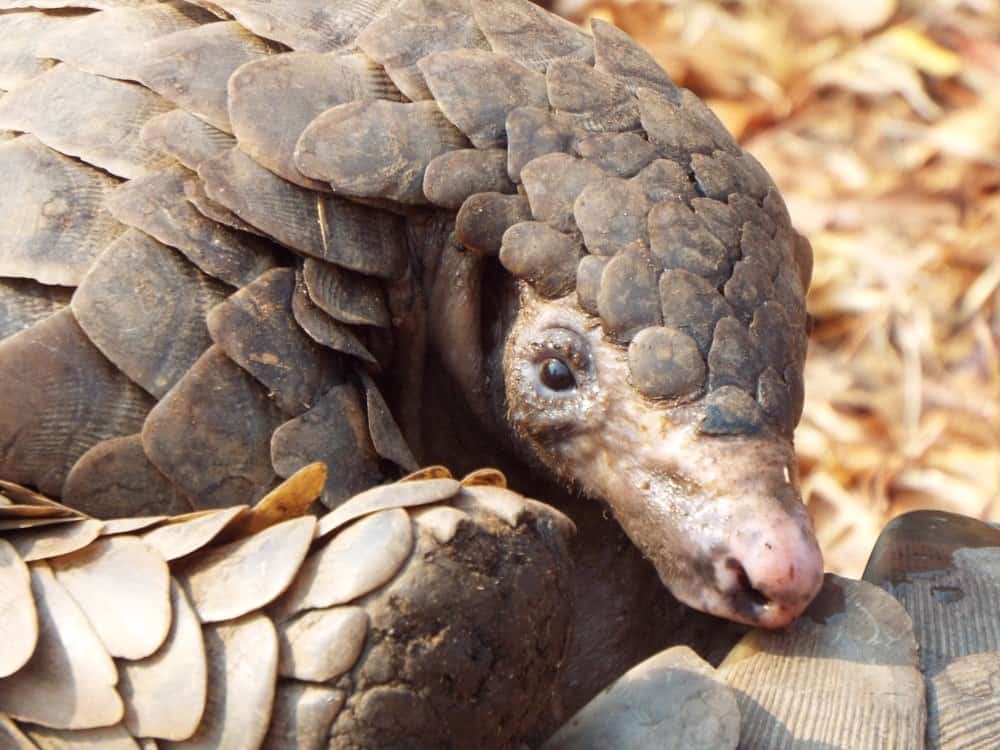
Pangolins are hunted for their scales and meat.
©Patrick Fonseca/Shutterstock.com
Current pangolin populations are exploited for two commercial markets. There is an international demand for pangolin scales, which has made them the most trafficked wild species in the world. In Ghana, pangolin scales and bones are prescribed by traditional healers for a range of conditions, including rheumatism and convulsions. Thirteen body parts of pangolins are used to treat various medicinal ailments in Ghana. In Chinese medicine, they are treated and used for a variety of conditions, including malaria, fever, and hearing loss. The resulting decline in the Asian pangolin populations has triggered a rise in the trafficking of African pangolins to fulfill demand. Pangolins are also caught for meat, and African communities have long used them to supplement their sources of food. Despite this, many organizations have focused their attention on the pangolin scale trade rather than on the hunting of pangolins for meat.
Pangolins in Nigeria
This study found that between 2020 and 2023, approximately 21,000 pangolins were killed each year in the Cross River Forest area of Nigeria. The majority (around 60 percent) were taken by formal hunters who mostly picked them up by hand but who also used traps, dogs, and guns. The remainder were captured by casual hunters who caught most by hand, but also caught 32 percent using wire traps. Interestingly, the formal hunters had not set out specifically to hunt pangolins. They were on general hunting trips and opportunistically captured them.
What Are the Pangolins Used For?
Most formal and casual pangolin hunters caught the animal to consume it as meat, but around a quarter of them intended to sell the meat on. Only 3 percent intended to use or sell on the scales. The scales were not of prime importance to these hunters. In fact, formal hunters threw away the scales of 67 percent of their pangolins. Only 1 percent of captures were ever used for medicinal purposes. In contrast, the meat was highly prized and often eaten by pregnant women in the belief that it would lead to strong and healthy children. The meat is judged to be more palatable by the local population than all other domestic and wild meat sources except for the African brush-tailed porcupine.
The Significance of This Research
This study has established that in this area of Nigeria, pangolin hunting is driven by a domestic demand for meat rather than an international demand for their scales. The meat of captured pangolins is almost always eaten, but their scales are often discarded. In local markets, the meat is worth three to four times as much as the scales. Scales are viewed here as a by-product.
These findings are highly significant for conservation efforts. It means that efforts to end pangolin trafficking from this area will have little effect if the local demand for meat is not addressed. Site-level interventions are likely to have a greater impact than law enforcement efforts targeting traffickers. Anti-poaching controls should be a priority, as should community-based interventions to improve food security and behavior change programs for hunters. Maintaining local support and ensuring that the focus does not shift to other endangered species is also critical.