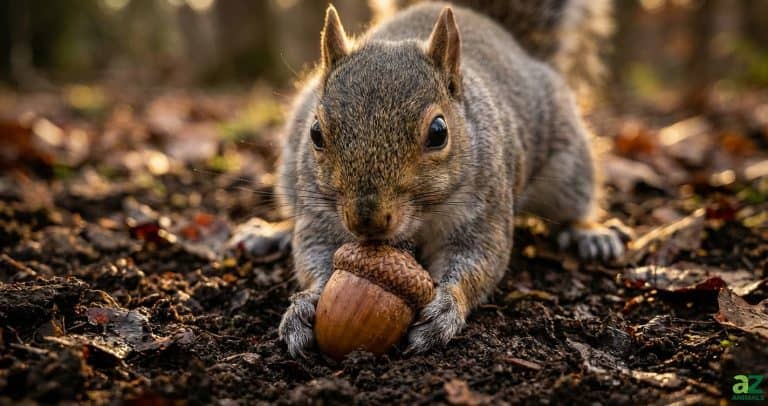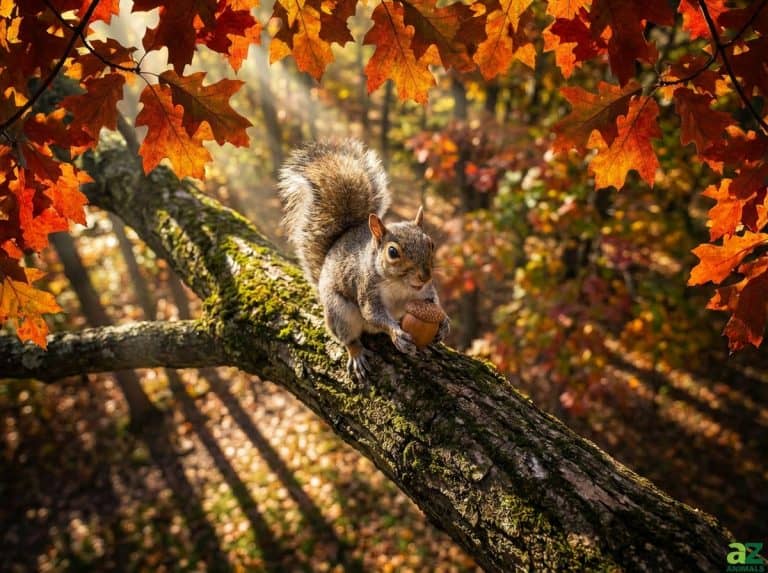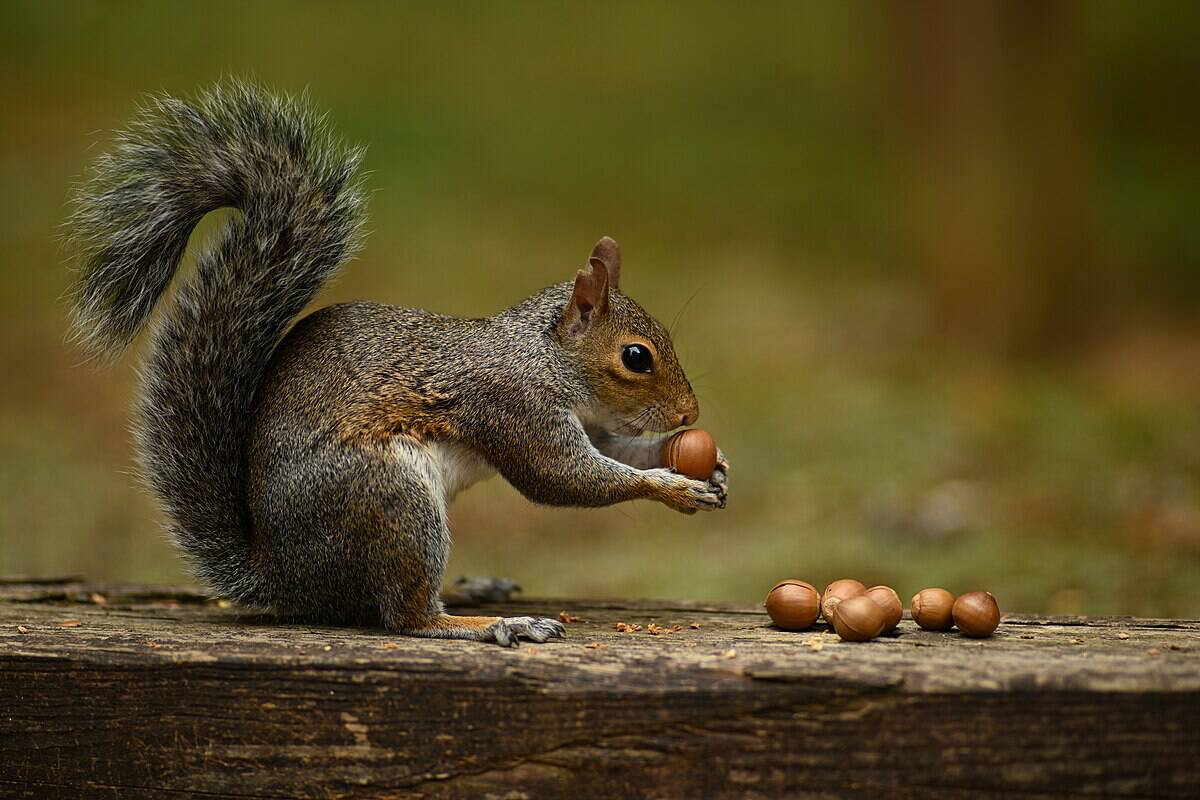

You’ve likely seen a squirrel dashing around with an oak tree acorn in its mouth. It may be about to eat lunch, or it may be stowing acorns in its pantry for later meals. But where, exactly, are squirrel pantries, and what role do they play in the seeding of new trees? This article will explore the intricate role of squirrels in forest maintenance and succession.
All five species of North American squirrels include acorns in their diets, to varying degrees. The red squirrel (Sciurus vulgaris) is not a big fan of oak acorns, typically preferring nuts from pine trees. But eastern grey squirrels (Sciurus carolinensis) eat copious amounts of acorns and—in doing so— play an ecological role in forest renewal. Native to the East and Midwest parts of the U.S., eastern grey squirrels, through introductions to places as far-flung as England, have global impacts on forests.
Why Acorns?
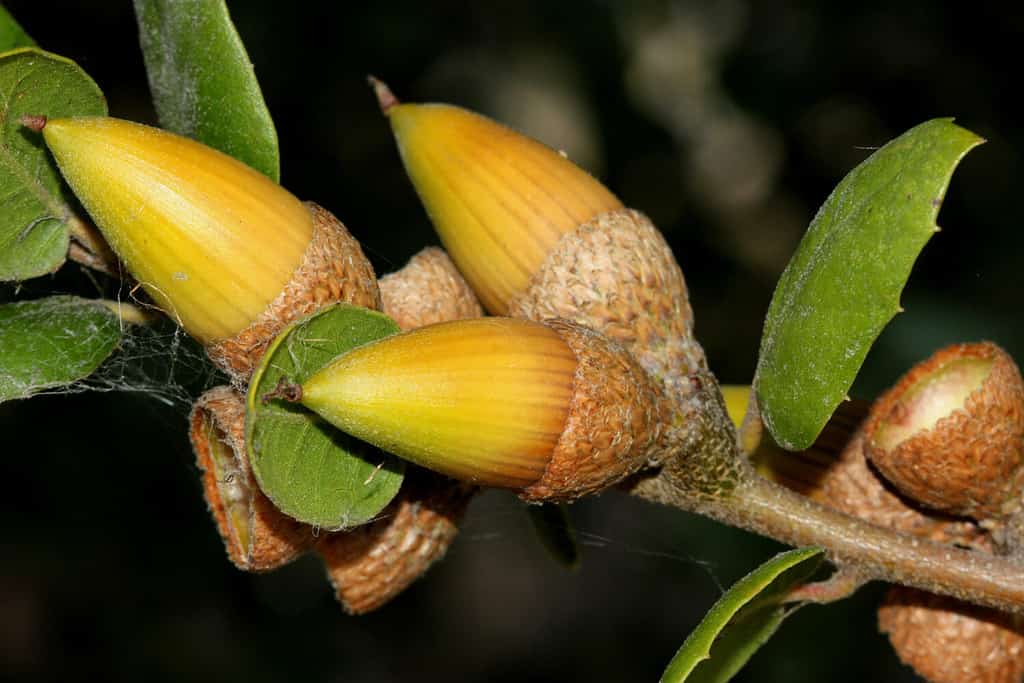
Acorns of the California live oak (Quercus agrifolia) feed squirrels as well as jays, chickadees, and nuthatches.
©Gurcharan Singh/Shutterstock.com
Oak acorns are highly nutritious, softer nuts and therefore easier for wildlife to eat. “Acorns contain more energy than corn, two times the amount of carbohydrates, and up to 10 times the amount of fat,” according to a University of Tennessee article. So, they function as easy-to-eat energy packets. Acorns are known to be popular with about 150 species of animals, from woodpeckers to foxes to black bears.
One group of oaks—red oaks, which have pointed leaves—is high in nutritious fats, alongside bitter, toxic tannins. The other group of oaks—white oaks, which have rounded leaf tips—produce sweeter, more palatable acorns with fewer tannins and fats. Wildlife, including deer and squirrels, favor the white oak acorns, which mature in summer, then drop off trees to germinate in fall. In contrast, red oak acorns take two years to mature, drop in autumn to overwinter, then germinate the following spring. The distinct chemistry and life cycles of these acorns shape their roles in wildlife diets.
Do Squirrels Prefer Certain Species of Acorn?
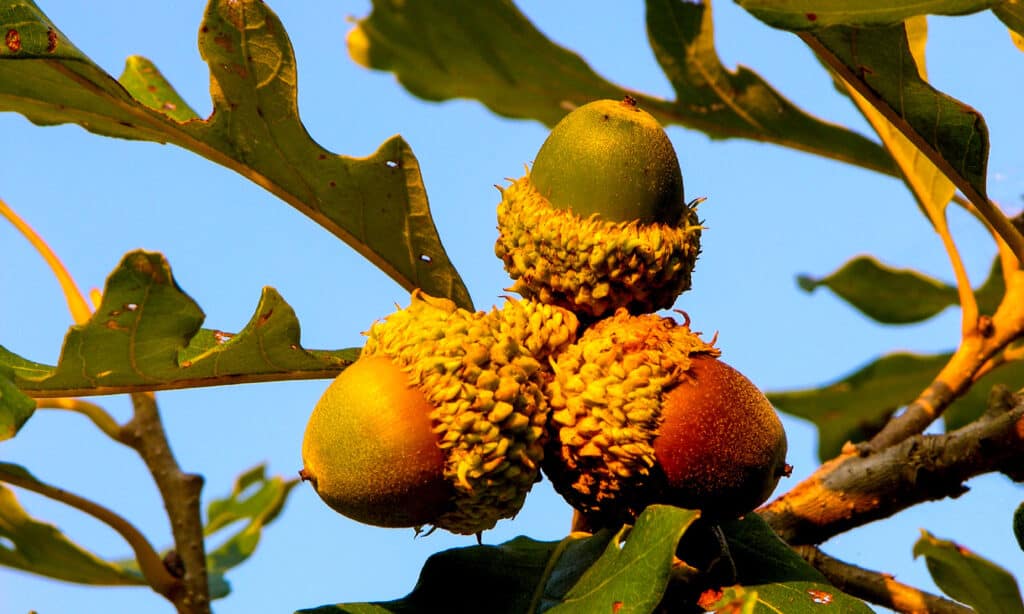
The acorns of this bur oak (Quercus macrocarpa) are sweet and tasty. Note its rounded leaves.
©iStock.com/EIBrubaker
“Tree squirrels are one of the most important animals for helping oaks spread, because they store acorns in the ground, practically planting baby oak trees,” says biologist Peter Smallwood in a press release. He and coauthor Michael Steele study squirrel acorn caching, investigating why squirrels choose certain species of acorns. They observed squirrels during 1,500 feeding events to see whether they ate the acorn or buried it for later use. Their data showed that 85 percent of white oak acorns were eaten on the spot, while only 40 percent of red oak acorns were eaten; the remainder was buried.
The researchers also noticed that, even when squirrels ate the red oak acorns on the spot, they tended to only eat the upper half, before burying the rest. Often the embryo remained intact, such that the seed could still germinate into a tree if the squirrel never returned to collect it. The squirrels’ behavior reinforces the notion that not all acorns are created alike; the sweet, white ones provide immediate sustenance, while the red varieties are more likely used as emergency supplies for the winter.
Acorn Dispersal
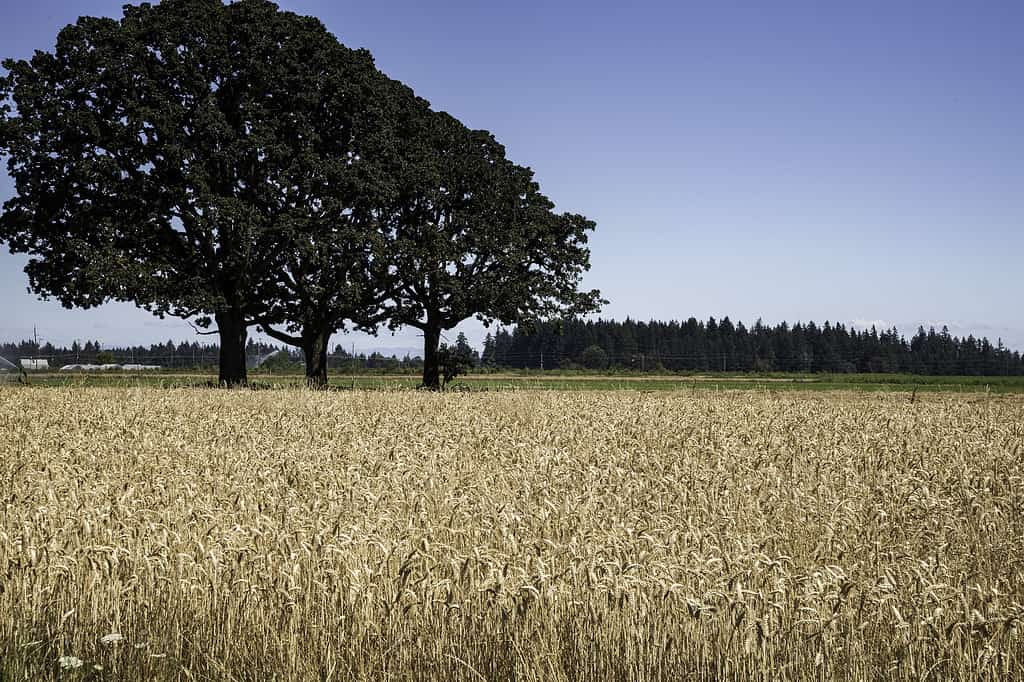
These three oak trees in a ripened wheat field may have been seeded by squirrels.
©Jon Spalding/iStock via Getty Images
Because such a large percentage of red oak acorns are buried by squirrels, these nuts are widely dispersed, such that red oak trees may be the first ones to crop up in new forests. In contrast, white acorns are either eaten or left beneath white acorn trees, germinating near their parent trees. Regardless, seed germination relies on squirrels forgetting to retrieve some of the acorns they stored (cached). Given that squirrels may scatter thousands of acorns, relying on their memories and smell to retrieve them, some are invariably left behind.
Squirrels bury acorns, especially of the red varieties, in sunny pastures and prairies, setting them up for success. The fatty seed leaves (cotyledons) of an acorn protect the embryo within as the acorn overwinters in the ground. Come spring, the cotyledons supply the red acorn with energy for germination.
White acorns, on the other hand, typically start germinating right away, staying moist in the forest floor soil. Once they sprout, their shade tolerance allows them to grow under their parent trees. In rare cases of squirrels caching white acorns, studies have found that they first use their incisors to scrape the bottom of the acorn, killing the embryo, such that it won’t germinate while cached.
Oak Tree Tactics
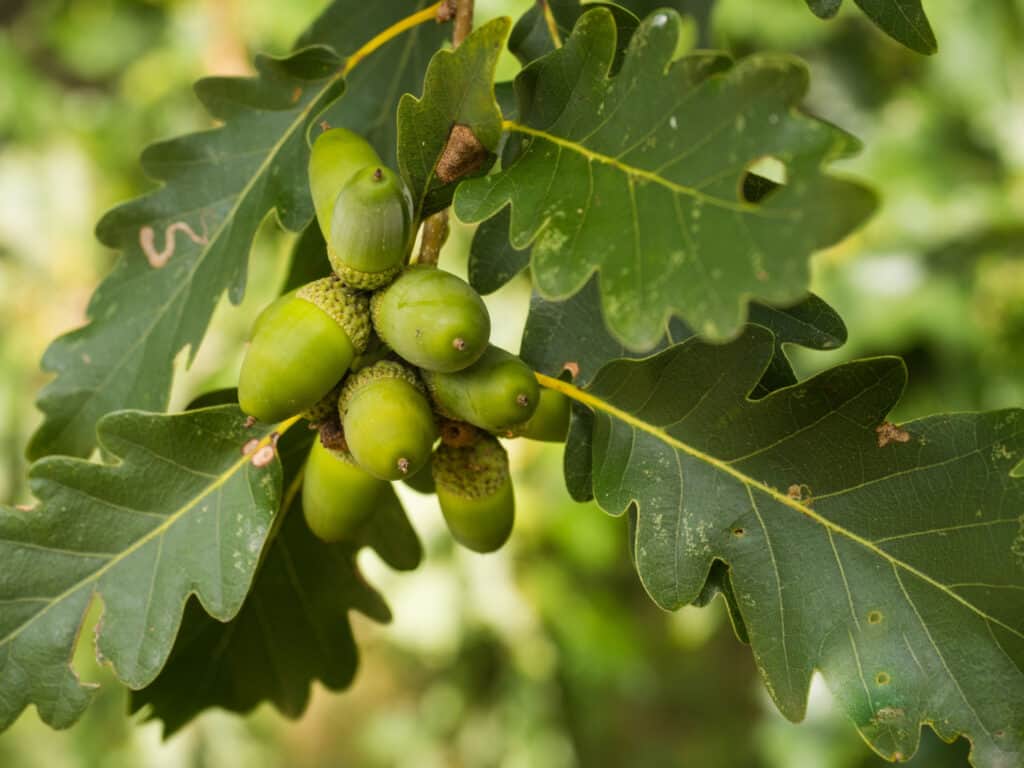
In a mast year, oak trees produce huge quantities of acorns.
©Hartmut Goldhahn/Shutterstock.com
If grey squirrels are such prodigious white acorn eaters, how do any white oak trees stand a chance of developing? Oak trees have adapted to squirrel foraging with a few tricks of their own. In what are called “mast cycles,” oaks make massive crops of acorns one year, then poor supplies another. Experts hypothesize that oak tree masting is a tactic to satiate predators. Producing up to 700 pounds of acorns per acre in a good year, an oak forest provides a feast for squirrels and other acorn eaters, who then presumably leave some acorns untouched.
Oak trees tend to cycle into masting, on average, every 2-5 years. Remarkably, trees of the same oak species will mast simultaneously across huge regions, such as from Wisconsin to New Hampshire. Not every individual tree masts, but the synchrony of many trees makes a “mast year” obvious. Says population ecologist Jalene LaMontagne in a Brooklyn Botanical Garden blog, “If you’re walking around outside and you see conifer trees covered in cones, or tons of acorns all over the ground, and you’re like, ‘Wow, that’s a lot’—that’s masting.”
Evolution of the Squirrel-Oak Relationship
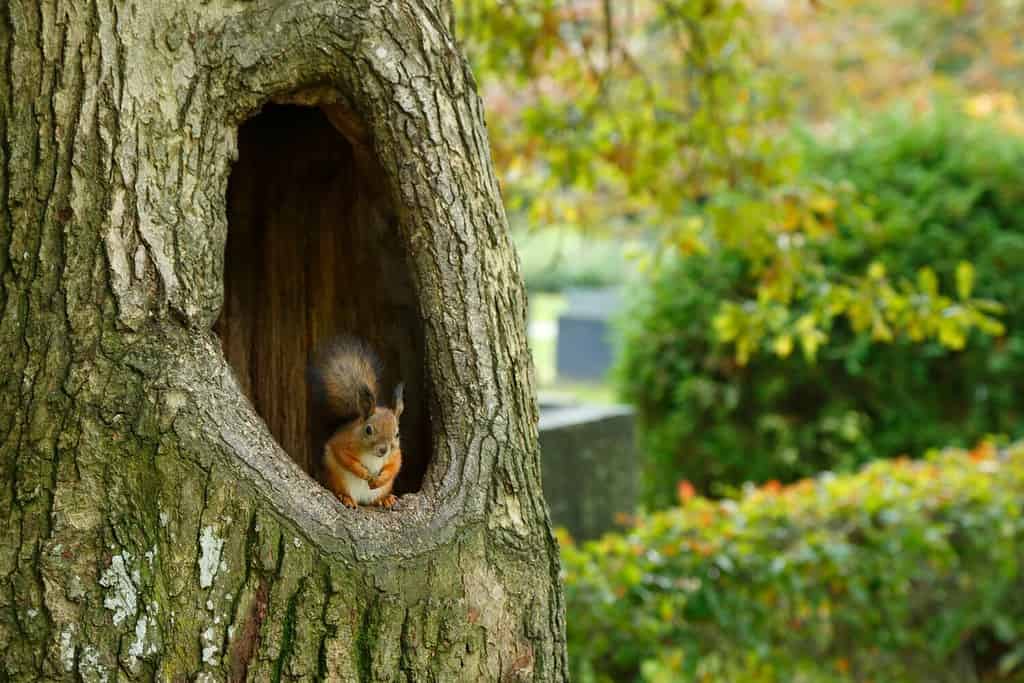
Squirrels and oak trees have long-standing evolutionary relationships.
©Antero Aaltonen/Shutterstock.com
From an evolutionary point of view, masting is thought to have evolved in oaks as a way to keep populations of squirrels and other oak-loving herbivores, such as blue jays, in check. If a tree masted every year, the herbivore populations would likely grow and grow, matching the availability of acorns. But the off years, in which the oaks produce little or no fruit, dampen the growth of herbivore populations. The oak tree strategy guarantees that some acorns survive to germinate.
Arguably, the relationship between oak trees and squirrels is an example of “coevolution,” with both species influencing each other’s evolution. A study published in Frontiers in Ecology and Evolution explored how squirrel interactions with oak trees have shaped their diversity, identifying “a tight ecological and evolutionary dance between the squirrels and the oaks that has shaped the biology of both across the globe.” The researchers conclude that the interactions of some squirrel species and their oak trees could be considered coevolution. However, the influences of squirrels on oaks aren’t just positive. While oaks may benefit from squirrels dispersing their seeds, they also sacrifice seeds, leaves, and bark to hungry squirrels.
The Significance of Acorn Caching
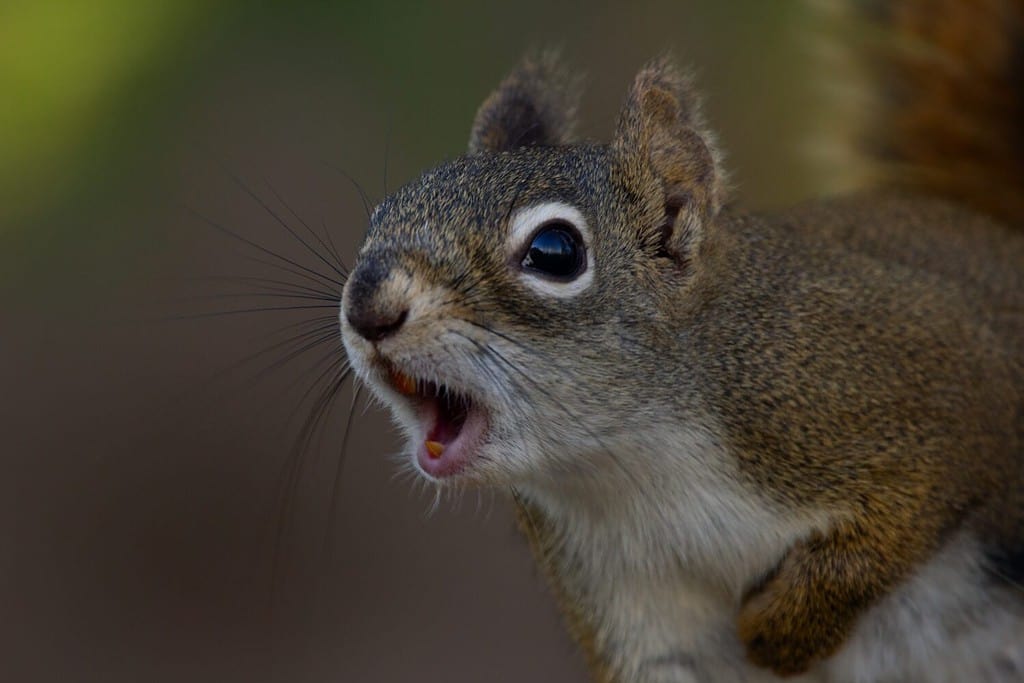
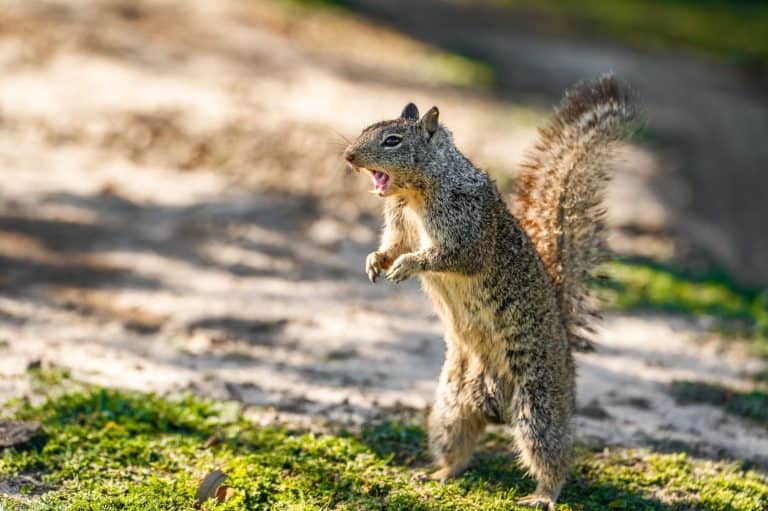
A squirrel will defend its territory with alarm calls when acorns or baby squirrels are at stake.
©Saeedatun/Shutterstock.com
From a squirrel’s perspective, making caches of acorns converts an important food (acorns) that’s highly concentrated in certain seasons (summer) to make it more evenly available during the winter. But it also changes the environment for other animals.
Squirrels do two types of caching. “Scatter hoarding” is when they bury single acorns around the landscape, whereas in “larder hoarding,” they bury multiple acorns at one site. They may also use a combination of types, depending on how oak trees are distributed and whether it’s a masting year. In the abundance of a mast year, for example, it may make sense to larder hoard, whereas if acorns are in scarce supply, scatter hoarding likely reduces the chances that other animals will find and eat all their reserves.
If a squirrel puts all its acorns in one or a few larder hoards, the animal may defend them from other acorn eaters, including other squirrels. If you hear a squirrel making sharp chipping or barking sounds, it is likely warning you or others away from its territory, where it may have valuable caches. In contrast, when a squirrel scatter hoards, placing acorns all around the landscape, it’s hard to defend the nuts. Instead, the squirrel relies on its own memory of the cache locations, outweighing the chance of others finding them.