
Quick Take
- Squirrels have achieved tactical deception levels previously thought to be primarily a primate trait, but later found in other animals such as corvids and squirrels.
- Squirrels perform deceptive caching most often when they’re being observed, both by other squirrels as well as humans.
- Empty decoy sites provide higher security than actual food burial, as these act as distractions for other animals, allowing squirrels to bury their food elsewhere.
- Half theatrics and half strategy, squirrels performing deceptive caching may forget where their actual stores are, leading to regenerative forest growth.
There’s more to the average squirrel than meets the eye, and their foraging habits prove it. If you’ve ever watched a squirrel for long enough, you’ve likely witnessed them bury their treasured food for later. However, there’s also a decent chance the squirrel didn’t bury anything at all.
In some situations, squirrels perform what scientists call deceptive caching. These rodents go through the motions of making a cache, but keep whatever food they’ve gathered in their mouth, leaving behind an empty hole or food storage place for other creatures to discover later (and revel in disappointment).
This is everything you need to know about deceptive caching, including why the unassuming squirrels of the world utilize this tricky method frequently.
What Is Deceptive Caching?
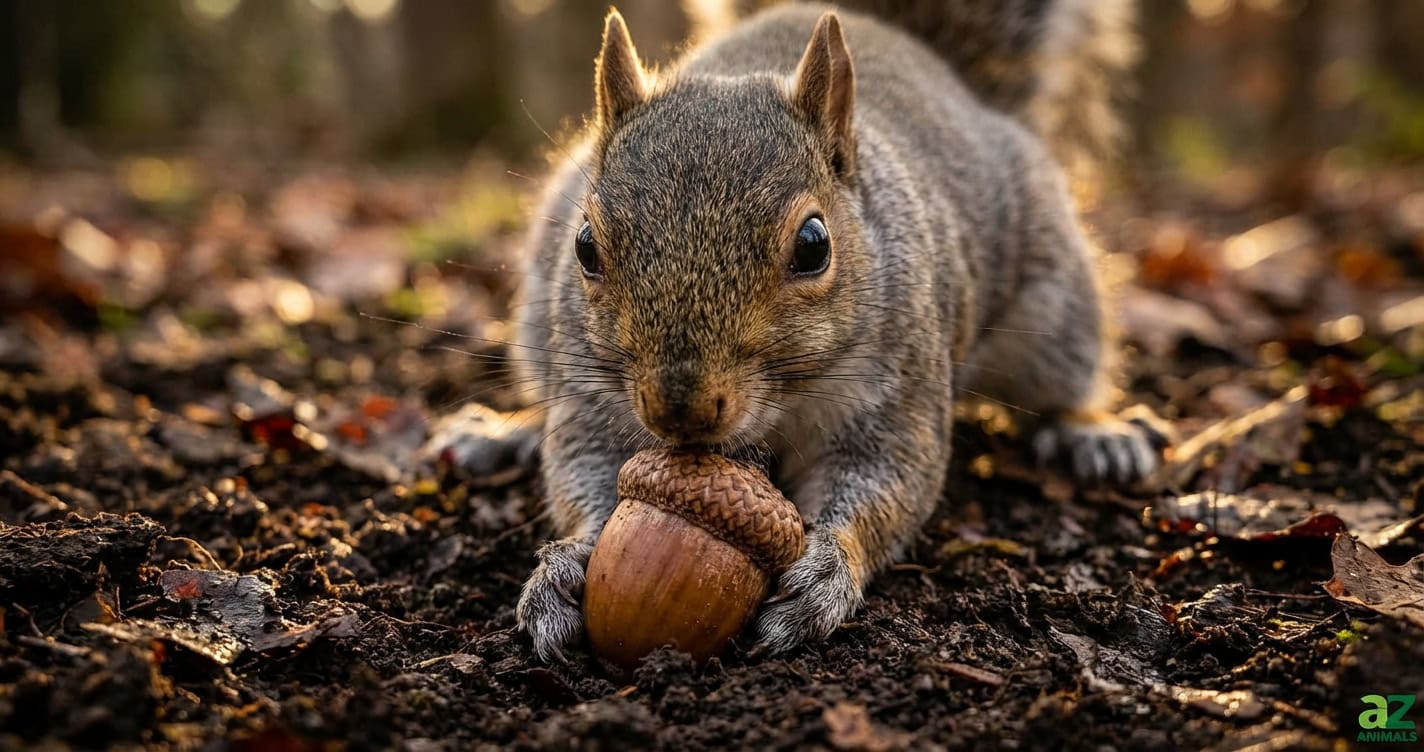
In scientific studies, deceptive caching describes behaviors that look like real caching on the surface, but don’t actually result in food being stored. In a widely cited field study on eastern gray squirrels, researchers reported that squirrels caching in view of others sometimes covered additional empty sites where nothing had been cached, a process researchers interpreted as behavioral deception aimed at protecting real stores.
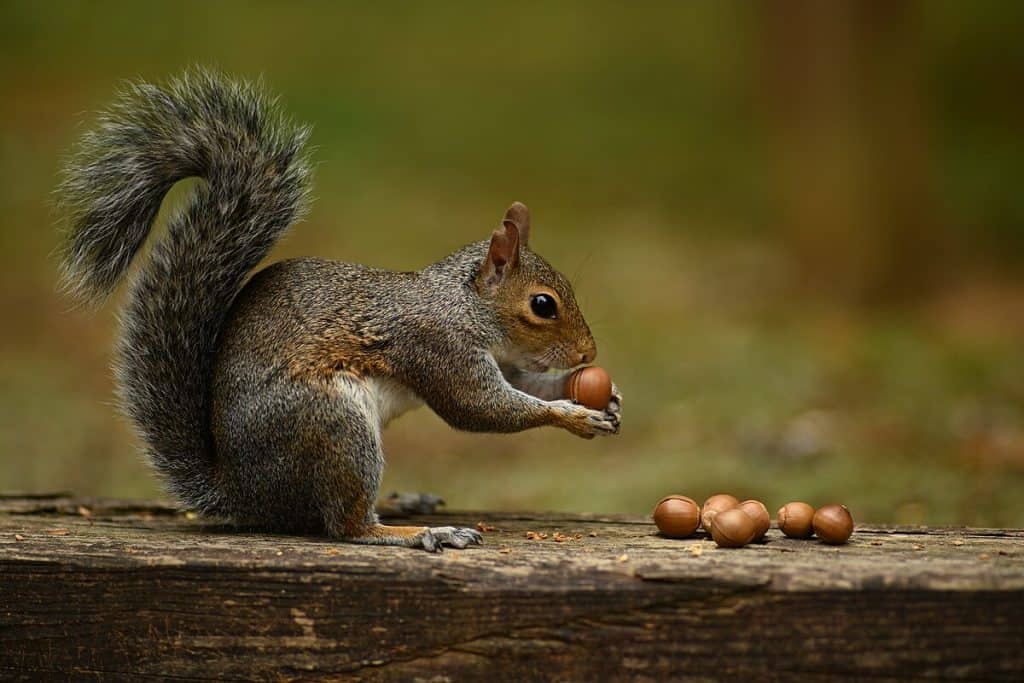
The diet of eastern grey squirrels is mostly acorns from oak trees, and hiding these becomes vital for their survival.
You’ve likely observed this process without realizing it, as squirrels are quick to perform deceptive caching. But why are they doing this, and is it truly effective according to studies and research conclusions?
The Competition Behind Deceptive Caching
While squirrels may perform this act of deception to better find hiding spots for their hoards, another key concept comes into play during this process: competition. Squirrels live in a world where other animals frequently learn by observation, later raiding caches when the cacher is gone. So, by mastering the concept of deceit, squirrels are more likely to keep their caches safe.
Evidence that squirrels adjust their behavior in front of an audience shows up in multiple peer-reviewed studies. A study found on PubMed revealed this precise evidence; researchers found that, when other squirrels were present, gray squirrels used evasive tactics to reduce theft risk.
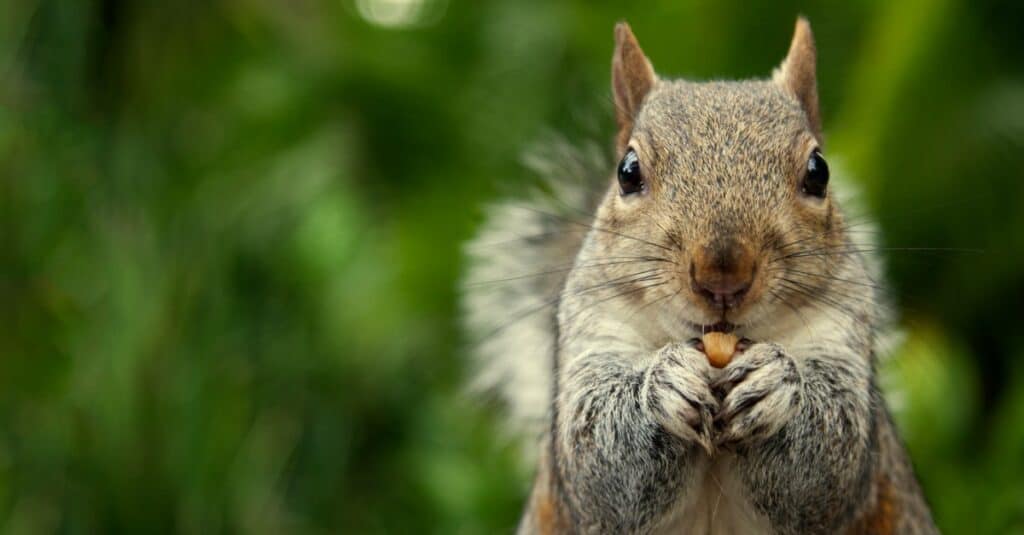
Squirrels are more likely to perform deceptive caching when they know they’re being watched.
©iStock.com/sines-design
Squirrels don’t cache the same way when they think they’re being watched; they developed their own tricks, like spacing caches farther apart and caching while oriented with their backs to an audience. While they don’t play these tricks every single time they’re hoarding food, squirrels will do so whenever they know they have an audience or observer.
What Research Shows About Fake Caches
The interesting components of deceptive caching are its inherent effectiveness and the fact that multiple squirrel species and populations utilize it.
In the eastern gray squirrel field study mentioned above, the authors reported three key points uncovered from their research: deceptive caching occurred in more than one population, it happened more often when other squirrels were close, and it reduced the odds of cache theft by other types of pilferers, such as humans, in their experimental setup.
Protecting these food stores is vital for squirrels, and this experiment proved they will indeed get sneakier under observation. After all, an empty cache is wasted effort, unless it redirects a thief away from their real food.
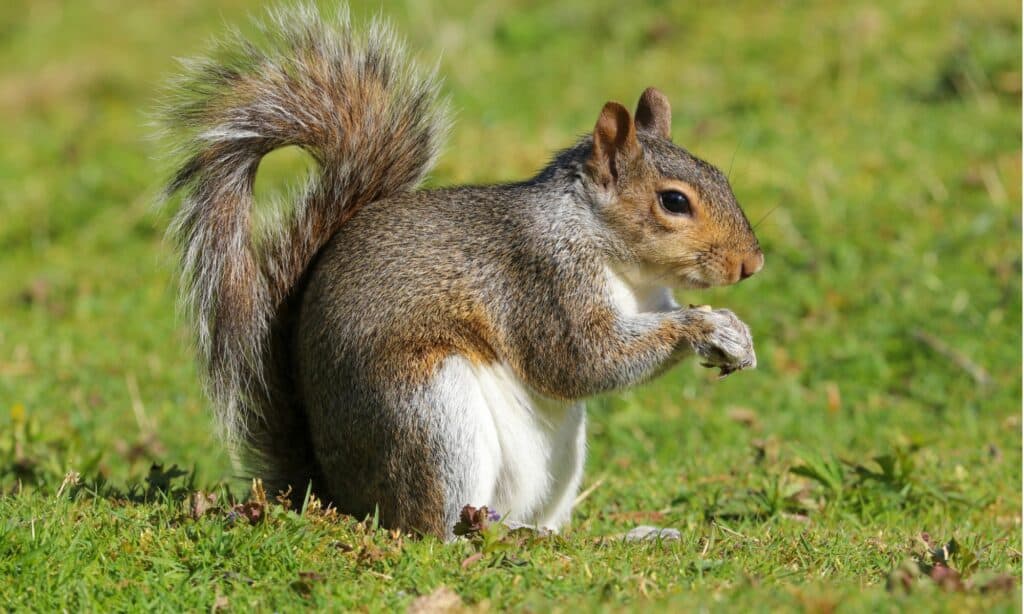
No matter the food involved, squirrels must be strategic about how they store it.
©iStock.com/Helen Davies
An interesting NOVA feature on squirrel science described deceptive caching in a new light, comparing squirrel behavior to observed caching behaviors in other, very different species of animals. In fact, squirrel expert Michael Steele said this about their process: “Up until the point where we found it in squirrels, this kind of tactical deception was thought to only occur in primates.”
To be clear, deception in the animal behavior world doesn’t automatically mean squirrels are consciously lying in a human sense. Many researchers actually view these behaviors as adaptive strategies that can be triggered by cues, such as proximity of a competitor, without requiring human-style intent, such as harm or falsehoods. Still, squirrels that utilize deceptive caching are capable of observing their environments and making decisions based on who or what is watching them.
Fake Caches Are Only One Strategy Squirrels Use
Squirrels actually use other defenses to protect themselves and their food. Besides deceptive caching, here are some other, more common squirrel behaviors and strategies:
- Cache spacing: spreading stores out so one theft doesn’t wipe out the entirety of their food supply. While it depends on their habitat and amount of food, this behavior is common after deceptive caching strategies.
- Orientation and concealment: positioning the body to block sight lines while caching is common, regardless of whether a squirrel is being deceptive or actually hiding their food.
- Recaching: moving food after it’s been stored, especially if the squirrel suspects it has been observed is also a common occurrence. Reporting and research often describe squirrels revisiting, excavating, rehearsing their digging, or reburying caches as part of ongoing cache management. Anything a squirrel can do to make their food less obvious, they’re going to do it.
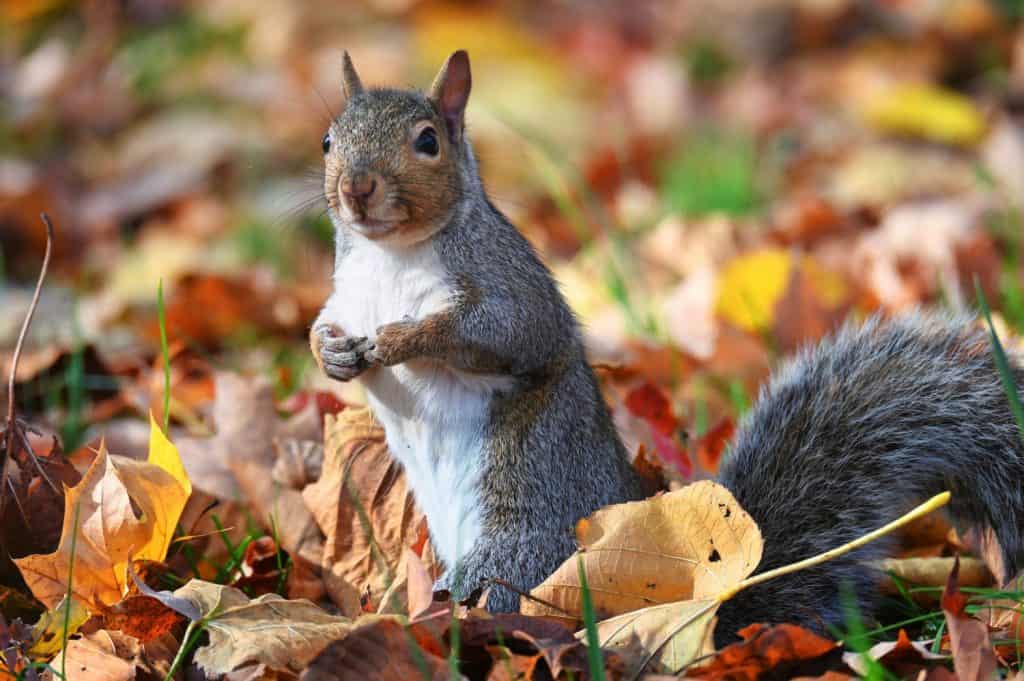
Squirrels will recache their food often, which means they may lose track of where they’ve hidden it.
©MargJohnsonVA/Shutterstock.com
Ultimately, squirrels shift their tactics based on the risks to their food supplies. The risks vary day by day, which means squirrels are frequently considering far more factors than we realize, even as they perform routine behaviors.
How to Spot Deceptive Caching in Your Local Squirrel Population
Interested in catching a squirrel in the act of deceptive caching? While you’ll be an observer and the squirrel will likely be aware that you’re watching, that makes deceptive caching all the more likely to occur. Here’s what to watch for in your local park or backyard:
- The squirrel performs the act of burying something, including digging, lowering its head, and covering its food, but never clearly drops the food item into the hole it has dug.
- The squirrel leaves quickly and caches elsewhere, sometimes after repeating its deceptive caching process more than once in a short span. The repetition of them digging is something to watch for.
- Other squirrels are nearby, especially trailing behind, watching from a short distance, or approaching when the cacher moves off, giving squirrels more motivation to deceptively hide their food.
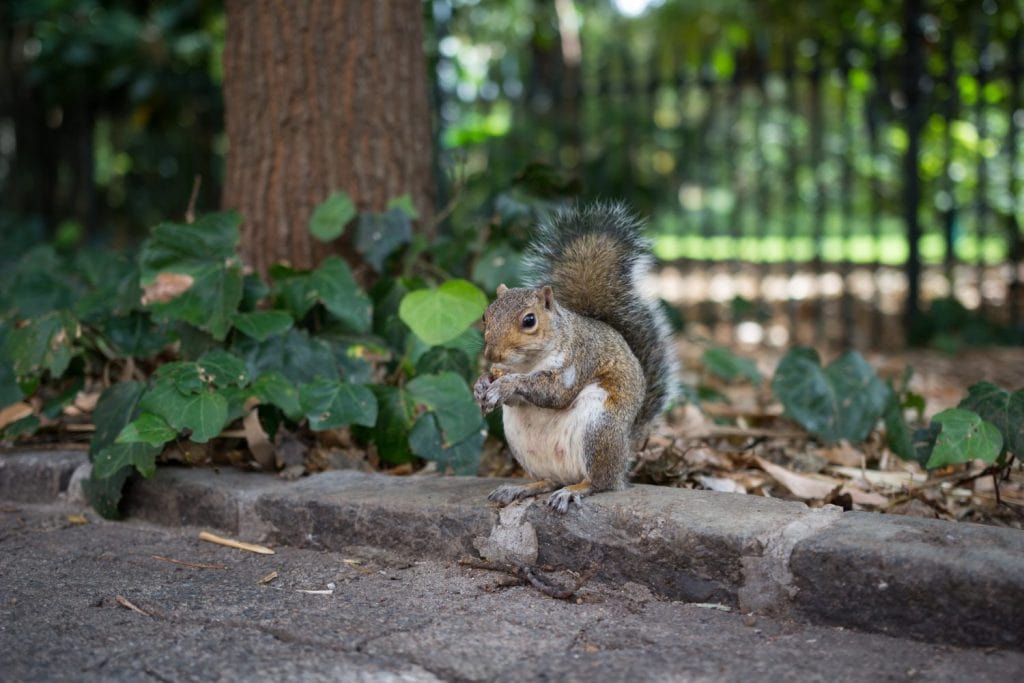
Deceptive caching happens all around you if you have a local squirrel population; you just might not realize it.
©Timothy Reinhardt/Shutterstock.com
However, even with these tips, it’s not always possible to know whether a cache is real without disrupting the animal’s intricate process. No matter what, when there’s more competition within an ecosystem, squirrels tend to become more evasive. They may even get better at deceptive caching the more you watch!
How Deceptive Caching Becomes a Survival Tool For Squirrels
Deceptive caching is entertaining to watch if you manage to catch a squirrel in the act, but it also points to something far bigger than fun. For this unique animal, caching is a behavior that has shaped squirrel cognition, movement, communities, and their risk assessment abilities.
It’s also a huge part of how squirrels influence forests and remain vital to our habitats. Scatter-hoarding means some buried seeds are never recovered, and those forgotten caches can germinate, making squirrels accidental planters and major contributors to tree growth. When squirrels refine where and how they cache to avoid thieves, they may also change where seeds end up across a landscape, shifting patterns of seed dispersal over time.
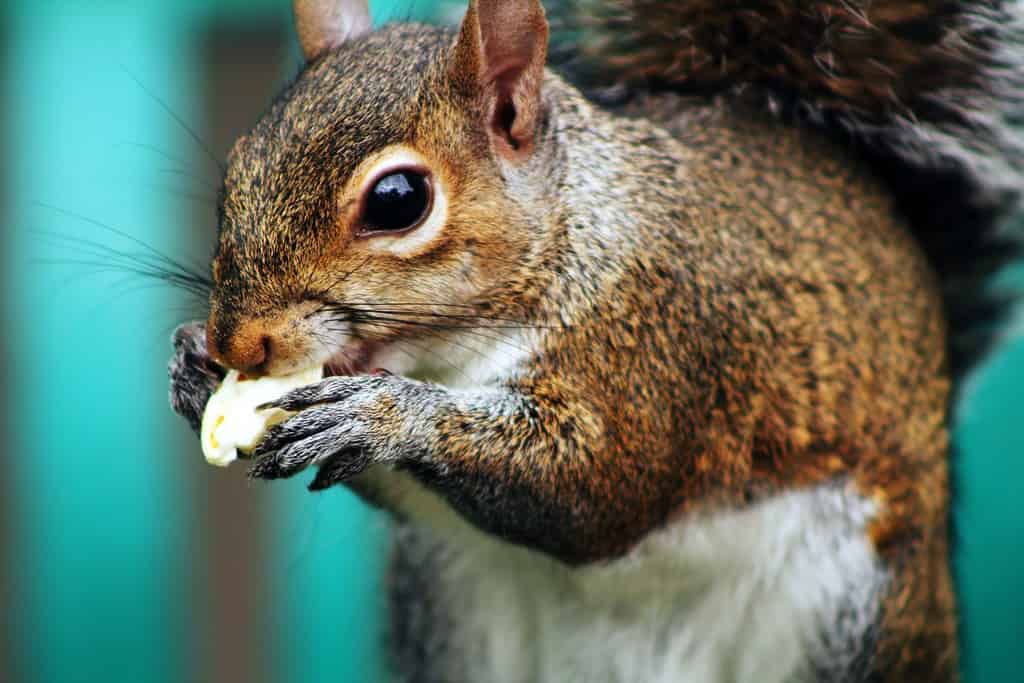
Without deceptive caching, squirrels would likely have their food stolen and their survival threatened.
©Photographic Views/Shutterstock.com
Deceptive caching may appear to only benefit a single squirrel at a time, but it becomes part of a bigger picture. These clever little guys actually contribute to our forests and natural world when their caches become a bit too deceptive, and squirrels deserve more credit for their hoarding behaviors than most people assume.