
Quick Take
- One invasive forest pest has already crossed into dozens of states, and warming winters are precisely why it keeps spreading. See how emerald ash borer spreads →
- Climate change isn't just producing more forest pests but larger ones, and that distinction matters more than you'd think. See how heat creates bigger pests →
- A single winter season is all it takes for a pest population to spiral permanently out of control, and that threshold is becoming easier to cross for reasons worth understanding. See the winter survival threshold →
Climate change is already reshaping the landscapes we know and love. Within the next century, the Antarctic could lose most of its ice, while climbing temperatures fuel devastating storms. Floods, forest fires, and droughts are slowly becoming the norm. These effects damage our ecosystems, lowering the survival rates of many species. But for some, like the insects that thrive in warm weather, the effects encourage survival.
This leads to an abundance of the pests that damage forests and woodlands across North America. In the last 20 years, scientists have documented a significant increase in forest pest damage across North America, with recent reports highlighting the growing threat to forest health. The correlation between hot climates and tree damage can no longer be ignored, but can it be stopped?
Hot Temps Breed Tricky Pests
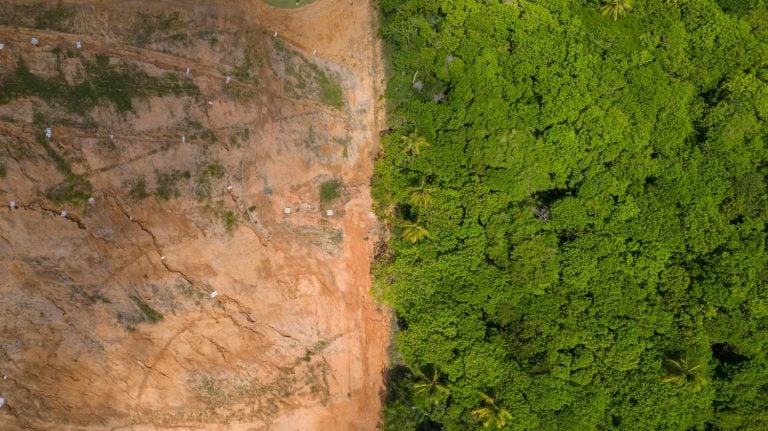
In 2007, mountain pine beetles infested Winter Park, Colorado. Aerial photos show brown and red patches of trees that were decimated by the pests. It’s estimated that more than 650,000 acres of Colorado’s trees were defoliated or weakened as a result. At the same time, spruce beetles in Alaska and Canada did the same to another 3.7 million acres. Another pest, the hemlock woolly adelgid, also destroyed acres of eastern hemlock trees. This was a significant problem nearly 20 years ago, and recent data show that pest infestations continue to threaten millions of acres of North American forests.
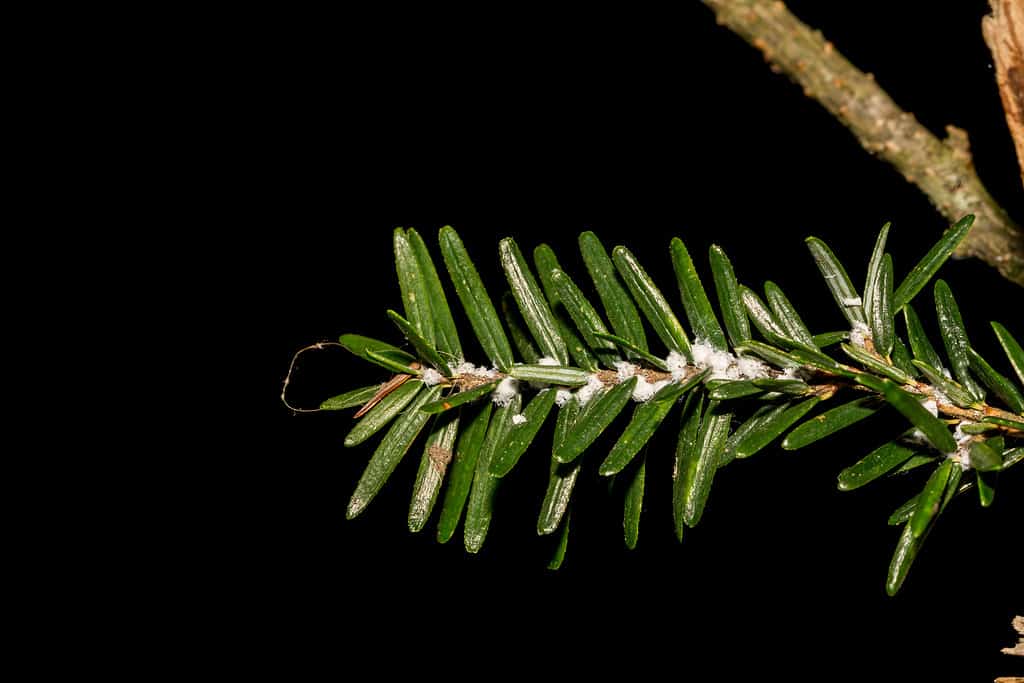
Hemlock Woolly Adelgid Infestations are now common throughout New England’s eastern hemlock forests.
©iStock.com/JasonOndreicka
Climate change paves the way for pests to grow, and for some species to outlive others. By 2070, scientists project that climate change will increase the risk and severity of pest outbreaks in Northeastern forests, potentially affecting oak-hickory and other tree species. This region is heavily dependent on woodlands, and their loss would have devastating consequences for northern ecosystems. A recent study in Nature Ecology & Evolution found that several key forest pests have been thriving and causing increased damage due to climate change over the past two decades.
Mild Winters and High Reproductive Pest rates
There’s a reason why bugs in the Southern Hemisphere are larger, more aggressive, and more numerous. Heat speeds up the reproductive rate of most pests and encourages breeding. As temperatures warm, the same pests that depend on tropical climates get an extra energy boost. Further north, these temperature fluctuations lead to overpopulation. We’ve already seen this in mosquito populations. Studies show that these pests have expanded their range in recent years due to warming temperatures.
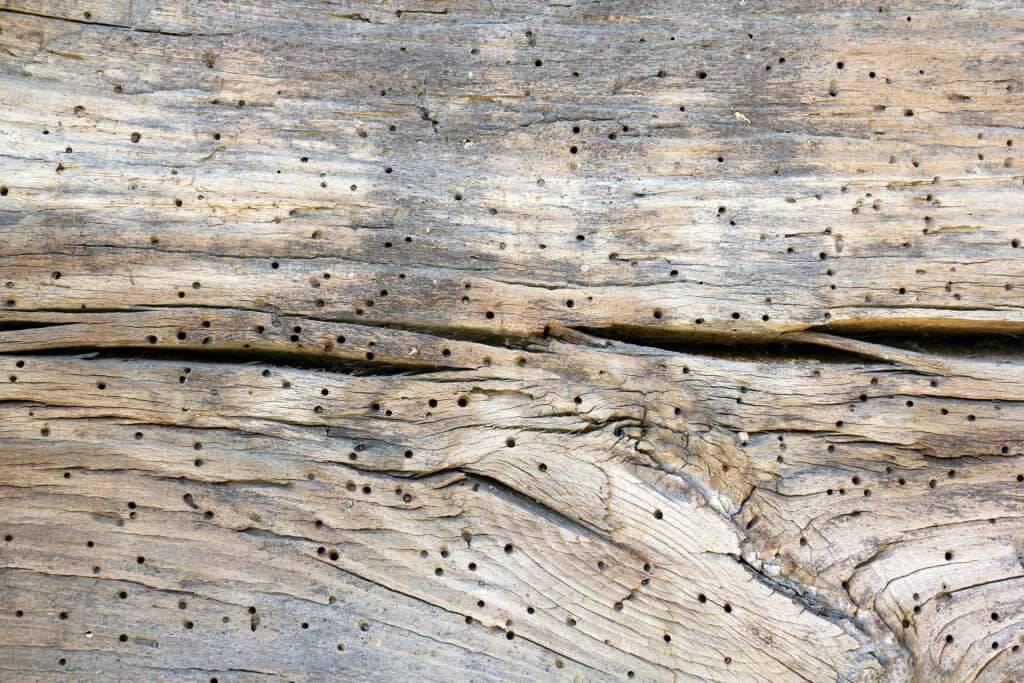
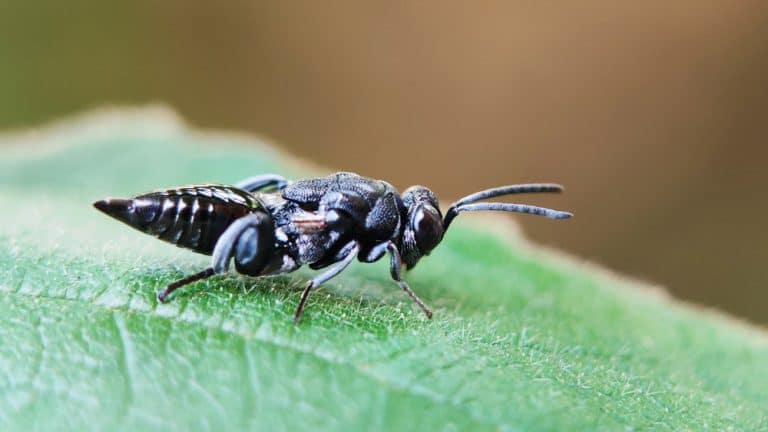
Beetle damage harms the bark and trunk of the tree, leaving it vulnerable.
©taviphoto/Shutterstock.com
Warmer winters mean pests have a better chance at survival, such as the mountain pine beetles and hemlock woolly adelgids. In extreme cases, some populations may even survive mild winter seasons. When this happens, the population spirals out of control and continues to grow. As it does, each pest continues to grow, sometimes resulting in an even larger insect than the year prior. As of 2018, pests damaged millions of forest acres across the U.S., and the threat continues to grow.
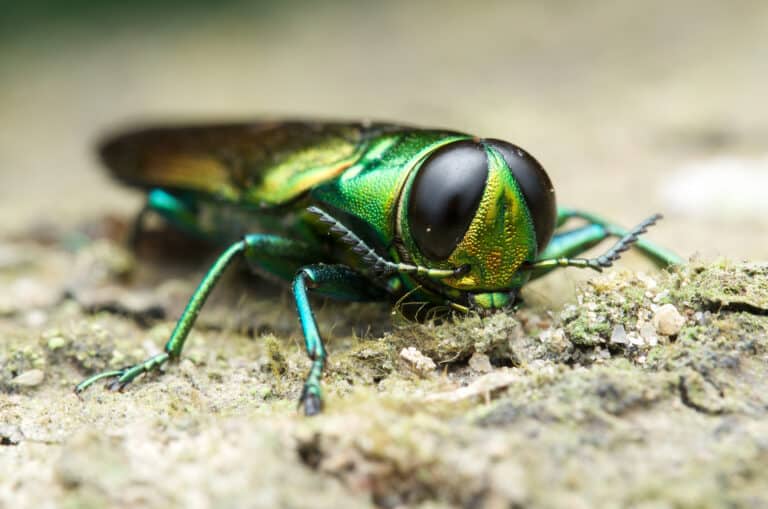
This problem presents itself in two ways: The pests are thriving, but they’re also invasive. Species such as the emerald ash borer are highly invasive. The emerald ash borer weakens ash trees from the inside out, leaving them vulnerable to other threats, if not dead. It was discovered in Michigan in 2002 and has since killed more than 100 million trees. Its enemy is the woodpecker, but even these efficient birds are not enough to control populations on such a scale. The result is an invasive insect that’s already found in 36 states and continues to thrive as temperatures rise.
Supersized Pests Are Only the Beginning
Unfortunately, wood-boring insects are only the start, as decades of data show. As pests devour a tree’s foliage and bark, they leave it defenseless and vulnerable to pathogens and other threats, such as drought and forest fires. Pests are a significant concern, but they’re also a gateway to other issues that climate change worsens.
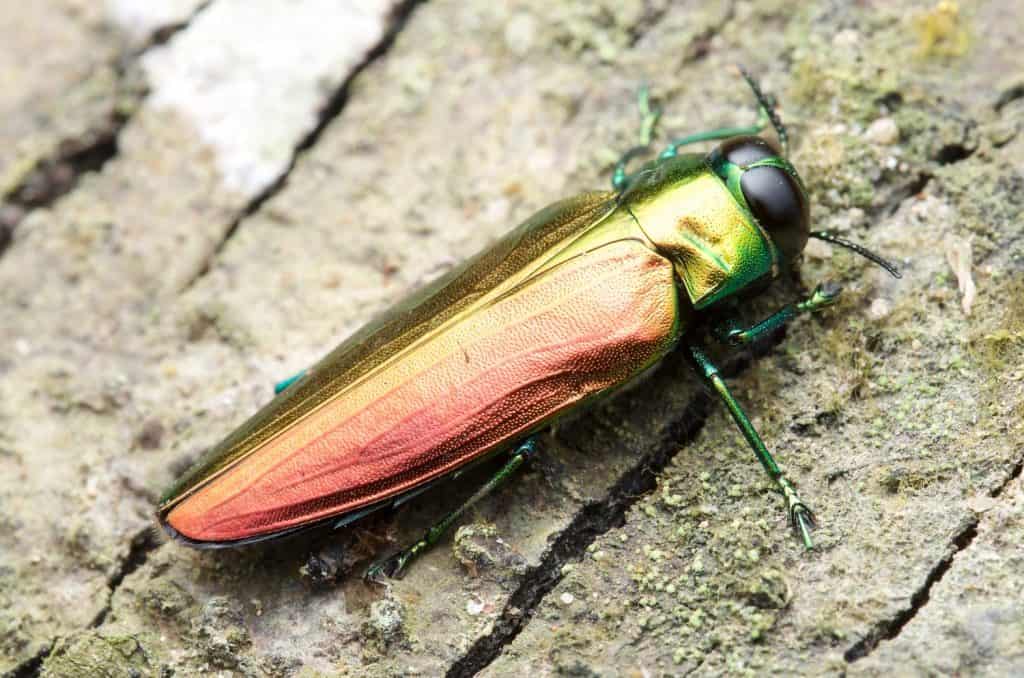
Emerald ash borers are one of the biggest threats to ash trees in North America.
©Herman Wong HM/Shutterstock.com
An example of this played out in 2005 when Hurricane Katrina slammed into the coast of New Orleans. Although flooding was the main problem, 5,000 acres of forest were damaged by high winds, rain, and hail. As these trees die, they release carbon, which pollutes the atmosphere, sometimes faster than even human activity. As storms intensify due to climate change, our forests are just as at risk as our wildlife species.