
Quick Take
- The Malabar giant squirrel reaches 3 feet, matching the physical length of German Shepherds.
- The Western Ghats geography presents a technical constraint that complicates mate location and nesting.
- Vibrant maroon and purple pelts offer counterintuitive camouflage that defies standard predatory detection.
- Engaging in a specific scouting process for high-canopy trees is required to survive nocturnal attacks.
Some see squirrels as adorable, bushy-tailed creatures that run in circles around tree trunks before they finally race up trees to the safety of the branches above to enjoy a snack while taking in the scenery. Others see the critters as nuisances that scare off local birds as they pilfer feeders. But there’s one lesser-known squirrel that, size-wise, puts flying squirrels, fox squirrels, American red squirrels, and ground squirrels to shame. The Malabar giant squirrel is two to three times the size of North American squirrels, making it a formidable rodent, and it is only found in one country in the world. But just where is the world’s biggest squirrel located?
How Big Is the Malabar Giant Squirrel?
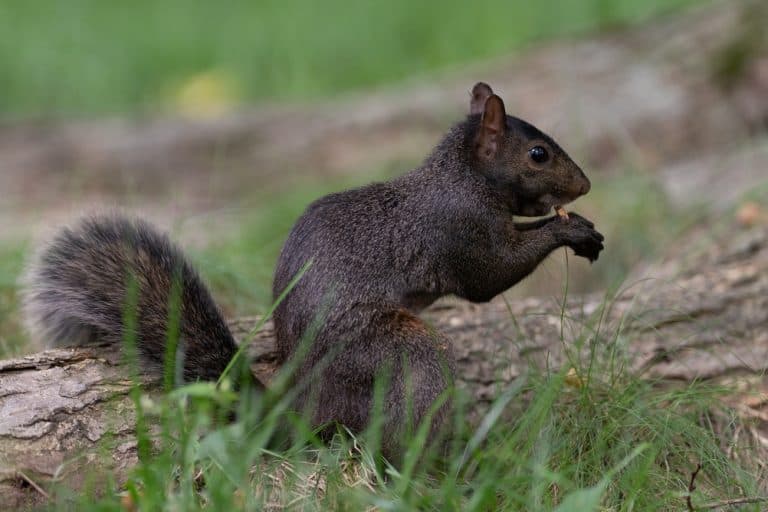
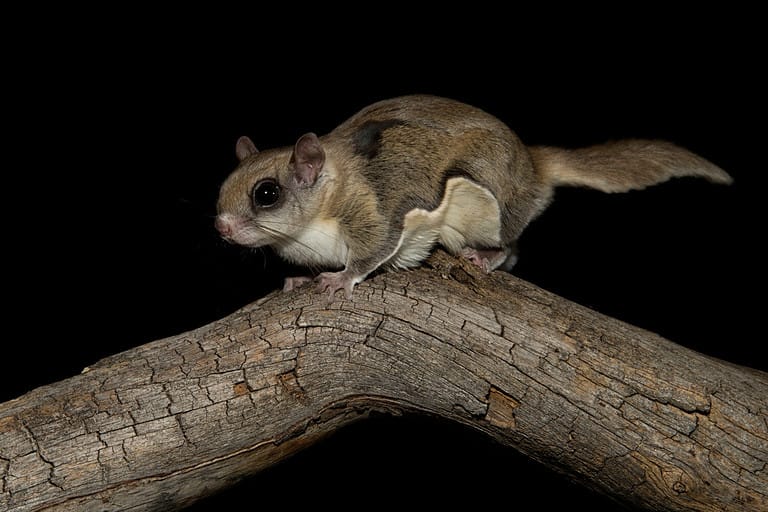
The average fox squirrel measures 10 to 15 inches long without its tail and 20 to 30 inches with it. The average American red squirrel is significantly smaller, reaching 10 to 15 inches, including its tail, which makes up the majority of its body size. These diminutive squirrels are the typical squirrels that people in North America see racing around trees as they play, defend their territory, or hunt for food.
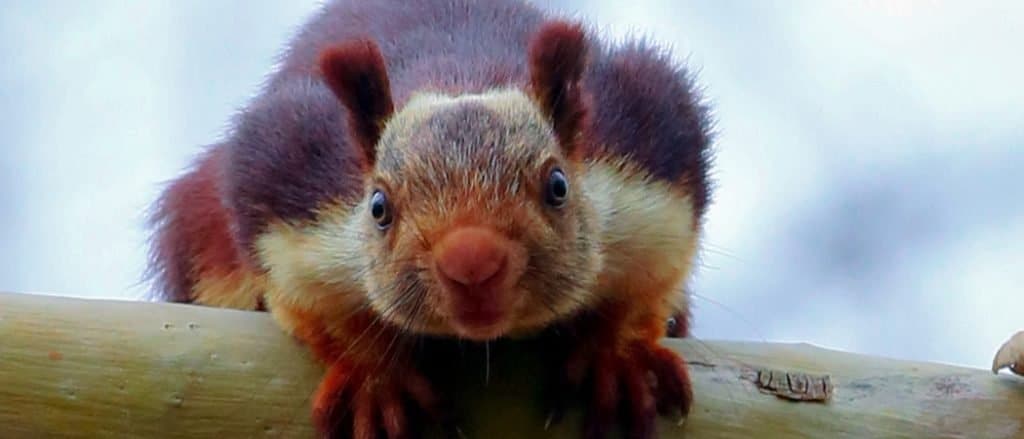
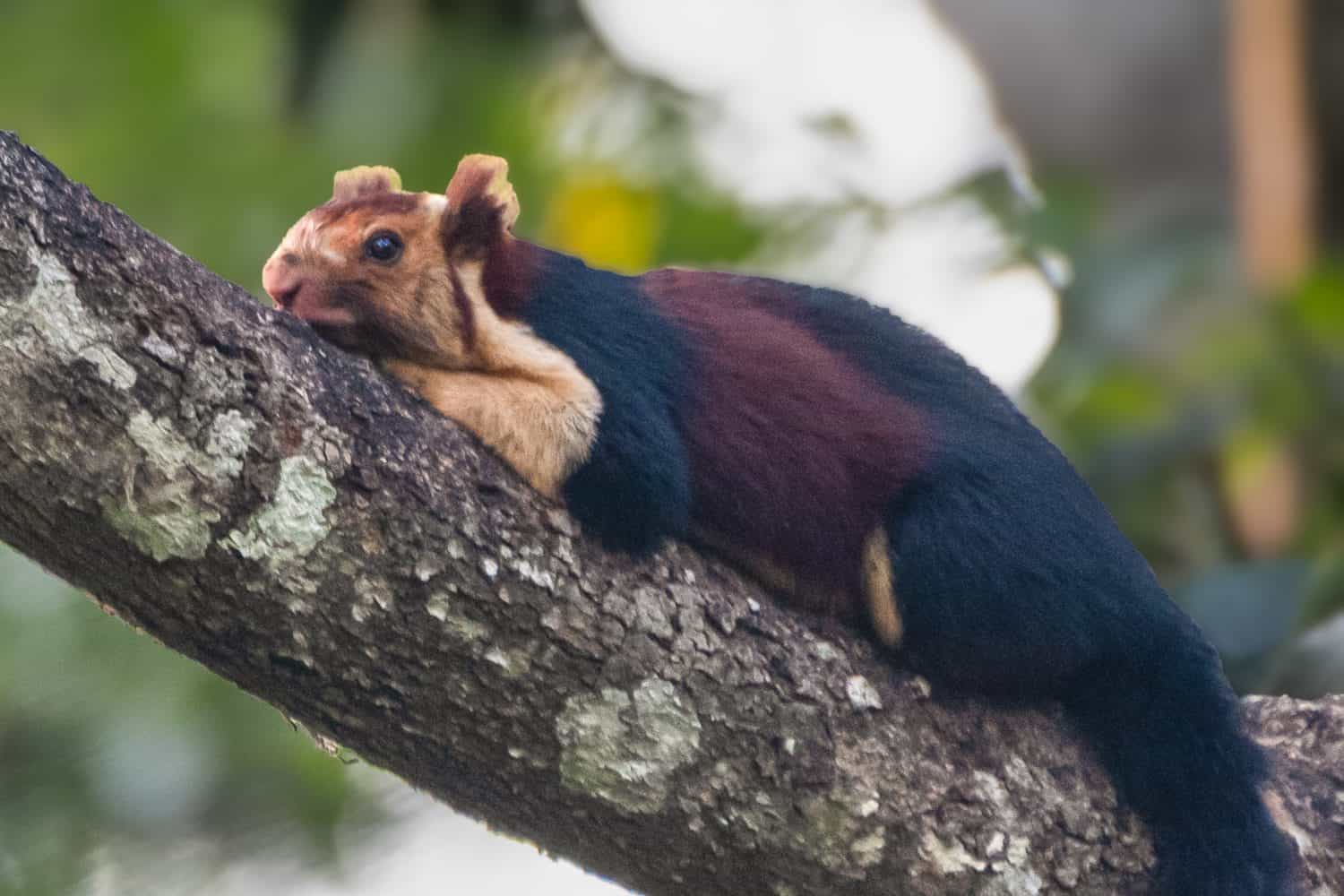
The Malabar giant squirrel is the world’s largest squirrel and is only located in India.
©Ajmal roshan 007/Shutterstock.com
Compared to the world’s largest squirrel, the Malabar giant squirrel, there is a significant size difference. This is because the Malabar giant squirrel has a body that reaches up to 18 inches long. If the tail is included, this massive squirrel can be as large as three feet long. To put this in perspective, Malabar giant squirrels are the same length as emperor penguins, sea otters, and even German Shepherds.
The Malabar giant squirrels are found only in the Western Ghats, the Eastern Ghats, and the Satpura Range in India. Typically, the squirrels live at higher elevations in both tropical and evergreen forests in the region. This is the preferred habitat for the squirrels not only because of the canopy cover they receive, but also because of their unique coloration, which allows them to camouflage in plain sight among the leaves.
Why the Malabar Giant Squirrel Has Unique Coloring
It may seem strange that a squirrel would have vibrant coloring if it is trying to both avoid predators and sneak up on prey. However, the Malabar giant squirrel has some of the most unique coloring of any squirrel. Not only is it striking, but it is also useful for survival.
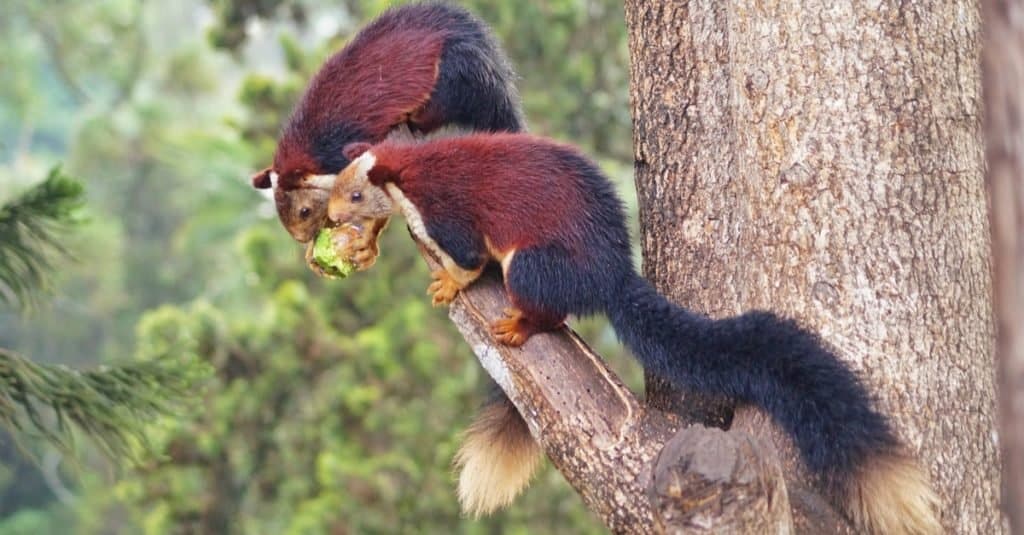
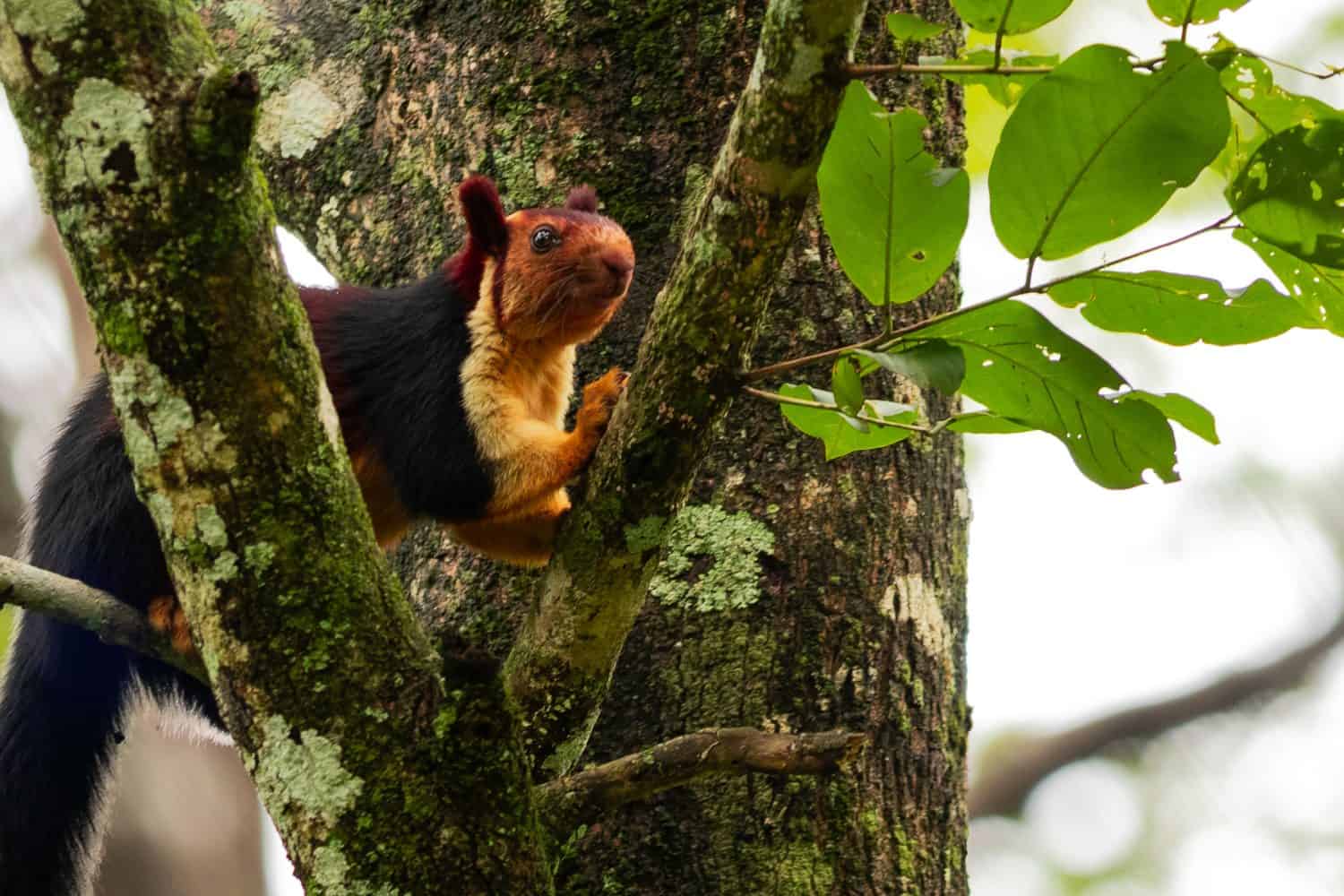
The Malabar giant squirrel has vibrant colorations that, surprisingly, help them camouflage in the forest canopies.
©jp signature clicks/Shutterstock.com
The Malabar giant squirrel can come in a variety of colors. The combinations can include everything from maroon and purple to terracotta, cream, black, and even rust. These bright colors may make some think that the giant squirrels would stand out in their tree canopies. Instead, these colors actually help the squirrels as the darker colors mimic the shadows of the trees, while the brighter colors resemble the leaves and bark.
What is most fascinating about the Malabar giant squirrel’s coloration is that each pattern is unique. It does not matter what the parents of a squirrel looked like. Offspring may have completely different patterns, all of which help with camouflage in the forest and aid the Malabar giant squirrels’ survival.
What Does the Malabar Giant Squirrel Eat?
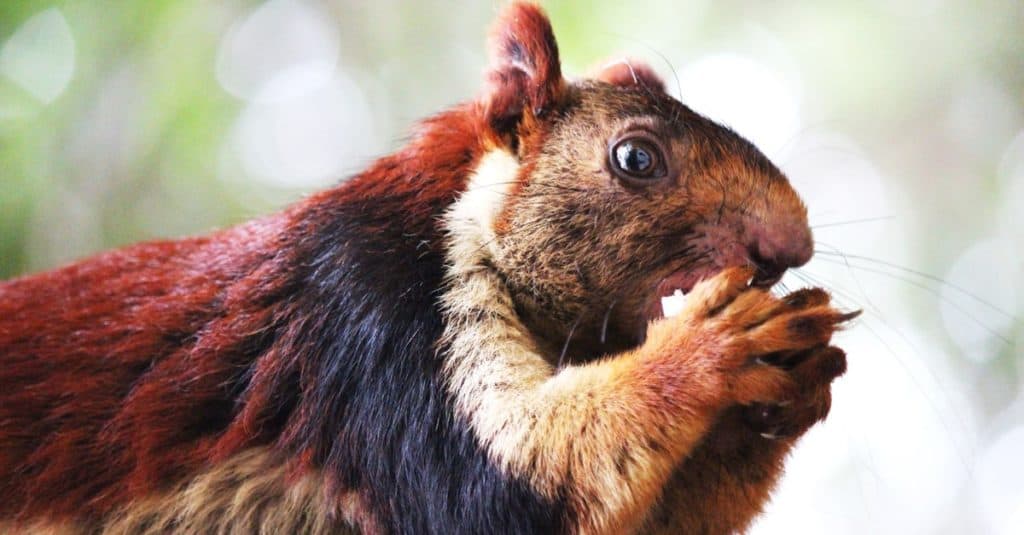
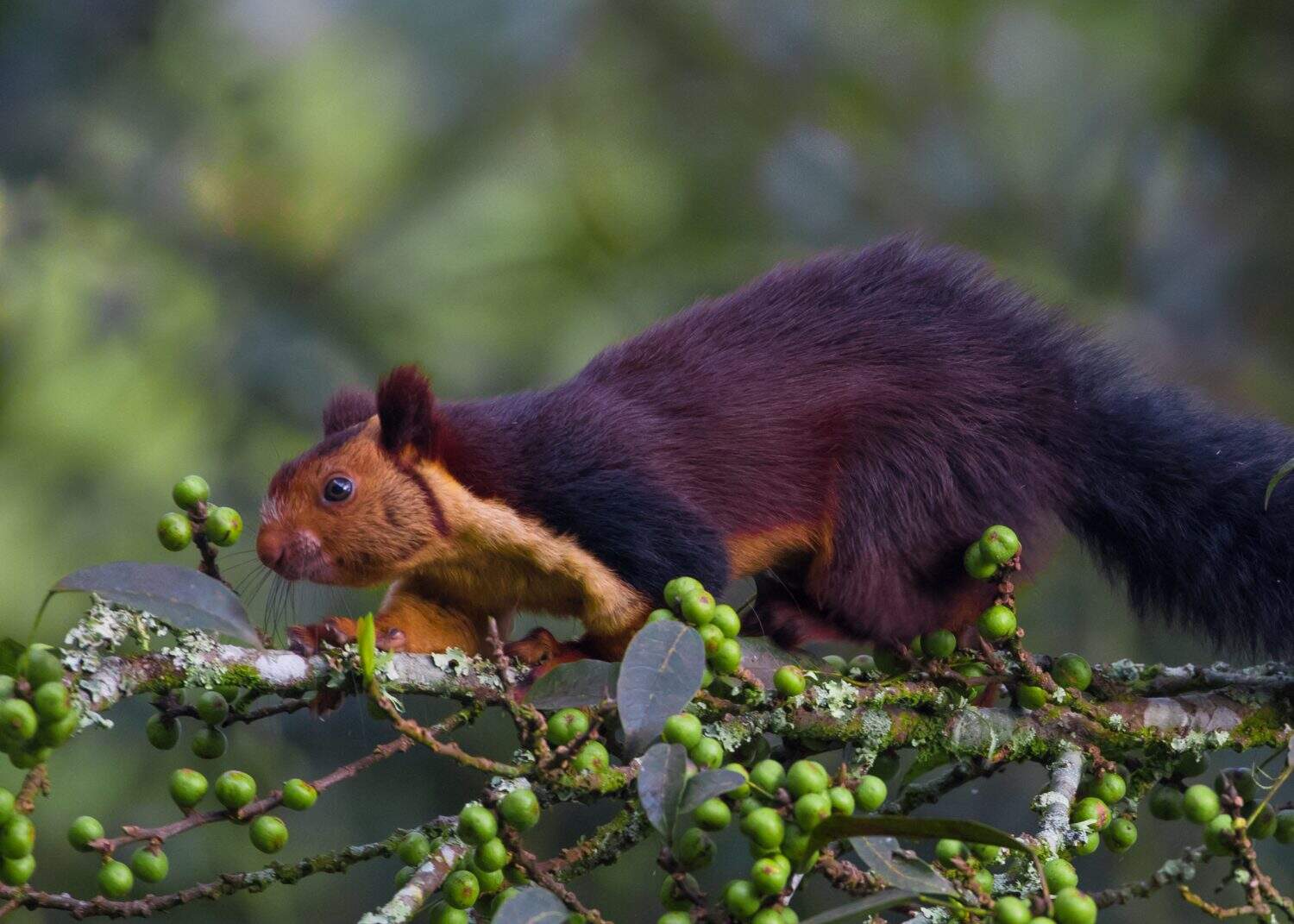
Most squirrels consume a variety of foods, meaning they have an omnivorous diet. The Malabar giant squirrel is no exception. While these squirrels do prefer seeds and nuts, they also consume a wide range of other foods to ensure a well-rounded diet.
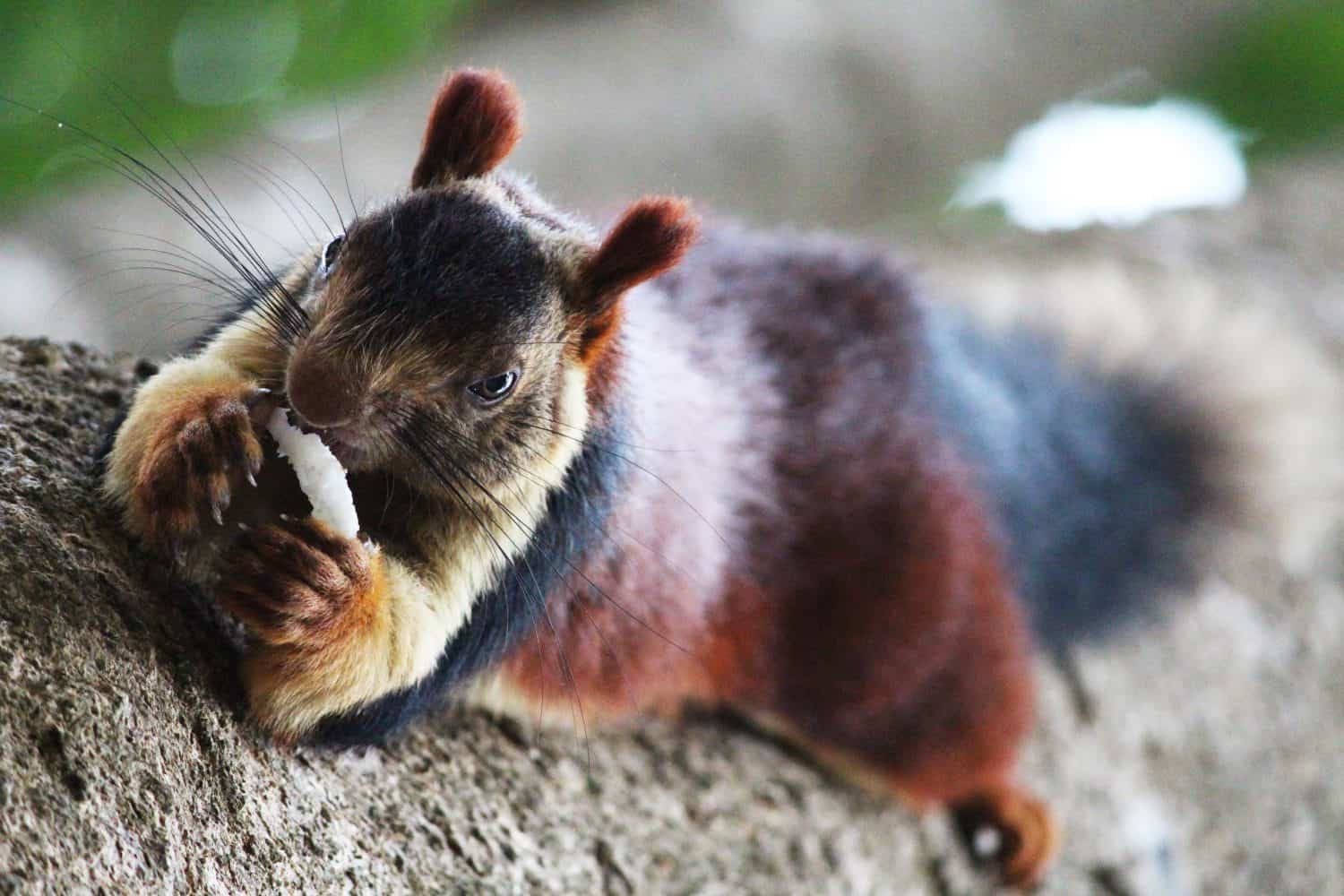
Malabar giant squirrels are omnivores, meaning they eat a varied diet of both plants and animals.
©jak ramu/Shutterstock.com
The types of foods Malabar giant squirrels eat include:
- Fruits
- Nuts
- Seeds
- Insects
- Flowers
- Tree bark
- Bird eggs
These foods can be found both in the trees and on the ground. Does that mean the Malabar giant squirrels split time between the canopies and the forest floor? No. Instead, if the squirrels had their way, they would be up in the canopies the majority of their day.
Where Do Malabar Giant Squirrels Spend Their Time?
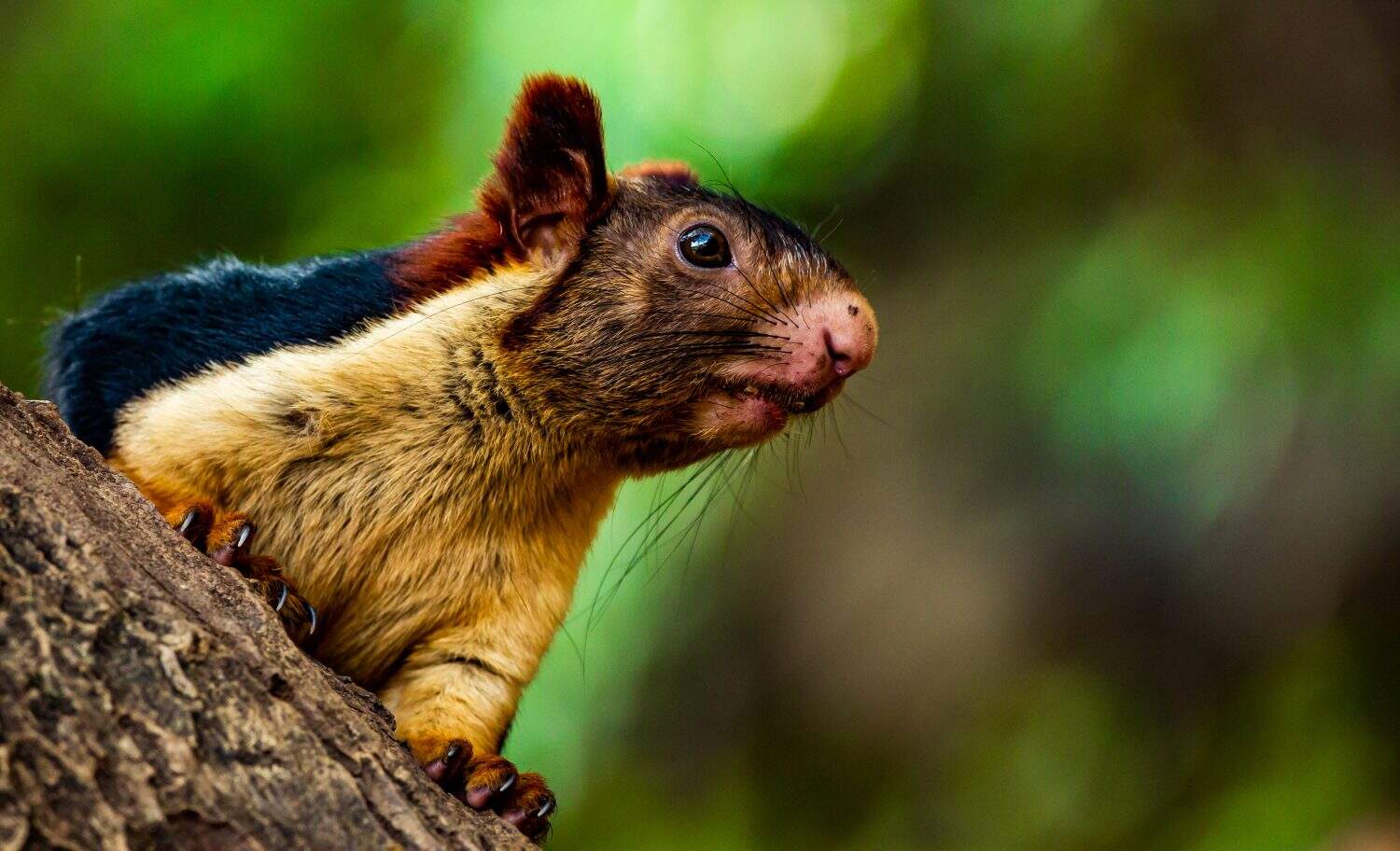
To spot a Malabar giant squirrel in the wild, look up. The squirrels are considered arboreal, meaning they spend most of their lives high up in the canopies of trees.
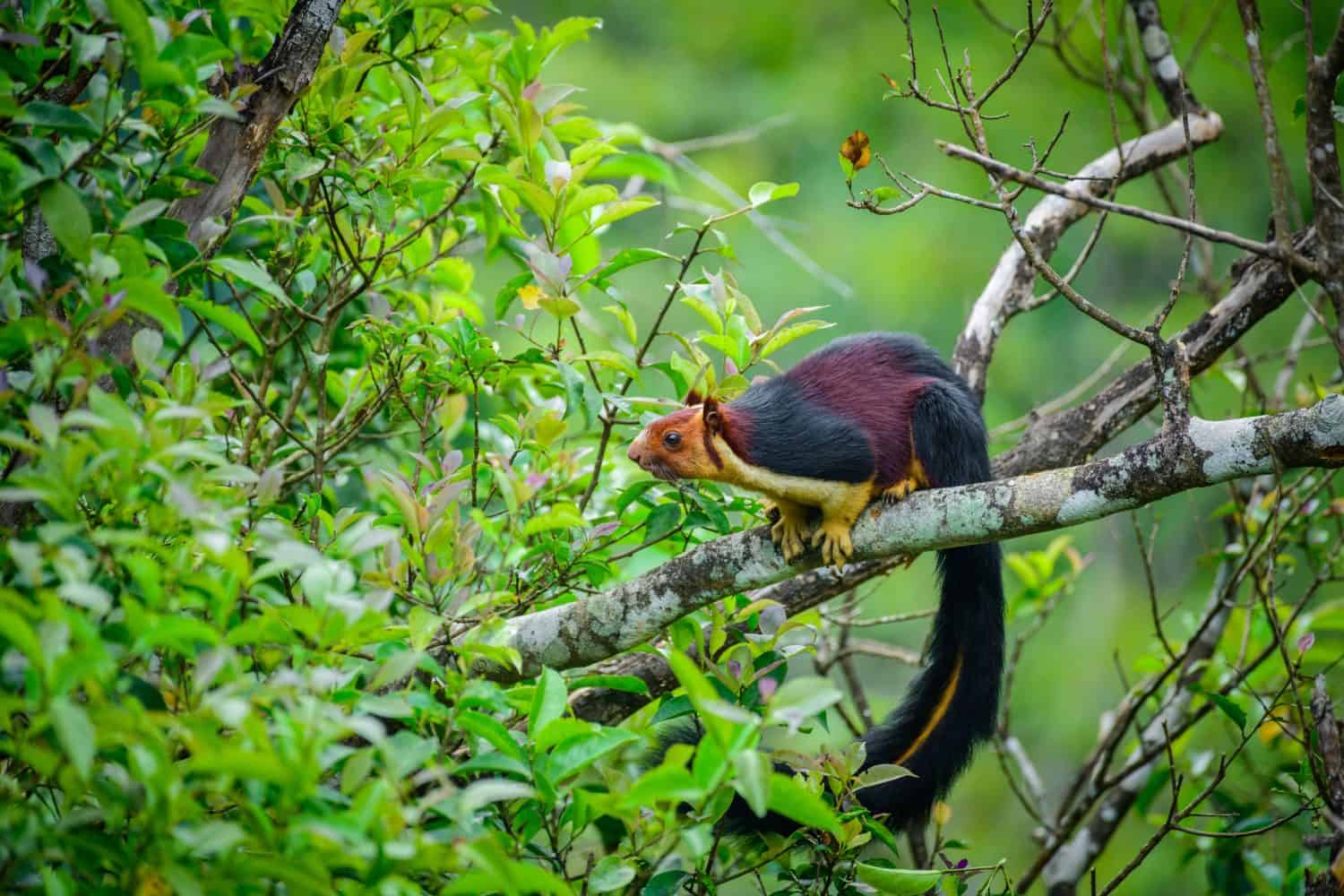
Malabar giant squirrels spend most of their day in the forest tree canopy.
©prasanthdaskkm/Shutterstock.com
From time to time, however, these squirrels can be spotted on the forest floor. The main reasons for leaving the safety of their treetops include:
- Foraging for food
- Returning to locations where food caches are buried
- Hunting insects
If there is an opportunity to easily snatch human food, Malabar giant squirrels will come down from their trees to do so as well. But given their shy nature, most of the day and evening are spent high above the ground, safe from would-be predators.
Malabar Giant Squirrels Are Not Social Animals
Not all squirrels are social animals. Unlike some ground squirrels, which may live in colonies, both Malabar giant squirrels and most tree squirrels are generally solitary, except during breeding or when raising young. This means that, unless they are looking for a mate, the squirrels keep to themselves in the tree canopies, foraging for food.
Malabar giant squirrels tend to be solo animals that do not interact with humans.
©Libin Jose/Shutterstock.com
While these squirrels are sometimes photographed on porches or roofs, Malabar giant squirrels prefer to keep their distance from humans. They are very shy, despite their larger size and agility. Therefore, as with all wild animals, it is recommended to keep a distance from them and not offer food, for the safety of both squirrels and people.
Does the Malabar Giant Squirrel Have Predators?
The Malabar giant squirrel spends the majority of its time in the high canopy of trees. While this may dissuade some would-be predators from coming after the squirrels, this does not mean the massive squirrels do not have predators. From the ground to the sky, there are quite a few creatures that the Malabar giant squirrels need to be on the lookout for to survive.
Malabar giant squirrels have predators both on the forest floor and in the canopies.
©jak ramu/Shutterstock.com
The most notable predators the Malabar giant squirrel faces include:
- Rock python
- Common vine snake
- Leopards
- Hawks
- Eagles
- Owls
To avoid being visible to these animals, Malabar giant squirrels flatten themselves against a tree to camouflage themselves. Their unique coloring also helps them blend into the trees they inhabit. The cover of darkness does not even help the squirrels, as some predators, including snakes, hunt them while they sleep. Consequently, Malabar giant squirrels are constantly on alert to survive.
The Malabar Giant Squirrel Is a Keystone Species
While large for a squirrel, the Malabar giant squirrel is still relatively small in stature compared to other animals in India. Despite its size, this brilliantly colored squirrel is incredibly important to its ecosystem. This is because the Malabar giant squirrel is a keystone species, and without them, habitats would not function properly.
Because of the varied diet of the Malabar giant squirrel, it is a key player in seed dispersal in the forest environment. By scattering seeds as they gather or eat them, and by burying seeds for future use and potentially forgetting about them, the forest has an opportunity for new plants to grow in multiple locations. This keeps the ecosystem diverse and provides food for other animals besides the Malabar giant squirrel.
Malabar giant squirrels are keystone species in their forest ecosystems.
©Alnoor rajwani/Shutterstock.com
Additionally, because the Malabar giant squirrel is prey for some animals, its presence is necessary within the forest habitat. Without them, there would be fewer options for predators, leading to smaller populations of animals in general in the forest.
If the Malabar giant squirrels were to disappear, the ecosystem would be negatively impacted, with reduced seed dispersal, lower plant diversity, and fewer prey options for some predators, potentially leading to a less resilient and diverse forest. Fortunately, for the ecosystem and for the Malabar giant squirrel, it is not a threatened species. That does not mean there are no threats to their survival, though.
Threats Facing the Malabar Giant Squirrel
With talk of species going extinct daily, it is a relief to know an animal is not considered endangered. However, this does not mean that the Malabar giant squirrel is not under threat. In fact, the species is dwindling, and conservation efforts are needed to prevent further decline.
Malabar giant squirrels are not at risk of extinction, but their population is declining due to habitat loss.
©DHANEESH P/Shutterstock.com
The biggest threat to the Malabar giant squirrel is habitat loss. The key causes of habitat loss include:
- Deforestation
- Illegal logging
- Clearing forests for agriculture
- Clearing forests for urban expansion
Because of habitat fragmentation and loss, Malabar giant squirrels have more difficulty finding mates. If they do find a mate, locating suitable trees to build nests for their young is a difficult task. Worse still for the squirrels is that, as their habitat dwindles, it becomes easier for predators to locate them, as they are no longer able to find adequate shelter to hide.
Conservationists are calling for high-canopied forests to be protected areas for squirrels, rather than continuously cleared in the name of progress. If this cannot be accomplished, the future of the Malabar giant squirrel is uncertain. For now, they are considered a species of least concern by the IUCN, and hopes are that, with education about the species, they will remain in this category for decades to come.