
Quick Take
- Summer heat quietly rewires a lake's physics in a way that forces fish into predictable traps, and predators exploit every layer of that process. See how lakes stratify →
- Baitfish rely on a clever daytime disguise that completely fails them after dark. Predators time their entire hunt around this vulnerability. How darkness exposes baitfish →
- Walleyes carry a secret weapon in their eyes that gives them a decisive edge the moment the sun drops below the horizon. Walleye night vision advantage →
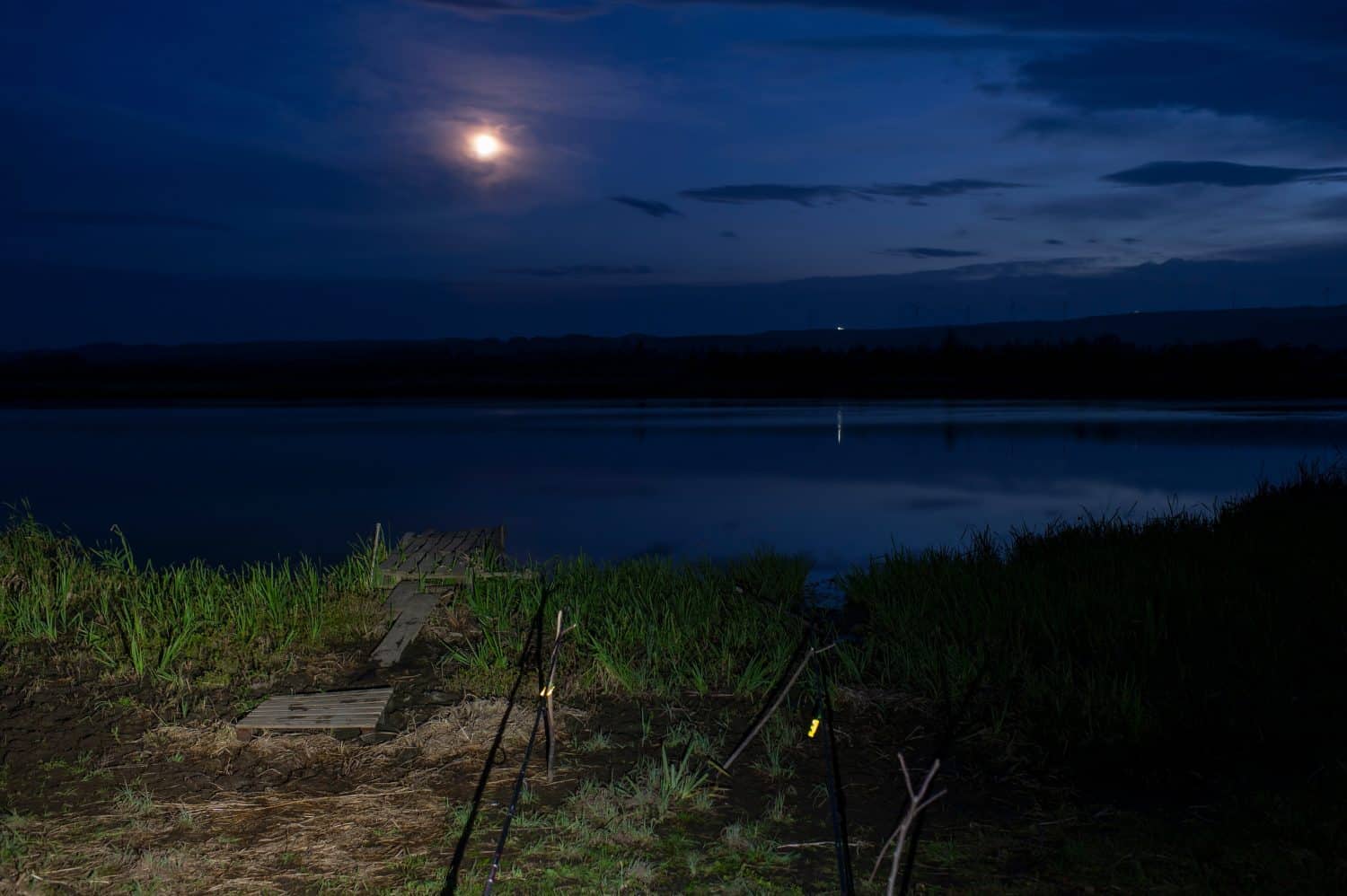
You know the feeling: it’s a drawn-out summer afternoon in the middle of July. Your cousin lent the family his lake house, and now you and the kids are lounging by the water. The sun begins to set, and the surrounding nature goes quiet, as if it’s taking the opportunity to relax a little bit, too. However, appearances can be deceiving, as the lake is just beginning to wake up.
By the time the sun sets, the water that was practically still all afternoon becomes a battleground of predator and prey. Gamefish that went dormant during the day have come out to forage on a massive scale. The summer sun is not friendly to most creatures. Even the water changes from the heat. But the long, hot days are merely a prelude to the great hunt that fish like walleyes and catfish undertake under the moonlight.
Liquid Stratification
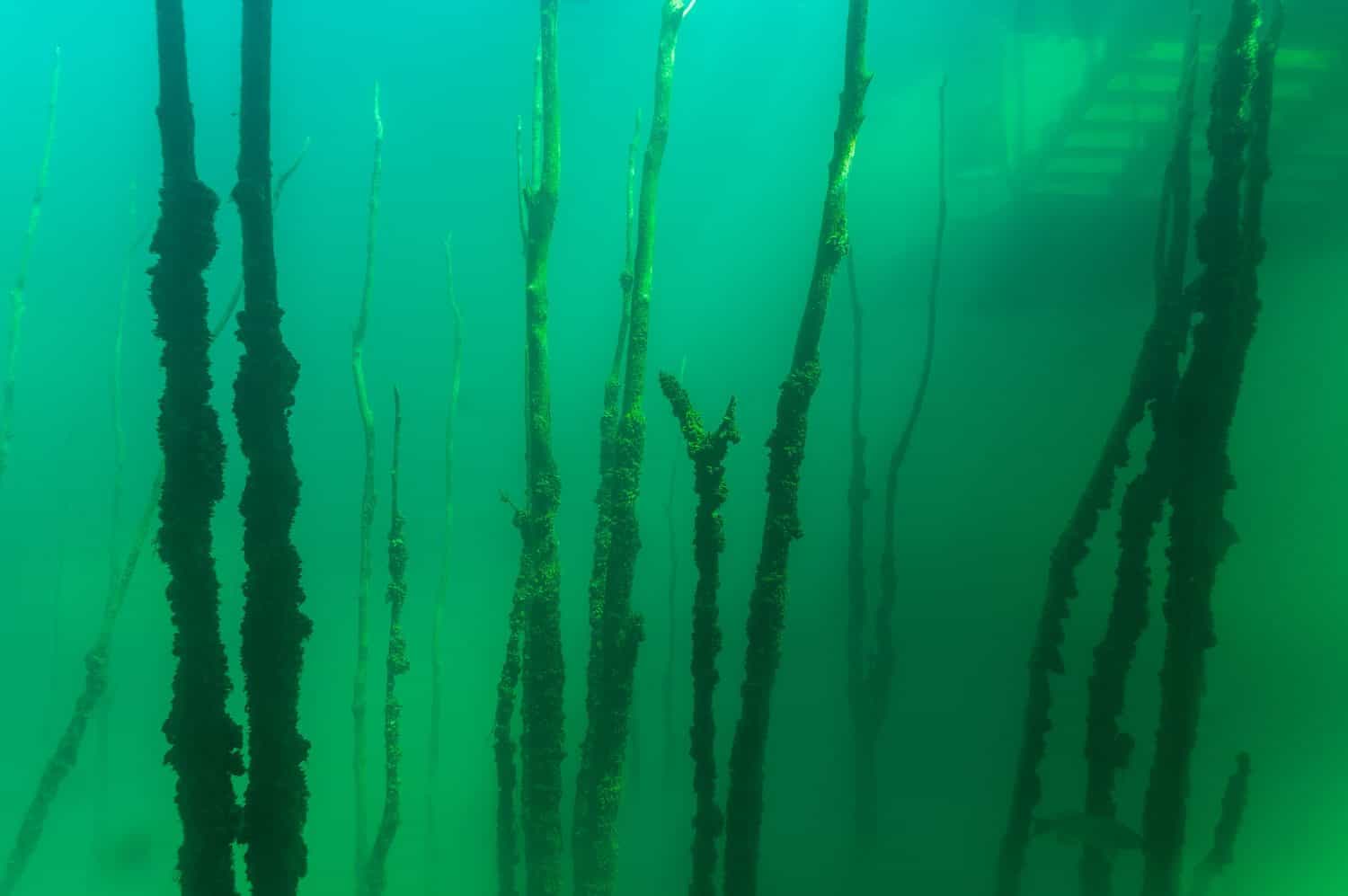
Deep bodies of water separate into different layers dictated by temperature.
©Focused Adventures/Shutterstock.com
A lake out in the countryside looks like one large mass of water, but deep lakes have layers dictated by temperature. When the summer sun is high in the sky, these layers become particularly pronounced. At the top sits the epipelagic zone, sometimes called the sunlight zone. This layer meets the wind, mixing with the air and redistributing warmth throughout the water.
The next layer down is called the thermocline. When swimming in a lake, you can feel this transition as the water gets considerably colder all of a sudden. The bottom layer is called the hypolimnion. It’s the coldest layer of the water, typically deprived of oxygen due to all the decaying matter collecting there.
Pressure Changes
This water stratification can have profound effects on fish, especially during the summertime. Fish have gas-filled organs called swim bladders, which govern their buoyancy and allow them to remain at certain water depths without expending much effort.
Low pressure can cause fish discomfort, so they descend to a lower depth, where higher pressure relieves the tension. This pressure-dictated movement causes fish to either rise toward the surface or sink to the depths. All the while, predators lurk nearby, waiting for the right conditions to signal an ambush.
Darkness Falls
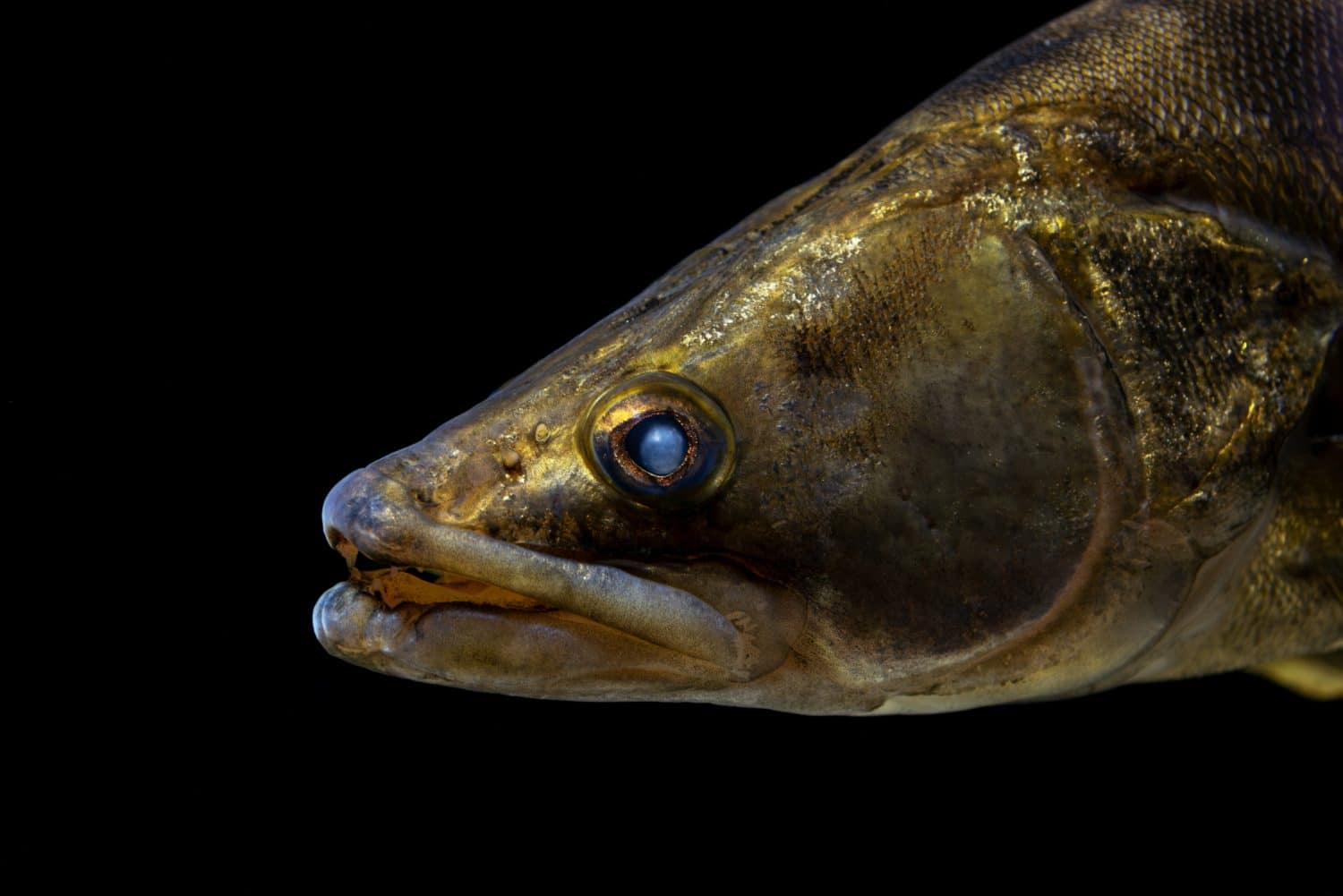
Walleyes have a reflective sheath in their eyes that helps them see better in the dark.
©Alberto Retouch/Shutterstock.com
Once the sun has fully set, many prey fish head closer to the surface. Meanwhile, predator fish like walleyes and catfish head to the surface, too. The lack of daytime glare allows them to see better. Baitfish, however, rely on camouflage—white bellies that resemble the sky—during the daytime. Suddenly, they are scattered from their protective schools and left dangerously exposed due to the changing light conditions.
Walleyes have a reflective sheath in their eyes called a tapetum lucidum. It is a specialized tissue that helps them see better in the dark. Baitfish, functionally blind in the dark, are left to the mercy of hungry walleyes, which use the cover of night to patrol the shallow regions of the lake.
Catfish are just as deadly to baitfish, but for a different reason. They lack strong vision, but they can detect subtle vibrations. At night, they rise from the depths and head to the shorelines, where they catch baitfish with ease.
The sun sets, and you gather your family, ready to call it a day. For the predator fish in the nearby lake, however, the day has just begun.