
Quick Take
- Ice forming inside a living body should be a death sentence. Yet one tiny frog has turned that process into a survival superpower. See how ice is managed →
- The wood frog's secret weapon against freezing isn't anything man-made. It's something your body already produces. Discover the glucose secret →
- Most frogs run from freezing temperatures, but this one does something completely different, and that choice gives it a competitive edge no other frog species has. Explore its unique strategy →
- Scientists aren't just admiring the wood frog. They're racing to steal its trick and apply it to one of medicine's most urgent unsolved problems. See the medical applications →
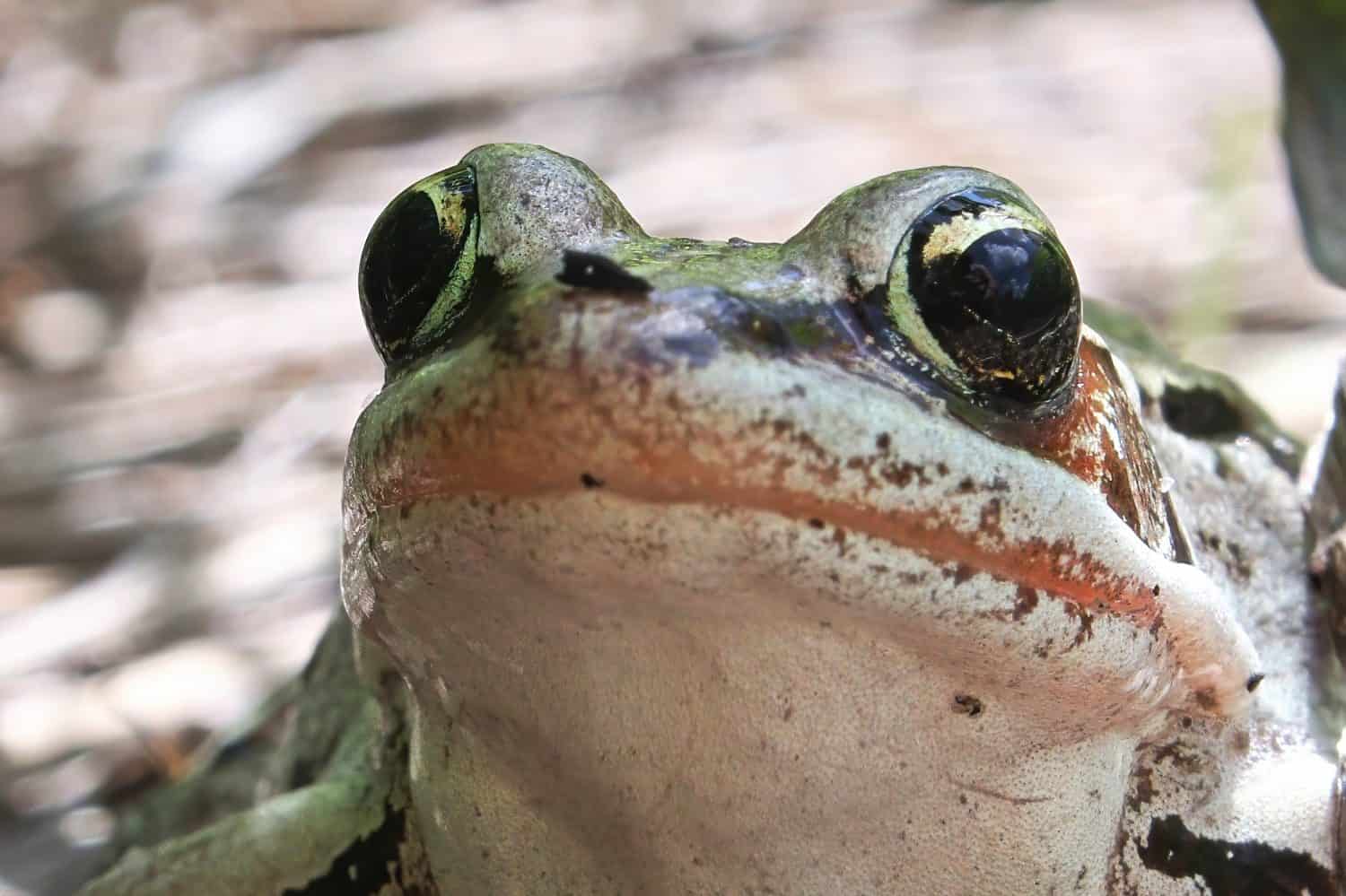
Would you believe a tiny frog that only grows 1.5 to 3 inches long is tough enough to survive the northern reaches of the North American boreal forest? The wood frog has adapted to surviving some of the most frigid winters on Earth by spending up to eight months in subzero temperatures before thawing out in the spring. Each winter, it completely stops its heartbeat, breathing, and brain activity, then comes back to life in early spring. It seems like a miracle, but the science behind it is even more incredible.
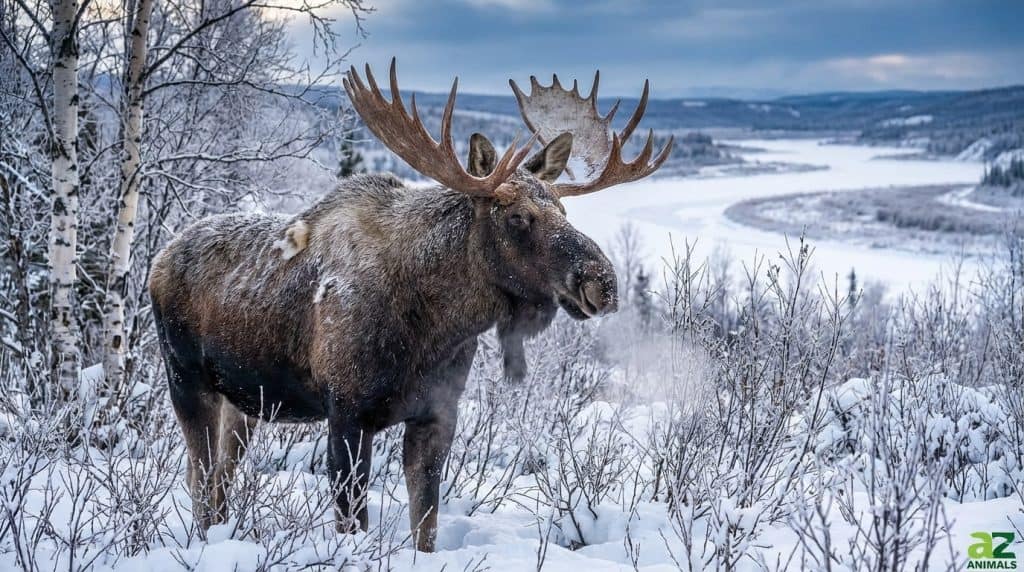
Wood frogs have adapted to survive the frigid temperatures of Alaska and Canada. Here, an Alaskan bull moose stands amid a landscape where wood frogs may be hibernating.
©A-Z Animals
A Different Way to Survive Winter
The wood frog (Lithobates sylvaticus) is not the northernmost frog in the world; that distinction belongs to the Siberian wood frog (Rana amurensis), which hibernates underground in groups to maintain warmth and avoid freezing.
Most frogs hibernate deep enough under water that temperatures do not reach freezing levels. They spend the winter dormant, but their bodies do not freeze. Though closely related to the Siberian wood frog, the North American wood frog has a different strategy for living in subzero temperatures.
The boreal forests of Alaska and Canada have extreme temperatures ranging from 90 degrees Fahrenheit in the summer to minus 50 degrees Fahrenheit in the winter. The resourceful wood frog has evolved to thrive in a place that not many species on Earth could endure.
Nature’s Own Antifreeze
Researchers have learned that when temperatures fall below zero, ice crystals begin to form within the wood frog’s body cavity. Ice crystals collect beneath the skin, surround internal organs, and even the lenses of the frog’s eyes freeze.
While this would mean imminent death for most species, in the wood frog, it triggers an amazing process. The wood frog rapidly releases massive amounts of glucose stored in the liver into its bloodstream. The glucose is like a syrupy sugar solution that flushes the cells in its body, acting like a natural cryoprotectant or antifreeze.
This process helps prevent ice crystals from forming inside cells while reducing dehydration caused by the water moving out of the cells. Ice crystals form around the frog’s organs, but not inside its cells.
Spring Brings the Frog Back to Life
In this frozen state, the wood frog appears to be a lifeless lump of ice. It can’t move its muscles, and it has no heartbeat, brain activity, or breath. But the most amazing thing happens in the spring.
The frog thaws from the inside out as its heart begins to beat. Water flows back into the cells, and the brain activates. Once the frog is fully thawed, its metabolic processes restart, and it hops out of its winter resting place without any damage.
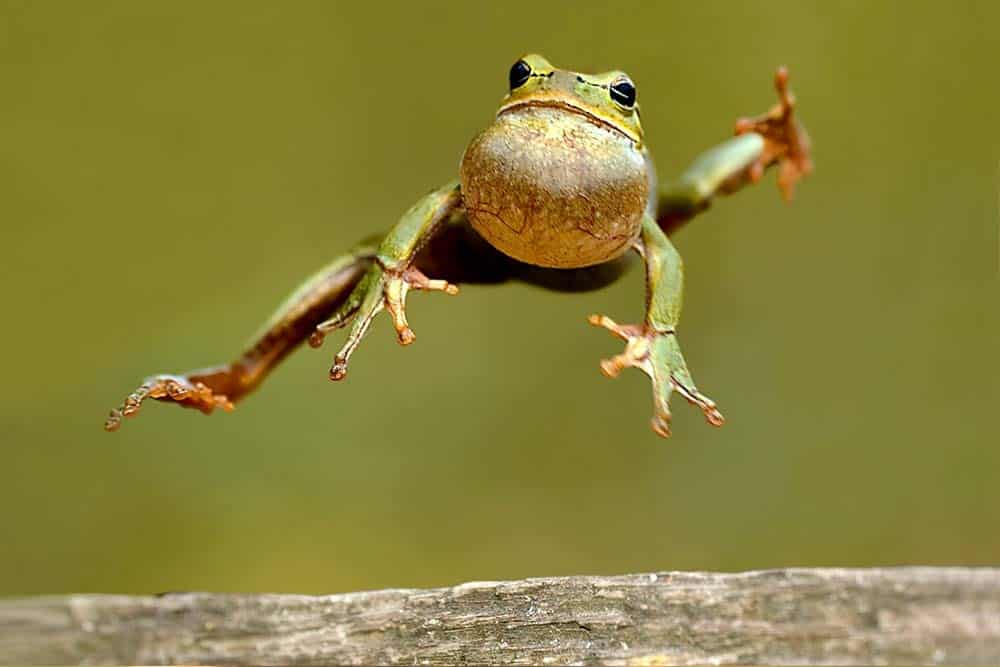
Wood frogs have an advantage over other frog species by becoming active in early spring.
©kyslynskahal/Shutterstock.com
In early spring, as the ground begins to thaw, the wood frog is the first frog species to become active. They can begin mating and laying eggs early in small ponds and meltwater pools as soon as these water bodies start to thaw.
Scientists have long marveled at this process and are looking into ways that we can learn from the wood frog. Researchers hope the wood frog’s freeze tolerance may one day improve how we preserve human organs for transplantation.