
Quick Take
- A crab that spots a cuttlefish approaching should easily escape, so the question is why it doesn't. Watch the hunt unfold →
- Scientists spent decades calling it hypnosis, but the real mechanism behind the cuttlefish's color waves turns out to be far stranger than that. Discover the real mechanism →
- The cuttlefish's most powerful hunting trick is not camouflage. It is something the animal does while fully visible. See the active hunting strategy →
- Tiny cells scattered across its skin are the engine behind this optical illusion, working in a way you wouldn't expect. Explore chromatophore biology →
Cephalopods are the camouflage masters of the sea. Like hyper-responsive chameleons, they can change their skin’s color and texture rapidly to blend in with the surrounding environment. While this ability to disguise themselves is helpful for hiding from predators, it is also a boon for hunting. One such cephalopod, the broadclub cuttlefish, uses hypnotic waves of color on its skin to confuse and stupefy prey.
This behavior, shown in several popular animal documentaries, seems like a sort of underwater hypnosis. Scientists, however, believe that this cloaking mechanism involves rhythmic color signals that manipulate the visual processing systems of fish and other prey animals. If a crab sees a cuttlefish approaching that isn’t using cloaking techniques, the cuttlefish looms large and triggers a fleeing response. To avoid this, cuttlefish use their skin as an optical illusion to make it seem like they are still instead of quickly approaching. Such feats of visual sorcery require specialized cells. Let’s learn about this process and how cuttlefish pull it off on a biological basis.
Continue reading
Broadclub Cuttlefish Background
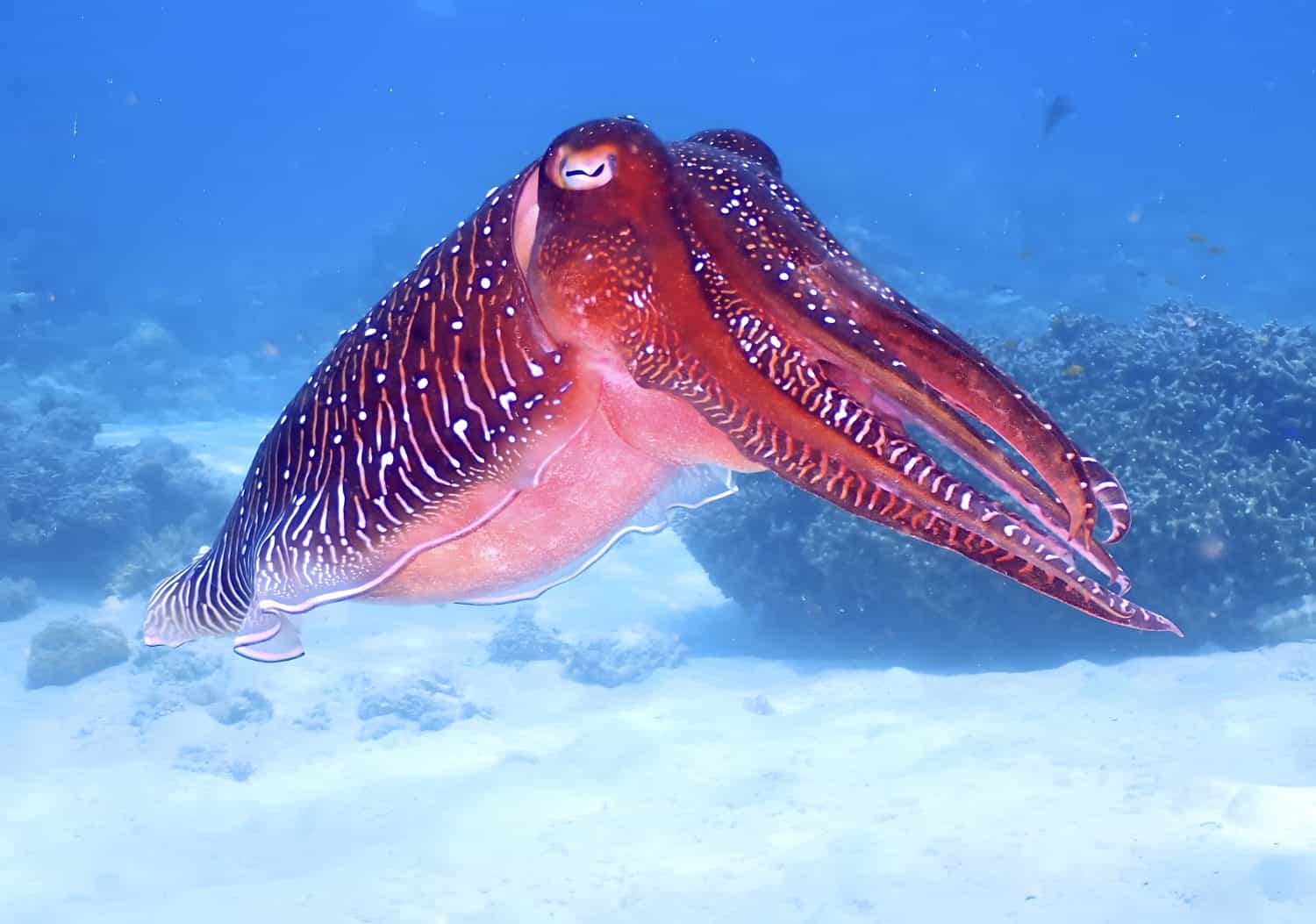
Broadclub cuttlefish are widely distributed across the coral reefs and coastal lagoons of the South Pacific.
©DeepVision Carsten Mohr/Shutterstock.com
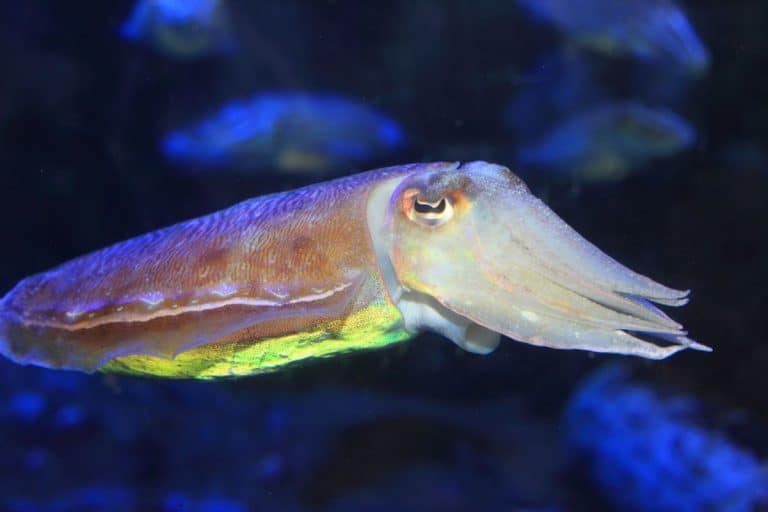
Snorkel around the coral reefs in the South Pacific, and you are bound to come across a broadclub cuttlefish (Ascarosepion latimanus). It is the most common cuttlefish found on coral reefs. It has a wide distribution from the Andaman Sea to northern Australia.
The broadclub cuttlefish is also the second-largest cuttlefish species in the world, with mantles that reach up to 20 inches in length. It has a thickset body, crescent-shaped club tentacles, and transverse bands running along its back.
These cuttlefish are typically found around coral reefs and coastal lagoons, though they can inhabit depths down to about 100 feet. Except during breeding, the broadclub cuttlefish is generally solitary and hunts during the day. While it is known to eat crabs and shrimp, it will also seek out other small prey like reef fish. However, it is easy to see them coming, so the broadclub cuttlefish uses its incredible range of color transformations to befuddle and disorient prey.
The Great Hunt
When a broadclub cuttlefish targets a crab or reef fish, it initiates a series of visual tricks to secure its meal. First, it slowly approaches prey while transforming its body colors to match the surrounding environment. As it inches closer, it increases its apparent size by flaring out its outer arms. It continues to approach, inch by inch. To ensure that its prey doesn’t flee, it produces rhythmic pulses of dark color that move downward along its arms and mantle. These waves flow toward the prey, which becomes fixated on the undulating bands. Too distracted to flee, the crab or reef fish remains still just long enough for the cuttlefish to shoot out two feeding tentacles. In milliseconds, the tentacles grab the prey before it can react.
This process can be hard to visualize, so imagine playing a game of tag with a particularly devious competitor. You’re ‘it,’ so you’re trying to flee your pursuer. When you look back at your pursuer, they seem to be standing completely still. This optical trick is similar to the cuttlefish’s approach. It uses a combination of body language and optical tricks involving flowing bands of color to make its prey think it is standing still.
While this illusion isn’t perfect, it is sufficient to confuse prey. For decades, scientists suggested that the cuttlefish’s visual tactics mesmerized or hypnotized its prey. Updated understanding, however, shows that prey are likely facing more judgment interference than pure hypnotism. A mixed visual signal causes the crab or reef fish to hesitate, giving the cuttlefish just enough time to strike. Executing this illusion, however, requires a series of specialized cells.
Cells of Light
Cephalopods like the broadclub cuttlefish use several layers of specialized cells to transform their body color and texture. These cells, called chromatophores, contain a range of pigments that can shift in seconds. Each chromatophore is surrounded by rings of muscle fibers.
When a cuttlefish contracts these muscles, the chromatophores in its skin expand to show different colors. Suppressing the motor neurons and relaxing the muscles hides the cells’ colors. Using their central nervous system, cuttlefish can produce sequential waves of color across their body. It uses the same process to confuse the visual systems of crabs or reef fish.
Master of Disguise
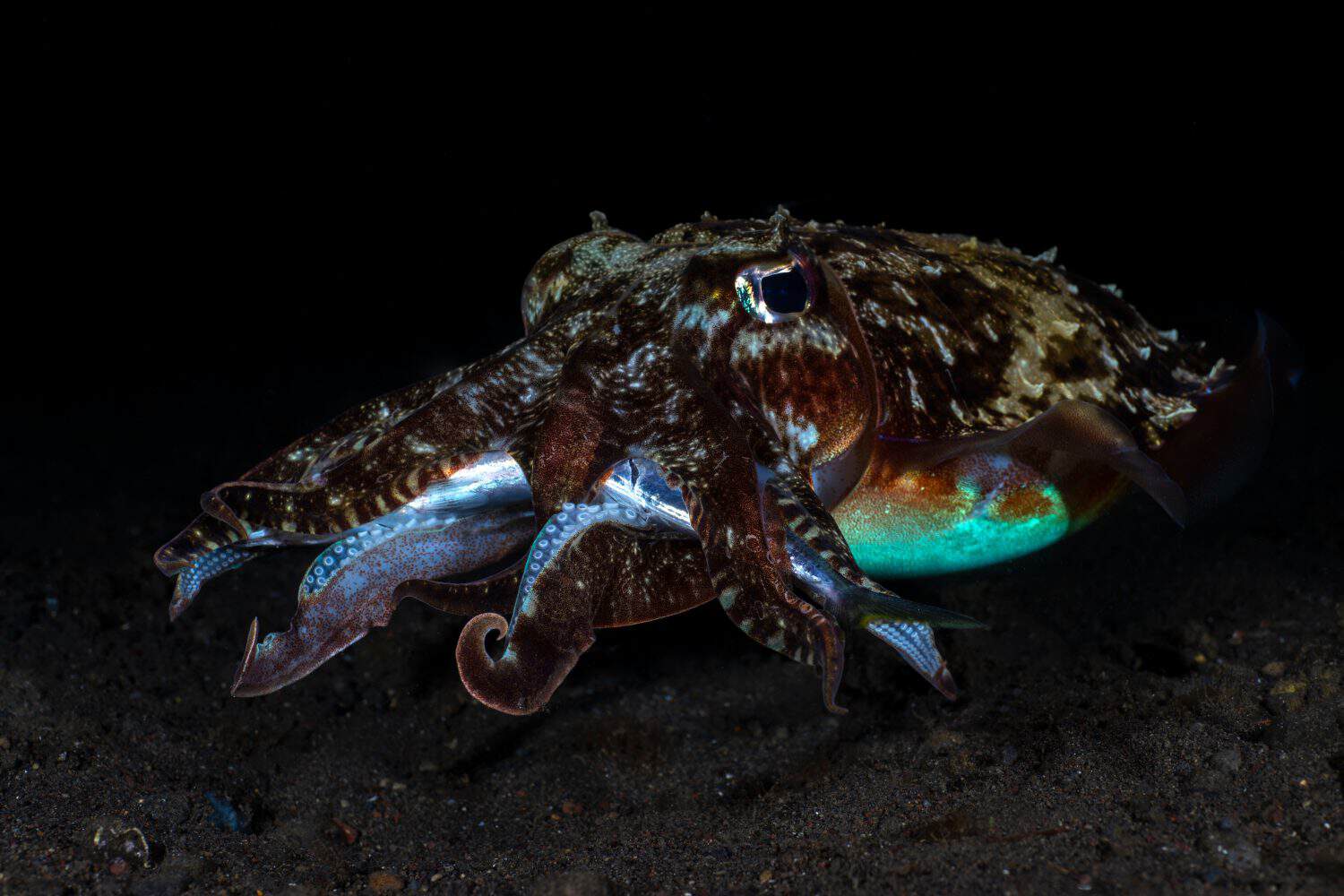
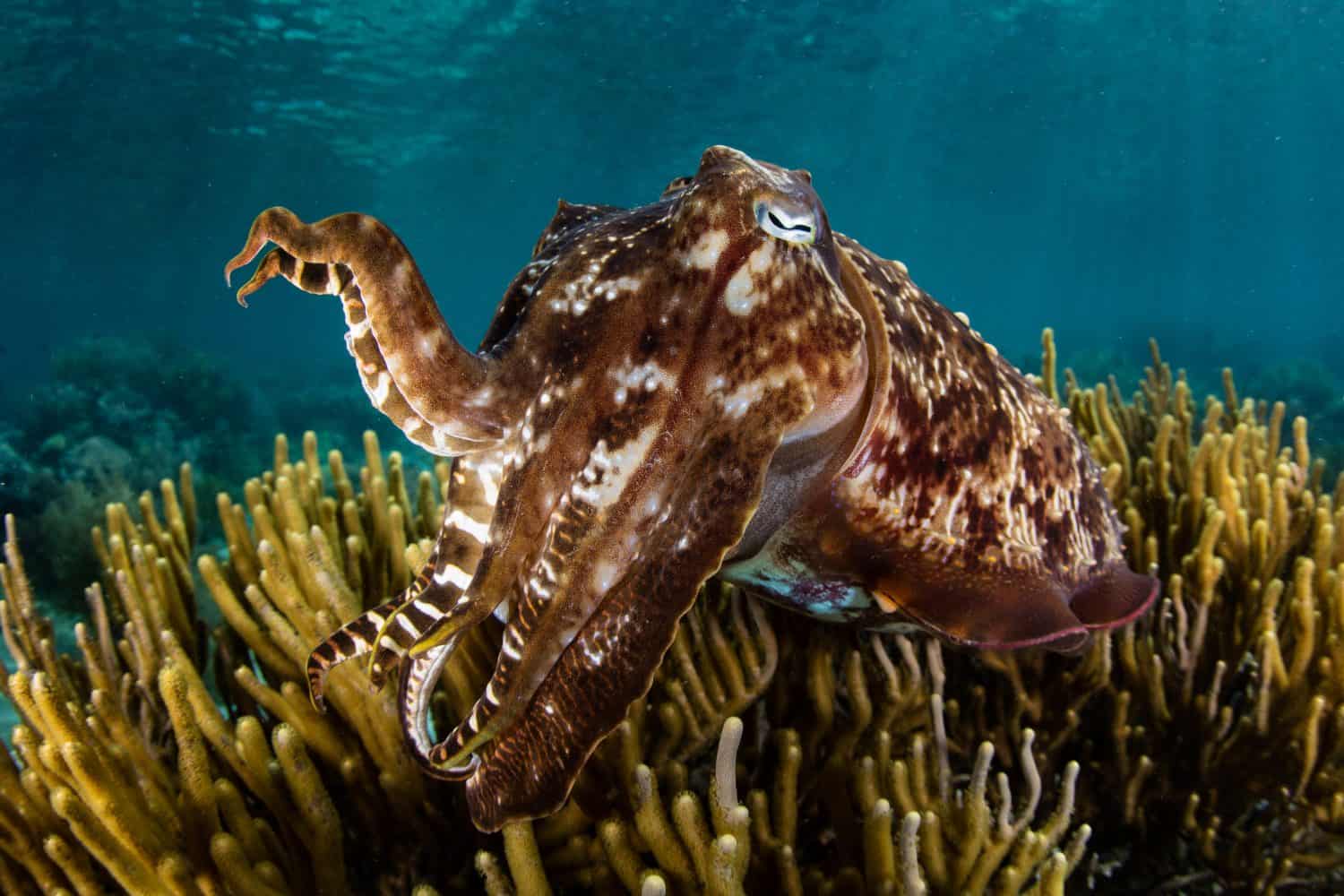
Broadclub cuttlefish rely on active camouflage techniques to successfully hunt prey.
©DiveIvanov/Shutterstock.com
As previously mentioned, cuttlefish don’t hypnotize their prey so much as overwhelm their visual processing systems long enough to allow an attack. Many animals rely on visual cues — such as a predator appearing larger as it approaches — to detect threats. The broadclub cuttlefish sidesteps this trigger by making its body appear as if it isn’t moving, or even moving in the opposite direction, using its “passing cloud” system of undulating color bands.
Most animals that rely on camouflage do so in a static manner. Egyptian nightjar birds blend in with desert rocks, and glass frogs are so transparent they disappear into the textures behind them. The broadclub cuttlefish remains a subject of considerable study for biologists due to its unconventional approach to camouflage. Instead of blending into the background or using countershading, the broadclub cuttlefish uses active motion camouflage. There is no need to blend in if it can confuse its prey’s visual system with mixed signals and movements.
Cuttlefish techniques show that it is more effective to overwhelm than to simply stay hidden when targeting prey.