
Quick Take
- This frog can't hear the way other frogs do, and the workaround its body evolved instead is genuinely strange. How they compensate →
- Scientists set up a mirror to find out if the waving was real communication, and the result settled the debate. See the mirror study →
- Male and female golden frogs wave for completely different reasons, and one of those reasons turns out to be a surprisingly ruthless test. Discover the reasons →
- A fungal outbreak nearly erased this species from the wild in under a decade, and the last confirmed wild sighting tells a grim story. Learn about the outbreak →
When you’re a frog that lives near the roaring waterfalls and mountain streams of Panama, croaking to communicate with other amphibians is a lost cause. The noise of rushing water quickly drowns out anything you have to say.
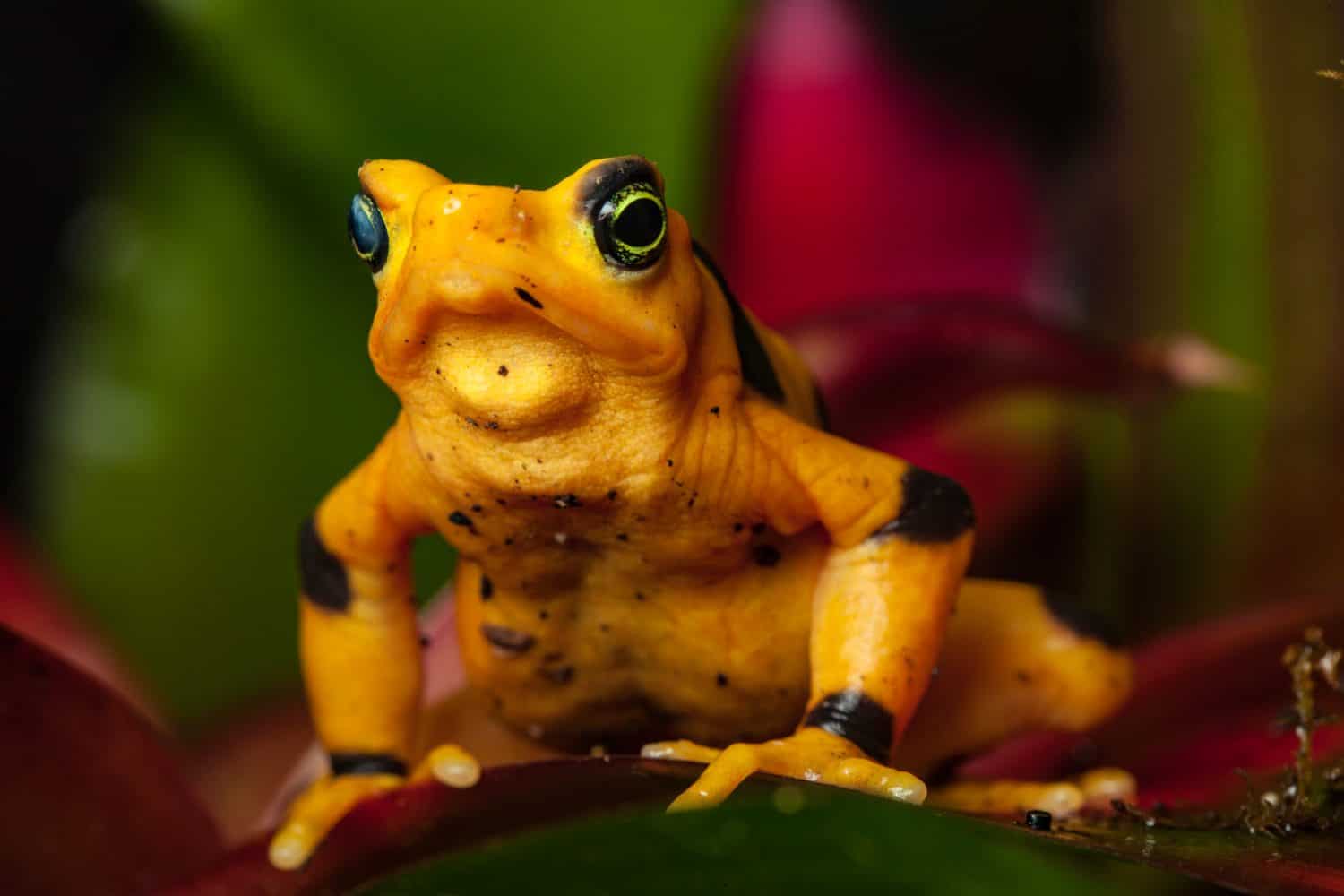
But the highly endangered Panamanian golden frog, Atelopus zeteki, has figured out a workaround to its noisy environment. It lets its body do the talking.
Meet the Panamanian Golden Frog
These tiny creatures range from about one to two and a half inches long and live near mountain streams and waterfalls in west-central Panama. They are a species in decline, with the last confirmed wildlife sighting in 2009. More than 80 percent of the wild population was wiped out by a fungal infection within 10 years.
The species is listed as critically endangered on the IUCN’s red list. Some believe it may even be extinct in the wild.
The Visual Way These Frogs Communicate
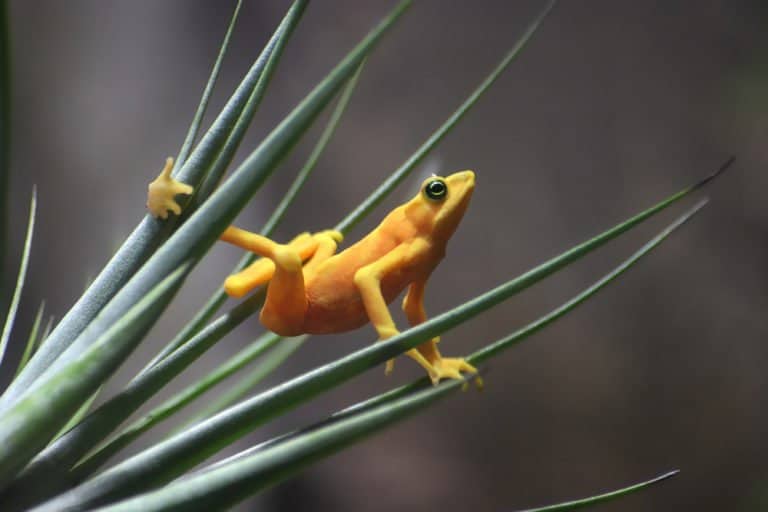
For Panamanian golden frogs, using their front legs to communicate is as natural as breathing or swimming in cold mountain waters. Unlike many other frog species, these tiny yellow critters lack normal frog ears, meaning they don’t have external eardrums. Experts hypothesize that these frogs sense sound through their lungs.
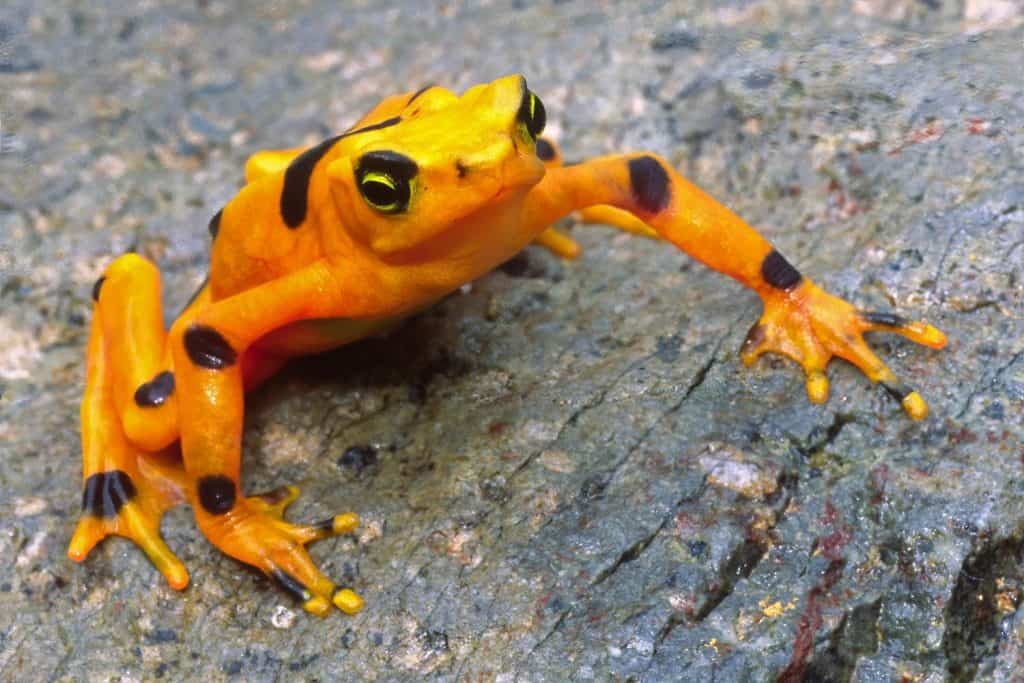
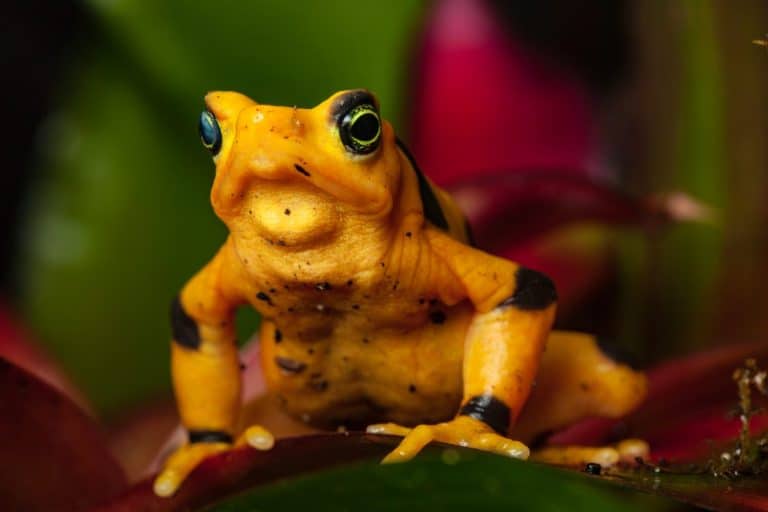
Panamanian golden frogs live in noisy environments, making vocal communication difficult.
©Mike Redmer/Shutterstock.com
That’s not to say these frogs don’t make noise—they do. They make soft chirps, whistles, and trills, but the sounds are too quiet to overcome the noise of the nearby water. This requires a different approach to communication.
Instead, they raise their front limbs, waving and rotating them to communicate with each other. Both males and females engage in this behavior.
Are They Really Waving to Each Other?
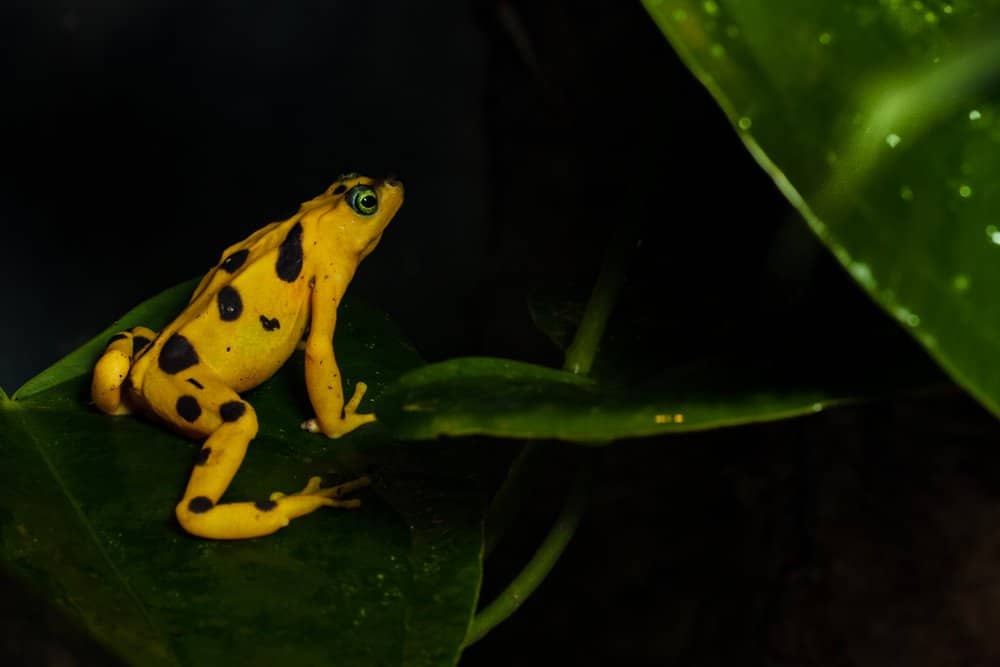
This behavior is called semaphoring—a name taken from the way sailors at sea communicate with each other across large distances by waving flags. Scientists conducted tests with the frogs to see if they were actually waving to communicate. They discovered that they were!
©K Hanley CHDPhoto/Shutterstock.com
A controlled study using mirrors revealed that the waving is directed at another frog. When a frog sees its reflection, it raises its front limb and waves at its mirror image. When shown a blank surface, the frog waved far less often.
Why Do They Wave?
Researchers believe that semaphoring happens for three reasons.
One reason is to attract mates. Males often wave to females to get their attention when they’re near breeding streams. Males also use a more aggressive form of waving to mark their territory and ward off rivals that try to move in. If waving isn’t enough, the male frogs may end up in a wrestling match.
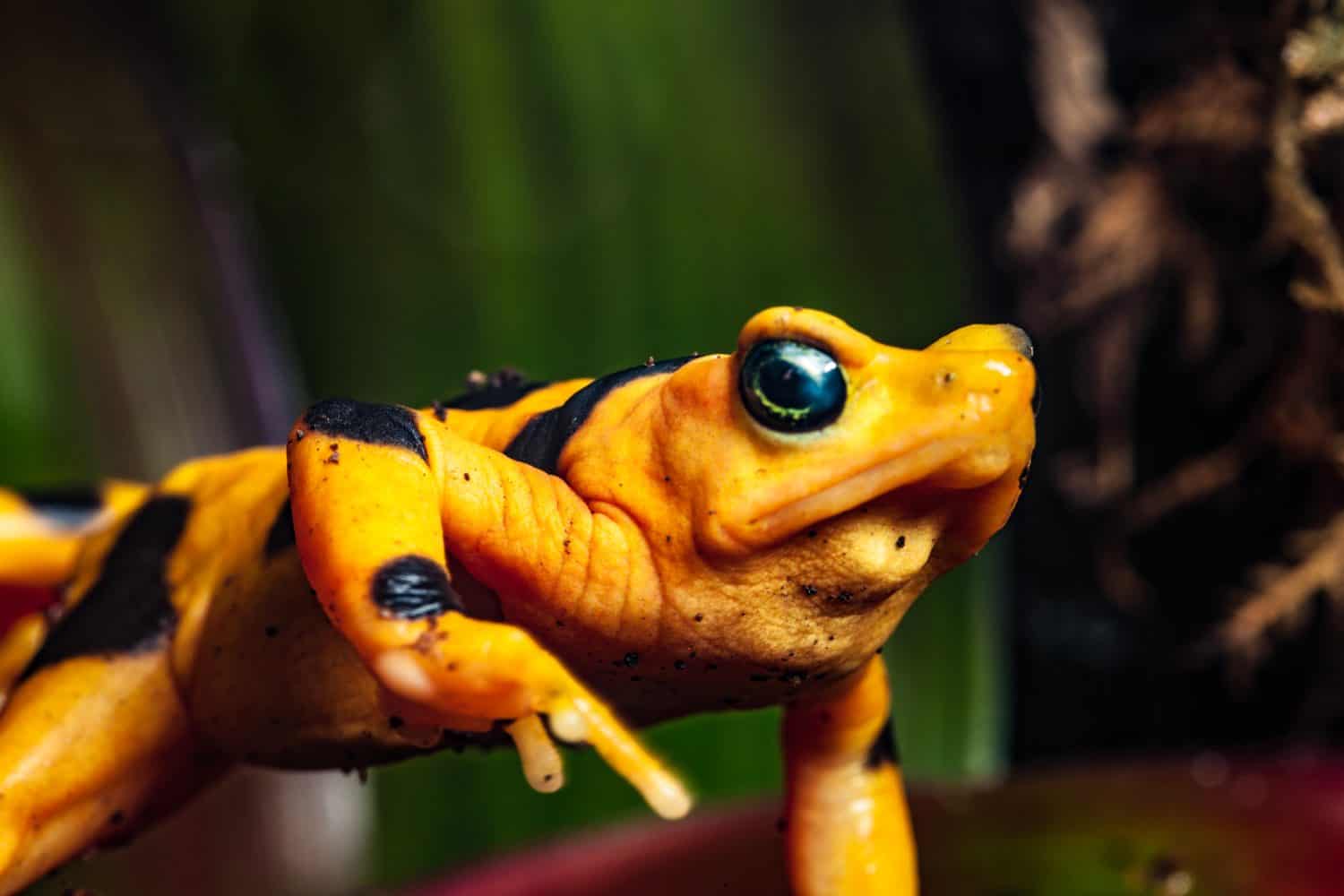
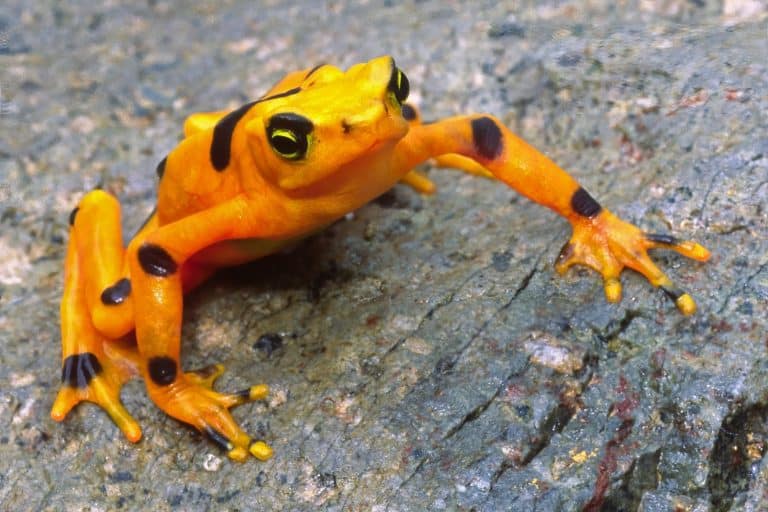
Panamanian golden frogs use their front limbs to wave, a process called “semaphoring.”
©K Hanley CHDPhoto/Shutterstock.com
According to the Maryland Zoo, females have a different reason to wave. When a male approaches, females semaphore aggressively as a test of the male’s bravery. If the male backs away, she rejects him. If he keeps advancing, she allows him closer.