No one wants to see an animal in pain. Horses are particularly sensitive animals when it comes to pain, but as they’re unable to speak, it can be tricky to notice that there’s something wrong or to pinpoint exactly where they are feeling it. Horses can only show us they are experiencing discomfort through their behavior and body language. However, even then, some signs can easily be missed if you’re not familiar with horses, or even if you’re not familiar with that particular horse’s typical behavior. Therefore, we’ve put together a list of the most common signs of pain in horses. Let’s take a look.
Lameness
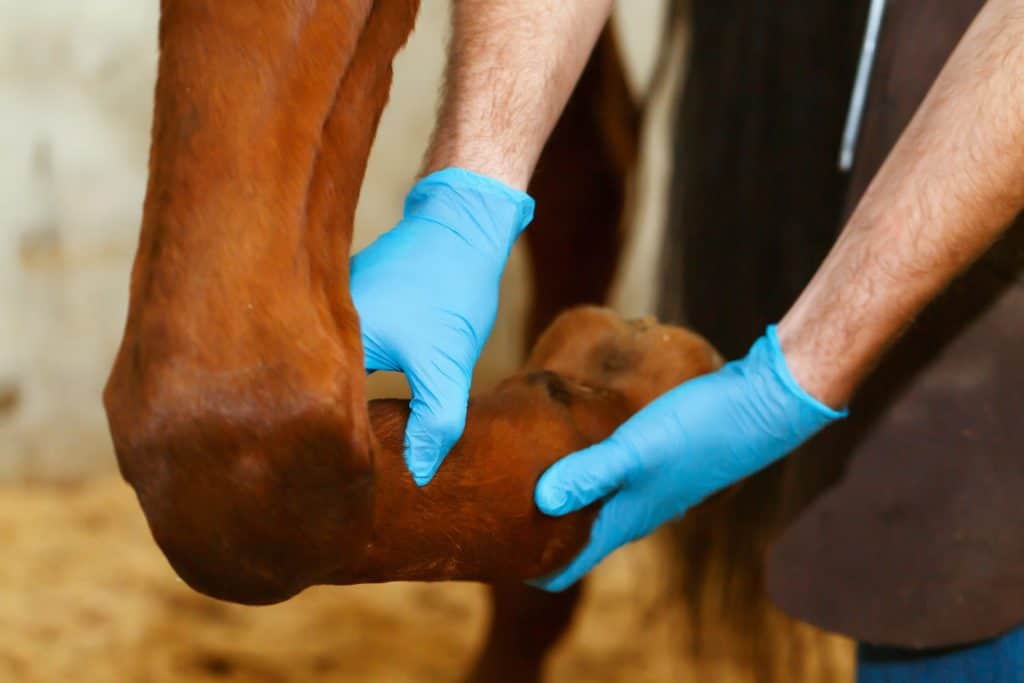
Horses with pain in their leg or foot are usually reluctant to put their full weight on it.
©Osetrik/Shutterstock.com
If you’re a horse owner, then one of the most common issues that you’re going to come across is lameness. Horses can develop a wide range of leg or foot injuries, both minor and more serious. The easiest way to know if a horse has pain in its leg is if it is showing signs of lameness. This essentially means that the horse is limping or not putting their full weight on the affected limb. Lameness can be either obvious or subtle. It can vary from a minor limp to not wanting to put their foot down at all, so it’s important to become familiar with the way that your horse walks.
A horse can also show signs of pain while standing still, such as being reluctant to put their foot fully on the floor. This usually means that they stand resting only the tip of their foot on the ground. A resting horse may also stand with a foot slightly raised, but if the horse is in pain, this behavior is usually accompanied by some degree of lameness when it is asked to put its foot down and walk.
Excessive Rolling
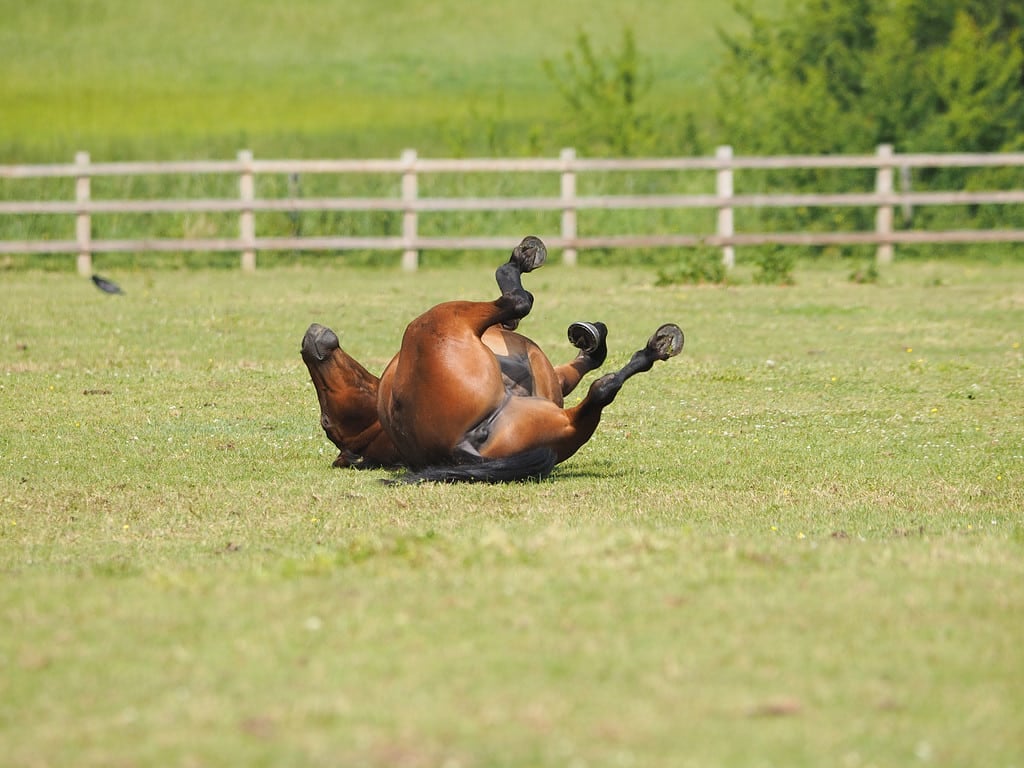
Excessive rolling is a good indicator of stomach pain.
©nigelb10/iStock via Getty Images
All horses enjoy rolling on the ground. However, excessive rolling can be a sign that a horse has stomach pain — also known as colic. Colic can be very serious if not treated by a veterinarian, as complications can lead to a twisted gut. Horses roll to try and alleviate the pain of colic. Therefore, if your horse is rolling more than usual — such as rolling, getting up, and then rolling again continually — or if it’s accompanied by one of the other symptoms, then it could be a sign that the horse is in pain.
Kicking Their Stomach
Similar to excessive rolling, kicking the belly is a classic sign that a horse is experiencing pain in their stomach. Horses kick at their stomachs with their hind legs to show their discomfort.
Abnormal Sweating
Horses can sweat if they are anxious or upset, especially if it’s caused by pain. Some horses might sweat noticeably, while others may simply feel clammy to the touch. However, if a horse suddenly starts sweating — particularly while at rest — it can mean that something isn’t quite right.
Decreased Appetite
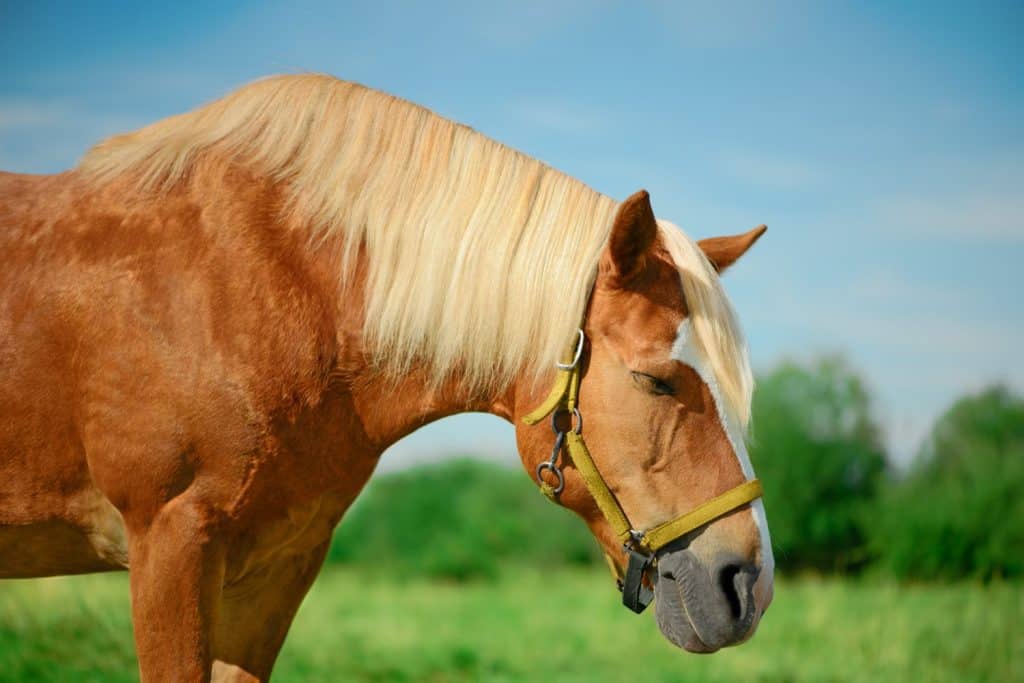
A horse that doesn’t want to eat could be in pain.
©IRINA ORLOVA/Shutterstock.com
Another sign that a horse is experiencing pain is if it suddenly becomes less interested in eating or stops eating entirely. Some horses react to pain differently from others, and a decreased appetite can be a sign of pain somewhere in the body. However, it is also another good indicator of colic.
Shifting Weight
Recognizing that a horse is in pain can be tricky, as some signs can be subtle. A horse shifting its weight around is one of these subtler signs, as it can be difficult to distinguish from normal movement. However, a horse shifting its weight from one foot to the other or generally moving its weight around uncomfortably could indicate that it isn’t feeling well.
Pawing the Ground
Horses paw at the ground with their front feet for various reasons, such as impatience or anxiety. However, if a horse is continually pawing at the ground without an obvious cause, it may be a sign of discomfort or pain. In particular, pawing the ground is often associated with colic.
Lethargy
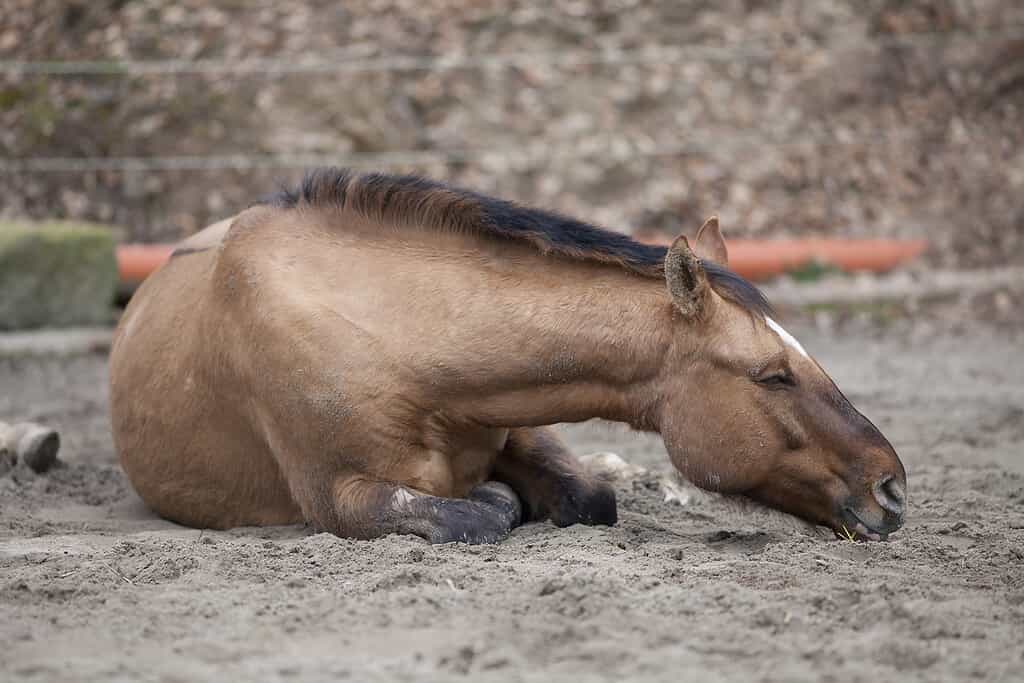
Lying down more or being lethargic could indicate that a horse has colic.
©anjajuli/iStock via Getty Images
Although it might not seem like the most obvious sign of pain, lethargy can actually be a good indication that a horse isn’t feeling well. A horse that is not behaving as usual or seems unusually quiet may be experiencing pain. Lethargy can also be noticed if the horse isn’t eating or moving around and is just standing or lying down in one spot.
Flinching
Although colic and leg or foot issues are the major things to look out for with horses, there are still a multitude of other reasons that a horse might be in pain. This could be from an ill-fitting saddle, a kick, or even dental issues. However, flinching can be a good indication of a problem. Horses might flinch away when you go to put a saddle on, tighten the girth, or even just if you touch them in a particular spot. Therefore, if your horse flinches, you should investigate the area further.