
Quick Take
- The classic "foaming, furious" image of a rabid animal is misleading, and the real early signs are something most people would never suspect. See the real early signs →
- A rabid animal acting calm and friendly can be just as dangerous as one that's aggressive. Knowing that distinction could save your life. Spot behavioral warning signs →
- Rabies looks completely different depending on the species. What counts as a red flag in a fox means something entirely different in a horse or cow. See signs by species →
Would you recognize a rabid animal? Do they foam at the mouth and act crazy? Actually, it is not at all easy to tell whether an animal has rabies, and the signs are far from obvious. This means that we need to take extreme care when approaching wild animals or even pets who may have the disease. Here, we give you some clues about what an animal with rabies actually looks like.
Continue reading
The Rabies Virus
Rabies is an acute and progressive disease caused by viruses in the genus Lyssavirus in the family Rhabdoviridae. It affects mammals, including humans, bats, dogs, and wild carnivores, and can be passed from animals to humans. At least 30 animal species are known to be reservoir species, and each one carries a distinct viral variant. For example, one variant infects red and Arctic foxes, and another infects striped skunks.
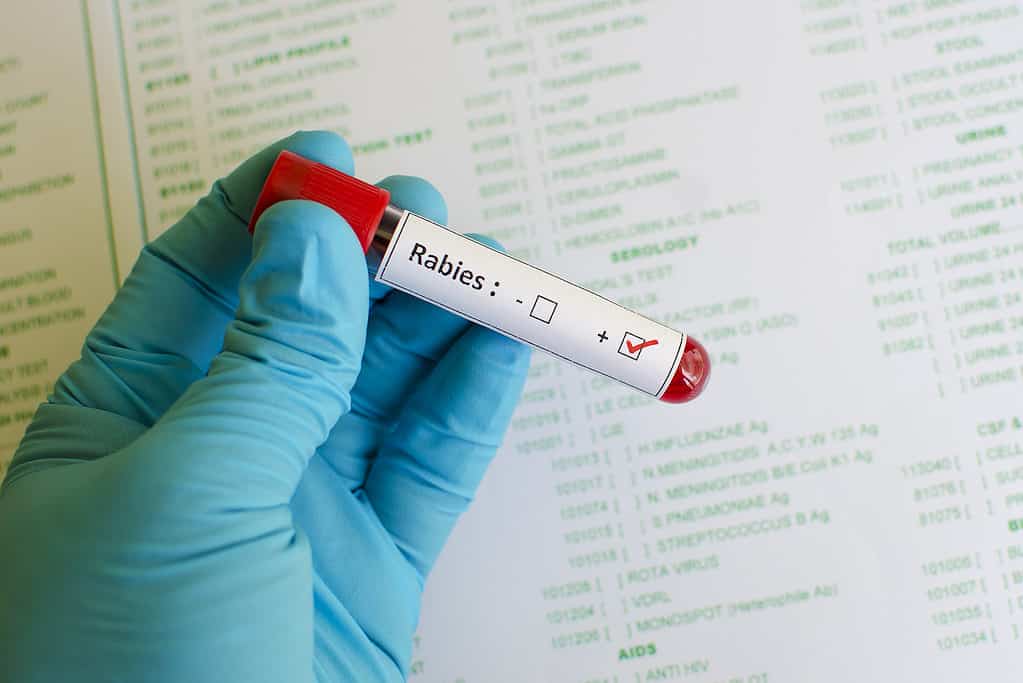
Rabies is caused by a virus.
©jarun011/iStock via Getty Images
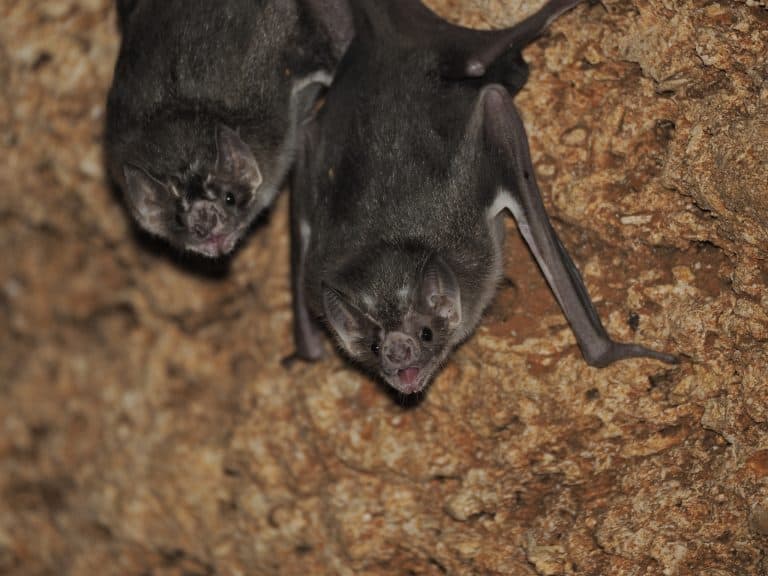
Globally, domestic dogs are the most important reservoir, but in North America, bats, raccoons, skunks, and foxes are the primary reservoirs, with bats being the most common source of human rabies cases. The disease is almost invariably fatal once the symptoms have started.
How Rabies Makes Animals Ill
To understand what a rabid animal looks like, we must first consider how the virus moves through their body. The virus nearly always first enters through a bite wound. The virus-laden saliva enters the victim’s body through the punctured skin. Initially, it replicates in non-nervous tissue at the site of the wound. Then it enters the nerve cells of the peripheral nerves and travels to the spinal cord and eventually the brain. From here, it spreads further to other organs and the salivary glands.
How Can You Tell an Animal Has Rabies?
There are no definitive clinical signs of rabies, but there are some general signs that suggest a rabies infection. There is nearly always some indication of the central nervous system (including the brain) being affected. This results in acute behavioral changes and an unexplained and progressive paralysis.
There are three phases, but their symptoms and durations can vary greatly. The first is the prodromal period, which lasts for between one and three days. During this period, the animal has vague and non-specific symptoms. Next is the acute excitative stage, followed by the paralytic end stage. Death inevitably occurs a few days later.
Spotting the Furious Form of Rabies
The furious form of rabies is the one that receives most coverage and attention, which can be misleading. In fact, the initial behavioral changes associated with rabies can be the complete opposite of ‘furious’. The animal may appear apprehensive or nervous and seek solitude.
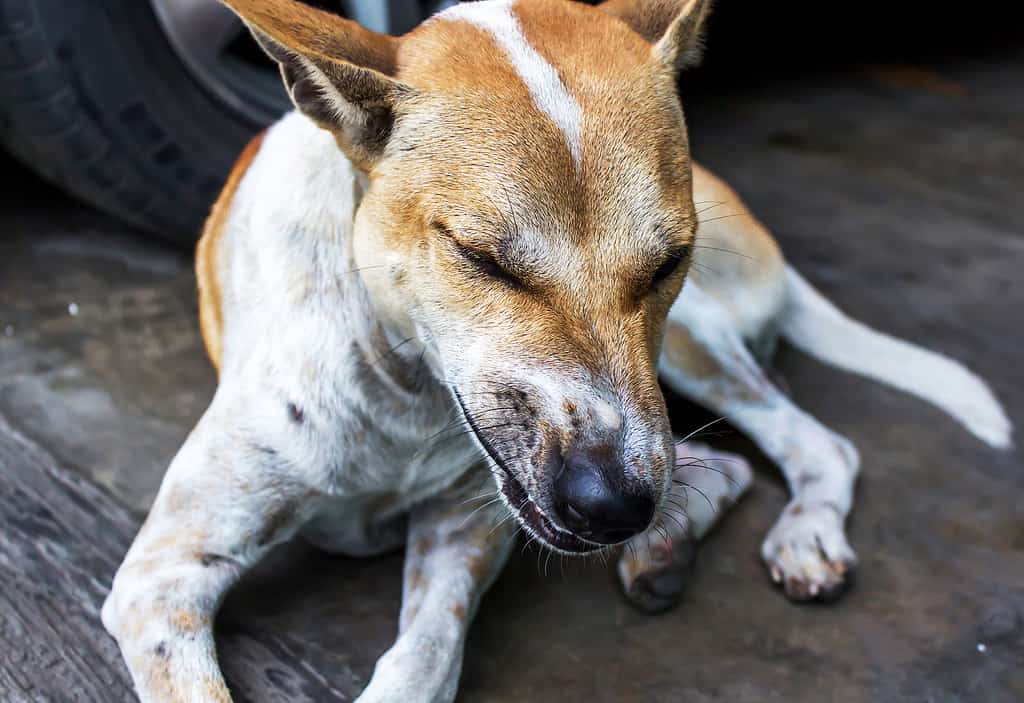
Dogs in the end stages of rabies often have seizures.
©kamontad123/iStock via Getty Images
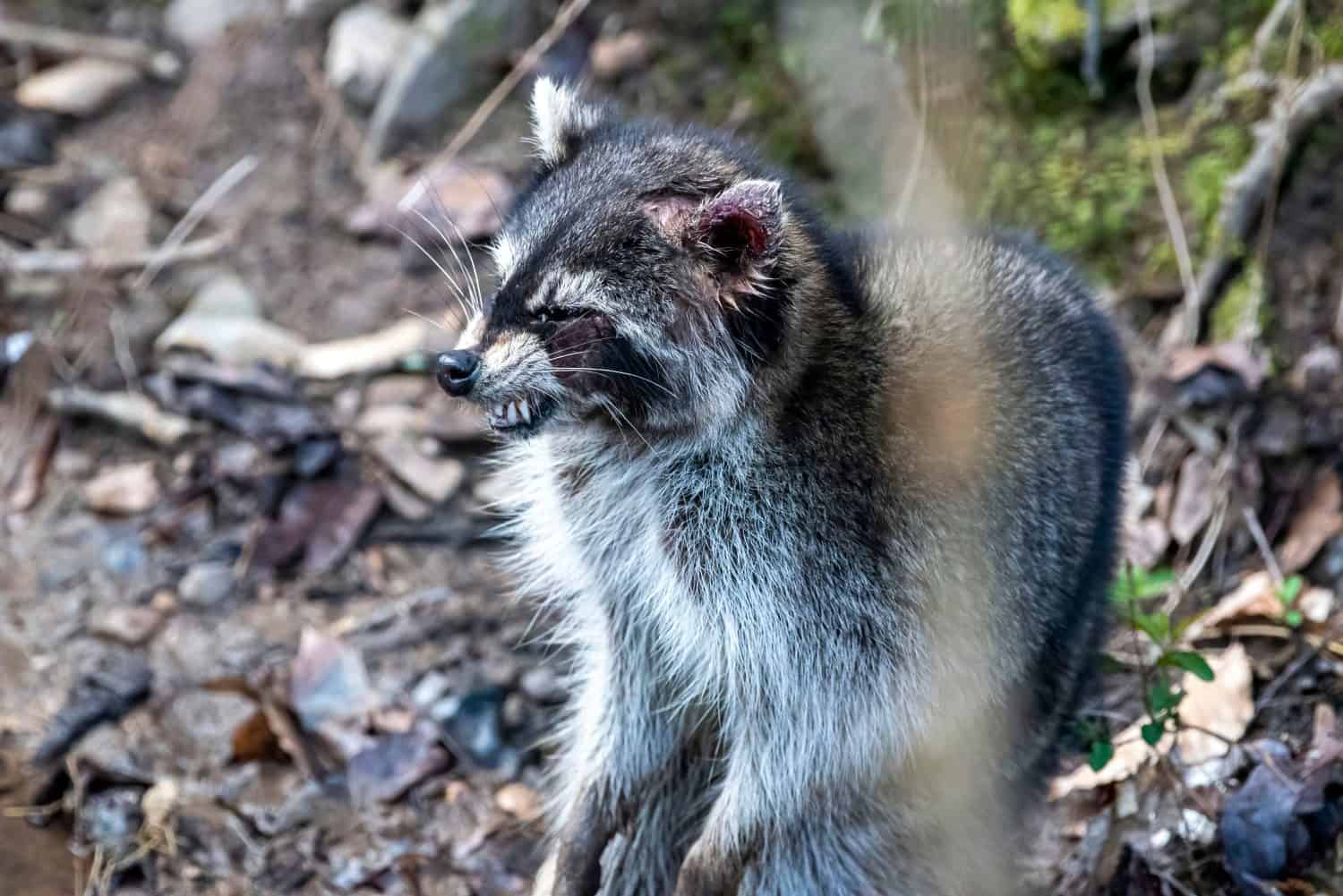
In contrast, other animals may lose their fear of humans and animals that are usually nocturnal may be seen out during the day. Docile animals can become aggressive, using teeth, claws, and even hooves to attack. This is the classic “mad-dog syndrome,” although it is not just seen in dogs.
What Do Rabid Animals Look Like?
At this stage, their posture is likely to be alert with their pupils dilated. Carnivores roam around and attack any animal or other moving object they come across. They may also swallow other objects such as sticks, stones, or feces. Rabid dogs chew their cages while rabid skunks seek out and attack litters of puppies or kittens. Domestic cats and bobcats with rabies suddenly attack by biting and scratching.
What Does Rabies Paralysis Look Like?
After a few days, the paralysis sets in. The animal has poor muscle control and clumsy movements (ataxia). They cannot move their throat and chewing (masseter) muscles and cannot swallow. In dogs, their lower jaw often drops, and they drool.
Some animals may have seizures. The paralysis becomes more progressive, moving to all parts of the body, and they eventually die.
Species-Specific Signs of Rabies
Rabies is a highly variable disease between species. For example, cattle with furious rabies start to look super alert; they follow sounds and movement intently, bellow abnormally, and attack other animals and people. Rabid horses show extreme agitation and may roll around on the ground, bite, and become unmanageable.
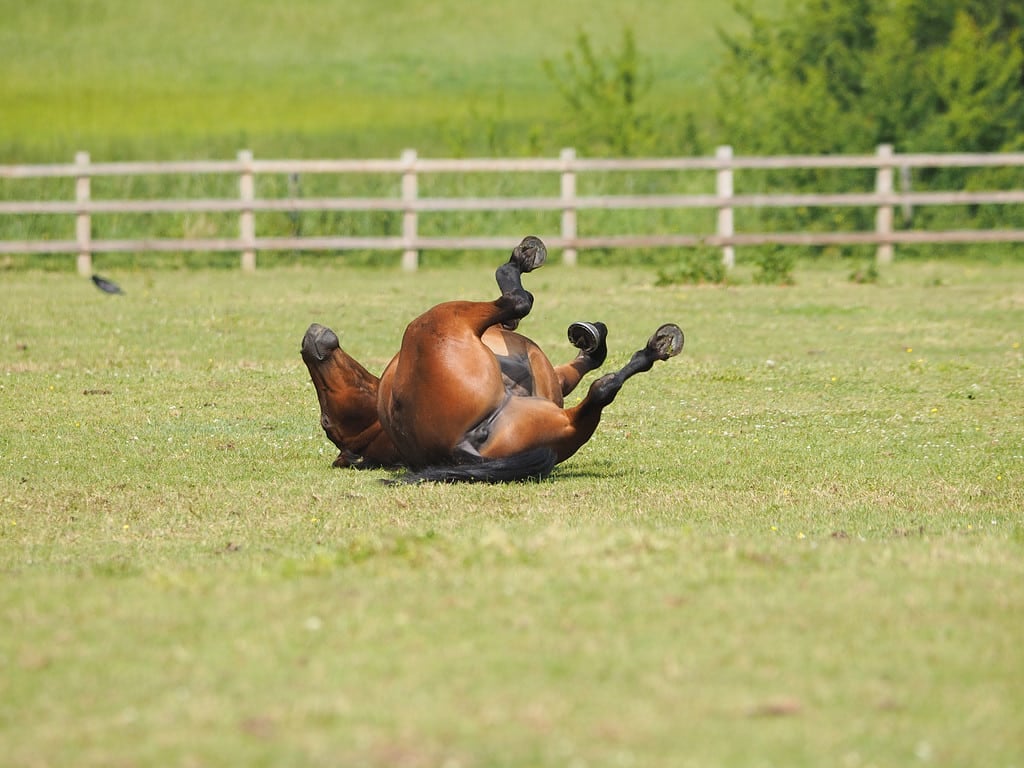
Sometimes horses with rabies roll on the ground and appear agitated.
©nigelb10/iStock via Getty Images
It is common for rabid foxes, skunks, and coyotes to invade yards, stumbling around and behaving aggressively.
How to Deal With a Rabid Animal
The safest approach is to suspect rabies in any wildlife that you see acting abnormally. Do not approach the animal and keep children and pets away from it. The USDA Animal and Plant Health Inspection Service advises you to contact them immediately at 1-866-4-USDA-WS (1-866-487-3297). You can also contact your local game warden or State Police. If you are in a National Park, you should alert a park ranger. If you have been attacked by a potentially rabid animal, seek medical attention immediately.