
Quick Take
- Moose antlers can grow at a rate most people would find hard to believe, a feat that is entirely the work of a specialized type of cell. See how fast they grow →
- That bloody, draping skin isn't damage. It's actually doing something critical that bare bone simply can't. Learn what velvet does →
- The velvet has to go before mating season, and the reason it becomes a liability rather than merely unnecessary is more tactical than you'd expect. Why velvet becomes a liability →
- Fresh antlers don't look anything like the brown racks you recognize, and that familiar color comes from something the moose does himself. How antlers get their color →
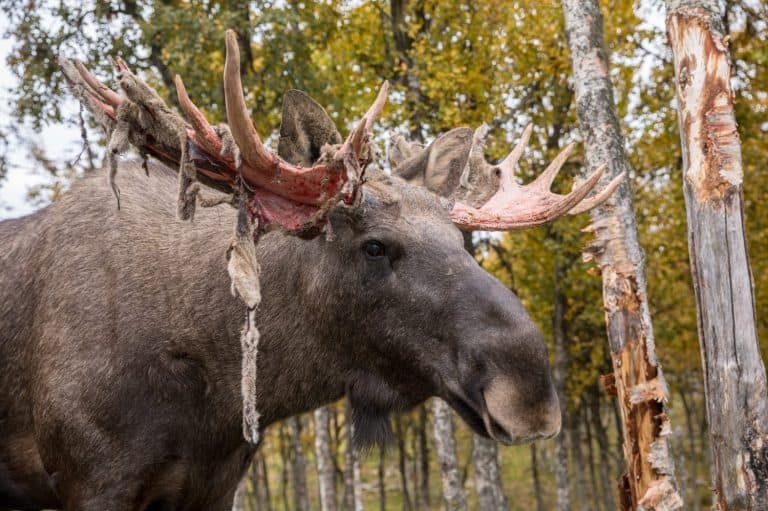
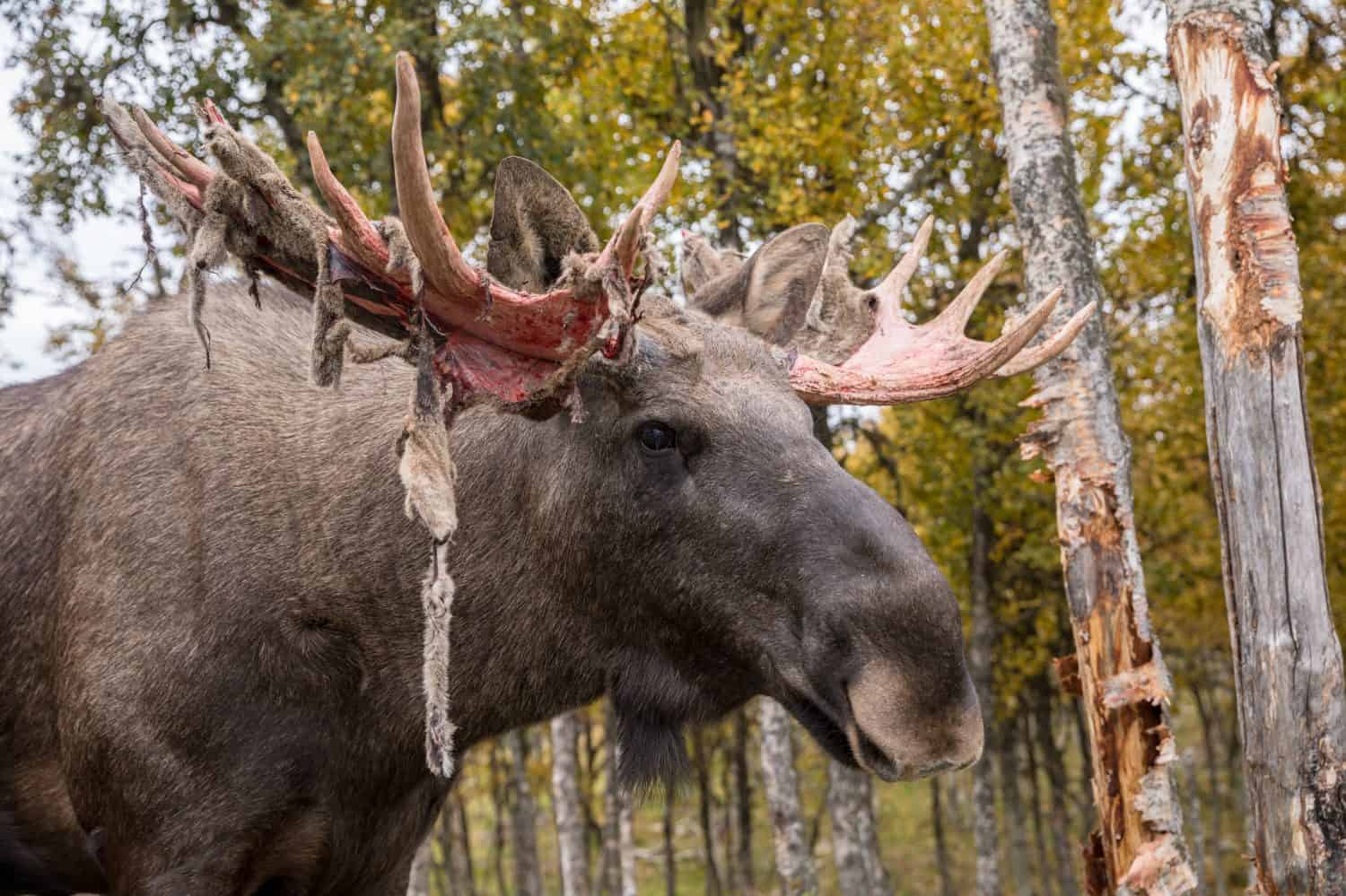
With bright pink flesh draped across its antlers, the moose in this fascinating YouTube clip looks like something from a gory horror film. This is indeed living tissue that’s being stripped from bone, but it’s all part of a normal growth cycle. Let’s take a closer look at the incredible biology of moose antlers.
Moose Antler Growth
Moose are instantly recognizable and large members of the deer family. They are also one of the largest mammals in North America. The males have very impressive antlers that can measure 6 feet from one tip to another. However, they are not a permanent feature!
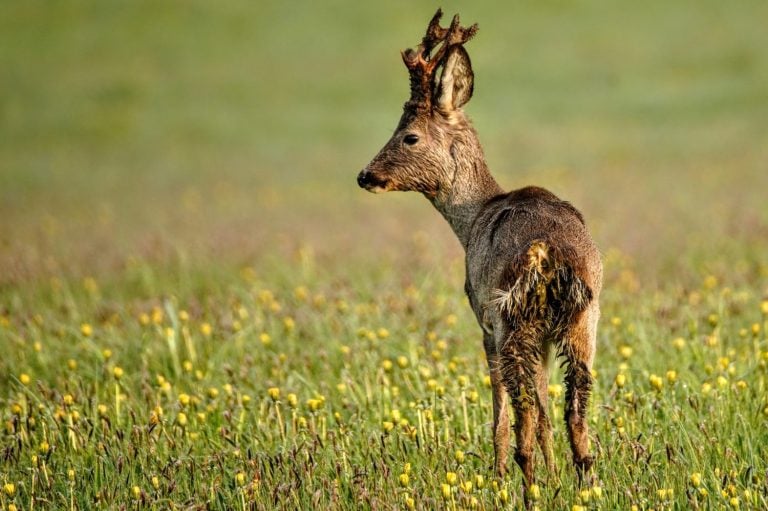
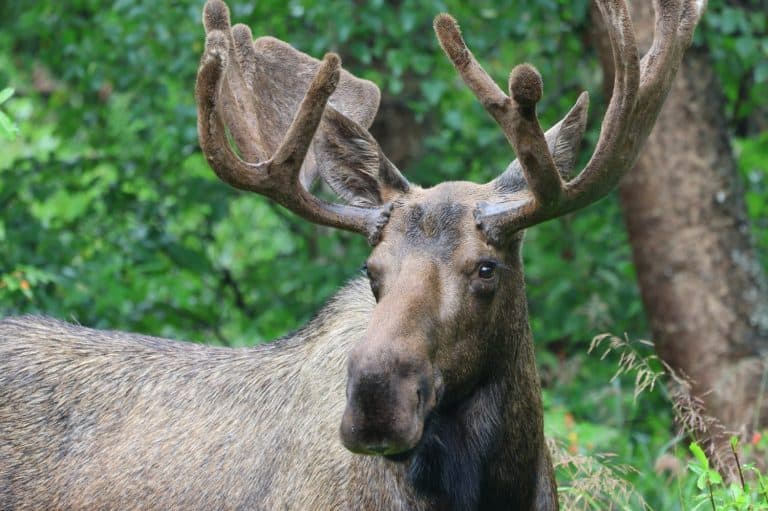
A moose’s antlers contain bone but are not fused to its skull. Every year, around April, the antlers start to grow inside a layer of skin. This skin has short, soft hairs and is called velvet. It provides the growing antlers with a blood supply. Without it, the antlers would not have the nutrients to grow. The rate of antler growth is astonishing and can be as much as 8 inches in 9 days! This is thanks to special cells called osteoblasts.
Why Do Moose Shed Antler Velvet?
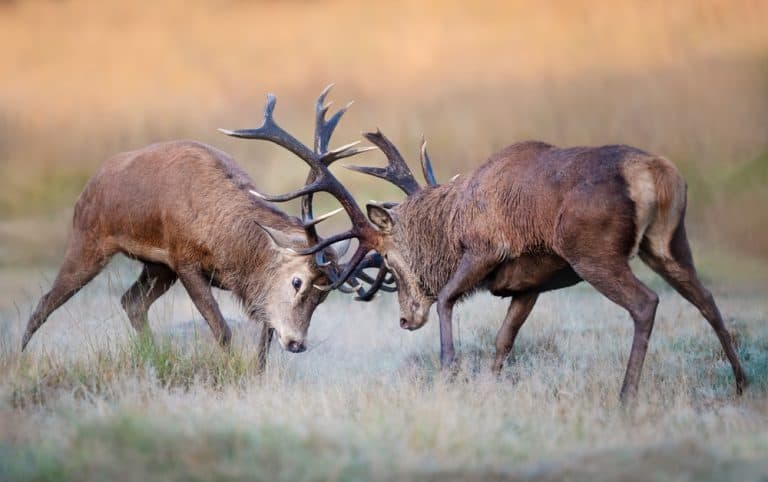
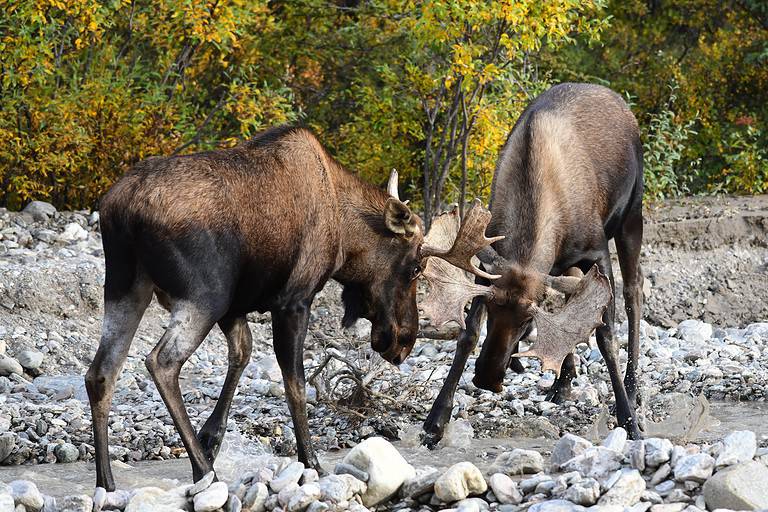
After around four months, the velvet has done its job and is no longer needed. The mating season is about to begin, and antlers have an important role to play in sparring and fighting. Sparring is practice fighting by bulls to gain experience. Two or more bulls engage their antlers and try to push each other backwards. Fighting is much more aggressive and violent, and the antlers are used as both weapons and shields. This process is called rutting and is used to establish the dominant male. He will have mating rights to the females.
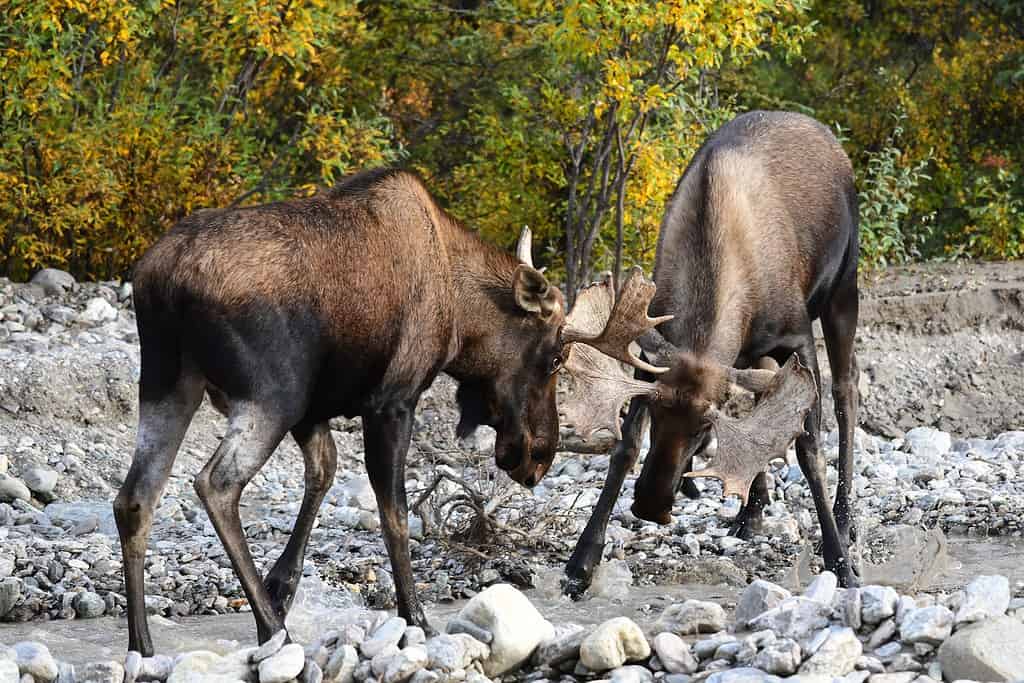
Antlers are important for moose rutting.
©JT Fisherman/Shutterstock.com
A soft, blood-rich coating would be a nuisance once the antlers are used in this way, so it is shed just before rutting starts. It dries out and loses its blood supply, but does not come off on its own. The male moose needs to rub his antlers against trees and bushes to scrape it off. When first exposed, the antlers look like bare bone or may even appear slightly pink. The rubbing behavior turns them the brown color that we are more familiar with. Moose antlers typically last until winter, with most bulls shedding them between December and March, though the exact timing can vary.