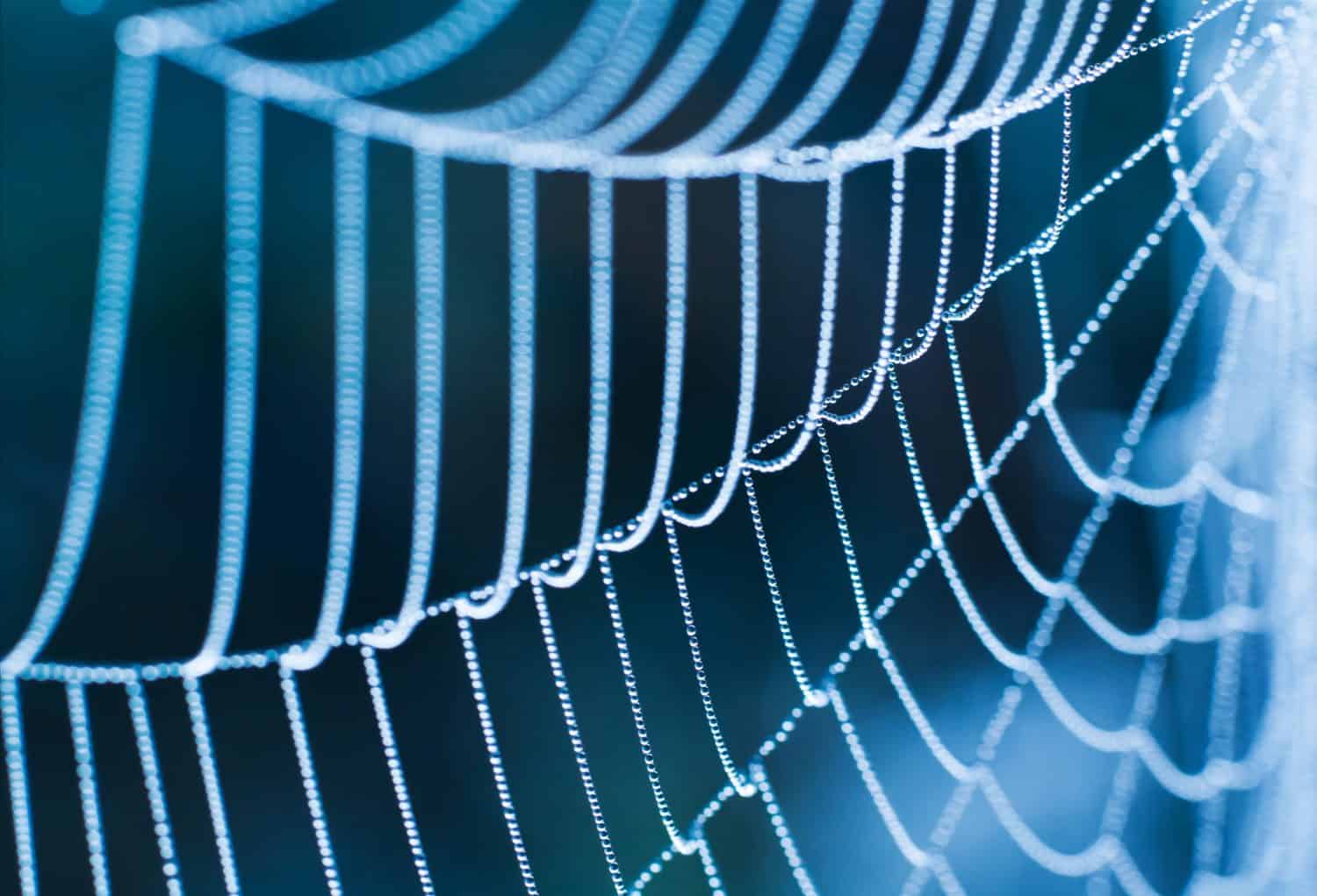

Most readers remember Charlotte’s Web, the touching story of a spider who saves Wilbur the pig by writing messages in her web. Although real spiders don’t spell out words, their silk carries information with remarkable precision. A hit on the web can mean dinner, a rival, or a possible mate. Some species also add bold zigzag patterns called stabilimenta. These extra bands of silk often appear to be purely decorative, sometimes resembling a “lightning” design. Their purpose has sparked debate for more than a century, but a new study helps explain why those patterns exist.
Spider Silk
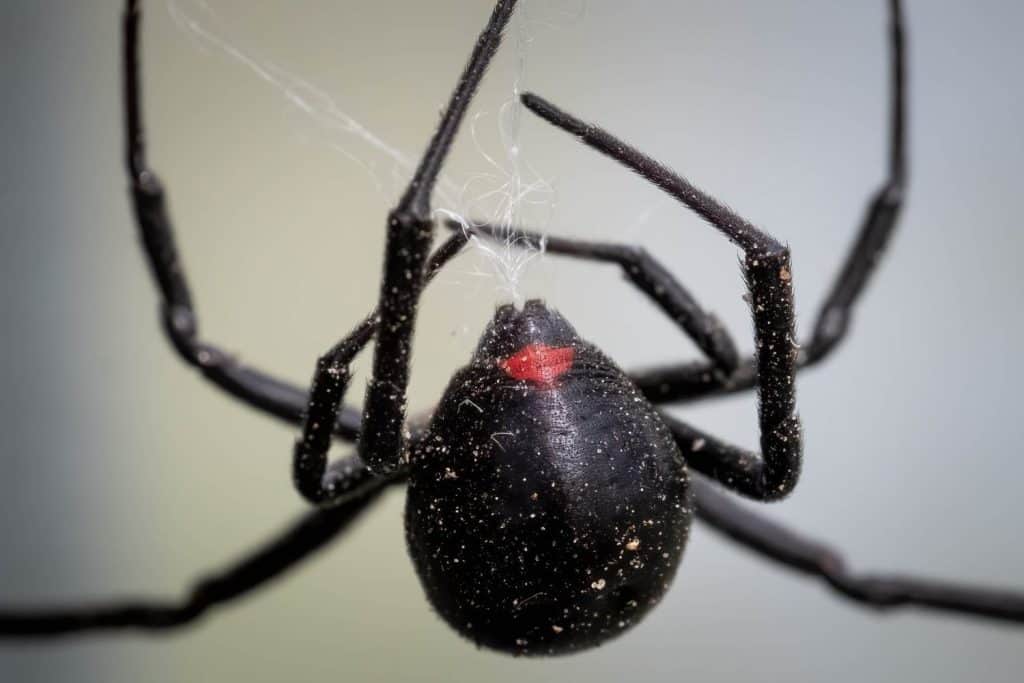
A female black widow spider is dispensing silk from her spinnerets.
©samray/Shutterstock.com
Spider silk is a protein fiber that forms tough, crystal-like sheets. A spider makes several silk types in different glands, then pulls a liquid mixture through microscopic spigots on the spinnerets, where it hardens into thread. One line can be sticky for catching prey, another dry and strong for the frame, another springy for safety. By weight, spider silk matches or exceeds high-grade steel in tensile strength and has far greater toughness. That means it absorbs more energy before breaking. Humidity, temperature, and the exact mix from each gland change its performance.
Spider Silk Products
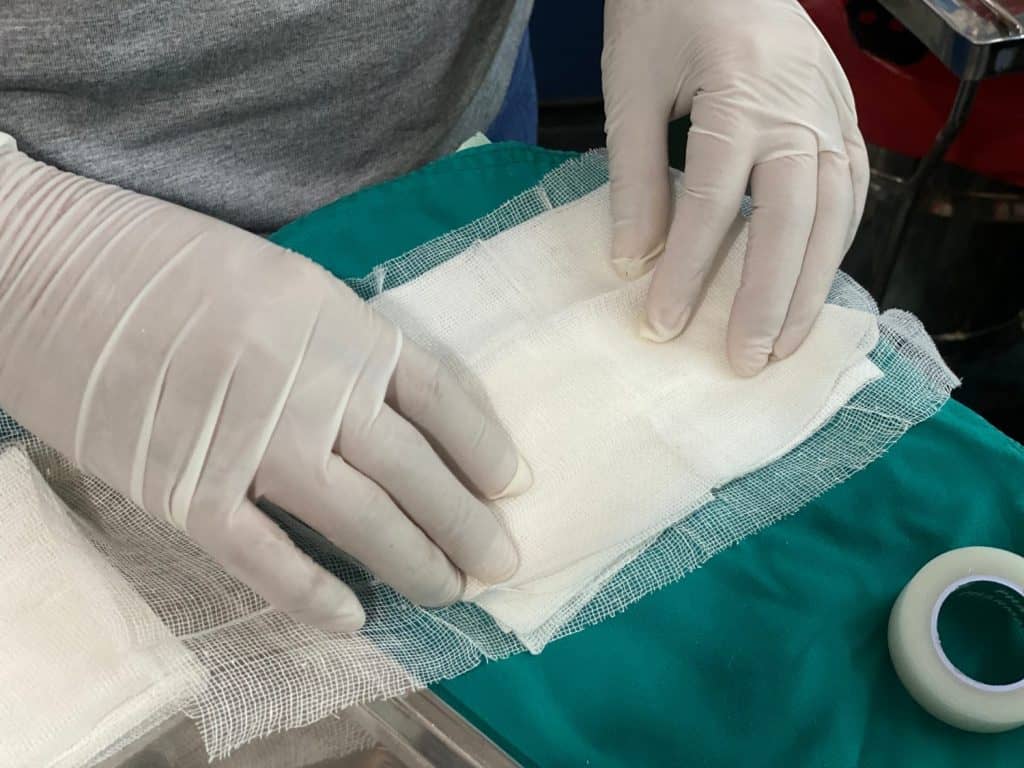
A nurse prepares to dress a wound with gauze. Researchers are looking into using spider silk for this application.
©Anukool Manoton/Shutterstock.com
Given the high performance levels of spider silk, people are already looking for ways to turn it (or synthetic copies of it) into useful consumer products. A few sneaker prototypes have used bio-made spider silk yarn for lightweight uppers, and a limited-run parka showed how the fiber can feel soft yet tough in a jacket. Some watch straps blend spider-silk protein with other fibers to make a smooth, durable band. Beauty brands have tested spider-silk protein as a silky film-former in creams and hair products.
Most importantly, labs are looking into developing it into gentle wound dressings and tiny scaffolds that help cells grow. Spider silk is antimicrobial, hypoallergenic, and biodegradable, so the medical field is a great application for it. These are promising steps, but you will not find racks of spider-silk T-shirts at the mall yet. The technology is real and improving, but it is generally not yet at the mass production stage.
Web Strategies
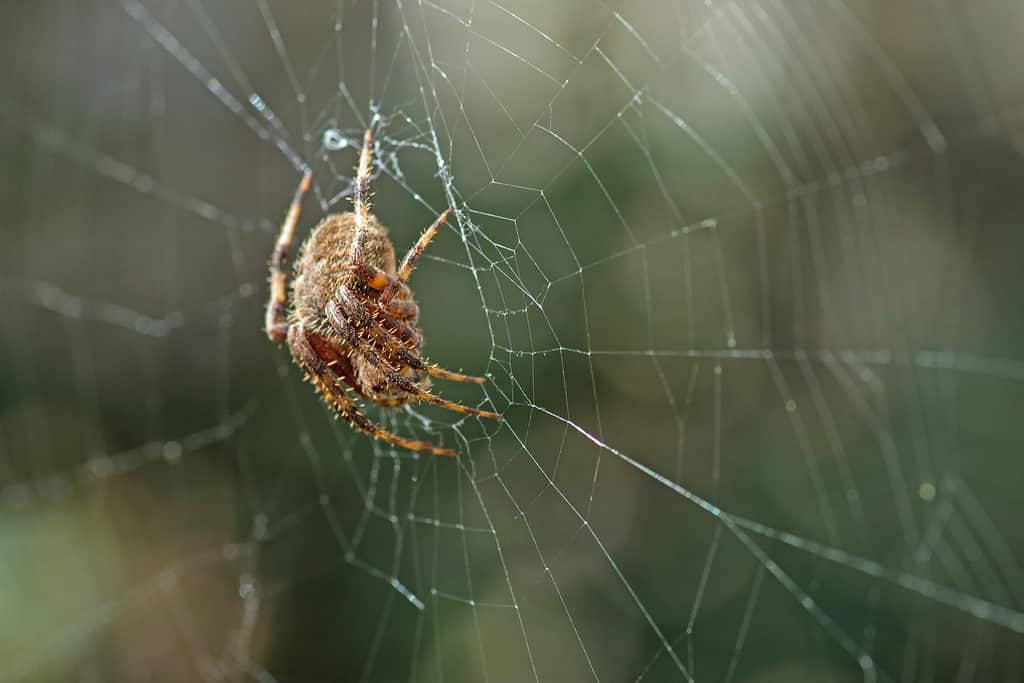
A side view of a barn spider, Araneus cavaticus, on a web.
©Tom Franks/Shutterstock.com
Not all spiders build webs, and not all spiderwebs are built the same way. There are over 50,000 described species in about 130 families. Jumping spiders stalk with sharp vision and leap at targets. Wolf spiders chase on the ground and read vibrations through their legs. Crab spiders wait in flowers and grab visiting insects. Lynx and fishing spiders pounce from plants or water edges. Burrowers such as trapdoor spiders hide under hinged doors and watch trip lines. Many of these spiders do use silk, but as a safety line, shelter, alarm thread, or nest lining rather than a prey-catching net.
Orb weavers are the spiders that build the classic round webs in gardens and fields. Sight is limited for many species, so they use the vibrations of their webs as their main sense. When a fly hits the sticky spiral, ripples race across the threads.
The spider reads that pattern and runs to the spot. If the insect is a manageable size, the spider wraps it up in a web cocoon to eat later. If it is too large and damaging the web, the spider will cut it loose before it destroys all that hard work, and then repair its web. Males also pluck web threads to create vibrations that introduce themselves to potential mates, but in a special pattern so they don’t get mistaken for food.
How Effective are Webs?
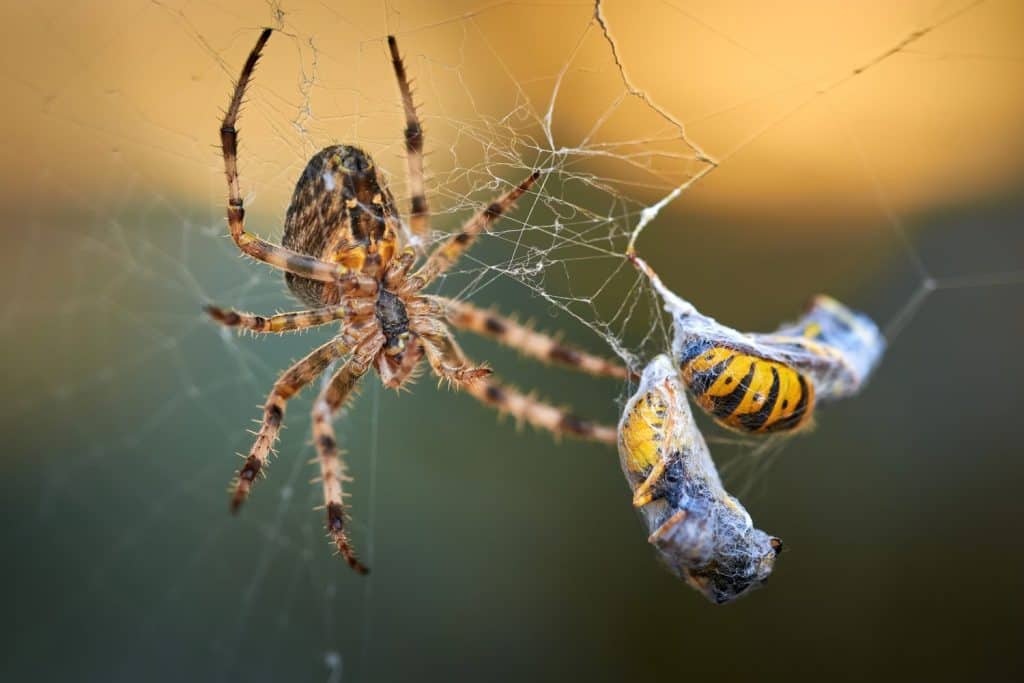
This European garden spider has captured two wasps in its web.
©Adrian Eugen Ciobaniuc/Shutterstock.com
Most orb webs are short-lived. Many species rebuild nightly or after damage, and some recycle old silk by eating it to reclaim amino acids. A fresh web can be assembled in about 30 to 60 minutes under calm conditions, though large or complex builds can take longer. In quiet yards, a typical orb web might snag 5–15 small insects in a night, or more if the location is a heavily buggy spot near lights, water, or tall grass. Catching just one fly is enough to cover the spider’s energy cost of building the web, so they can repair it or build a new one the next night.
What Are Stabilimenta?
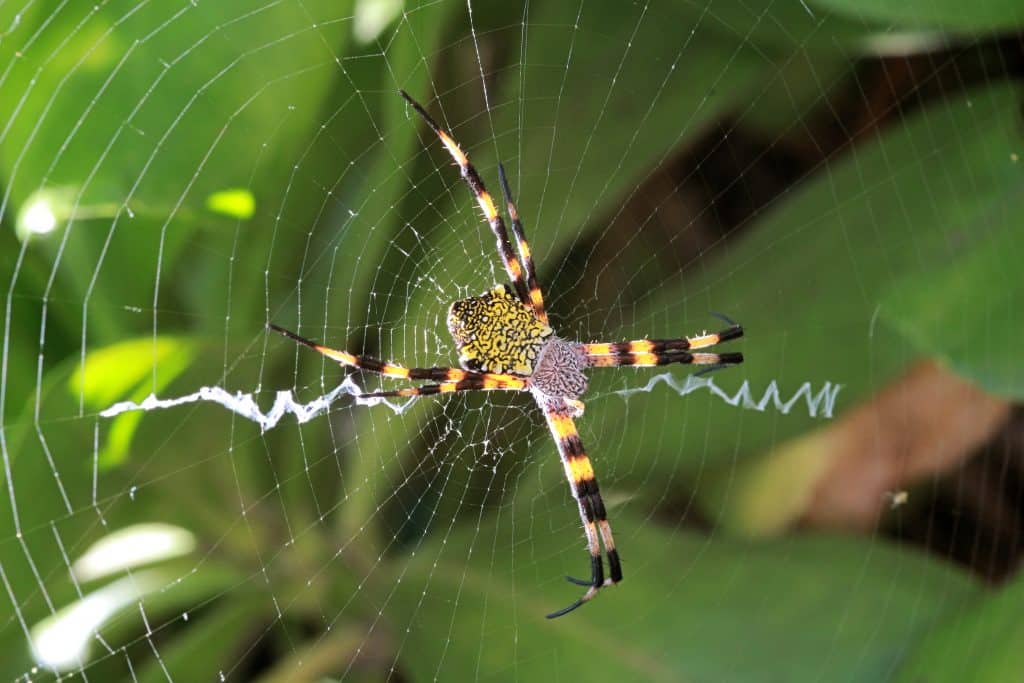
Argiope appensa spider in Kauai, Hawaii, with stabilimenta in its web.
©Paul Harrison, CC BY-SA 4.0 , via Wikimedia Commons – Original / License
Some webs have bold silk “decorations” near their hub, often forming zigzags, X shapes, crosses, or dense ribbons. These are called stabilimenta. Researchers have speculated that they may help make the web more visible to birds, preventing them from flying into and damaging the web. They might help camouflage the spider. Maybe they make the web more attractive to insects that see in ultraviolet light. Alternatively, they may assist with heat control or moisture collection.
Only a minority of spiders make stabilimenta, and even then, not on every web. They are most common in orb-weavers, such as species of Argiope and a few others, like some Cyclosa and Gasteracantha. Jumping spiders, wolf spiders, funnel weavers, and black widows do not build them. Usage varies within species as well, influenced by light, age, hunger, and context. This is why you might see a dramatic zigzag on one web and none on another nearby.
New Research Findings
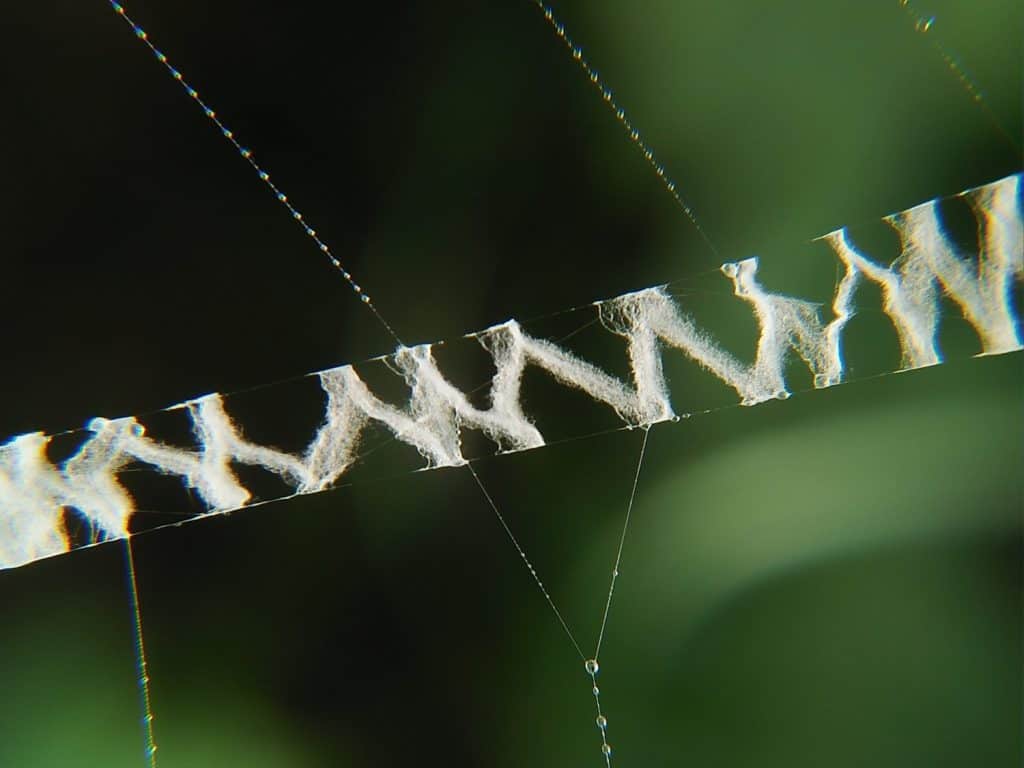
A close-up of the stabilimenta created by a female wasp spider (Argiope bruennichi)
©Muhammad Rinto/Shutterstock.com
An October 2025 report from a multinational research team gives new clarity about their function based on observation and numerical simulations. The authors studied wasp spiders, Argiope bruennichi, watching how individuals built their stabilimenta and then modeling how the added zigzags changed signal flow in the web.
Results showed that the effect depends on geometry and placement. Alignments that run with key thread directions can amplify or extend the useful signal and increase the fraction of the web that the spider can “feel,” while other orientations impose small delays that still alter how the spider samples events across the structure. Thus, stabilimenta are more than just decoration. They act as amplifiers and dampeners of vibrations from different parts of the web.
What does all this mean in practical terms? It’s as if the spider has attached more motion-detecting security cameras to its house, allowing it to be more… welcoming… to visitors.
Why This Research Matters

Robotics is one area of technology where research on spiderwebs could be applied.
©Gorodenkoff/Shutterstock.com
The recent analysis of Argiope bruennichi does two important things. First, it establishes that the zigzag patterns don’t just change what predators or prey see when they approach the web. They change how the web itself feels to the spider. Second, it shows that different ways of placing the designs produce different outcomes, such as making the web more sensitive or helping the spider feel more distant parts of it.
Understanding how this works can have applications for human technology. Lightweight, smart materials might be designed to convey signals without heavy power demands. There may be applications for fiber networks, sensitive microphones, wearable technology, and robotics that can steer the path of vibrations before they reach the processor. So stabilimenta might be a model for tunable, low-energy detection.
Where to See Stabilimenta

Some spiders on every inhabited continent create stabilimenta.
©CarloStock25/Shutterstock.com
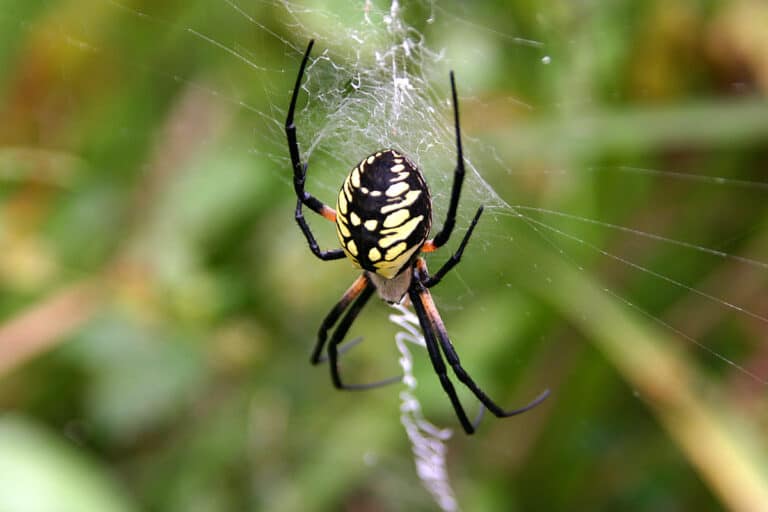
Several Argiope species are easy to spot if you know where to look. In North America, the yellow garden spider, Argiope aurantia, often places a zigzag down the hub of its web. Look for it in late summer and early fall in open fields, backyard gardens, and along fence lines. In Europe and parts of Asia, the wasp spider, Argiope bruennichi, builds stabilimenta in meadows and tall grass.
Australia hosts the Argiope species known as St Andrew’s cross spiders, which arrange silk in a cross pattern. Hawaiʻi has Argiope appensa, common on Oʻahu, Kauaʻi, and other islands, where it weaves visible stabilimenta in open, sunny spots. Similar patterns turn up in parts of Africa and South America as well. Warm, still mornings are the best time to see fresh webs sparkling with dew and decorated with a bold stripe or cross.
Threads of Connection
Spider silk ties a small animal to a complex world. Tiny signals add up to important choices. The more we understand that conversation, the better we become at listening to the natural world and at building tools that listen just as well.