
Quick Take
- Three decades of jaguar protection in the Atlantic Forest may have failed. See why protection falls short →
- Jaguars inside protected areas are faring no better than those outside, a finding that raises an uncomfortable question about what protection actually protects. Explore the protection paradox →
- A hidden threat is gutting jaguar survival from the inside out, and it has nothing to do with direct poaching. Uncover the hidden threat →
Jaguars have lived in the Atlantic Forest for hundreds of thousands of years. They are apex predators that have helped to maintain their ecosystem, keeping species of both flora and fauna in balance for generations.
While clearly an important part of the habitat, jaguar populations have declined rapidly in recent years. Conservation efforts have helped to increase numbers in and around the Atlantic Forest, thanks to protected areas. However, protected areas are now failing the jaguars, and without immediate action, these spotted felines may disappear entirely.
The Atlantic Forest Jaguar Is ‘Protected’ But Still Vulnerable
Jaguars have been protected in the Atlantic Forest for over three decades. Thanks to conservation efforts, the species—once nearly on the brink of regional extinction—has made progress in rebuilding its population.
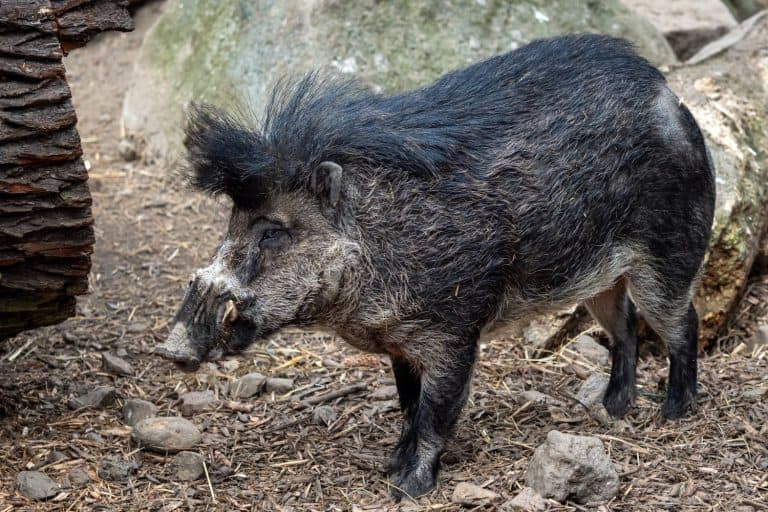
According to a new study published in Global Ecology and Conservation, this effort to save the jaguar may not be sufficient in the long term. This is because the large prey that jaguars require to survive, such as wild boar and deer, are declining. The prey has declined to the point that jaguar populations cannot be sustained by what is available. If the situation continues to worsen, jaguars’ long-term survival is not possible.
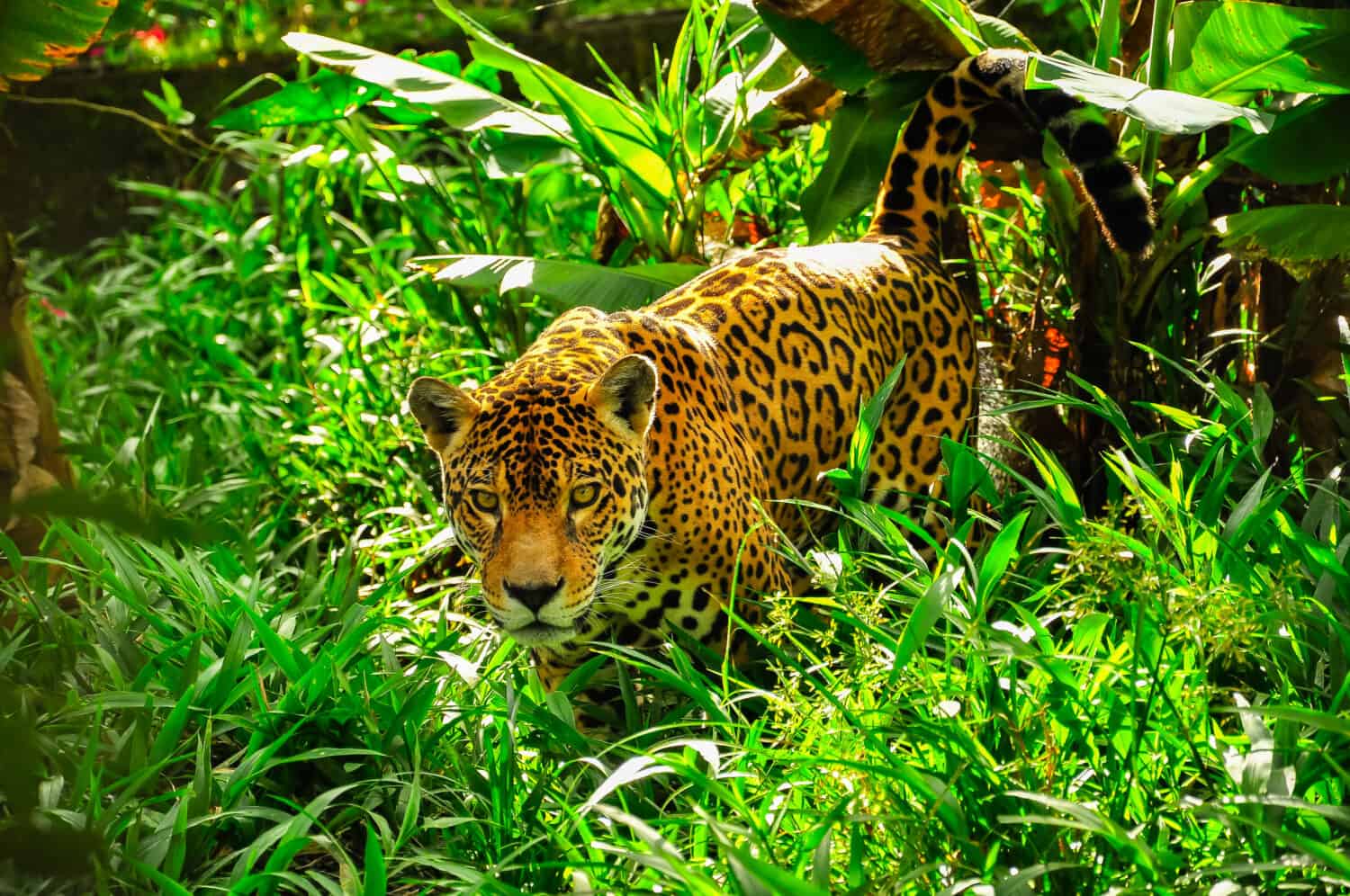
Jaguar prey is disappearing, which could contribute to regional extinction.
©miroslav chytil/Shutterstock.com
To further complicate the issue, according to Katia Ferraz, a professor at the Luiz de Queiroz School of Agriculture at the University of São Paulo, the jaguars living in protected areas are not faring any better than those that are not.
“We found an alarming situation of low abundance of key prey species for the jaguar even in protected areas of the Atlantic Forest, where national and state parks are located and where one would expect the situation in terms of the animal’s conservation to be better,” Ferraz explained to Agência FAPESP. “Most likely, the decline of these prey species is one of the main causes of the critical conservation situation facing the jaguar in this biome.”
Without enough to eat, jaguar populations will decrease, eventually reaching numbers that required conservation in the past. But without prey to rely on, the jaguars’ future is bleak.
Why Is the Jaguar’s Prey Disappearing?
Within the Atlantic Forest, there are national and state parks. These regions are protected, as are the animals that live within the parks. Therefore, it would be natural to assume that the animals in the parks would be faring well. But with the jaguars’ prey disappearing at alarming rates, no amount of conservation for the jaguars will work if they have nothing to eat.
According to the study, jaguars’ prey is less readily available than it once was because people are illegally hunting within protected areas. The more human presence there is in an area, according to Ferraz, the less prey is available to jaguars.
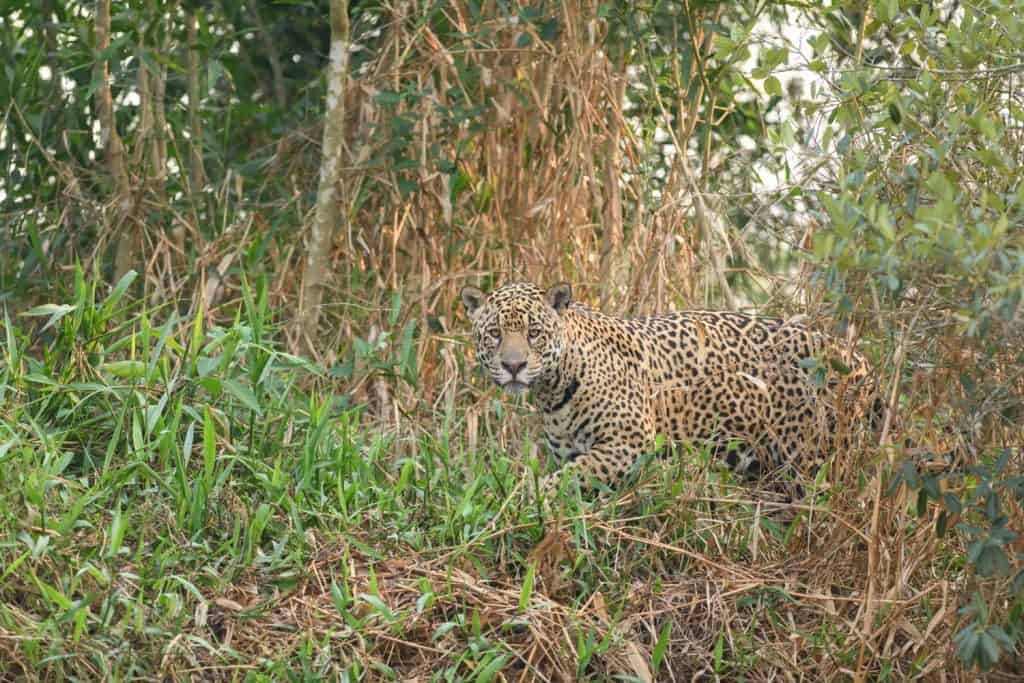
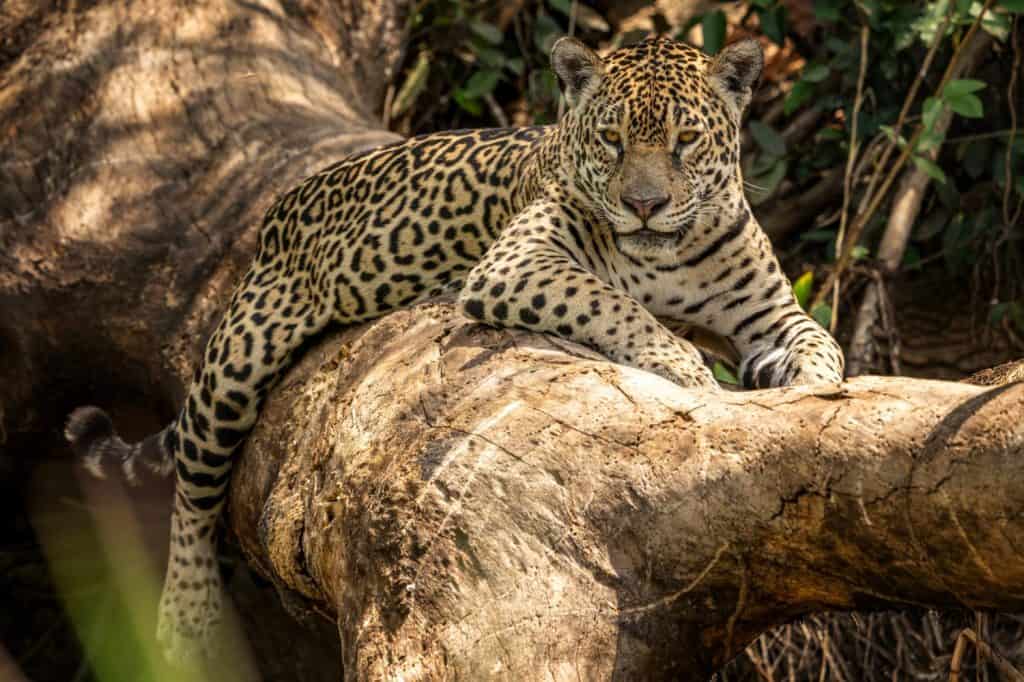
The jaguars’ prey is disappearing because it is being illegally hunted by humans.
©NaturesMomentsuk/Shutterstock.com
“We’ve observed that the low availability of prey is linked to increased human access to protected areas,” Ferraz explained to Agência FAPESP. “In areas that are more easily accessible due to factors such as terrain and proximity to villages and urban centers, prey availability is lower.”
Ferraz, who is also the first author of the study, continued, saying, “This suggests a direct link to hunting pressure. In addition to the pressure on the jaguar itself, the predator, there’s very strong pressure on prey populations, leading to the decline of the feline.”
Therefore, researchers say reducing illegal hunting of peccaries, agoutis, and deer, specifically in protected areas, is critical. If it does not, jaguars in the Atlantic Forest—and possibly throughout Brazil—could disappear permanently.
Fragmentation of the Jaguar Population Is Alarming
When a habitat is fragmented, it puts a massive strain on populations of animals that require roaming space to survive. As that space continues to decrease, species have no choice but to turn to inbreeding. This decision is one that limits genetic diversity and eventually leads to the demise of a species.
The jaguar requires large amounts of land for two reasons. The first is that each jaguar has its own territory. This typically ranges from 19 to 29 square miles for males and 9.6 to 14.7 square miles for females. While two to three females may have overlapping territories with a male jaguar, other males are either driven away or must fight to maintain their territory if they trespass.
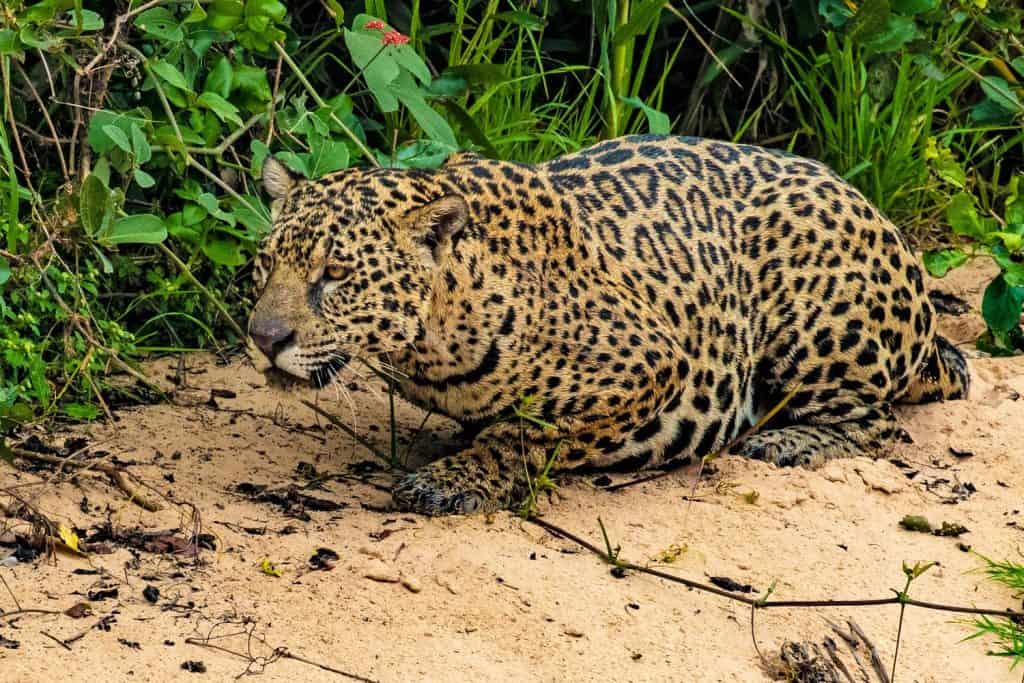
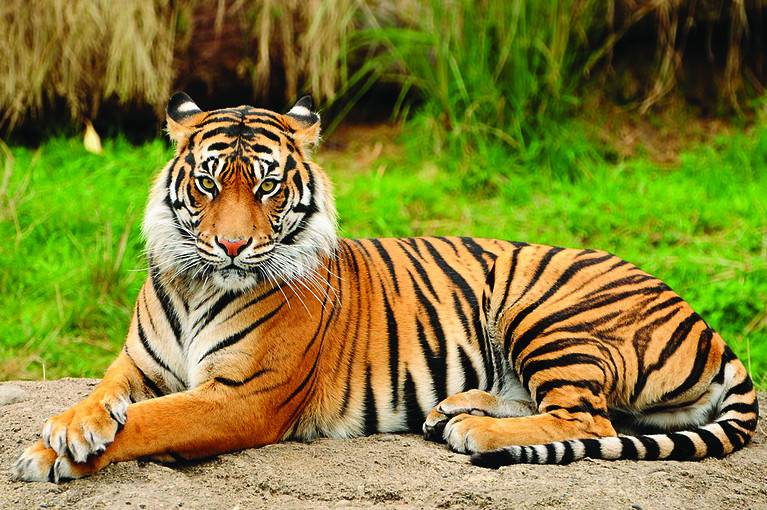
Jaguars are further being pushed to the brink of extinction by habitat fragmentation.
©Alan De Witt/Shutterstock.com
Secondly, jaguars will travel long distances to find mates. By doing this, there is insurance that genetic diversity occurs within the species. Long-distance travel also occurs when looking for food or water.
According to a 2013 study, despite the presence of protected areas, the jaguar population is highly fragmented in the Atlantic Forest. With an estimated 250 to 300 jaguars in the region, the overall population is very small. However, to put further pressure on a species already considered near-threatened by the IUCN and regionally endangered, some fragmented populations number fewer than 50, with some estimates as low as 20. These smaller populations have no choice but to interbreed. As a result, recessive traits are perpetuated through successive generations. Eventually, this will render the jaguar incapable of adapting to environmental pressures, and they will become unable to sustain viable populations
Atlantic Forest Poised to Become First Rainforest to Lose an Apex Predator
For the last few decades, the alarm has been sounded that the jaguar population in the Atlantic Forest is in trouble. What was once a population estimated at up to 800 had declined significantly by the end of the 1990s. In 2005, the Green Corridor population was estimated to have only 40 jaguars. By 2009, the population in portions of the protected area was as small as nine to 11 jaguars. It appeared that extinction was all but imminent.
Thanks to conservation efforts, the population has seen a small rebound. But now that a lack of prey has been introduced as a new problem for the jaguars, how long this rebound will hold is unclear.
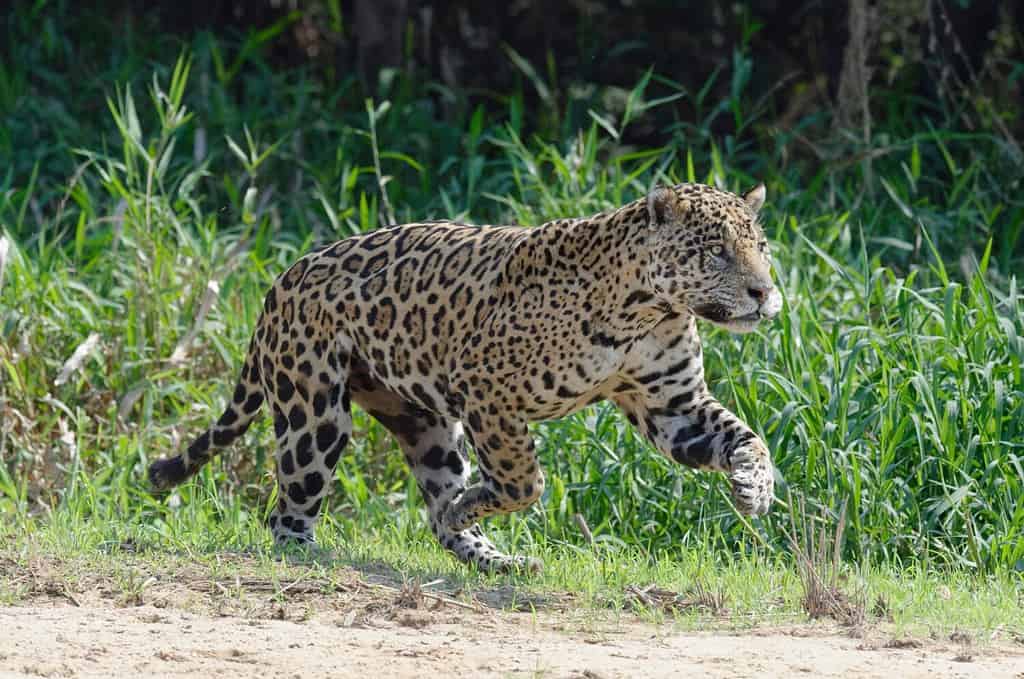
If there is not enough prey to sustain jaguars, the Atlantic Forest will become the first rainforest to lose both an apex predator and a keystone species.
©imageBROKER.com/Shutterstock.com
The study makes it very clear that if prey loss and fragmentation continue, jaguars will become extinct locally. Whether this is within five years or a decade, the loss will be seen in the near future. The Atlantic Forest will become the first rainforest to lose not only an apex predator but a keystone species. If this happens, the entire ecosystem will change. Unwanted prey populations will increase exponentially, vegetation will die off, and the ability to carry out carbon cycling effectively will decrease. This affects not only the species living within the rainforest but also the communities that rely on the Atlantic Forest.
There is only a brief window of opportunity to make changes that could improve the jaguars’ current trajectory. If prey continues to be scarce, jaguars will not survive. Those confined to smaller patches of land due to fragmentation will disappear first. The population along the Green Corridor will follow. Jaguars will leave behind a habitat that becomes a shell of its former self—incapable of sustaining life as it once did—making the entire region less healthy.