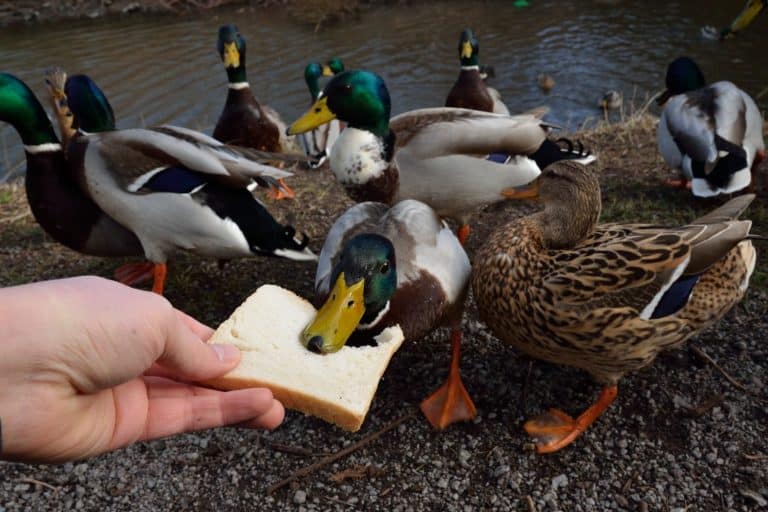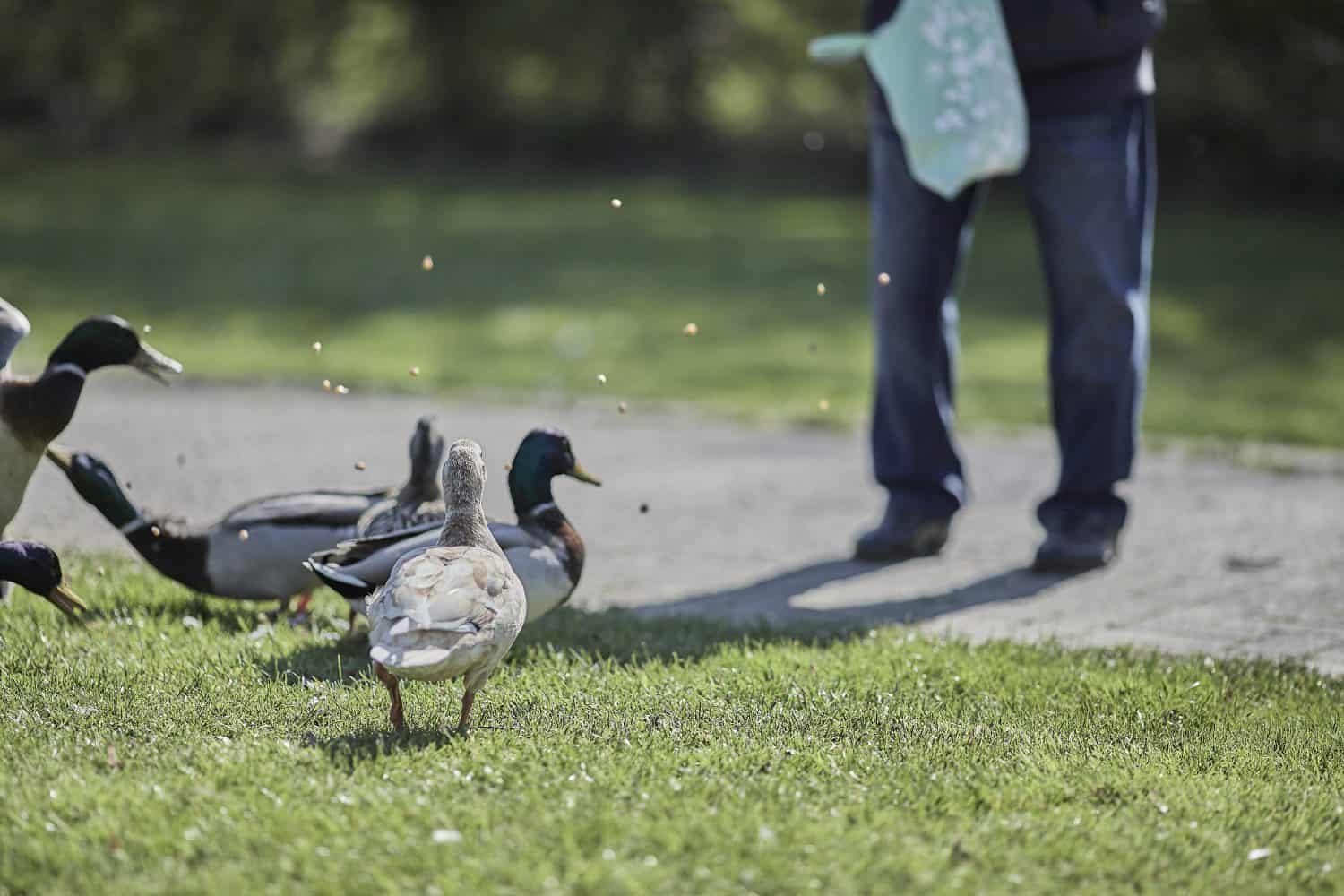

We’ve all been there: at the lake or a local park, watching an adorable flock of ducks in their natural habitat. The group begins to walk toward you, and instantly, you reach into your cooler or tote bag to see whether you have any treats to offer them. To your delight, you find some leftover bread from the loaf you purchased for your picnic. And so, you start tearing small pieces off, tossing them to the ducks for a delicious afternoon snack. By feeding them, you may think you are being kind, but you are actually causing them harm.
That’s right: feeding ducks is actually a harmful practice—something I didn’t learn about until recently. Many people assume that feeding ducks bread or crackers is a common and safe habit. I mean, we see it in all those cheesy rom-coms. However, doing so can cause a variety of health concerns.
I spoke with Dr. Kathryn Dench (MA VetMB), Chief Scientific Advisor at Paw Origins, a holistic and integrative veterinarian from Cambridge University, and a member of the Royal College of Veterinary Surgeons, about the dangers of feeding ducks. Here’s what she had to share.
Feeding wild ducks disrupts their natural foraging instincts, draws them into unnatural group sizes, and increases disease risk.
Dr. Kathryn Dench (MA VetMB), Chief Scientific Advisor at Paw Origins
Is It Safe to Feed Ducks?
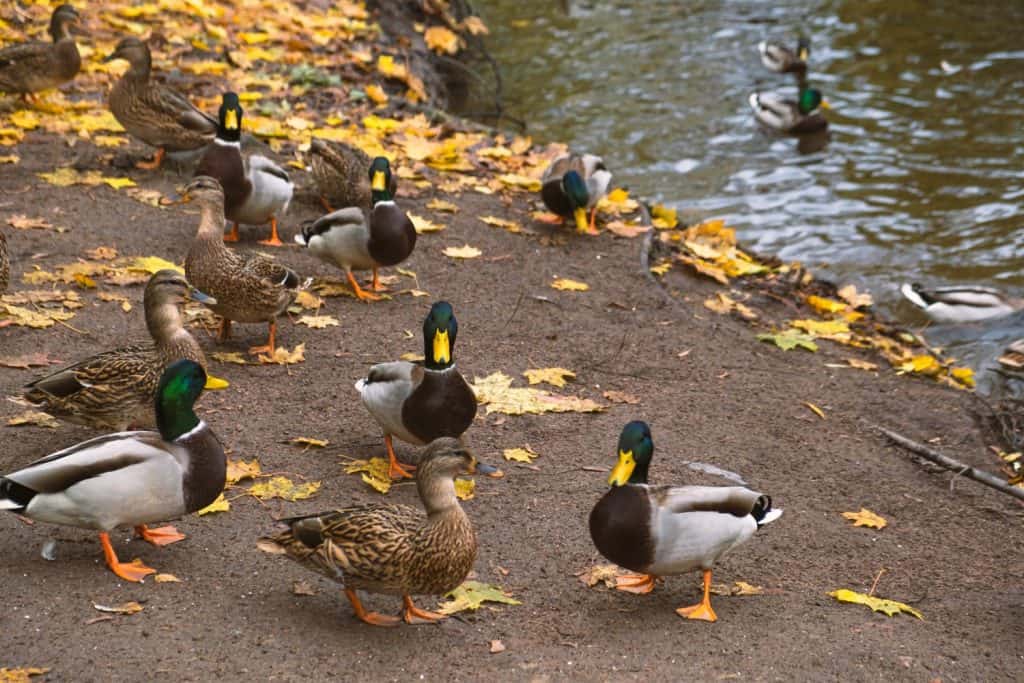
Ducks are social animals, but they can get skittish around humans.
©Nataliia Chubakova/Shutterstock.com
In short, it’s generally not safe to feed ducks. While a stray cracker or small piece of bread likely won’t hurt them, there are some major health risks involved.
“Feeding wild ducks disrupts their natural foraging instincts, draws them into unnatural group sizes, and increases disease risk,” says Dench. “In wildlife centers, I’ve seen that overcrowding alone can accelerate the spread of parasites and bacterial infections by several-fold.”
Dench adds that feeding ducks often makes them dependent on humans for survival. According to Dench, these ducks might even start to “lose their instinctive wariness of predators and traffic—one of the most common causes of duckling mortality in urban areas.”
“There’s also the environmental impact: uneaten food decays quickly in ponds, driving algae overgrowth,” she continues. “This reduces oxygen levels in the water and harms fish, amphibians, and even the ducks themselves.”
So, feeding ducks is not only harmful to the birds themselves, but also to the environment and other animals.
Is Bread Bad for Ducks?
Many well-intentioned animal lovers bring bread to the park to feed the ducks, believing they’re offering a nice treat. However, while bread isn’t necessarily dangerous for ducks, it isn’t healthy either.
“Bread is essentially ’empty calories’ for ducks—filling but nutritionally poor,” says Dench. “In wildlife rehab, we routinely see waterfowl with stunted growth, poor feather quality, or joint deformities after prolonged consumption of carbohydrate-heavy, nutrient-light diets.”
One specific risk of overfeeding ducks bread is a condition called angel wing. This occurs when a duck’s developing wing joints begin to twist outward.
“It’s strongly linked to diets high in simple carbs and low in essential vitamins and minerals,” says Dench. “In my experience, roughly half the juvenile waterfowl brought in with deformities have been fed bread regularly.”
Additionally, as mentioned earlier, there are environmental risks associated with feeding ducks.
“Bread also encourages unhealthy crowding around feeding spots, accelerates water pollution, and attracts rodents,” says Dench.
Safe Food for Ducks
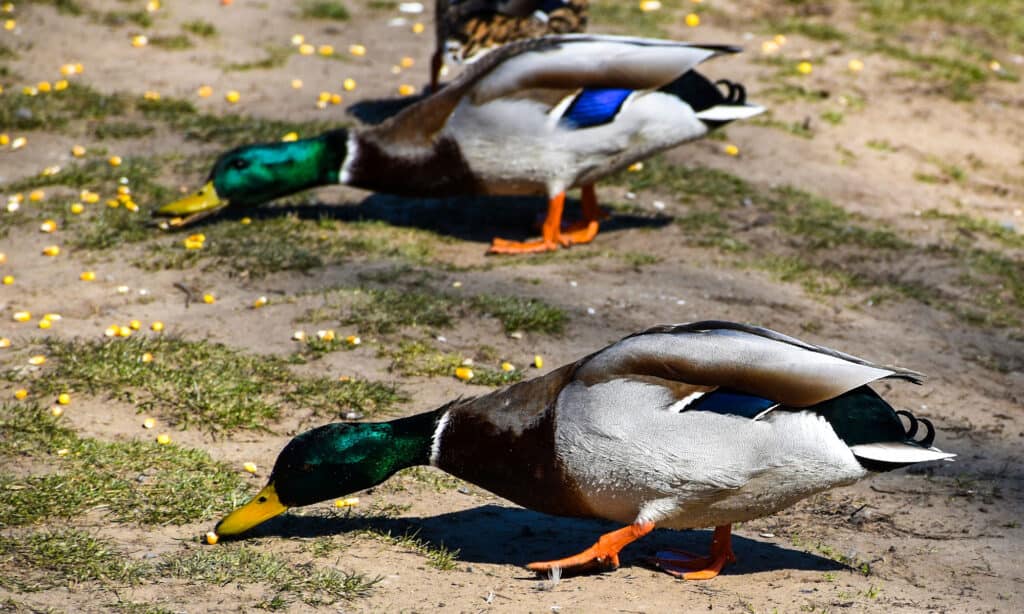
Corn can make a great treat for ducks—but only in moderation.
©Laszlo66/Shutterstock.com
In summary, although feeding ducks may seem like a kind gesture, it is best to avoid it altogether. However, if you absolutely insist on feeding them, at least opt for healthier options. Dench recommends offering nutritionally appropriate items such as chopped leafy greens (lettuce, kale, spinach), peas or corn (defrosted, never salted), oats or barley flakes, or duck-safe pellets formulated for waterfowl.
“The key is small portions, scattered widely, to avoid crowding and prevent ducks from associating humans with unlimited food,” she says. “Even ‘safe’ foods cause problems when offered excessively.”
What Is a Duck’s Natural Diet?
According to Dench, ducks are natural foragers, meaning they scour their environment for available food sources. In other words, while ducks might appear excited when you toss them bread, you are actually doing more harm than good by feeding them.
“This variety gives them the protein, micronutrients, omega-3s, and minerals required for healthy growth and feather development,” Dench explains. “Human-provided snacks—especially processed foods—simply can’t replicate that balance.”
In other words, while ducks might appear excited when you toss them bread, you are actually doing more harm than good by feeding them.
“In wildlife practice, we always prioritize restoring natural behaviors and natural diets,” Dench continues. “Ducks thrive when they forage, dabble, and graze as they were designed to—not when they queue for bread.”