
What can you do if you feel peckish when you’re having a nap and can’t be bothered to get up to eat? Have a snack on your own poop! Or, at least, that is an option if you are a hamster. In this hilarious Instagram post, you see a snoozy hamster lying on their back, tilting up their rear end, and eating some poop that they have just produced. The hamster doesn’t even bother to open its eyes fully. Read on to find out if this is normal behavior!
Do Hamsters Normally Eat Poop?
Yes, this is perfectly normal behavior for hamsters. It even has a scientific name, which is coprophagy, and animals that show this behavior are said to be coprophagic. The word comes from a Greek word that means ‘to eat dung’. It is not just seen in hamsters but is common in other rodent animals, including rabbits, mice, and guinea pigs.
This behavior effectively allows the animal to digest its food twice. However, the poop the hamster eats isn’t just any waste—it’s a special type called cecotropes. Cecotropes are composed of food, especially fiber, that has been retained in a pouch-like structure in the intestines. In the hamster’s cecum, bacteria break down undigested food into nutrients such as sugars and amino acids. These nutrients form a special kind of soft poop, which the hamster eats directly from the anus and rarely chews.
What Are the Benefits of Eating Cecotropes?
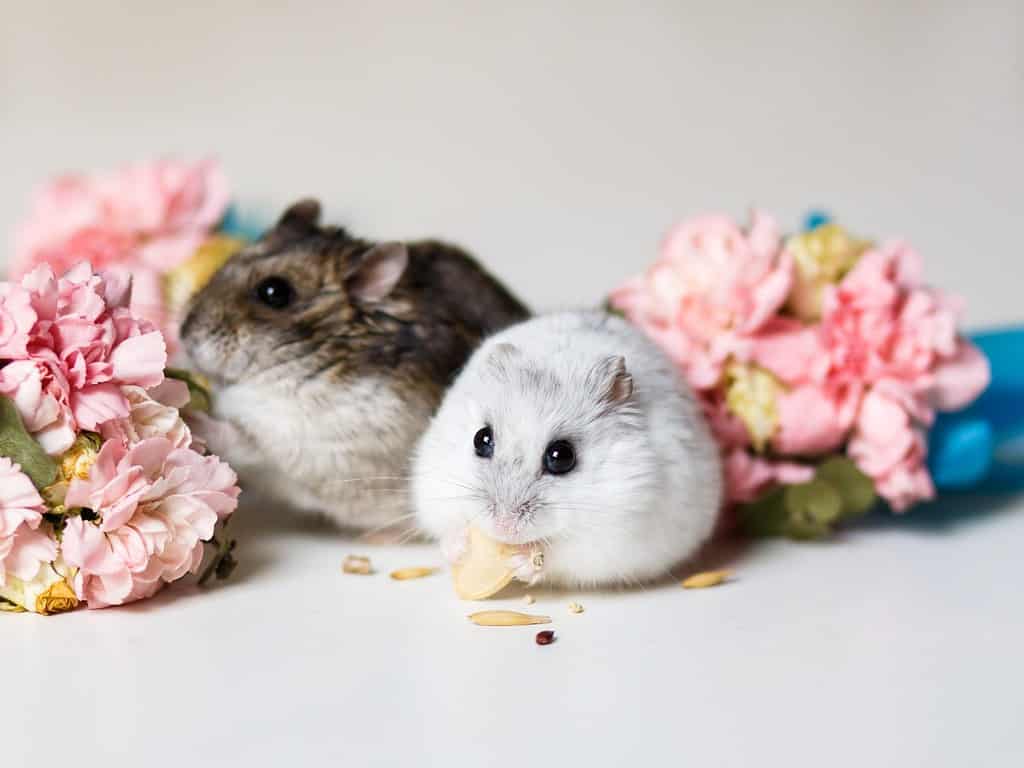
Hamsters benefit from eating their poop.
©Daria_Cherry/Shutterstock.com
Cecotropes are rich in volatile fatty acids, B vitamins, vitamin K, microbial proteins, amino acids, and minerals. For herbivores like hamsters, whose diets are low in nutrients but high in fiber, this process allows them to extract the nutrients they need from their food. By eating cecotropes, hamsters recover nutrients that were released in the hindgut and could not be absorbed during the first digestion. However, studies have also shown that this behavior helps the animal to retain gut microbes by re-circulating them.
Coprophagy is observed more frequently during pregnancy and when females are nursing their young, as their nutritional needs are higher during these times. Even though commercial hamster diets are formulated to provide adequate nutrition, coprophagy remains essential for hamsters to obtain certain nutrients, such as B vitamins and biotin, which are produced in their hindgut and are only accessible through this behavior. Therefore, pet hamsters still need to engage in coprophagy for optimal health.