
Quick Take
- Researchers built an actual 46-question test to measure your cat's psychopathic traits, and the results say more about evolution than bad behavior. See the 46-question test →
- A high 'psychopathy' score on this test isn't the red flag you'd expect, and it might actually mean something completely different about your cat. Find out what scores mean →
- The traits that make some cats hardest to live with could also be the reason their wild ancestors survived, and understanding that connection changes how you should respond. Explore the evolutionary link →
- Misreading your cat's personality doesn't just cause frustration. Researchers say it carries a far more serious consequence most owners never consider. See the welfare consequences →
Cat owners are used to mystery. From sudden sprints across the living room to the unpredictable moods and out-of-nowhere cuddles, our feline companions often leave us wondering, what is really going on inside their heads?
Continue reading
The latest curiosity: is your cat just quirky, or is there a touch of psychopath hiding under that fur? Researchers at the University of Liverpool decided to find out.
A Scientific Look at Feline Personality
The Liverpool team launched their investigation with scale. More than 2,000 cat owners participated, sharing detailed observations about their pets. To deepen their research, they also arranged direct observations of 30 cats, comparing what owners reported with professional behavioral notes.
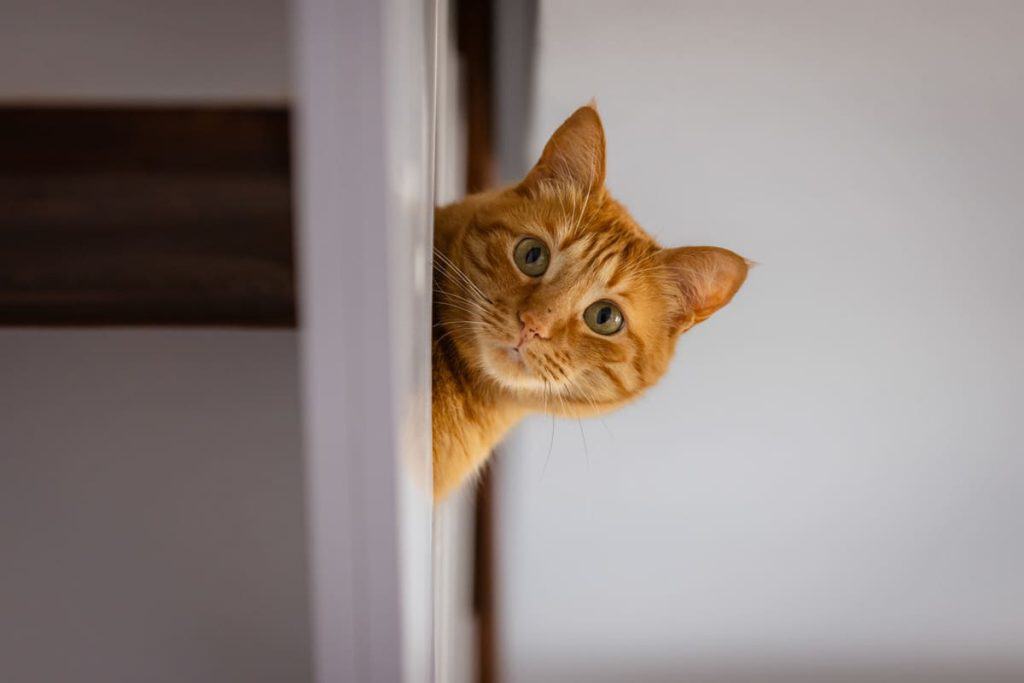
Your cat knows exactly where you are in the house without ever seeing you
©iStock.com/Berk Ucak
Combining these insights, the researchers crafted a new assessment tool: the CAT-Tri+ questionnaire. This online survey includes 46 statements about feline behavior. Cat guardians rate each from 1 (“not at all true”) to 5 (“extremely true”) for their own pet.
Among the things the CAT-Tri+ measures: Does your cat relish exploring risky places? Break house rules? Show aggression toward other cats? Avoid affection? The responses are sorted into five main dimensions, each reflecting different traits often discussed in human psychology.
Why Scientists Use the Word “Psychopathy”
The scientists are clear: this isn’t a diagnosis. Cats can’t be “psychopaths” in the way humans understand the word. The model borrows terms from psychological research to decode feline quirks, not to pathologize or judge them.
According to the official protocol, detailed in the Journal of Research in Personality, the CAT-Tri+ reveals that these so-called “psychopathic traits” may actually be inherited behaviors from cats’ wild ancestors. Evolutionary psychology offers context: boldness helped cats explore, hunt, and defend territory. Disinhibition was key for reacting swiftly to threats. Traits that might alarm us now were once vital for survival.
©ChocoPie/Shutterstock.com
What the Scores Really Mean
A high score on the CAT-Tri+ isn’t a red flag. These cats aren’t “bad.” More often, they are holding onto instincts, habits that made their ancestors successful, but can be tricky in a modern living room.
Still, a cat with a lot of boldness or strong antagonism can challenge their human companions. Too much disinhibition, for example, might test household routines, but it can also signal a more intense bond with their owner.
Learning to Understand Our Cats (and Ourselves)
Understanding these personality traits better isn’t just interesting, it could improve the lives of both cats and the people who love them. Researchers believe that recognizing and adapting to a cat’s personality can reduce misunderstandings, ease frustration, and decrease the risk of abandonment or euthanasia over behavioral issues.
The story behind this work shines a light on how much humans crave to understand the animals who share our lives. Every study like this is less about labeling and more about bridging the gap between species, so we can offer our cats the environment and respect they need to thrive.