
Quick Take
- A parasite carried by cats shows the opposite trend from cat ownership, which changes what the happiness link actually means. See the Toxoplasma trend →
- Researchers stripped wealth out of the model, and the next strongest predictor that emerged is genuinely unexpected. See what wealth removal revealed →
- One major country breaks the pattern entirely, and it hints at how many other forces the study can't explain.
- The researchers are blunt about what their numbers cannot prove, and the real explanation may run in the opposite direction. See the causation caveat →
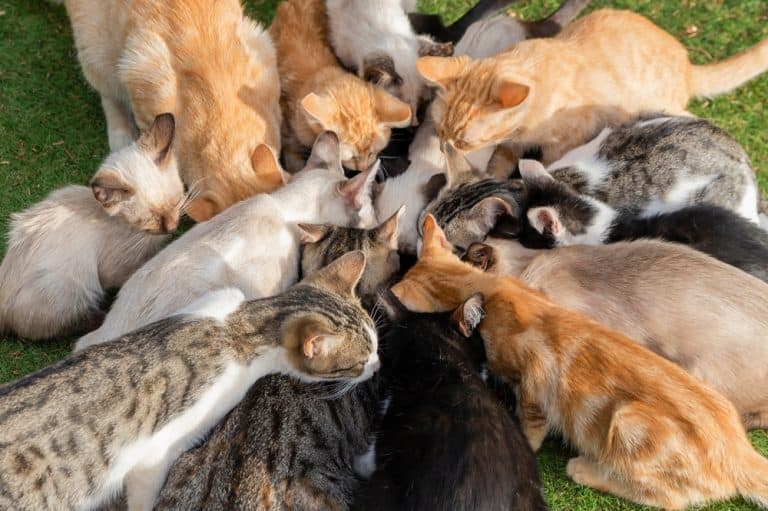
Countries with more pet cats per person tend to report higher happiness, according to a study of 93 nations published in PLOS One. The same study found the opposite pattern for Toxoplasma gondii, a parasite spread mainly through cat feces and undercooked meat that infects as many as 1 in 3 people worldwide: nations with higher infection rates reported lower happiness. The researchers are careful to say the link is a correlation, not proof that cats themselves are making anyone happier.
What The Study Actually Measured
The paper, led by biologist Javier Borráz-León of Mexico’s National Institute of Psychiatry along with coauthors from Finland and Latvia, compared national happiness scores against cat ownership rates, Toxoplasma infection rates, wealth and health spending across the 93 countries. Cat density varied enormously from one nation to the next, ranging from roughly 67 to more than 3,200 cats per 10,000 residents, with an average of about 990. When the researchers combined cat density, national wealth, health spending and infection measures into a single model, those factors together accounted for 47 percent of the variation in happiness between countries, according to the study.
Money Still Mattered More Than Cats
Even the researchers behind the finding pointed out that national income and GDP per capita correlated with happiness more strongly than cat ownership did. Once wealth was stripped out of the model, cat density and recent Toxoplasma infection emerged as the strongest remaining predictors of how happy a country reported being. The pattern wasn’t universal. China, for instance, reported relatively high happiness despite having comparatively few cats per capita, ScienceAlert reported, a reminder that plenty of other forces are shaping how satisfied people say they are with their lives. Health spending per country also factored into the model, since nations that spend more on healthcare tend to both treat parasitic infections more effectively and have higher disposable income left over for pets.
An Association, Not A Cause
The study’s authors were blunt about what their numbers can and can’t show. “These are associations at the country level, so we cannot say that having more cats makes people happier,” the researchers said, adding that the patterns “deserve further investigation.” Because the data compares countries rather than individuals, it can’t rule out the possibility that the relationship runs in the opposite direction, or that something else entirely is driving both trends. Wealthier nations, for example, may simply be better equipped to support pet ownership and control parasitic infections at the same time, which would make both cats and lower Toxoplasma rates symptoms of national prosperity rather than causes of happiness on their own.
Toxoplasma gondii itself has a long and strange relationship with cats. The parasite needs a feline host to complete its life cycle, and some research has linked chronic infection in humans to subtle changes in mood and risk-taking behavior, though the science on how much that affects day-to-day wellbeing remains unsettled, Sci.News noted in its coverage of the paper. People can pick up the parasite by handling litter boxes, gardening in contaminated soil, or eating undercooked meat, which helps explain why infection rates vary so widely between countries with different sanitation and food-safety standards. For now, the safest conclusion is the one the researchers themselves drew: cats and happiness travel together across the world’s nations, but nobody has shown that one causes the other.