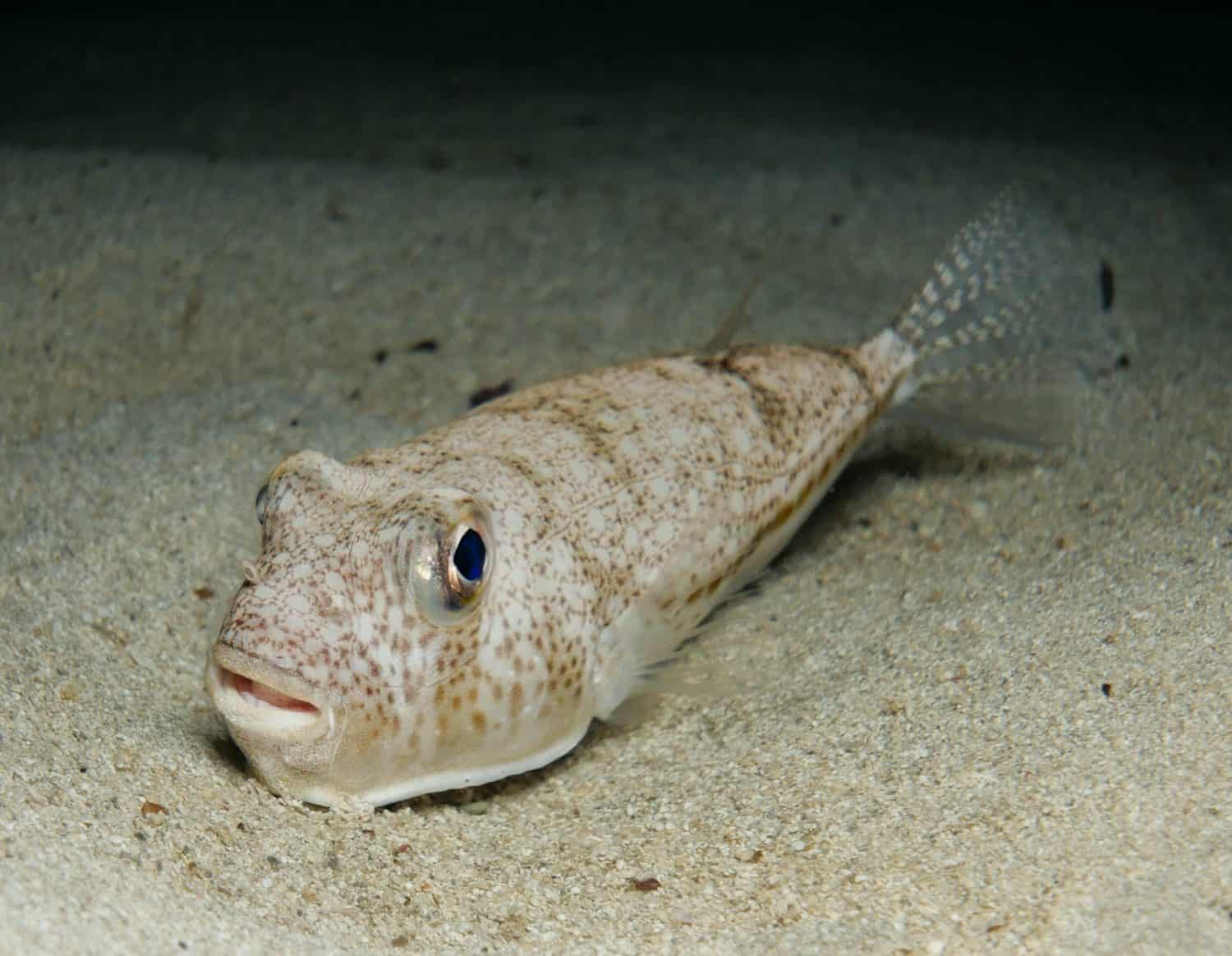

Have you ever wandered along a beach and marveled at the gorgeous sand sculptures made by local artists? All of that effort, only for them to be destroyed when the tide comes in or the wind picks up. Perhaps that is what makes them so magical. If you are a fan of sand sculptures, you will love this amazing YouTube clip. It shows that the real artists are further out to sea, under the water. They are called pufferfish.
New Discovery Under the Water
During the 1990s, native divers exploring the seabed around Amami Oshima Island in southwest Japan came across a remarkable sight. The sand had been arranged into strange patterns, very like crop circles. They were around 6.5 feet in diameter and consisted of two distinct features: an outer ring made up of deep, radially arranged ditches, and a shallow, maze-like ditch in the center. What could they be, and who or what was making them?
New Species of Pufferfish
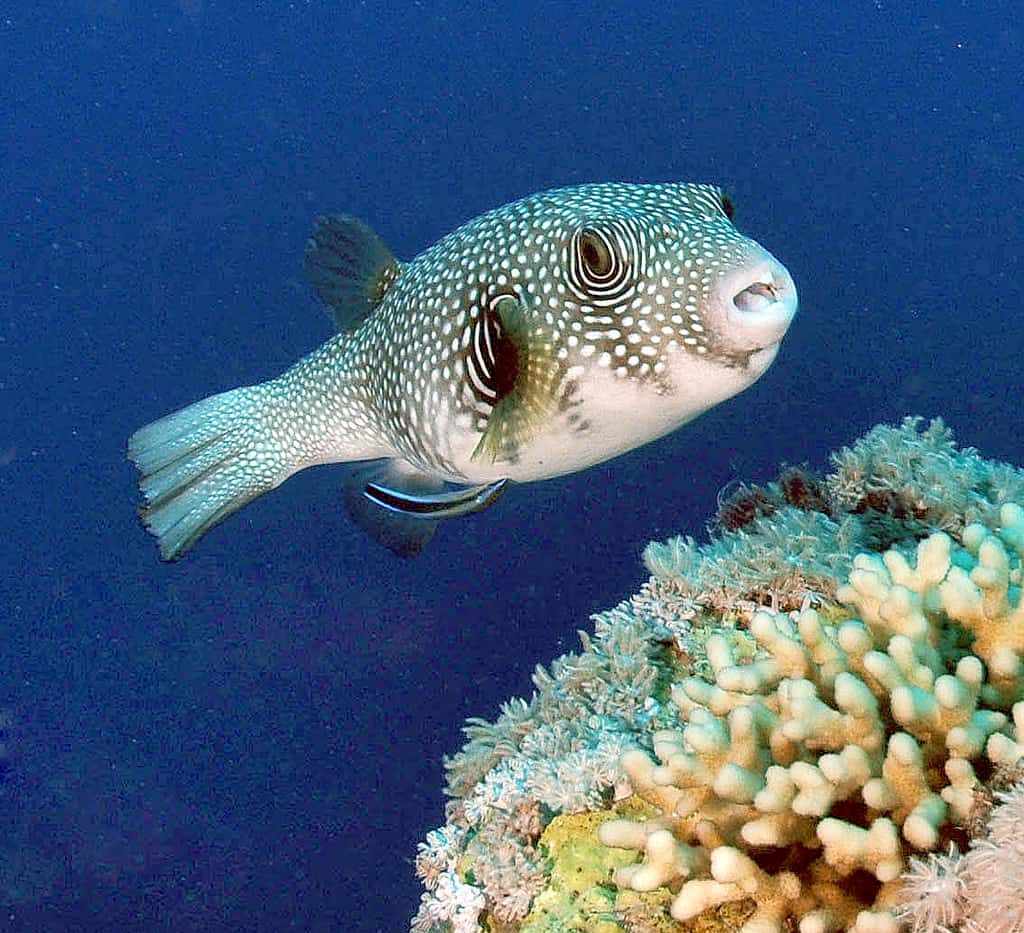
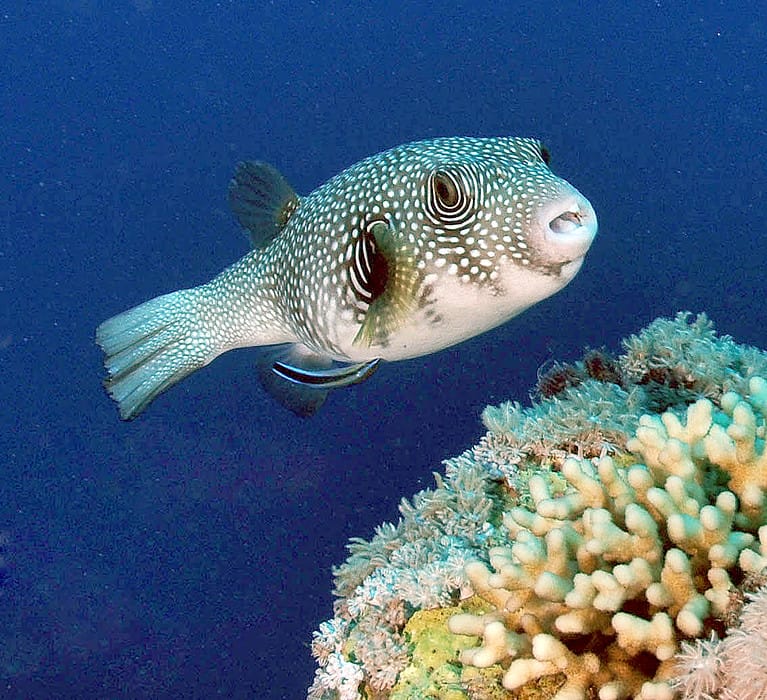
The white-spotted pufferfish is a native species of Japan.
By 2014, Japanese scientists had found that these structures were actually the elaborate nests of a local species of pufferfish called the white-spotted pufferfish (Torquigener albomaculosus). This species was formally described for the first time in 2014, after its unique nest-building behavior was observed, and it quickly became the subject of much scientific attention.
They live in waters around the Ryukyu Islands in Japan at depths of between 33 and 89 feet. At first glance, they are unremarkable little fish that barely reach four inches in length. Their head and body are brown with white spots on the back, and their abdomen is silvery-white with white spots. But when it comes to finding a mate, the males do something incredible.
Underwater Artists
Male white-spotted pufferfish build an intricate nest structure on the sea bed to attract a female. The nest has a geometric design and is beautiful to look at. For such a small fish, this is a huge undertaking. To begin the design, he makes a mark by pushing his belly into the sand in the central region of the nest. Then, he repeatedly excavates the sand with his fins and body, making hundreds or even thousands of radial ditches to create an outer ring.
During the entire project, he stays close to the sea floor. This suggests that he is following some kind of internal or environmental signal, rather than viewing the entire nest from above to orient himself. Interestingly, he does not complete the inner or outer portion first. He works on them both at the same time. Once the early radial ditches are formed, the pufferfish uses them to determine the direction of excavation.
Scientists have also discovered that pufferfish with wider bodies produce a smaller number of ditches in their nests, according to a study published in Nature (2018). This suggests that the physical traits of pufferfish may influence the geometric pattern of the nest. It also raises the possibility that the female fish may be able to gauge the body size of the male who made it from his nest pattern. This may help her to decide if she wants to choose him as her mate or not.