
Quick Take
- A fish barely the size of your hand builds a structure that dwarfs it by a factor most engineers would envy, and the real puzzle is why females care so much about the design. See how males build →
- The nest isn't just eye candy. It performs a hidden physical function that scientists didn't expect to find. Discover the hidden function →
- One finishing touch on the nest determines whether all that effort pays off or gets rejected entirely. See what females evaluate →
- The male races a ticking clock to finish the nest, and losing that race means starting over from scratch. See the seven-day race →
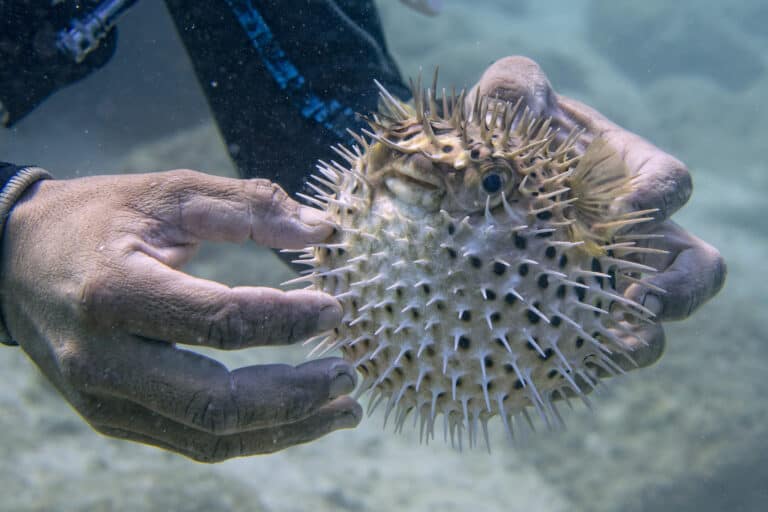
Did you know that pufferfish are quite the aquatic artists? As part of their mating ritual, male pufferfish construct beautiful, elaborate sand mounds to impress potential mates. But how do they make these mounds in the first place? This YouTube video by Nature on PBS shows the incredible process.
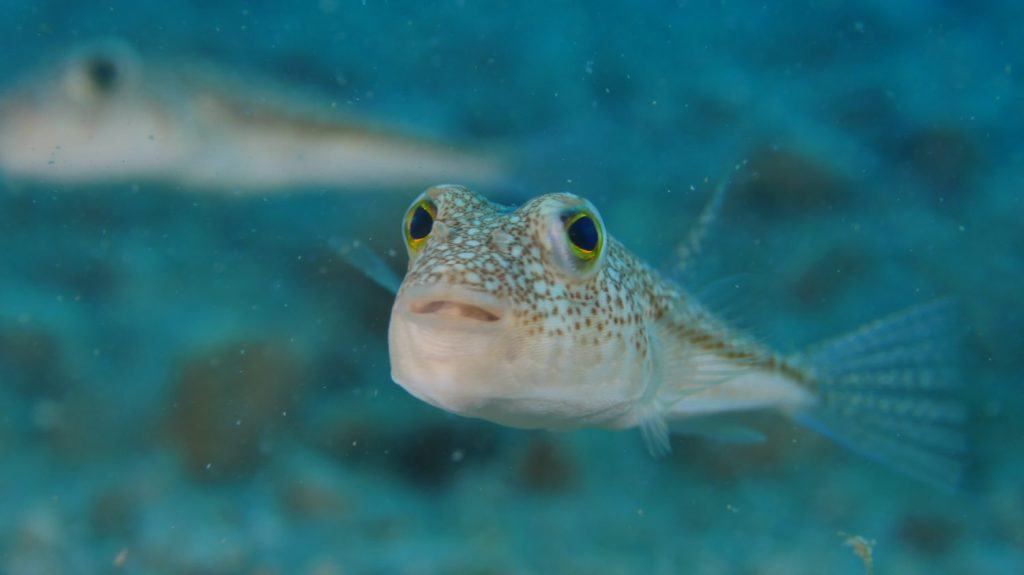
Pufferfish sand mounds are made by males to attract female mates in the breeding season.
©scubadesign/Shutterstock.com
Pufferfish Sand Mounds
In the video above, a male Japanese pufferfish makes an elaborate sand mound. What looks like an underwater crop circle is actually a mating nest. Interestingly, when divers first began finding these mounds, they were often confused about what they were and who was making them. Over time, the culprits were identified. The main purpose of the nests is to impress females. The nests aren’t just decorative; they also signal the physical fitness of the builder. Males create the structures during the breeding season, and females judge the characteristics of the nest to decide whether the particular male is worth mating with. One of the most impressive parts of the process is the size difference between the builder and the finished mound. Male pufferfish often grow to about four inches, while the mounds can be six feet across!
When female pufferfish visit a mound, they look for a few key characteristics. This includes size, symmetry, complexity of pattern, decorations, and the amount of sand used. The construction process can be difficult for the males. The fish has to repeatedly swim through the sand and use its body and fins to carve out a pattern. They may also even carry sand in their mouths. Although the duration varies by individual, it can take approximately seven to nine days to complete a single structure. If the male impresses the female enough, the pair spawn at the center of the artwork. After this, the female will leave, and the male will nest and guard the eggs.