
Quick Take
- Burmese pythons have done something to Florida's native mammal populations that most people wouldn't believe is even possible in a single ecosystem. See the ecological damage →
- The python problem is far larger than the state originally admitted, and the gap between early estimates and current reality is staggering. Read the population numbers →
- One rule about how hunters must eliminate pythons surprises nearly everyone who assumes this is a straightforward outdoor competition. See the elimination rules →
Nothing says Florida quite like a state agency-sponsored event where participants can win $10,000 in cash by hunting and capturing invasive pythons slithering through the Everglades. And while the event is a fun, if high-stakes, competition, it is also serving a very important purpose: protecting one of the state’s most vulnerable habitats from destruction.
Though the actual event is a month away, competition already looks fierce, especially considering last year’s turnout and results. The 2025 Florida Python Challenge™ resulted in the removal of a record 294 invasive Burmese pythons from the Everglades. With 934 people from a combined 30 states (as well as Canada), the challenge ultimately saw a record 294 Burmese pythons removed, contributing to the over 1,400 nonnative constrictors removed across all Florida Python Challenge events to date. As such, let’s learn more about this year’s competition, what state agencies are involved, and the steps you can take to enter the challenge yourself.
Python Destruction
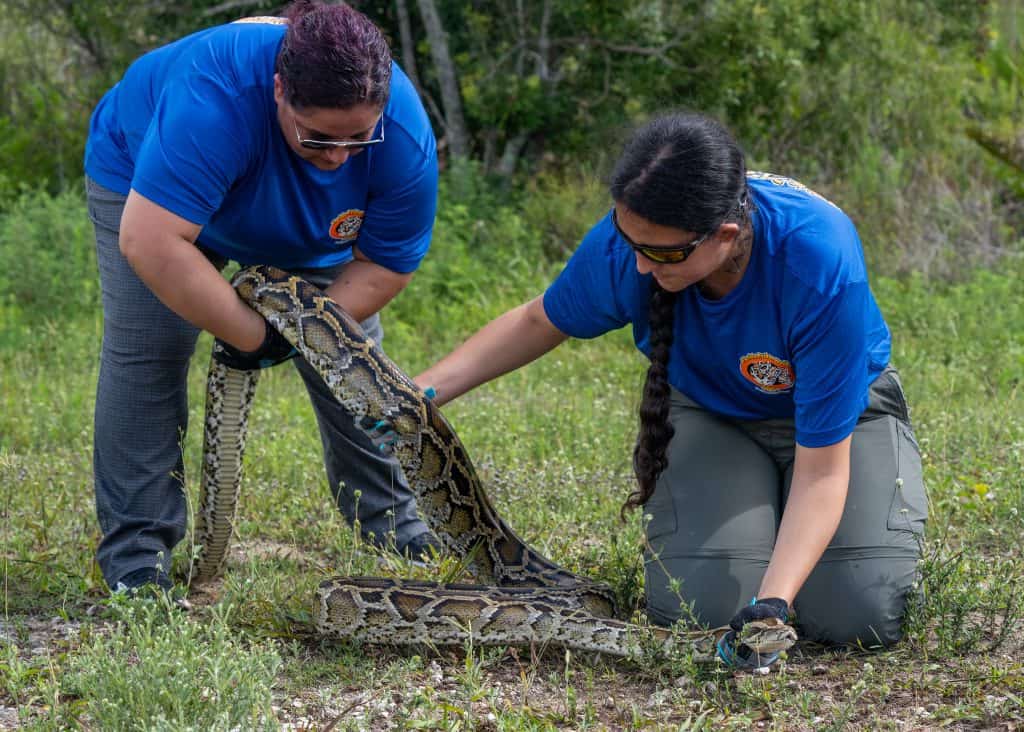
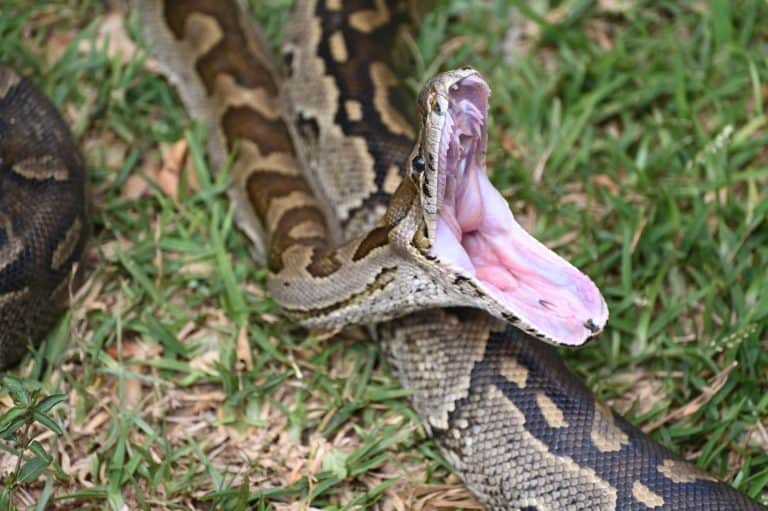
Invasive Burmese pythons have caused untold destruction across the state of Florida.
©Courtesy of the South Florida Water Management District – Original
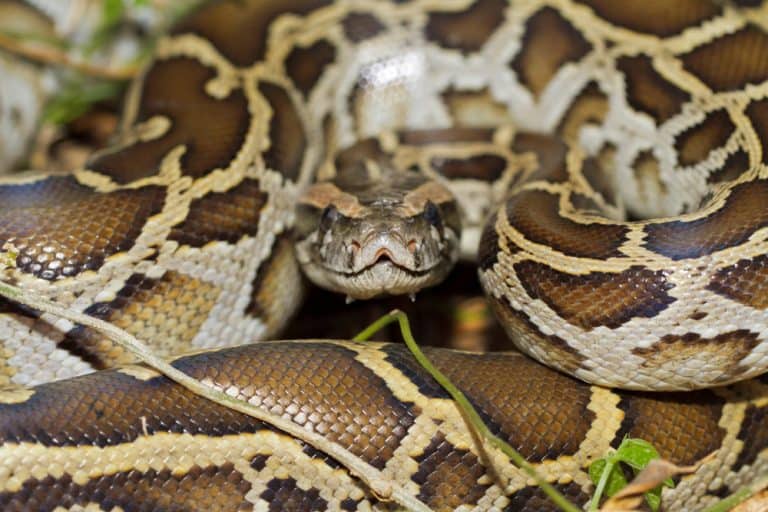
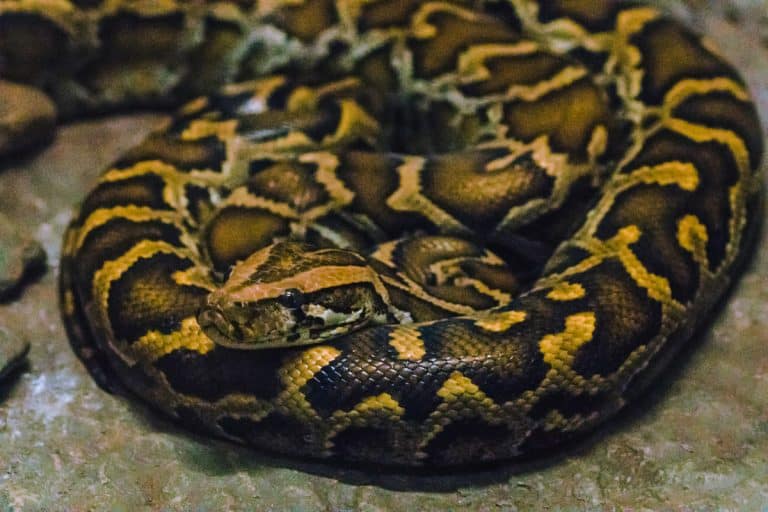
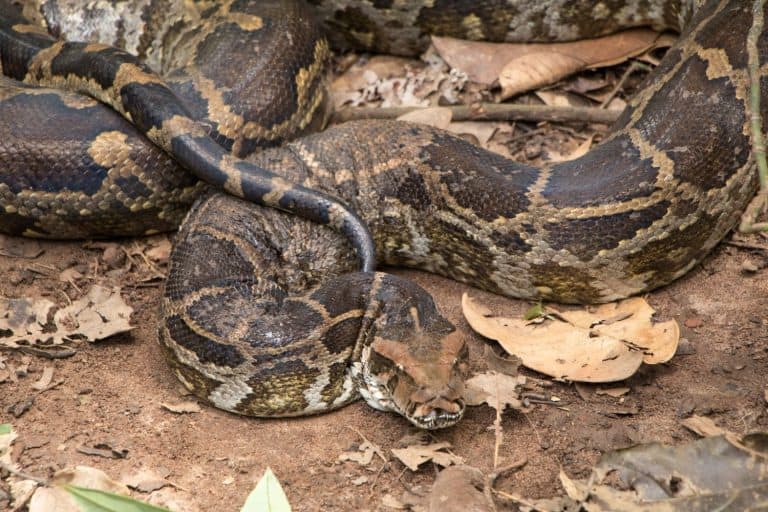
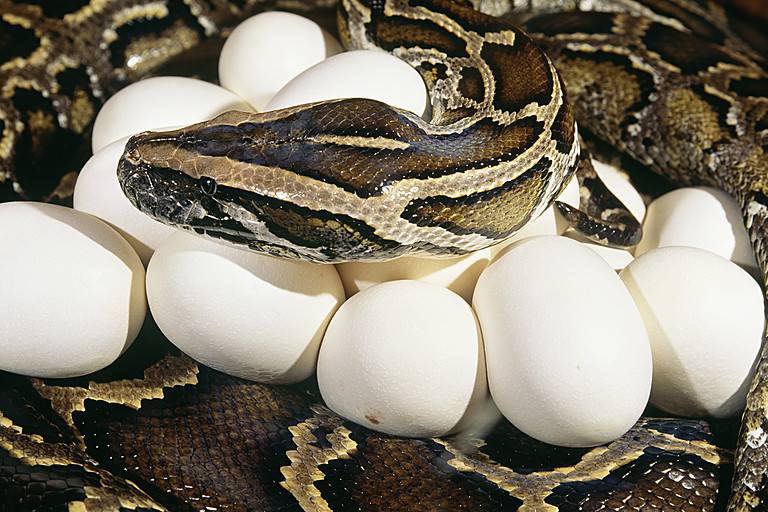
Burmese pythons may be native to Southeast Asia, but they have made a home of Florida’s wetlands in the last century, much to the frustration of native flora and fauna. They were first seen in the state between the 1980s and 1990s but not officially recognized as a reproducing population until 2000. Since then, however, python numbers have exploded; the state recorded over 30,000 sightings just between 2008 and 2010. Some estimates put their current population in just the Everglades at over 300,000.
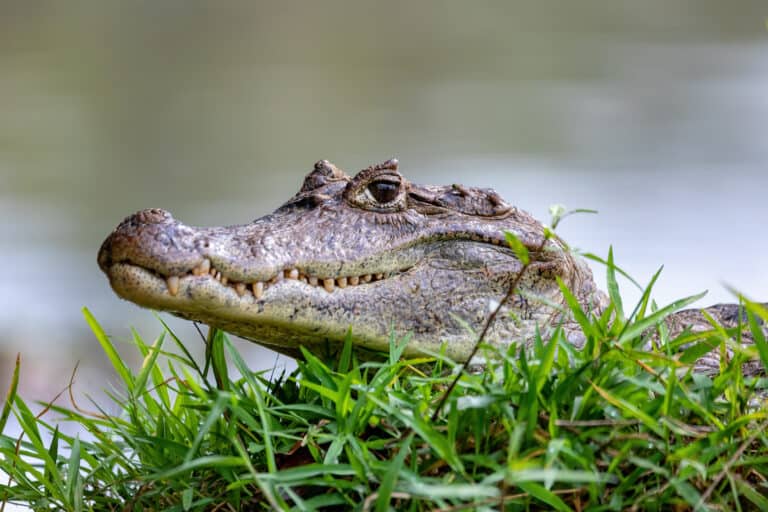
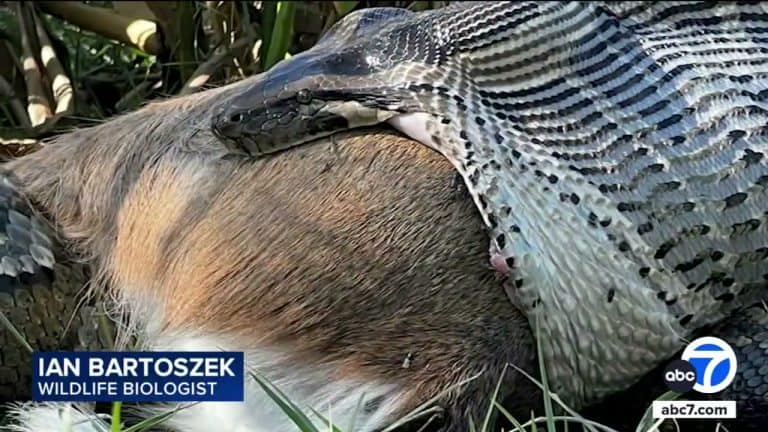
Burmese pythons prey on native species, compete with native species for food, and change Florida’s habitats considerably. These powerful snakes even go so far as to predate American alligators. Pythons have significantly reduced mammalian populations across the state. In the Everglades alone, they have made a dangerous dent in native wildlife. A study found that road surveys totaling “56,971 km from 2003–2011 documented a 99.3% decrease in the frequency of raccoon observations, decreases of 98.9% and 87.5% for opossum and bobcat observations, respectively, and failed to detect rabbits.” These surveys also found that the same mammalian species were more abundant in areas without pythons.
Whatever the exact number or level of destruction, Burmese pythons need to be stopped from overrunning the state completely. Fortunately, agencies have sponsored events like the Florida Python Challenge™ to protect native species and ecosystems.
2025 Challenge
After last year’s impressive results, the 2026 Florida Python Challenge™ will feature a share of $25,000 in prizes for removing invasive pythons. The Ultimate Grand Prize will be $10,000 to the hunter who can remove the most. The Florida Fish and Wildlife Conservation Commission and the South Florida Water Management District serve as sponsors. What’s more, this year sees the return of Everglades National Park as a partner, making the park one of the eight official competition locations.
As South Florida Water Management District Governing Board Member “Alligator Ron” Bergeron said in a statement, the competition is an effective way for the public to help protect the Everglades. He said, “Removing Burmese pythons from this ecosystem is critical to the survival of the native species that call this area home. We appreciate our partners at the Florida Fish and Wildlife Conservation Commission and Everglades National Park as we continue to work together to raise awareness about invasive species.”
How to Enter
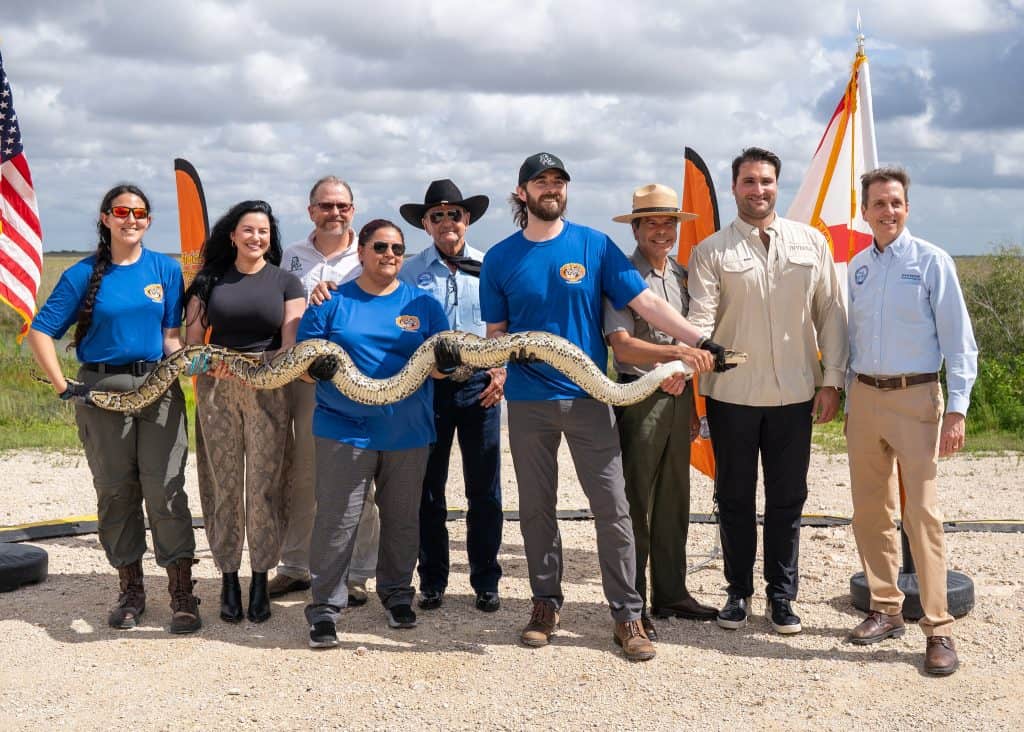
Last year’s competition resulted in a record 294 invasive Burmese pythons removed from the Everglades.
©Courtesy of the South Florida Water Management District – Original
The beauty of the Florida Python Challenge is that anyone can enter with the proper registration, training, and understanding of the rules. Any interested competitors first must take a test after studying a 30–45-minute training module covering snake identification, safe handling practices, and the mandatory two-step humane elimination method. Only by passing the test with a score of 85% or higher will a code be unlocked for use on the registration form. From there, applicants register and pay a $25 fee. While supplies last, registered participants will receive a free event t-shirt.
While most people register as novices, state contractors register as professionals. Organizers have also set aside special prizes for active-duty military personnel and veterans. Regardless of experience or skill level, anyone can apply as long as they have no prior convictions for animal cruelty or fish and wildlife violations.
Applicants choose a permitted location to engage in the challenge. Those planning to hunt in Everglades National Park must watch an orientation video and complete a one-time, in-person check-in at designated locations. It should be noted that no firearms are allowed, and a digital or printed copy of your registration confirmation email must be kept on your person at all times. Happy Hunting!