
Quick Take
- Most snakebite victims weren't taking unnecessary risks. In fact, what the majority were actually doing flips the common assumption about who gets bitten. See who's really at risk →
- Snakes aren't nearly as much of a nighttime danger as most people assume. The real peak hour is something that surprises even researchers. Check the real peak hours →
- Simple advice like 'wear boots' sounds reasonable, yet the review exposes a flaw that renders it useless for many of the people most at risk. See why boots fall short →
- Researchers named a fourth driver of snakebite risk that standard prevention programs rarely address, and it may be the hardest one to fix. Explore the overlooked driver →
Snakebites can occur for many reasons. Someone steps into the wrong patch of vegetation, reaches toward something they cannot see clearly, or discovers a snake inside a home.
A major new review suggests that this view misses the larger pattern.
After examining 142 studies from around the world, researchers found that snakebites repeatedly happen under recognizable conditions. Farming was by far the most common activity linked to bites. Poor housing, seasonal rainfall, unsafe working conditions, and limited access to healthcare also impacted where encounters happened and how serious their consequences were.
Most snakebite efforts focus on antivenom and emergency care, which are obviously both essential, but they come into play after someone has already been bitten. The new research reframes the topic, looking to mitigate the bite risk before it happens.
Farming Was the Cause of Most Reported Bites
The study, published today in PLOS Neglected Tropical Diseases, is a scoping systematic review led by Chandrashekhar Janakiram of Amrita Vishwa Vidyapeetham in India.
A review maps the available evidence across many studies. It does not calculate exactly how much one behavior increases a person’s risk. Instead, it identifies circumstances that appear over and over again.
The researchers searched several major scientific databases, along with reports from health agencies and other sources, including 142 studies published between 1978 and 2025. The research covered Asia, Africa, the Americas, Australia, and Europe, although more than 60% of the studies came from India.
The review included hundreds of thousands of recorded snakebite incidents. Different portions of the data were available for different questions. The researchers analyzed 47,892 records describing what people were doing when they were bitten.
Agriculture and farm work, which includes planting, weeding, harvesting, clearing vegetation, and tending livestock, accounted for 59.1% of those cases. It also covered plantation work and other outdoor jobs around farmland.
Other forms of work accounted for 9.1% of cases. Walking accounted for another 8.4%.
These findings clarify the fact that many snakebite victims are not handling snakes or taking unnecessary risks. They are simply working.
For farmers and laborers in snake-endemic areas, avoiding fields may not be possible. So the safer approach is to reduce danger during the work itself.
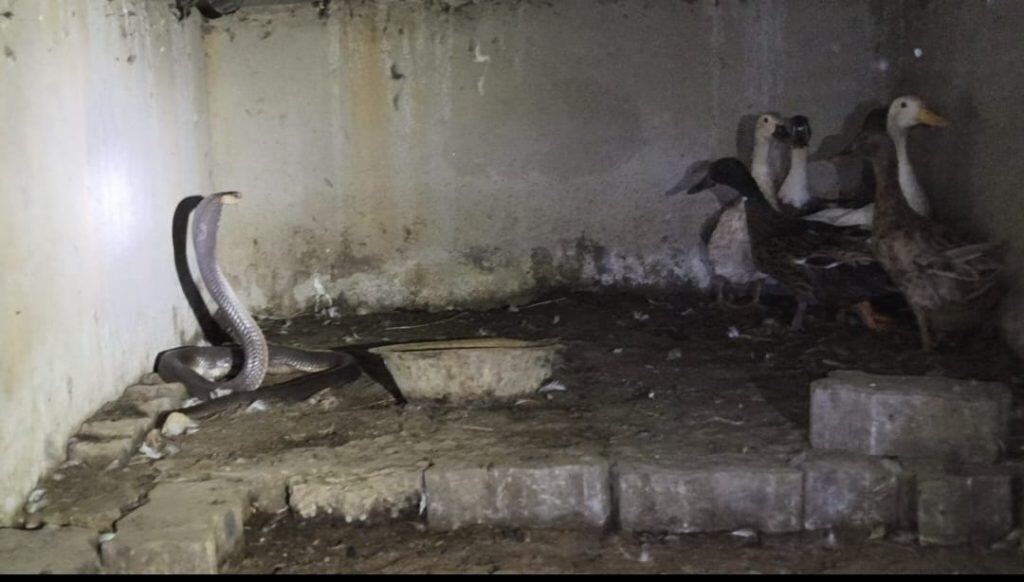
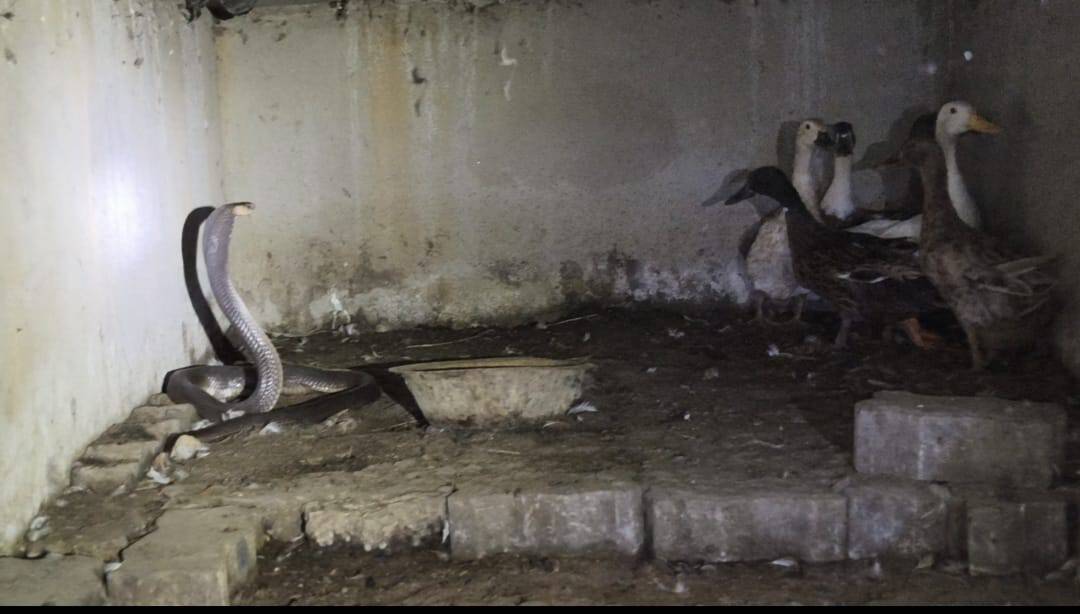
A monocled cobra enters a duck coop in Assam, triggering panic as the ducks frantically attempt to evade the venomous predator.
The Site of Most Bites
Among the 85,593 cases with a recorded bite location, 79% involved the lower limbs. The upper limbs accounted for only 19.2%.
That pattern fits closely with the activities described in the review. People walking through crops or working close to the ground may not see a snake hidden under leaves, soil, or other plant material. A bite can happen before either the person or the snake has time to retreat.
Protective footwear may help, but the solution is not as simple as telling everyone to wear heavy work boots.
Footwear needs to be both affordable and practical. A boot that becomes unbearably hot or fills with water in a flooded field is pointless. So prevention programs have to consider the climate and the kind of work people are doing.
The same problem applies to gloves and long-handled tools. Safety equipment only works when people can obtain it and use it comfortably during a full day of labor.
One of the review’s most important lessons is that advice must fit real living conditions. A recommendation that sounds sensible in an office may fail in a rice field.
Not Mainly a Nighttime Problem
Snakes are often associated with danger after dark, but the review found that bites were almost evenly divided between daytime and nighttime.
In the study’s detailed table, 52.6% of bites occurred during the day. The remaining 47.4% happened during the evening or at night.
The period from noon to 6 p.m. accounted for the largest share of bites, which may reflect the number of people working outdoors during the afternoon.
The paper’s abstract gives a slightly different daytime figure of 54.6%. The detailed results table reports 52.6%. This appears to be an internal difference in the manuscript, but both figures point to the same conclusion. Snakebite prevention should not focus only on nighttime activity.
Lighting is still important, especially when people walk outdoors after sunset. Yet workers may face just as much danger while harvesting crops in the afternoon.
Seasonal warnings and safer field practices could therefore be as important as flashlights.
Homes May Be Risky
Some bites happened indoors or while people were sleeping. In fact, sleeping or resting accounted for 2.4% of the activity records. That proportion may sound small, but the risk can be much higher in communities where people sleep on the floor and homes have openings that allow snakes inside.
The studies linked encounters with damaged walls, gaps around doors, and poorly sealed floors. Some homes are also located close to fields or other snake habitats.
Simple changes may reduce the chance of a snake entering a living space. Things like repairing openings and raising sleep areas off the floor can make an impact on decreasing bites. However, those changes are not equally available to everyone.
A family may understand the risk and still lack the money to repair a house. Electricity may be unreliable or unavailable, making outdoor lighting difficult. Food storage and household clutter can attract rodents, which may then attract snakes. And the review treats these conditions as part of the snakebite problem.
Rainfall Can Increase Contact
Many of the studies reported seasonal increases in snakebites, particularly during monsoon and post-monsoon periods, times that naturally impact both snake and human activity levels. .
For example, flooding can force snakes out of their shelter. And wetter conditions may also increase prey activity, encouraging snakes to move more often. At the same time, rainy periods can coincide with planting or other labor-intensive farm work. All of this means there is greater overlap between people and snakes in the outdoors.
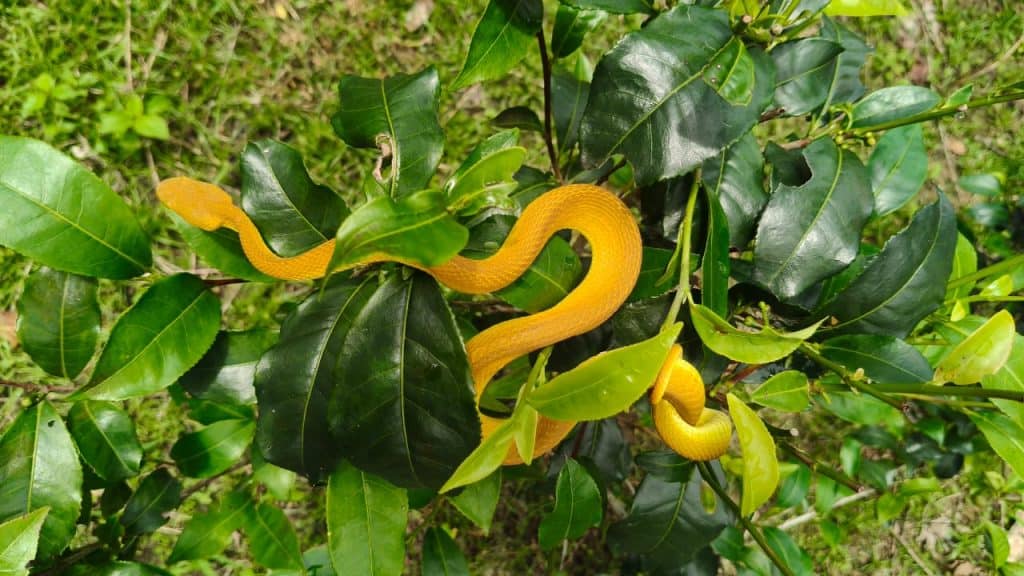
Land-use changes can add to that pressure. When forests or other habitats are cleared, snakes may move closer to farms and homes. However, the pattern will not be identical everywhere. Different snake species respond to different habitats and weather conditions.
A prevention campaign designed for kraits entering homes in South Asia may not work for agricultural bites caused by Bothrops species in Latin America.
What About Snake Handlers?
Handling snakes accounted for 3.6% of the reported bite circumstances.
Some people were bitten while trying to catch or move a snake. Others were attempting to kill one. Although handling made up a relatively small share of cases, it represents an exposure that can often be avoided. Approaching a snake brings a person within striking distance and removes the option of simply allowing the animal to retreat.
People without training should not try to capture an unidentified snake. That advice is more useful when communities have someone they can call. Professional removal services are not available in many rural areas. Prevention programs may need to include trained local responders rather than relying only on public warnings.
Snakebite is Shaped by Poverty
While safety pointers like “wear shoes” and “use a light” seem useful, they don’t address the full problem. Again, a worker may go barefoot because safe footwear costs too much. Or a family may sleep on the floor because there is no bed. Someone may continue working after dark because delaying the harvest could mean losing income.
A person who is bitten may also face a long trip to the nearest hospital. Transportation can be expensive or unavailable. And delays can make an otherwise treatable bite far more dangerous.
The researchers grouped the circumstances around snakebite into four broad areas:
- Environmental conditions that influence where snakes appear
- Work that brings people into snake habitat
- Immediate behavior shaping the moment of contact
- Poverty
This framework avoids blaming victims for conditions they may have little power to change.
What Is Not Proven
The review is broad, but it has limits. For example, it did not calculate how strongly each circumstance increases snakebite risk. It also did not compare exposed people with similar people who were not bitten.
The included studies used different methods, and many relied on hospital records that may have been incomplete. More than 60% of the studies came from India, which means some regions remain poorly represented. Also, only English-language research was included.
The percentages should therefore be understood as a map of reported circumstances, not as universal risk estimates. Even with those limits, the review changes how snakebite can be understood. It shows that bites often happen in repeatable social and environmental settings, but that creates opportunities for prevention.
Better housing may reduce encounters at home. Practical safety equipment may protect workers. Faster access to medical care can improve survival when prevention fails.
Snakebite will never be entirely predictable. Yet it does not have to be treated as an unavoidable act of nature. Once communities understand where encounters happen, they can begin interrupting the conditions and mitigating the scenarios allowing them to happen.