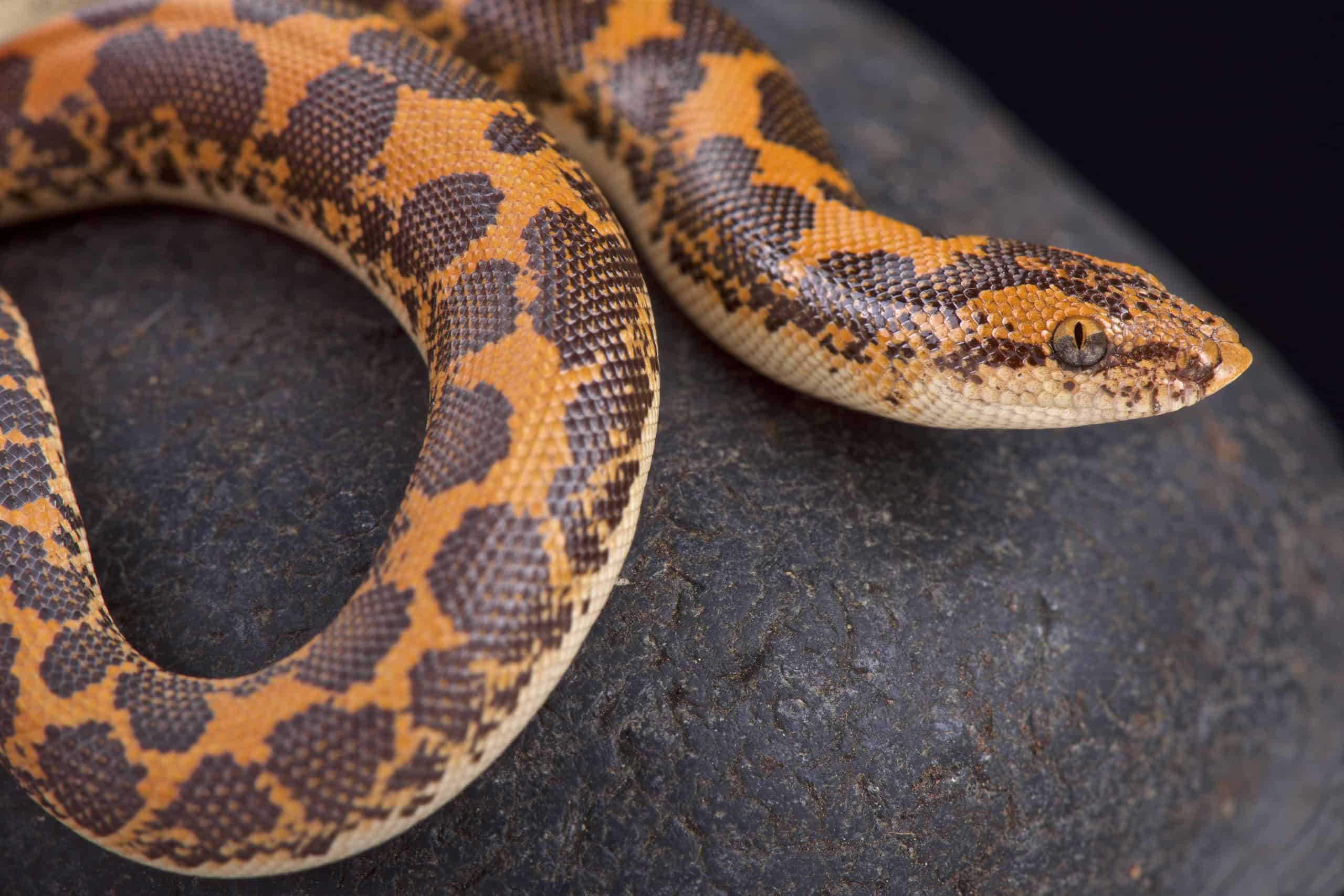

Snakes have a scary image associated with them, and for good reason. With the ability to inject venom, it’s no wonder we’re scared. However, some snakes aren’t venomous at all. One of these snakes is the Kenyan sand boa, a popular pet among reptile keepers. This video by Jukin Media shows a Kenyan sand boa playing in a sandbox, looking adorable as it does so. Read below to learn more about this snake and why it loves sand.
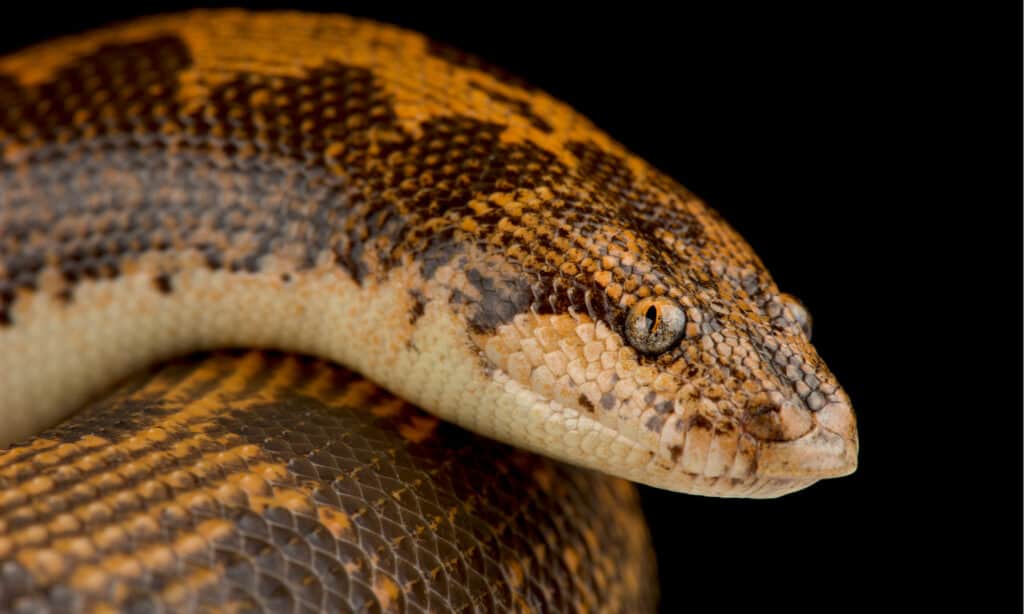
Female Kenyan sand boas are larger than males.
©reptiles4all/Shutterstock.com
All About the Kenyan Sand Boa
Kenyan sand boas are native to eastern and northern Africa. As their name suggests, they are most prominent in Kenya, but they also live in surrounding countries such as Ethiopia, Sudan, Egypt, Somalia, and Tanzania. Within this region, they inhabit semi-desert areas, places with plenty of sand and sparse vegetation. They prefer these sandy and rocky areas as they can burrow and hide. Their scales are smooth, with a beautiful pattern of orange, yellow, and red, helping them blend in with the sand they inhabit.
Males and females differ in size. Females grow to around 27 to 31 inches, while males reach about 15 to 20 inches in length. This difference is known as sexual dimorphism, which refers to males and females having noticeably different physical appearances. This is common in snakes and reflects their roles in nature. Females require a larger size for reproduction, while the smaller size of males aids in mobility and mating.
Why Do They Love Sand?
Kenyan sand boas are unique in the boa family as they have evolved to burrow and live underground. With compact bodies and a tail that resembles a head, they have multiple adaptations that make living underground safer and easier. Their head-like tail is used to confuse predators, causing them to strike the wrong end. Using a side-to-side movement, they can “swim” through the sand, positioning themselves right below the surface. This behavior is clearly seen in the video, where the snake leaves its tail exposed and quickly pops its head out at the end. By staying close to the surface, the boa can strike and constrict its prey, making it an effective hunter.
One of the important reasons for staying underground is thermoregulation. During the hot desert days, they can bury themselves deeper underground to stay cool and come up at night to warm up. Being able to rest underground for so long has many advantages. The first is avoiding predators. By remaining hidden, the Kenyan sand boa can stay safe for longer periods. This adaptation is very useful for these boas, representing a unique evolution suited specifically to them.
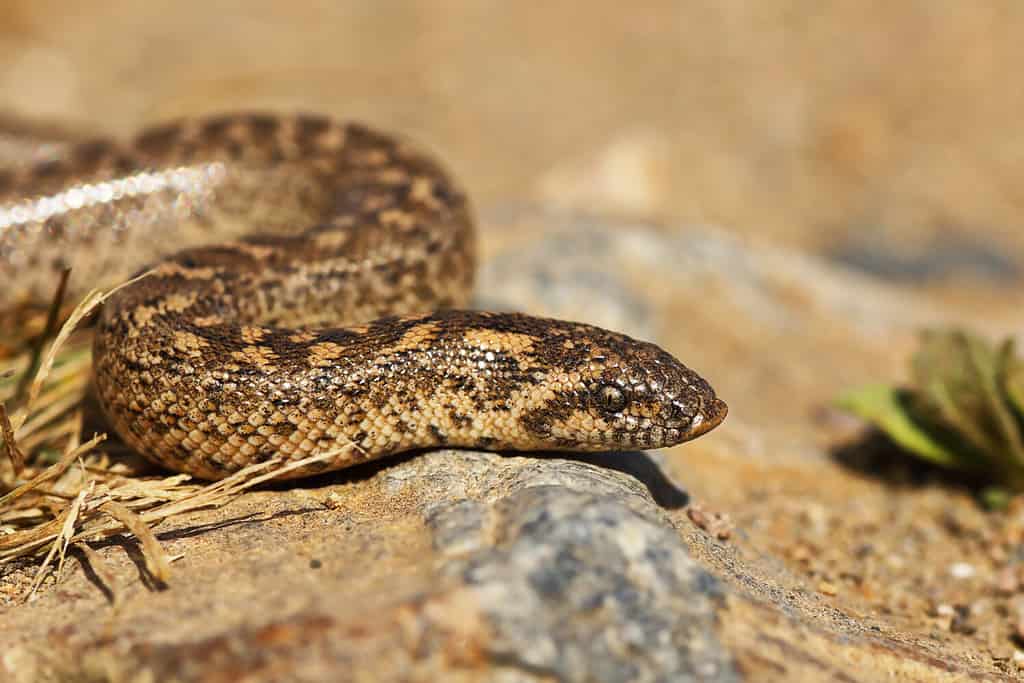
These snakes bury themselves in sand to stay cool.
©taviphoto/Shutterstock.com
Are They Venomous?
Kenyan sand boas belong to the Boidae family, which includes other boas as well. This family of snakes is constrictors rather than venomous. The Kenyan sand boa does not have the anatomy to produce or inject venom. Venomous snakes have specialized venom glands and fangs for injecting venom, which boas lack. Rather than using venom to hunt, boas rely on their strength to capture prey, consistent with their ambush hunting style. When hunting, they coil around their prey and constrict it, suffocating the animal. This method is ideal for the Kenyan sand boa. By hiding underground, they can wait for their prey before striking—another advantage provided by their sandy habitat.