
Quick Take
- Cyanide killed 15 elephants in Kenya, and authorities are now divided over whether it was an accident or a calculated act. See the confirmed deaths →
- The pesticide suspected in the deaths is illegal in Kenya, yet it keeps showing up. It also has a chilling history with elephant poachers. Explore the illegal pesticide →
- The death toll may not stop at elephants. Wildlife officials are bracing for a much larger fallout. Read the ecological warning →
Tragedy has struck the Kimana area, where authorities found 15 dead elephants near the Tanzania border. At first glance, there wasn’t an obvious cause for the death of so many animals. But after an analysis of tissue samples taken from the bodies, there was one definitive cause for their demise: cyanide poisoning.
Now, many, including authorities, are questioning whether the elephants were poisoned intentionally. Were they viewed as pests, repeatedly getting into tomatoes near Amboseli National Park? Or were they the unfortunate victims of new, stronger pesticides? As more details emerge, the picture painted reflects the grim reality of Kenya’s vulnerable elephant populations.
A Sad Day For An Endangered Species
Elephants are considered endangered globally, but Kenya’s localized efforts have encouraged strong population growth. That’s why the news coming out of Kimana hits home for many in the community. Following the investigation, the Kenya Wildlife Service confirmed that before the elephants died, they were feeding on tomatoes from a nearby farm. The cause of death was ruled poisoning due to cyanide found in the tomatoes in the field and in the stomachs of each elephant.
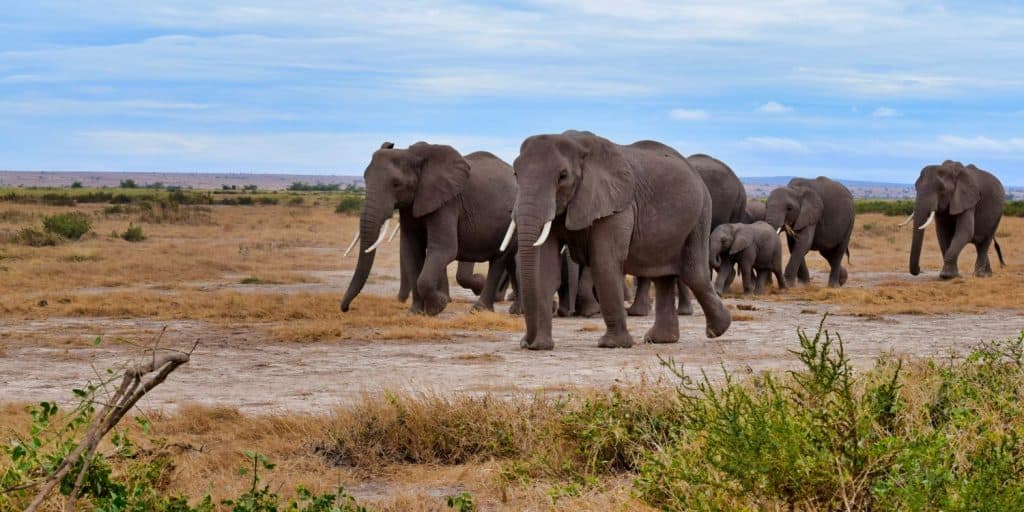
Kenya’s elephants are classified as Vulnerable by the International Union for Conservation of Nature (IUCN).
©NAEPHOTO/Shutterstock.com
The Kimana sanctuary and Kuku Group ranch areas, where the deaths occurred, are home to approximately 1,600 elephants. It’s widely considered safe for a population that was dwindling not long ago. However, Kimana is also one of the leading tomato producers in the region. Authorities believe the concern is not pesticide use in general, but the specific chemicals being used.
Tiger: Pesticide Made With Cyanide
In 2024, Route to Food discovered at least six farms in the Kimana region using Tiger. This is an insecticide containing the active ingredient Chlorfenapyr, which is highly toxic to both insects and mammals. This compound is potent even in small amounts, leading to neurotoxicity and liver damage if ingested. It’s also unsafe to handle, as even topical exposure can cause acute toxicity, skin irritation, and eye irritation. This pesticide, along with its alternative Dudu-Ace-Amectin, is listed on the Highly Hazardous Pesticide list by Route to Food.

Agricultural expansion forces elephants to seek food elsewhere, which is how they often end up on farmers’ land and eating crops.
©PiggingFoto/Shutterstock.com
Despite the warnings against this pesticide, it often enters Kenya in illegal cross-border trading. It is not a locally approved pesticide, nor is it safe to use around wildlife. And while Kenya does not approve it, it has also been used by poachers to target species such as elephants. Nearly a decade ago, authorities found that this was the method used to kill 62 elephants on a Zimbabwe reserve. They were poisoned for their ivory tusks, which were then sold on the black market at high prices.
With the most recent poisoning in Kimana, some experts are worried that poachers may also be behind the elephant killings.
Accidental Poisoning Or Purposeful Killing?
Authorities are keeping details quiet surrounding the elephant poisoning. However, they have revealed that at least one elephant died on a farm that used Tiger pesticide. Others traveled toward a watering hole before receiving emergency treatment from veterinarians. Sadly, there was little that could be done to ease their suffering. Of the 15 elephants, 10 showed signs of partial paralysis, which prompted authorities to conduct tests that revealed cyanide poisoning. Unfortunately, there was little that could be done to ease their suffering.
While the investigation is ongoing, authorities have another truth to contend with. If not poachers, authorities have documented cases in which farmers have illegally poisoned crop-raiding wildlife. This is not the first time elephants have been poisoned—whether intentionally or unintentionally—as a method of deterrence. As their habitats become smaller, they look for food in readily available places such as farms. If this is the case, it could have disastrous consequences for other vulnerable wildlife in the region.

The death of 15 elephants in Kimana signifies a bigger issue with pesticide use and safe agricultural practices.
©iStock.com/Devilkae
“Other than the elephants and the wildlife that may be feeding in those fields, we have the local livestock. We have the goats. We have the cattle that are there. Eventually, if this is truly what is in the system, then we are going to see a bigger impact,” Kenya Wildlife Service Director General Erustus Kanga said.
Other wildlife organizations, like the International Fund for Animal Welfare, call the situation deeply alarming. There’s significant concern for the overall conservation of Kenya’s wildlife, specifically those in the Kimana region.