
Quick Take
- A deer's gut bacteria secretly transform as the seasons change, and that shift is the hidden key to surviving winter. See how gut biomes adapt →
- Deer essentially carb-load like athletes every September, though the reason why has nothing to do with energy for running. Explore the fall diet shift →
- When winter hits and nearly all food disappears, deer fall back on one last-resort food source that seems barely edible. Discover winter survival foods →
The air will soon have a chill, and leaves will crunch underfoot as summer gives way to fall. It’s many people’s favorite season, but it also marks a dramatic ripple effect throughout nature and the animal kingdom. While we prepare soup and make our homes cozy, the wildlife around us also prepares for the changing season, though in a different way.
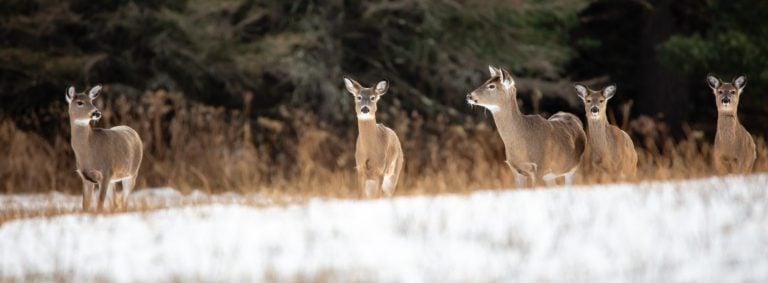
White-tailed deer change their entire lifestyle, even down to what they consume, in preparation for fall. Their nutritional requirements change, as does the amount of fat needed to survive a long winter. While food is abundant in the summer months, many plants lose their nutritional value and become scarce as the seasons change. Here’s how a deer survives after the summer’s cornucopia is depleted.
September Is About Carb-Loading and Fiber
Leading up to fall, white-tailed deer need foods high in protein. This helps antler growth in bucks and provides necessary nutrients for females, which are given to their fawns while nursing. And while spring and early summer are all about growth and bulking up, the quiet transition through August slowly shifts the nutritional focus.
Rather than focusing solely on nutrition, white-tailed deer seek foods that will keep them feeling full for longer periods. Their goal is to increase fat storage with carbohydrates and good fats. This helps them get through the winter, when food is nearly impossible to find. Most deer are lucky if they find enough to survive, which is why it’s crucial to forage in the months before the first frost.
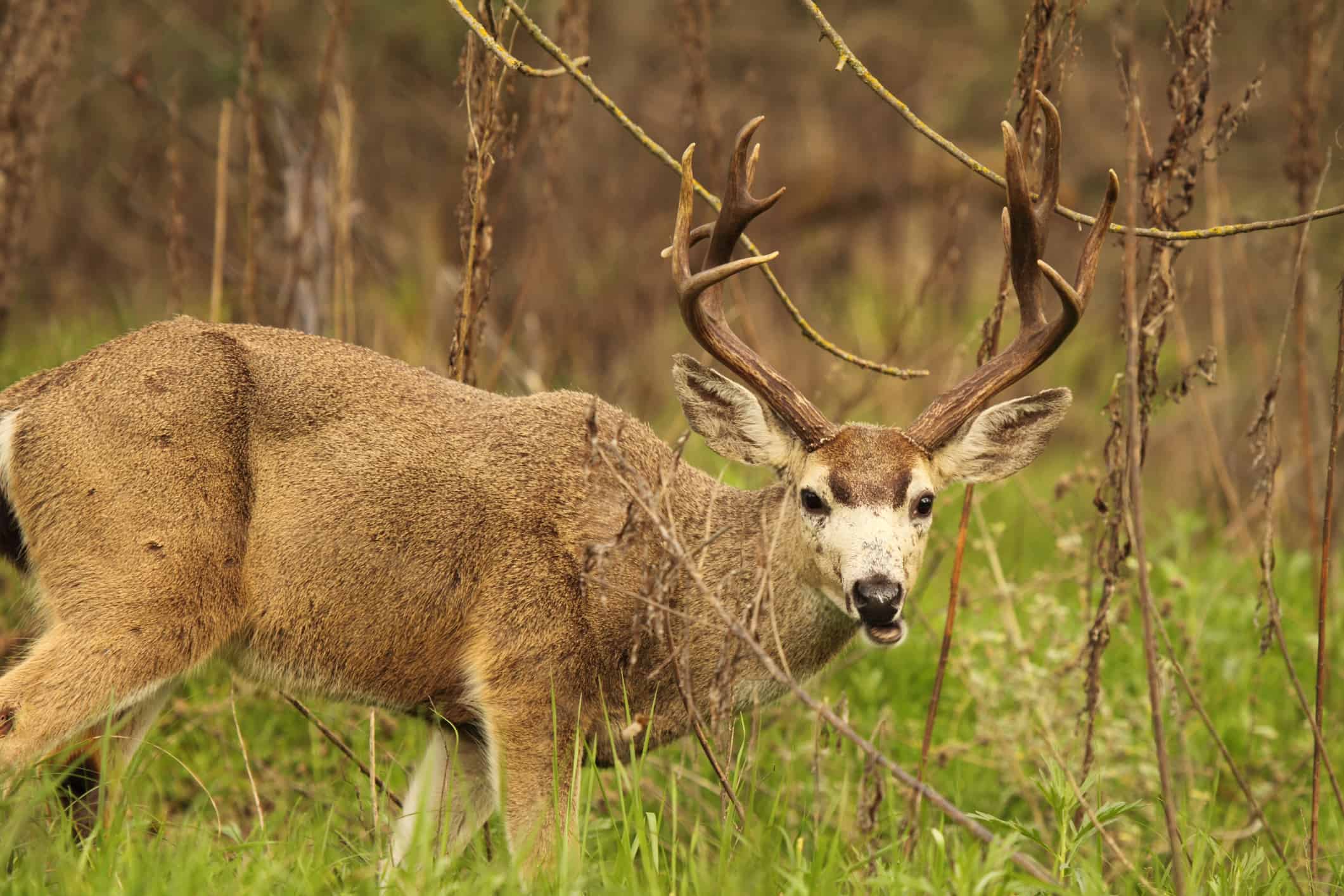
Deer are often drawn to gardens and farms during the summer.
©iStock.com/gatito33
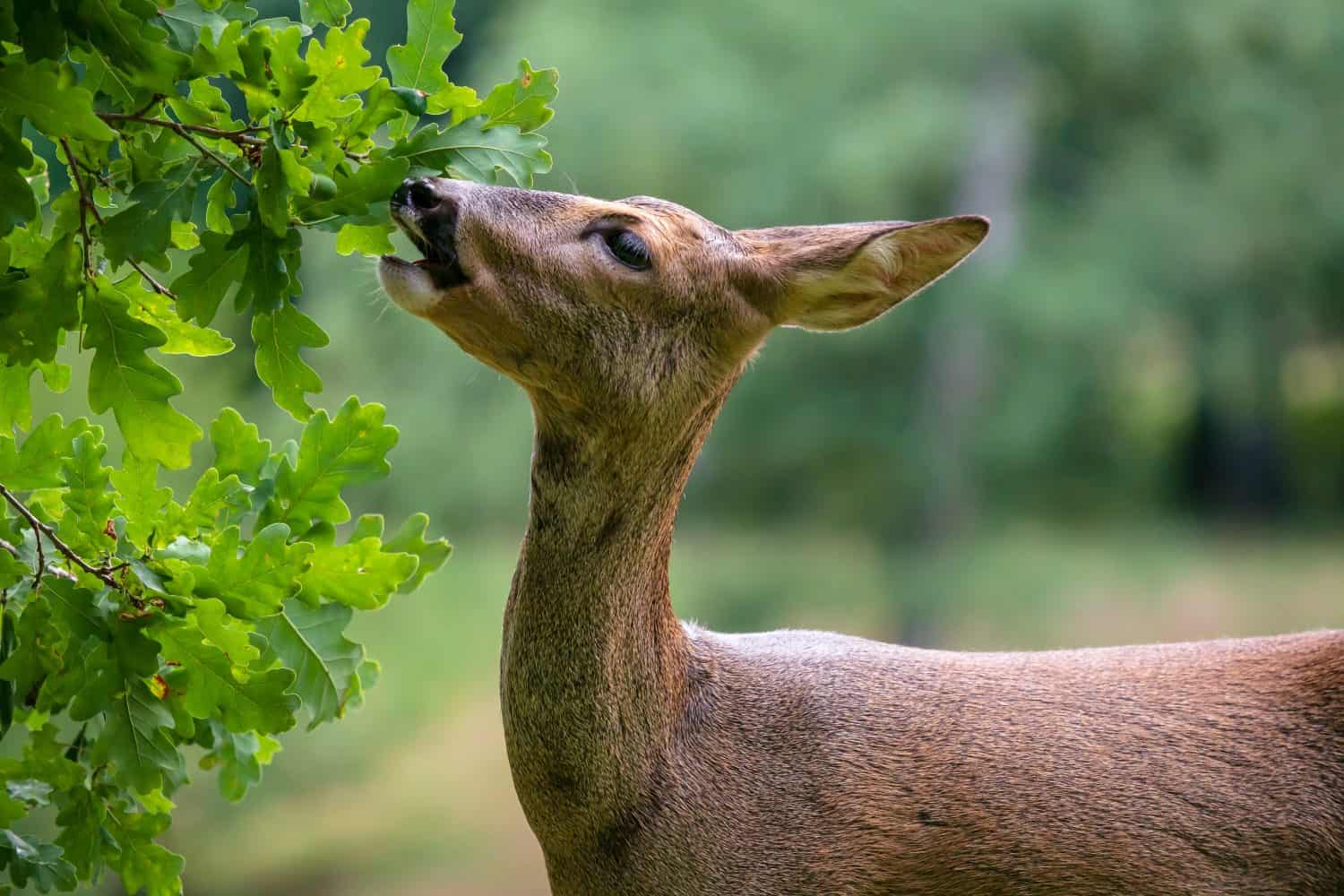
Deer also eat seasonally, making them “concentrate selectors.” Their diet reflects the availability of certain plants, nuts, crops, and seeds. While they’re not picky and will consume food out of season if it’s available, their foraging follows a very specific rhythm. Late-season crops, such as legumes, beans, and grains, are all fair game for a hungry deer. If these can’t be found, they’ll consume acorns, chestnuts, beechnuts, and other hearty fibers. Foods high in sugar and fiber help deer build up enough fat reserves for winter, before their diet changes again.
Winter Offers the Least Variety in a Deer’s Diet
The cruelty of winter is that leafy greens, fruits, vegetables, and grains are no longer available. Ideally, a deer has put on enough weight at this point to survive on very little food. But this isn’t always the case. A hungry deer in the winter will consume anything that provides even the slightest nutritional value.
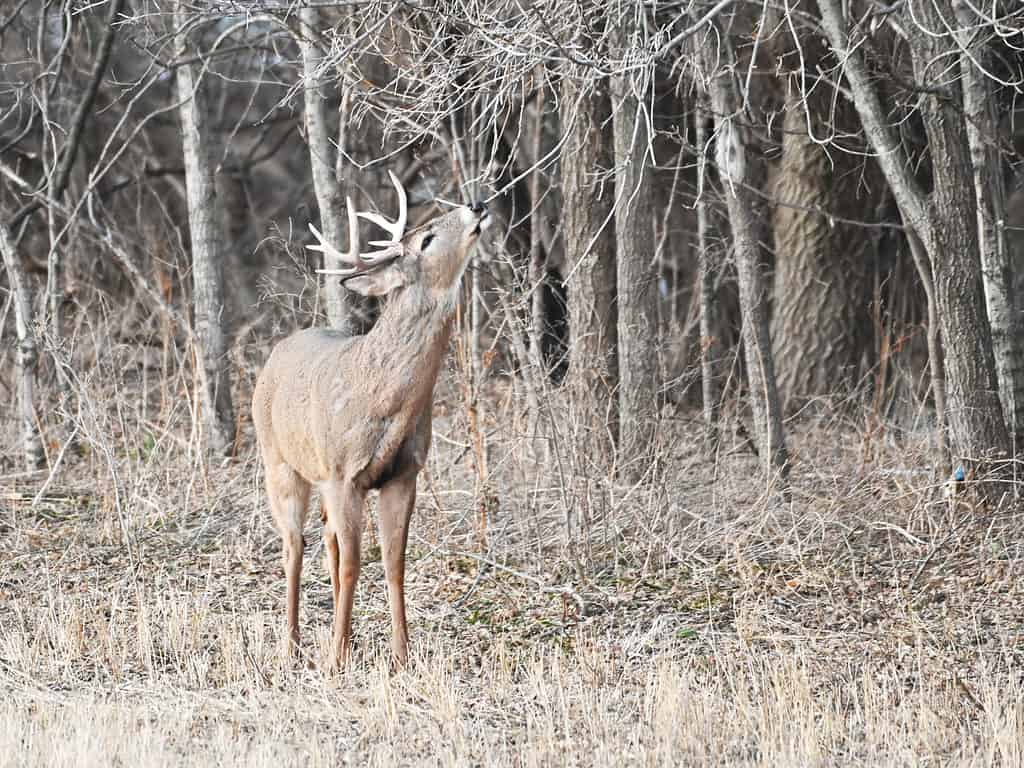
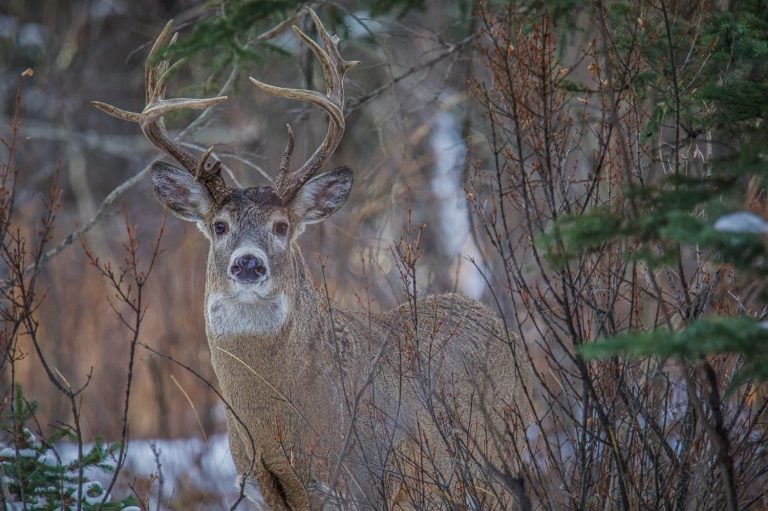
Food is scarce in the winter, and deer sometimes eat branch buds or twigs.
©iStock.com/steverts
Hardwood buds, bark, twig tips, and even pines and other evergreen needles provide a small boost. Deer conserve energy in winter, which allows them to survive on a diet of woody plants. And as their food intake changes, so do their gut biomes. During the summer, the good bacteria in a deer’s gut are prepared to break down fibrous leaves and crops. In the fall, it slowly digests nuts and grains.
However, during the winter, the gut biome becomes even stronger. Although food breaks down more slowly, the increased activity of beneficial bacteria enables deer to digest woody materials over the course of the winter.
Native Habitats Make a Difference In White-Tailed Deer Diets
Not every deer will follow the same dietary pattern. A deer in the Midwest will not eat the same foods as a deer living in the Northeast. In the latter, white-tailed deer typically consume plenty of berries and brambles, as they’re readily available in the summer. During the fall and winter, they resort to nuts, such as acorns, and to pine needles, both of which are abundant in mountainous regions.
Deer in the Midwest—especially in agricultural regions—consume a steady diet of ragweed, wild lettuce, rose, and trumpet creeper during the summer months. This lush vegetation provides essential proteins and fiber.. In the fall and winter, crops such as corn, wheat, and soybeans are a major draw for foraging deer.
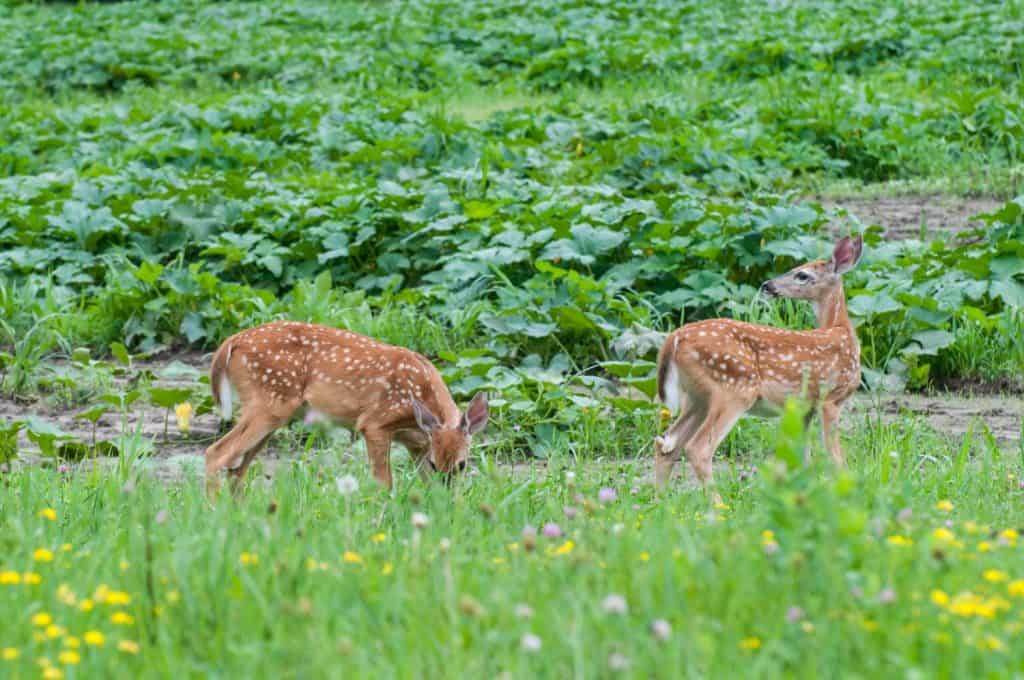
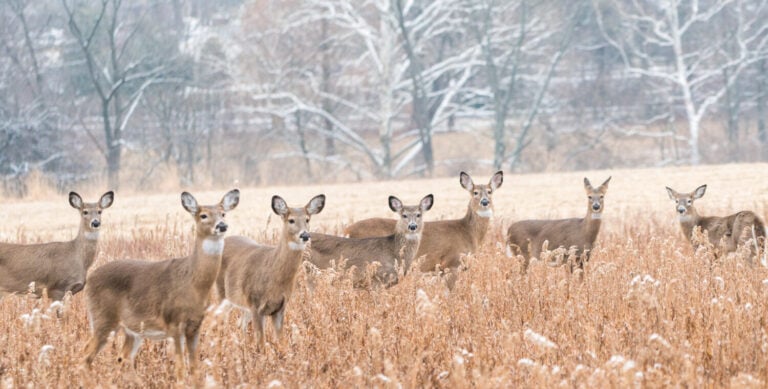
A deer’s diet changes depending on the region and what’s available seasonally.
©Michael Siluk/Shutterstock.com
The Southeast provides the most consistent diet for deer. Depending on the area, honeysuckle, pokeweed, greenbrier, and beggar-ticks are all part of a deer’s summer diet. Since temperatures are milder, deer continue to consume vegetation such as honeysuckle and greenbrier, and may also feast on seasonal berries if they are available throughout the fall.
Further north in Canada, white-tailed deer have some of the most robust diets. Food is even scarcer here, and the cold climate encourages greater consumption of pines, fireweed, and aspen shoots. In the summer, wild berries, such as strawberries, provide necessary fiber. During the winter, Canadian deer are able to tolerate snowberry, chokecherry, and even fungi.