
Quick Take
- Researchers identified seven new frog species. The unconventional method they used is changing how scientists think about museum collections. See the museomics method →
- These frogs look plain brown at first glance, but they're hiding something on their bodies that can stop a predator cold. Discover the hidden defense →
- Scientists have a hypothesis about why diamond frogs might be eating dirt, but nobody can confirm it despite the frogs having stomachs packed with soil. Explore the soil-eating mystery →
- Now that 27 species are confirmed, the study's conservation findings put most of them in a precarious category, with two falling into an even more alarming one. See the conservation status →
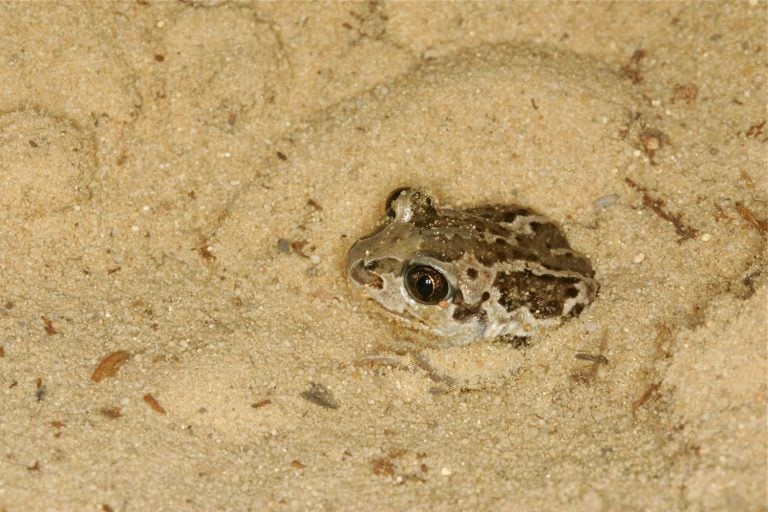
For one family of frogs in Madagascar’s dense landscape, living undercover means living their best lives. These frogs burrow into the forest soil or deep moss and stay hidden most of their lives. It’s only when they feel threatened that they emerge momentarily to thwart the threat, then quickly retreat into their hidden lairs.
These frogs are the elusive and seldom-seen Madagascar diamond frogs—a group of species so unique that they are rarely observed and even less frequently photographed. However, for one international team of researchers, the goal of a recent study was to identify new species within the Rhombophryne frog family. And they used a very novel approach to do their research.
Their findings were just published in the journal Vertebrate Zoology.
Continue reading
What Is a Diamond Frog?
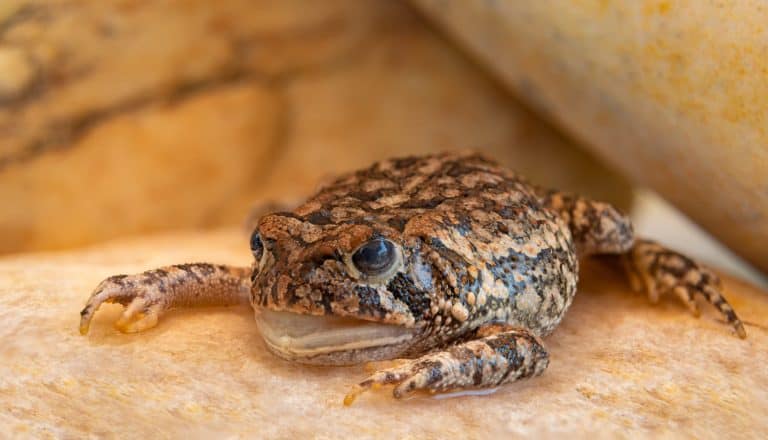
Diamond frogs belong to the group Rhombophryne and are found only in the forests of Madagascar. They are small and round, often shaped like a ball. They often resemble mainland Africa’s rain frogs.
But not all diamond frogs look the same. Some have long legs and live in the moss covering rocks and trees throughout the forest. Others are more compact and live on the ground.
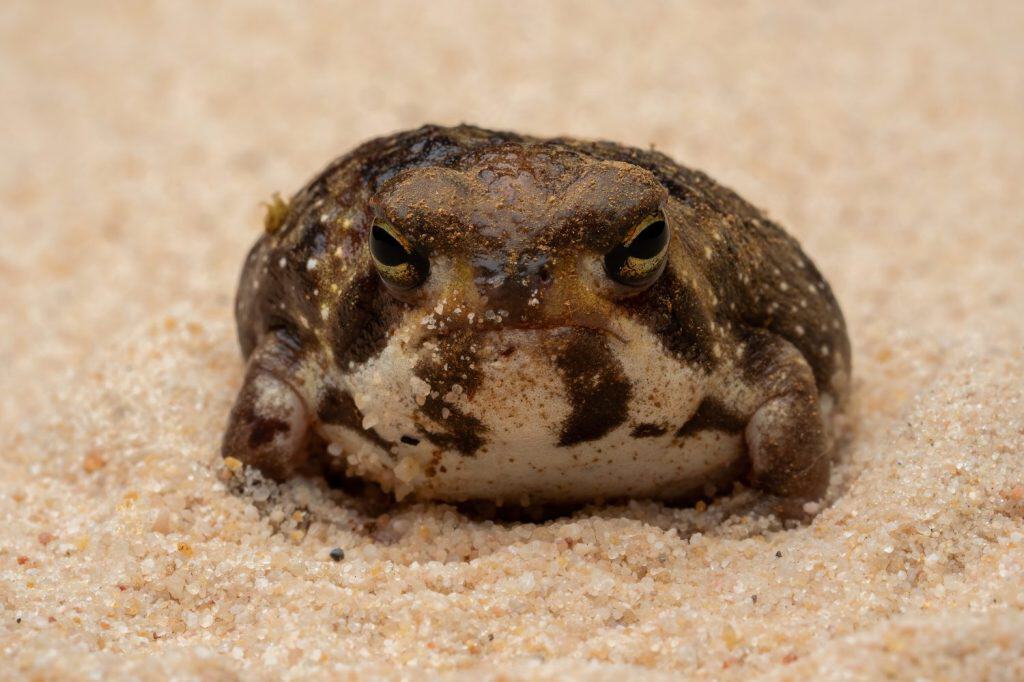
Madagascar’s diamond frogs sometimes resemble African rain frogs, seen here.
©Lauren Suryanata/Shutterstock.com
While they may come in different shapes and sizes, they all tend to be plain brown in color. At least at first glance; scientists note that several diamond frog species have hidden patches of bright orange, white, or black on their legs and lower back. The coloration is believed to be used to startle predators when the frog is disturbed, giving the frog a chance to escape.
A Chance Sighting Spurs a 12-Year Study
Dr. Mark D. Scherz of the Natural History Museum Denmark was the lead researcher for the study. He got the idea for the research after observing frogs in Madagascar forests that didn’t match any known species. He and his colleagues had difficulty matching historical species names with the modern frogs they were seeing.
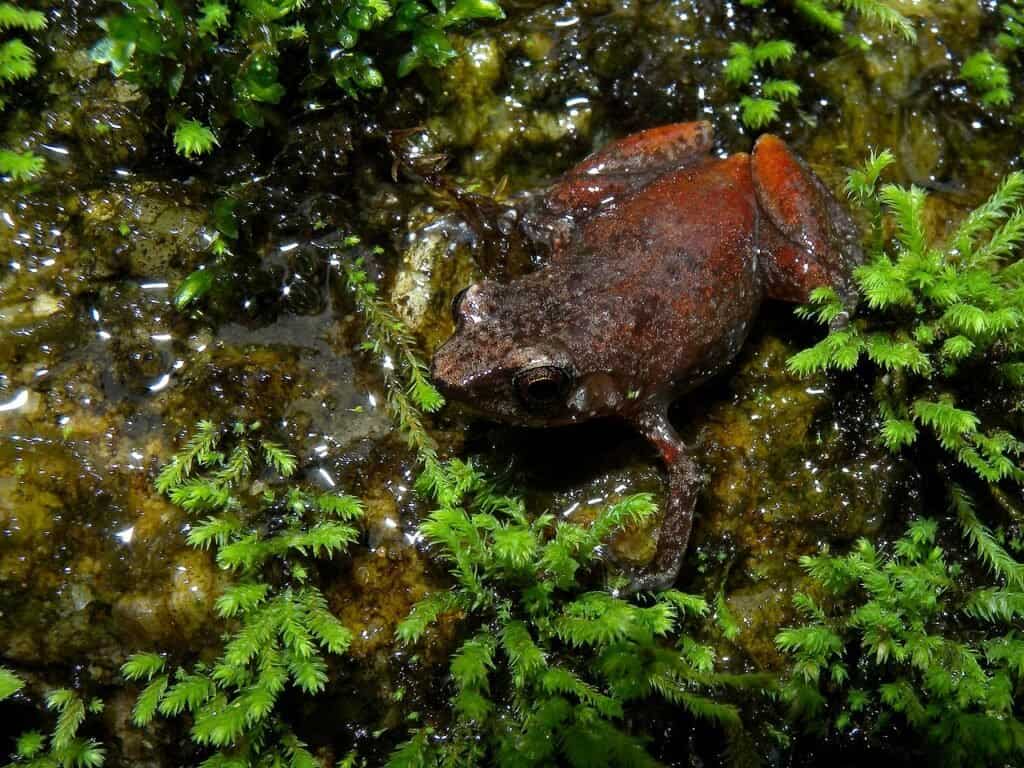
Madagascar is home to many frog species, like this still-unidentified one.
“When I started this project twelve years ago, we already knew there were several species waiting to be described, and almost every expedition to Madagascar revealed another one. Some were relatively straightforward to describe, but others were complicated by uncertainty surrounding older species names. Untangling that puzzle took years,” Scherz said in a press release announcing the findings.
The Research Methodology That Solved the Mysteries
It took a novel approach to figure out which frogs matched which historical species names. The research team turned to “museomics” – a process where DNA is sequenced from historical museum specimens.
That DNA information is then compared with newly collected DNA samples from the unknown species. The comparison data is then paired with analyses of external and internal skeletal anatomy, as well as frog calls, to clear up any uncertainty. This process makes it easier to map historical DNA strands to current species, helping to resolve the identity of several new species.
The results demonstrated the importance of historical museum specimens beyond serving as visual examples of older species.
“Museum collections are far more than archives of the past – they are essential scientific resources for understanding biodiversity today,” Dr. Alice Petzold of the University of Potsdam, who led the museomics work, said in the press release.
Meet the Seven New Species of Diamond Frogs
Rhombophryne quentini – an orange-thighed frog that lives in the high mountain forest in northern Madagascar. Scherz named the frog after his young son.
Rhombophryne kilonjy – a small frog that lives in the lowland forest near the island’s northwest coast. Its name means pebble in the Malagasy language.
Rhombophryne kotrobaratra – a species with unusually long, strong back legs that is found in northeastern Madagascar and tends to appear during rainstorms. Its name means thunder and lightning in Malagasy.
Rhombophryne mavokely – a small frog from northeast areas of the island. It has bumpy skin and can look either pink or yellowish. Its name means small yellow in Malagasy.
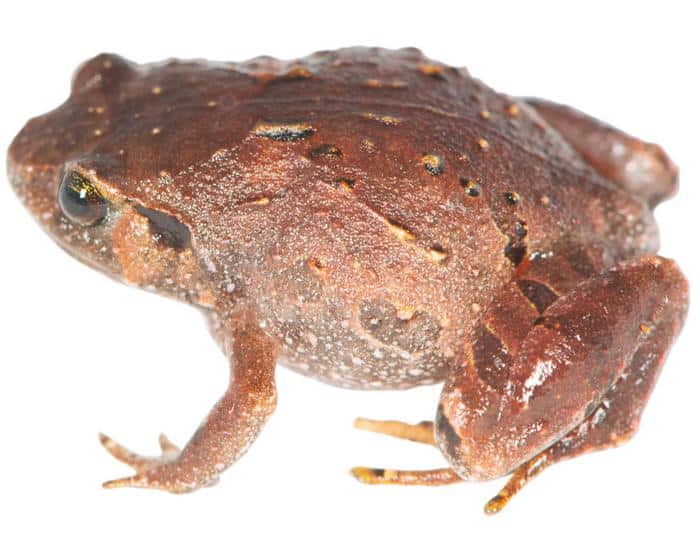
The Rhombophryne mavokely is one of the seven new diamond frog species discovered in Madagascar.
©Mark D. Scherz, Natural History Museum Denmark – Original / License
Rhombophryne maraorao – a burrowing species from northeastern Madagascar that, when threatened, stiffens its entire body and legs as a defensive move. The name means rough to the touch in Malagasy.
Two other species, Rhombophryne sonaliae and Rhombophryne anatiala, were also discovered.
What Do Scientists Know About Diamond Frogs?
Scientists actually know very little about this family of frogs, especially regarding their daily behaviors and diet. The frogs tend to be elusive and are rarely spotted.
Past research on specimens has identified their diets as including ants, beetles, spiders, and millipedes. In some burrowing groups of diamond frogs, researchers found that their stomachs were nearly full of soil. Scientists hypothesize that this might be accidental, with soil consumed while the frogs hunt for other food sources. Another hypothesis is that the frogs consume soil on purpose. Neither hypothesis has been confirmed.
The Importance of the Study’s Findings For Conservation
With the newly named seven species, the total number of known diamond frog species now stands at 27. The study’s authors estimate that 24 of the 27 species are threatened. They’ve recommended that two, R. kilonjy and R. matavy, should be considered critically endangered. Such a designation is important since many Madagascar forests are being cut down and divided into smaller areas. This habitat loss threatens the frogs’ survival.
It will be up to the IUCN to decide whether to add any of the species to its Red List.
In the meantime, several of the new species are already being used in conservation planning. During a March 2026 workshop, which was part of Madagascar’s Biodiversity 30 x 30 program, the newly named species were used to support proposals for expanding protected areas.
Identifying the seven new diamond frog species was just the start. Researchers note that there are almost certainly additional unnamed species that need to be discovered and scientifically described. For Scherz, this latest study is only the beginning.
“Every newly described species represents millions of years of unique evolutionary history. The more we learn about Madagascar’s remarkable amphibians, the clearer it becomes that there is still an enormous amount left to discover,” he said in the press release.